


LGBTQ5 min(s) read
Remembering trans pioneer Jan Morris as we celebrate LGBTQ+ History Month
.webp_vBqgAR?tr=cr-242.0.1293.1051,f-webp,q-70,w-100)
Jan Morris had a colossal impact on the transgender community.
The Welsh historian, author, and writer is hailed as an LGBTQ+ "pioneer" for her book Conundrum.
Opening up about her gender transition from man to woman, Morris poured her heart out in the 1974 book, recalling how she knew at the age of three or four that "I had been born into the wrong body, and should really be a girl."
Describing that realization as a "cherished secret" she fought to keep for many years, the "conviction of mistaken sex" became "no more than a blur, tucked away at the back of my mind."
As Morris desperately battled to try and suppress her "secret", she couldn't stop a yearning from eating her up inside.
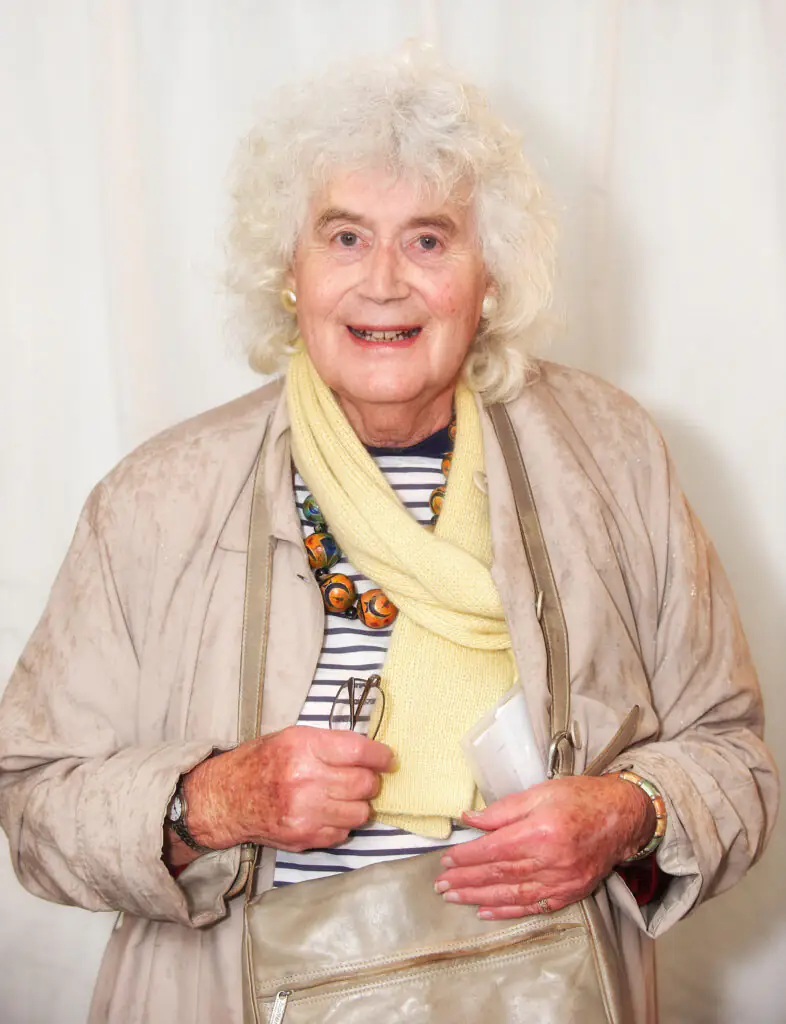
She wrote: "It was as though there were a piece missing from my pattern, or some element in me that should be hard and permanent, but was instead soluble and diffuse."
Morris, who was born as James in 1926, joined the army in 1943, before studying English at Oxford University and began working as a journalist.
Per the Guardian, she was sent to climb Everest in 1953 by The Times, and gave them the scoop that the mountain had finally been conquered by writing the following coded message: "Snow conditions bad stop advanced base abandoned yesterday stop awaiting improvement."
The news that Everest had been conquered for the first time was published on the morning of Queen Elizabeth's coronation and marked a huge victory for Britain.
After making history in the British Mount Everest expedition, Morris spent the next year traveling from New York to Los Angeles – a journey that became the basis for her first book, Coast to Coast, in 1956.
It was described by the Guardian as "admirably evocative" at its best where Morris had "drunk deeply of American life".
She then went on to work for the Guardian and traveled to Egypt on behalf of the newspaper.
This role saw her once again break major historical news – the first evidence of French collusion in the Suez conflict. Namely, this was the incineration of Egyptian lorries and tanks, which French soldiers told her had been supporting the Israeli campaign with napalm bombs.
For the next five years, Morris continued to work for the Guardian and wrote another six writing books on South Africa and the Middle East, with the publication of her book Venice in 1960.
While she was writing Venice, Morris decided to start addressing her "secret" and made the decision to start taking hormones. In 1972, she completed her transition with the help of a surgeon in Casablanca.
"I should have been terrified, but I wasn’t," she told the New York Times in 1974. "It was inevitable – I'd been heading there mentally all my life."
Jan Morris discusses her life in a 2000 interview with CBS:
Two years later, Conundrum hit shelves for the first time.
At first, critics struggled to decide how to react to the pioneering book.
Reviewing the book, AN Wilson of the Guardian admitted that he was unsure as to why it was easy "to let a little bitchiness creep into one's comments on Miss Morris's most interesting book."
Meanwhile, Rebecca West wrote in the New York Times that "now we are both women he mystifies me".
The journalist then went on to question the validity of Morris's trans identity, writing: "She sounds not like a woman, but like a man's idea of a woman, and curiously enough, the idea of a man not nearly so intelligent as James Morris used to be … I cannot accept Conundrum as the story of a true change of sex."
However, while critics might have struggled to accept Morris's story, she received a much more welcoming reaction from those in her hometown, explaining that no one batted an eyelid when she introduced herself as Jan instead of James.
"I put it down to kindness," she told the Observer in 2020. "Just that. Everything good in the world is kindness."
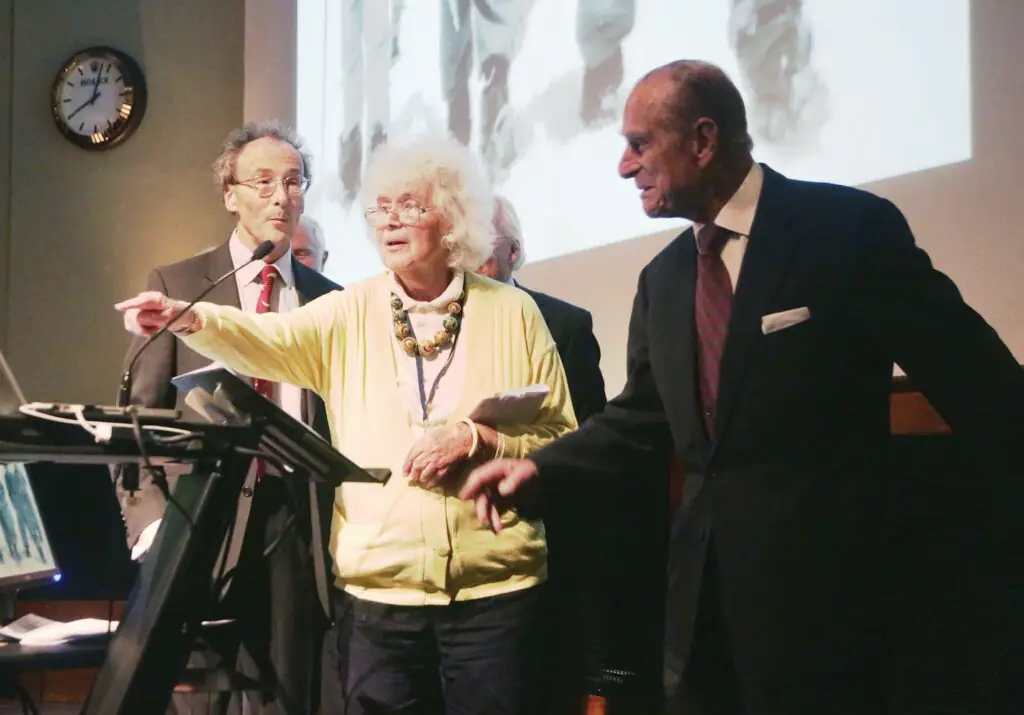
Morris is pictured below in 2013 with Prince Philip.
Despite some negativity from critics, Conundrum went on to become a worldwide bestseller and helped validated many who were in the process of questioning themselves at a time when transgender identities were far less understood than they are today.
However, this was far from Morris' only notable literary achievement, and her three-volume history of the British Empire, Pax Britannica, was completed in 1978, and her novel Last Letters from Hav, was shortlisted for the Booker prize in 1985.
Looking back at her life in an interview with the Financial Times in 2018, Morris said that her transition no longer felt like the defining moment of her life. She said that it hadn't changed her writing "in the slightest" and that "it changed me far less than I thought it had".
Towards the end of her life, Morris lived with her partner Elizabeth. In November 2020, she passed away at the age of 94. She wrote on the epitaph: "Here are two friends at the end of one life."
Paying tribute to the LGBTQ+ icon after her passing, Wales' First Minister, Mark Drakeford wrote on Twitter that Morris was "a real treasure to Wales".
*LGBTQ+ History Month – to fully understand the present, we must educate ourselves on the past.