


Relationships4 min(s) read
Doctor issues warning for this common method men use to masturbate and it could have serious consequences
.webp_lli6Ty?tr=cr-74.9.445.380,f-webp,q-70,w-100)
A doctor has issued a warning to men about the way they masturbate, including one common method that can cause problems.
Self love is something most people indulge in but few talk openly about - from frequency, to exactly how you get down.
While there's no "normal" frequency of masturbation, as it varies from person to person, previous studies have claimed that 35.9 percent of people with penises masturbate at least once a week.
According to the Cleveland Clinic, that's no bad thing as masturbation can help reduce stress, improve sleep, and even offer some pain relief.
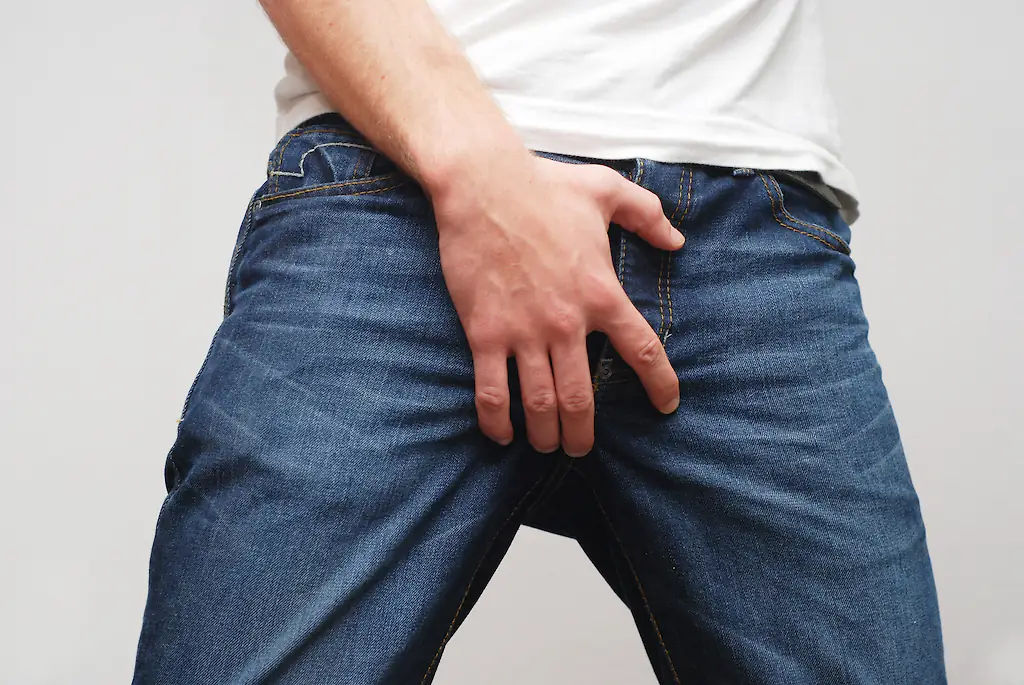
However, the method you use to self-pleasure can have a big impact not only on the act itself but your ongoing enjoyment in the bedroom, too.
Urologist, pelvic surgeon, and sex educator Dr. Rena Malik has issued a warning to men that use a "death grip" while masturbating.
She shared a YouTube video in January 2024, titled: ‘Everything You need To Know About Death Grip, Explained by a Urologist’.
Dr. Malik explained: "‘Death Grip’ is essentially using a very firm and aggressive grip during the time of masturbation.
"This is thought to lead to some sort of desensitisation of the penis where essentially things that used to be pleasurable, for example, intercourse or penile-vaginal intercourse, no longer feel good enough or strong enough to make you climax."
She revealed that using such a firm grip and doing so "over and over again" can lead to "habituation", meaning you get used to the more intense pressure that can be created by the hand compared to a vagina.
She revealed that this can mean it becomes harder to climax through sex as your body is habituated to needing that death grip to reach orgasm, which is known as idiosyncratic masturbation.

What is idiosyncratic masturbation?
According to Michael A. Perelman, a Clinical Professor Emeritus of Psychiatry, Reproductive Medicine, and Urology at the NY Weill Cornell Medicine/New York Presbyterian, this type of self-stimulation is not easily created by a partner's hand, mouth, or vagina and can lead to delayed ejaculation.
People who experience idiosyncratic masturbation may also experience difficulty in getting and maintaining erections with a sexual partner, which can lead to frustration and issues within the relationship.
Dr Malik explained: "When you're in a relationship it can be devastating, because you're now having difficulty getting erections with someone who presumably you really like, you want to have sex with, you want to pleasure them and to be pleasured, and you can't get it."
How can you combat it?
Firstly, doctors advise getting checked to make sure the issue is not urologic, such as genital numbness.
Once you have been evaluated to "make sure there’s nothing else that’s going on that can be corrected medically", Dr Malik says you need to address the reason for your masturbation.
If it's down to boredom, she suggests finding something else to take up the time, such a seeing friends, working out, or going for a walk.
Dr. Malik advises completely stopping masturbation, and while she did not specify how long for, when you come back to self-loving, do so with a very loose grip.

"Try to explore all of your genitals. Don't just focus on the penile shaft or the head, explore on all of it," Dr Malik advises.
"Be as mindful as possible, focus on the sensations you're having... Really focus on how it feels, how your body is enjoying the pleasure."
She added that over time, it should be possible to get back to a place where you can enjoy sex again and masturbate regularly, using a lighter grip.