Loading...
Travel4 min(s) read
travel7 min(s) read
weird3 min(s) read
relationships4 min(s) read
Published 09:39 11 Jun 2026 GMT
A woman who permanently resides on a cruise ship has revealed the truth about exactly how much it costs her to live at sea.
For many, a cruise is a once-in-a-lifetime treat, often embarked upon after retirement, when time off is no longer so scarce.
However, some people love it so much they choose to pack up their life on land and move onto a ship full-time, making the most of seeing different parts of the world while having all their needs catered for on board.
Lynnelle, 53, the woman behind the Poverty to Paradise YouTube channel, lives on board a cruise ship - and she's revealed the "dark truth" about exactly how much it costs her.
While many imagine it's all sunshine and scenery - and never having to do your own cleaning or laundry - Lynnelle warns that the reality can be quite different.
She warned that while there are many undeniable perks, there are some downsides too - including living in a small cabin which isn't all that sound-proof.
And that's without factoring in the cost, as life on board is far from cheap.
The American revealed that living full time on cruises runs to over $88,000 per year, which includes the fare, taxes, and tips.
If you want to upgrade your living quarters to have a bit more space or some fresh air and get a balcony cabin, that would cost you closer to $103,000 for the year - and that's before you add in anything you spend on board.
Unsurprisingly, onboard spending can soon add up, with specialty dining, WiFi packages, and things like photos and souvenirs, or anything else you buy on the ship coming at a premium price.
As well as the financial cost, there's also the practical side of living in a ship's cabin to consider before packing up your home on land.
Lynnelle revealed that cabins are smaller than you think, and you have to squeeze your whole life into the equivalent of half a bedroom, with the tiny bathrooms feeling closer to the size you'd find in an airplane rather than an apartment.
If you happen to be a light-sleeper or bothered by noise, she warns that the walls are "paper-thin" and she can hear almost everything her neighbors do, including the noise from their televisions, chairs scraping, snoring, and more.
You'd also better have your sea legs as things can get rocky on board, with storms making movement on board unavoidable - and all the cabins feel the effects, no matter where they are located on the ship.
Lynnelle recommended that people avoid routed that sail the Caribbean through hurricane season as this can get particularly rocky, but recommended those thinking of living on board to try cruises throughout different seasons before they commit, to make sure they can cope with it.
If you happen to be an introvert or suffer from social anxiety, cruises can be a pretty overstimulating place to live as you're constantly in close contact with strangers you pass in elevators, pool decks, dining rooms and hallways, and the only place you can escape is within your small cabin.
Loneliness can also creep in if you're cruising solo, however, as there can be patchy internet depending where you are, and though you will meet people on board, these friendships can be short-lived as most people will be debarking and going back to their normal lives once the cruise comes to an end.
You may also worry what happens in the case of a medical accident or emergency - and it should come as no surprise that a doctor's visit also comes with a hefty price tag.
While onboard medical care is available, Lynnelle revealed that it's very costly to see a doctor, with her once having paid $150 to be seen for an ear infection. Should the emergency be more than the onboard medics can handle, that may mean coming off the ship and being treated at a nearby location.
Much of the additional costs come from the fact that people are pretty much restricted to paying the prices of things on board as they are unable to leave the ship except for stops at different destinations, so the bill can quickly add up.
However, if money is not an object and you don't require a vast amount of space, and can put up with noisy neighbors as a trade off for waking up in a different exotic destination every few days, then cruise life can be a dream option for many.
Published 12:39 07 May 2025 GMT
A woman who spends her life living on cruise ships has revealed the dark sides that others may not have considered.
Lynnelle, a 53-year-old content creator behind the YouTube channel Poverty to Paradise, decided in 2024 to trade in her toxic job, broken marriage, house, and car for life on the open sea.
Now, with over 70,000 subscribers tuning in, she’s sharing the unfiltered truth about what full-time cruising really looks like — and it’s not all umbrella drinks and ocean views.
“So you’ve been watching all the YouTube videos and you’ve seen all these people living on the cruise ships and you are just about ready to sell your house, pack everything up and come live on a cruise ship,” Lynnelle says.
“Before you do that there are some things you need to know. It’s not all paradise and glitz and glamour but there are some things that might make you pause.”
She originally planned just 90 days at sea.
“When I first started doing this I was not planning to live on cruise ships. I was going through a transition and I saw some deals here and I thought let me go through this for 90 days while I think about what I’m going to do with my life and it turned out this is perfect for me.”
But even though it works for her, Lynnelle warns that there are eight major realities would-be sea nomads need to come to terms with first.
1. Space: Say Goodbye to Roominess
If you think cruise cabins are cute and cozy, try living in one permanently.
“Take your current bedroom, cut it in half and squeeze a queen-size bed a couple of night stands and everything you need to live into that half of a bedroom,” Lynnelle explains. “That’s what your cabin is going to look like.”
2. Noise: Thin Walls, Loud Neighbours
The cruise ship soundtrack isn’t just the ocean breeze — it’s karaoke, theatre shows, scraping pool chairs, and other guests’ private activities.
“The cabins on cruise ships are paper thin so if you are the type of person who wants to spend a significant amount of time in your cabin you need to think about that,” Lynnelle warns.
“I have heard so many things that were disturbing to me that I pulled the pillow over my head and put ear plugs in.”
“You hear everything, depending what deck you are on. You might hear noise from the theatre, karaoke singing, one time I heard the scraping of pool chairs up on the Lido deck because I was right below it. Also, the neighbours when you can hear their ‘extra-curricular activities, their snoring, their arguments, their TV blasting.”
3. People: It’s Hard to Hide from Social Interaction
If you're the type who enjoys solitude, cruising might test your patience.
“I am not a shy person but I am very quiet and introverted … so a lot of times I just enjoy my own company and enjoy being by myself,” she says.
“If you are an introverted person and you don’t like to be socially interactive you might want to rethink living on a cruise ship because you are going to be in places and people are going to talk to you."
“Even if you get a private table somebody is going to come and say ‘hey, how you doing’ and strike up a conversation with you."
“You are on a ship so unless you sit in your room the whole time, which I don’t suggest you do, you’re going to see that same chatty couple at breakfast, lunch, dinner and you cannot escape them.”
4. Seasickness: The Ocean Has No Chill
Location on the ship and seasonal weather can make a huge difference in how your stomach handles the motion.
“Depending on where you are on the ship – particularly at the very front of the ship or the very back – you are going to feel the motion of the ship from the waves,” she says.
“If there’s a storm, forget it, you’re going to feel it wherever you are on the ship."
“If the motion of the ocean bothers you then that’s something you definitely want to think about.”
Higher decks = more motion, and possibly more nausea.
5. Cost: Not As Cheap As You Think
Living at sea isn’t necessarily a money-saver — at least not unless you play it smart.
“Living on a cruise ship can be upwards of (USD) $80,000 to (USD) $100,000 or more and that’s just for the cruise itself,” Lynnelle explains.
“That’s not including any of the extras you want to get like specialty dining, pictures, souvenirs. All that other stuff adds into the cost of cruising.”
She’s managed to reduce her own expenses dramatically. “My average is USD $2000 per month,” she says — which adds up to about USD $24,000 annually, thanks to her cruise loyalty perks and savvy deal-hunting.
6. Healthcare: Prepare to Pay Out of Pocket
Need to see a doctor at sea? Get ready to open your wallet.
“I am 53 and I am pretty much healthy but a lot of people have health issues where they can’t live on a cruise ship or they can but they are going to need special care,” Lynnelle explains.
“If you have some pre-existing health conditions where you need to go to your doctors on a regular basis then living on a cruise ship is probably going to cause some drawbacks for you.”
She once had to get treatment for an infection on board — the appointment alone cost $150, not including medication.
7. Food: Not As Varied As It Seems
Sure, cruise food is a highlight… until it’s not.
“I hear a lot of people complain about the food being monotonous,” Lynnelle says.
“I was on one cruise ship for two months straight and even though there was a variety of food … it can be monotonous and so if you are not into eating the same food and you get bored easily that is something you need to take into consideration.”
Cruise menus tend to repeat on a weekly cycle — and after months at sea, you’ll likely be able to recite them by heart.
8. Wi-Fi and Loneliness: The Hidden Emotional Toll
Connectivity at sea is expensive — and not always reliable.
“If you are a person who, on a regular basis, is Facetiming people and you’re on social media all the time, the Wi-Fi on cruise ships is not very reliable,” she admits.
“About 75 per cent of the time it is great but the other 25 per cent of the time you want to pull your hair out because it’s like ‘ah, I have paid for this Wi-Fi but I am not getting coverage’.”
But the biggest challenge of all? Emotional isolation.
“It’s hard to make lasting friendships because the nature of cruising is transient, so those people will only be on the ship with you for maybe 10 days but after that they move on their merry way,” Lynnelle explains.
“I’m not saying you can’t make friends on cruise ships but, for the most part, especially if you are cruising solo like I am, you need to find people you click with but it is difficult."
“If you are a social butterfly or someone who needs to have deep connections with a person all the time then this might not be the lifestyle for you.”
Published 13:01 06 Jul 2025 GMT
Published 15:18 13 Aug 2023 GMT
Spending months aboard a cruise ship might be something people dream of having the time and disposable income to do in retirement, but it turns out some people are taking to the high seas earlier - as it's cheaper for them than living on land.
Going on a cruise can seem like a pricey luxury, but those that get to do it can see many different places on their voyage - all while returning to the same cozy cabin every night.
With the cost of living crisis pushing up rents and making mortgage payments ever more unaffordable - if you can get on the property ladder in the first place - some people have traded it all in to live in luxury on the water, for less than they were paying on dry land.
Among those that have made the change are Ryan Gutridge, who spends 300 days of the year on a cruise ship, after realizing he was able to work remotely while on board.
Ryan first began staying on Royal Caribbean cruise ships in 2021 after finding the cost of his rent and ever-increasing bills worked out far higher than paying for his place on the boat.
He revealed to Insider: "I work in IT as a cloud-solution engineer for a cloud-solution provider and started working from home in 2012.
"But because of the pandemic, my team was able to work from home and access the data they needed from anywhere.
"At that time, cruise lines hadn't announced when or if they were coming back. I thought that if they returned, I'd want to try taking my job with me on a short cruise. I wanted to see how the WiFi would work and if I could access some elements of my job with heavy security."
He initially booked two four-night cruises on Royal Caribbean's Freedom of the Seas in September 2021 to test out whether he'd have access to the systems he needed and a reliable enough connection to WiFi to be able to do his job just like he would at home.
"Everything worked great, and since then, I've been on a cruise pretty much every week, except for a few weeks due to the holidays," he revealed.
Originally from Fort Lauderdale in Florida, Ryan found that the cost of living at sea for 300 nights was "almost neck-and-neck" with what he was paying for his apartment and trash service back home - plus it came with the chance to see some amazing places and to socialize with people.
He admitted he'd found the pandemic to be isolating as he did not have children or pets to keep him company, and loved having the chance to meet many different people who came aboard the ship.
And while his base fare budget is $30,000 for the year, the cruise comes with extra perks including free WiFi and free drinks, meaning he is saving money on those expenses.
He revealed that the trick to making it the most cost-effective is to work out which cruise line offers the best benefits for what you need and to make the most of their loyalty programs - and he will have reached the highest level after two years, meaning this year's travel will cost him a lot less than last year did, despite being on board for longer.
Ryan did not reveal what he does for food, but Royal Caribbean's website state that the price of cruise tickets includes "most meals onboard" too.
He also revealed that he has a great relationship with the crew on board, having remained on the ship for so long, and is planning to get rid of his apartment in Florida permanently by 2025, as he only spends a short time on land to see friends and have doctor and dentist appointments.
Ryan is not the only person who's traded in being a landlubber for living on board a ship, as 28-year-old Austin Wells last year revealed that he'd moved from his home in San Diego to buy a 12-year lease of an apartment on board the mega cruise ship the MV Narrative.
He told CNBC that he spent $300,000 on the 237 square feet apartment which will belong to him for the duration of the 12-year lease onboard.
His new home will not be ready until 2025, however, as it is still in construction on the docks of Croatia at this time.
Austin said: "This is probably the first time ever that there is even the ability to have a standard job and even consider working and living from a floating apartment complex.”
He plans to spend three years of his 12-year lease living on board and working remotely while traveling the globe, with access to a private gym, a farmer’s market, a cinema, and a swimming pool on the ship.
The ship hopes to amass 1,000 residents and will also feature a school and a library, and hopes to visit locations including Slovenia, Albania, Croatia, Greece, and even the Arctic Circle.
Those behind the MV Narrative, Alister Punton and Shannon Lee, say that the concept of cruise living came from them "wanting to offer more affordable apartments for life at sea."
According to RentCafe, the average monthly rent in San Diego is $2,916, while living on the MV Narrative will save Austin almost $1,000 a month as his lease works out at $2,000 a month.
Luckily, he is able to work his job around his new lifestyle, as Austin added: "The thing that most excites me is I don’t have to upend my daily routine, in order to go see the world. My working hours will be shifted towards evenings, nights, and very early mornings, but that does open up the ability for me to see a city midday to afternoon."
Angelyn and Richard Burk, who are originally from Seattle, also made the choice to move onto a ship full-time after realizing it worked out cheaper than their mortgage payments.
In May 2021, they bid farewell to their jobs and embarked on a new life at sea, armed with just a single suitcase each after finding they could live on the ship for as little as $43.92 a day.
Angelyn, 53, told 7News: "We love to travel, and we were searching for a way to continuously travel in our retirement that made financial sense."
The couple had initially planned to begin their cruising life when they retired but devised a financial plan that meant they could start their dream life earlier than anticipated.
They adopt a frugal lifestyle, capitalizing on sales and loyalty memberships to secure the best deals, and by using their savings and selling their home, they achieved early retirement.
Angelyn revealed: "We have been frugal all our lives to save and invest in order to achieve our goal. We are not into materialistic things but experiences."
She told CNN in April 2022 that the average daily cost of living on a cruise ship amounts to $89, which includes the room, transportation, tips, entertainment, as well as port fees and taxes.
Luckily for the couple, this was "well within" their retirement budget, and they set off almost immediately, and have spent just a handful of nights on dry land since.
Anyone else got a sudden urge to do the maths and see if living on a cruise ship is cheaper - because we have.
Published 11:28 31 Jan 2023 GMT
The cost of living crisis is hitting families hard around the world - but one couple has found a novel way to beat it and still live their absolute best lives.
Angelyn and Richard Burk, who are originally from Seattle, have decided to give up dry land in favor of living on the high seas after finding it is actually cheaper to live on cruise ships than pay their mortgage,
The couple has found that with rising mortgage rates being what they are, it actually works out a lot more cost-efficient for them to live on board a boat rather than scrimping and saving for a home loan, as well as scratching their itch to travel.
The Burks left their jobs and packed just a single suitcase each as they began their life at sea in May 2021, after realizing they could live on a ship for as little as $43.92 a day.
Angelyn, 53, who is a former accountant, told Australia’s 7News: "We love to travel, and we were searching for a way to continuously travel in our retirement that made financial sense."
She and Richard, who is also in his 50s, plan to spend the rest of their lives traveling and have already been making the most of sailing around the world.
They have hopped on and off multiple cruise ships since their adventure began, including a 51-day trip from Seattle to Sydney, and say that some of their favorite locations have been the Bahamas, Singapore, Italy, and Canada.
Angelyn added: "Our original plan was to stay in different countries for a month at a time and eventually retire to cruise ships as we got older."
The couple has decided to put their retirement plan into action earlier than expected and worked out a way it would make financial sense for them to live a holiday life.
The pair lives frugally, making the most of sales and their loyalty memberships to get the best deals without having to ever return to their 9-5 jobs.
They began to fund their travels using their savings and worked out that by selling their home, they could retire early and start living between cruise ships immediately.
Angelyn explained: "We have been frugal all our lives to save and invest in order to achieve our goal. We are not into materialistic things but experiences."
She went on her first cruise in 1992 and caught the bug for it, which only increased when she met Richard, with the pair planning to cruise yearly, if not bi-annually.
In April 2022, Angelyn told CNN that the average cost per day to live on a cruise ship was $89, which included the price of their room on board, transportation, tips, and entertainment, as well as port fees and taxes, which was "well within" their retirement budget.
Since embarking on their seafaring adventure, the couple can count on one hand the number of nights they have slept on dry land in the past year, staying with family or friends when they have a day or two between switching ships.
Retiring on cruise ships is nothing new, however, as Reddit users commented about family members who have done the same.
One user pointed out the benefits of living on a ship include free medical care on board, explaining: "There are older retired folks who do this cause there are doctors on board those ships and it costs less than nursing homes.
"They'll be on the same ship for months, then get onto another ship for months, just back and forth. Signing up for 3+ months like that the cruise lines give out large discounts, so it's much cheaper than a single week that most people would go on."
Published 08:22 27 Aug 2024 GMT
A man who bought an apartment has revealed that he did so because it's cheaper than living at home - and it comes with the perk of traveling!
We all love a nice vacation, but what if I told you that you could go on vacation indefinitely and it could end up being cheaper than your standard housing costs?
Austin Wells, a 28-year-old from San Diego, bid farewell to the hustle and bustle of city living, opting for a unique life on the high seas, as reported by CNBC.
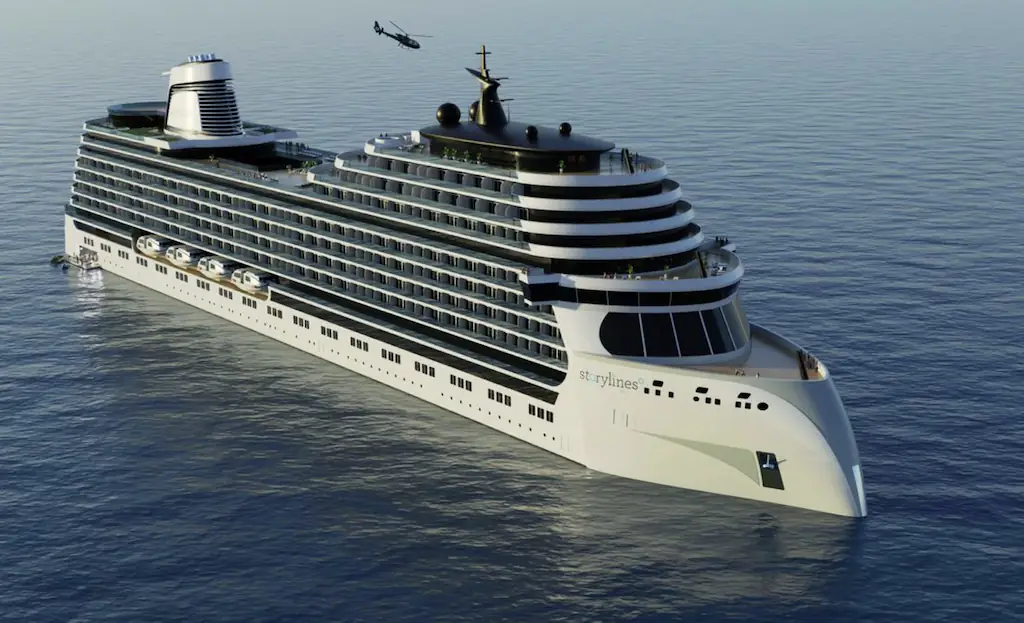
Wells' new floating abode is far from ordinary. The cruise ship boasts an impressive array of amenities, including 20 dining restaurants and bars, a microbrewery, a library stocked with 10,000 books, a movie theater, three inviting pools, a fully-equipped gym, an art studio, and even an onboard medical facility.
One might assume that such an extravagant lifestyle would come at a premium, but Wells' costs may astonish you.
He made the decision to live on the cruise ship after securing a remote position with Meta - the tech giant that owns Facebook and Instagram - allowing him the freedom to explore various countries for an estimated three and a half years.
The ship, known as Storylines MV Narrative, is scheduled to set sail in 2025 and is poised to embark on a breathtaking journey that includes stops in Rome, Naples, Venice, Slovenia, Croatia, Greece, and Turkey.
Wells' role in Meta's augmented and virtual reality division is fully remote, affording him the flexibility to travel continuously without being tethered to midweek office meetings.
Wells' studio apartment on the MV Narrative - a residential luxury cruise ship - comes with a price tag of $300,000 for a 12-year lease.
Given that the average rent in San Deigo (as of July 2024) works out at an estimated $2,995 per month, per RentCafe, it's safe to say that Wells' decision is much cheaper than if he decided to stay on land. (That would work out at $431,280 over 12 years.)
His room measures 237 square foot, with the ship boasting around 500 rooms and apartments in total, per Metro. According to the company behind the liner, owners can choose from "coastal" or "contemporary interior design styles".
Wells explained to CNBC: "The thing that most excites me is I don’t have to upend my daily routine in order to go see the world.
"My working hours will be shifted towards evenings, nights, and very early mornings. But that does open up the ability for me to... maybe see a city midday to afternoon and then start my workday around 6:00PM or 7:00PM.
"This is probably the first time ever that there is even the ability to have a standard job and even consider working and living from a floating apartment complex."
For those times when Wells might miss his family and friends or feel a bit seasick, he has the option to rent out his apartment if he wishes to return home, or he can extend an invitation to friends or family to join him on the ship for a month.
If you're enticed by the idea of leaving behind your overpriced city flat and setting sail, you're in luck, as there are still apartments available on the ship.
Most leases run for 24 years, approximately the life of the vessel, although Wells secured a 12-year lease by getting in early. Prices for other apartments start at around $1 million and can soar to a staggering $8 million.
For those seeking an even more carefree experience, there's a "fractional ownership" option of three months per year, and an all-inclusive package can be added for an extra fee of $2,100 per person.
So the question is, what are you waiting for? More information can be found here.