


Travel3 min(s) read
Urgent warning issued for travel to 32 countries over spread of 'paralyzing' disease

Travelers are being urged to take extra precautions after health officials issued an urgent warning about the spread of polio across dozens of countries around the world.
The U.S. Centers for Disease Control and Prevention (CDC) has issued a level 2 travel alert, which alerts people to "practice enhanced precautions” before visiting 32 countries where the virus is currently circulating.
The advisory advises everyone to make sure they are fully vaccinated against the disease and recommends that people planning to visit affected areas consider receiving a single-dose booster.

Polio Spreading Across Multiple Regions
Polio, or poliomyelitis, is a highly infectious disease that attacks the nervous system.
The illness is caused by the extremely contagious poliovirus, which spreads through droplets from sneezing or coughing and through feces. It can also be transmitted through contaminated food or drink.
For most people infected with the virus, symptoms never appear, but when they do, they resemble a mild flu-like illness, including fever, tiredness, nausea, headache, nasal congestion, sore throat, muscle aches, and vomiting. This early stage is known as "abortive polio," per the Daily Mail.
A smaller percentage develop nonparalytic polio, which causes more severe symptoms such as neck and spine stiffness, decreased reflexes, muscle weakness, and more intense flu-like illness.
In rare but serious cases, the disease progresses to paralytic polio - the most dangerous form. This stage can cause intense pain, extreme sensitivity to touch, tingling sensations, muscle spasms or twitching, and paralysis.
The CDC said in its advisory: "Polio can be fatal if the muscles used for breathing are paralyzed or if there is an infection of the brain."
Countries Included In The CDC Advisory
According to the CDC, polio has been detected within the past 12 months in countries including the UK, Spain, Poland, Germany, and Finland, alongside several nations across Africa and the Middle East:
- Afghanistan, Algeria, Angola, Benin, Burkina Faso, Cameroon, Central African Republic, Chad, Côte d'Ivoire, Democratic Republic of the Congo, Djibouti, Ethiopia, Palestine, Germany, Ghana, Guinea, Israel, Niger, Nigeria, Pakistan, Papua New Guinea, Poland, Senegal, Somalia, South Sudan, Sudan, Tanzania, Yemen, and Zimbabwe.
The agency advises travelers to wash their hands frequently and follow recommended hygiene practices to help reduce the risk of infection.
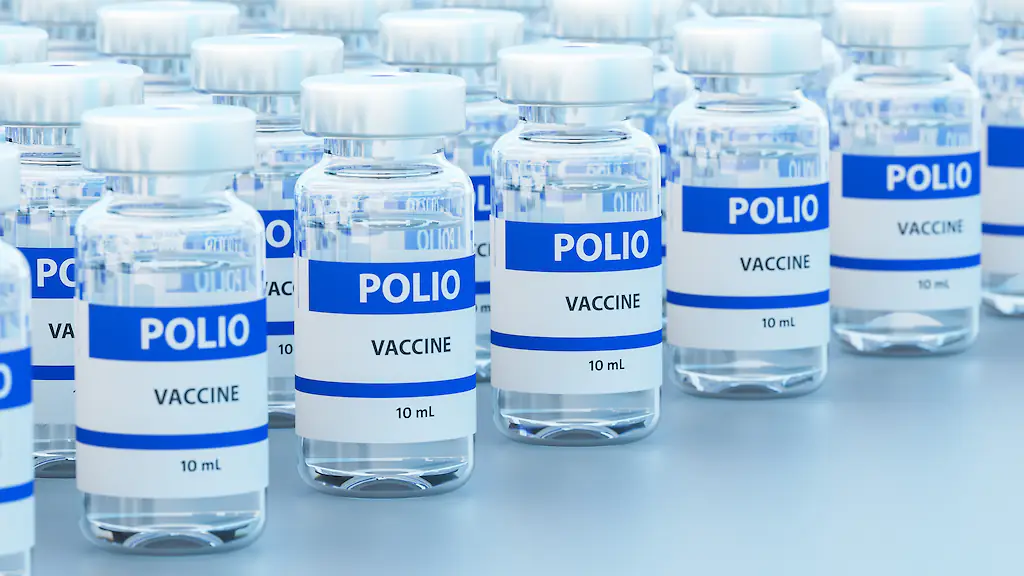
Polio was once a major public health crisis in the United States before vaccines reduced its spread.
Today, the vaccine is administered as a four-dose series throughout childhood, normally given at two months, four months, six to 18 months, and again between four and six years of age. Once the series is completed, protection is believed to last for life.
Per the latest CDC data, 92.5 percent of children in the United States have received at least three doses of the polio vaccine.
However, health officials warn that growing vaccine hesitancy could help fuel the return of diseases that were once nearly eradicated.
Health and Human Services head Robert F. Kennedy Jr.'s lawyer and ally, Aaron Siri, petitioned the FDA in 2022 to revoke approval of the polio vaccine, which eliminated the disease in the US.
In January, Dr. Kirk Milhoan, a pediatric cardiologist who leads the Advisory Committee on Immunization Practices, suggested vaccinations against polio and other diseases should be optional.
“If there is no choice, then informed consent is an illusion,” Dr. Milhoan told The New York Times. “Without consent, it is medical battery.”