Uncategorised3 min(s) read
uncategorised3 min(s) read
stories0 min(s) read
Netflix viewers have been reduced to tears by a heartbreaking scene involving orangutans in the latest David Attenborough documentary.
The scene in question comes from A Life On Our Planet, David Attenborough's new feature-length documentary on Netflix, which, in one segment, explores the deforestation wrought by the palm oil industry.
Take a look at the heartbreaking scene in the video below:
[[jwplayerwidget||https://content.jwplatform.com/videos/z3yJY7Ys-sKUnNGKf.mp4||z3yJY7Ys]]
In the scene above, the renowned broadcaster and documentary filmmaker states:
"Many of the millions of species in the forests exist in small numbers. Everyone has a critical role to play. Orangutan mothers have to spend 10 years with their young, teaching them which fruits are worth eating.
"Without this training, they would not complete their role in dispersing seeds. The future generations of many tree species would be at risk."
[[twitterwidget||https://twitter.com/WillowsCrayon/status/1312838515613462530]]
In a voiceover, Attenborough continues:
"Tree diversity is the key to a rainforest. In a single small patch of tropical rainforest there could be 700 different species of tree - as many as there are in the whole of north America."
"And yet this is what we've been turning this dizzying diversity into. A monoculture of oil palm, a habitat that is dead in comparison."
"There is a double incentive to cut down forests: people benefit from the timber, and then benefit again from farming the land that's left behind. Which is why we've cut down three trillion trees across the world - half of the world's rainforests have already been cleared."
[[twitterwidget||https://twitter.com/OliPaul4/status/1313219648796663821]]
The footage in the documentary then showed a number of orangutans from a half-filled forest in Borneo, clinging on to the last vestiges of their treetop home, while machinery begins to carve up what few trees are left to make way for arable land.
Attenborough adds:
"We can't cut down rainforests forever, and anything that we can't do forever is by definition unsustainable. If we do things that are unsustainable, the damage accumulates - ultimately to a point where the whole system collapses."
[[twitterwidget||https://twitter.com/Johncharlesart1/status/1313523541762093059]]
A number of social media users were clearly left emotional by the heartrending footage, and posted their reactions online.
For instance, one Twitter user wrote: "Every time I see that clip of the orangutan clinging onto the last tree in a rainforest that’s just been destroyed my heart hurts."
Another commenter wrote, "If you haven’t watched David Attenborough: A Life on Our Planet on Netflix please do. Watching it at 4am tearing up in my room. Already know some changes I’m going to make from now on."
[[twitterwidget||https://twitter.com/NicsAndNacs/status/1312807236876394496]]
Meanwhile, someone else stated:
"A Life On Our Planet" is truly inspirational, eye opening and worrying all at the same time. I urge you all to watch it and make that small change, because if you don't, the effect is huge. We have created the issue, so we should fix it."
[[twitterwidget||https://twitter.com/ConorMcDPhoto/status/1312744778166145027]]
Attenborough has made quite a splash on social media lately, with the 94-year-old joining Instagram and gaining an incredible 200,000 followers just one hour after making his first post.
stories1 min(s) read
A number of British trophy hunters have been rebuked online after sharing photographs of themselves alongside recently shot animals. The pictures, which feature a variety of African wildlife such as the “vulnerable” plains zebra, have gone viral after appearing on a series of Facebook posts, as well as several safari websites.
[[twitterwidget||https://twitter.com/CBTHunting/status/1178687558479499264]]
According to multiple reports, the hunters featured in the photographs include 55-year-old Andy Denson, who is currently listed as the UK agent for Thaba Thala Safaris. As stated in The Mirror, Mr Denson is also one of the UK’s top taxidermists, having regularly visited Southern Africa since early 80s. His website states:
“My auntie was a manager on one of the biggest privately owned game reserves in South Africa and for the past 20 years I have spent most of my time studying and hunting there. I have been glad to see my son follow in my footsteps to become a very well respected professional hunter and fisherman taking clients out to fulfil their African dreams.”
Watch as Hunters High-Five Each Other After Shooting A Lion:
[[jwplayerwidget||https://content.jwplatform.com/videos/z29fWm86-sKUnNGKf.mp4||z29fWm86]]
Hunting in Africa is extremely controversial. Many participants claim that the practice, which is especially prevalent in South Africa, helps to encourage conservation, though experts often dispute this assertion.
What is clear, however, is that hunting holiday packages cost a premium and are only accessible for the super rich. The Mirror claim that Thaba Thala offer a list of over 40 animals that hunters can shoot from, with packages starting at around $4900 for a week.
[[twitterwidget||https://twitter.com/CBTHunting/status/1178697757634306050]]
Understandably, the shocking photos have prompted an angry reaction from the conservation community. Eduardo Goncalves of the Campaign to Ban Trophy Hunting group stated:
"It is unbelievable there are hardly any legal restrictions on shooting zebras for fun. So many of Africa's greatest wild animals are already suffering thanks to the vile trophy hunting industry. Now zebras have joined the list. In April last year zebras were officially listed as vulnerable. The Grévy's zebra species are listed as endangered. What is it going to take to stop these killers from wiping out our wildlife completely?"
With wildlife populations in Africa under more pressure than ever before, it’s understandable that many see photos such as these as barbaric examples of our contempt for the natural world. If the reaction to this story is anything to go by, they may well become a thing of the past.
uplifting1 min(s) read
A stunning picture that shows a tigress walking through the forest with her five cubs has been posted to Twitter.
The remarkable photograph was tweeted by Parveen Kaswan, who works for the Indian Forest Service. Not only this, he cares deeply about the environment and is also a member of the International Union for Conservation of Nature.
Kaswan captioned the stunning picture: "This is [a] magical picture. Count the cubs with [the] tigress. I know for a reason how few people will be elated after seeing this. Efforts are helping in making this species bounce back from [the] verge of extinction. PC Siddharth Singh. Magical Terai."
[[twitterwidget||https://twitter.com/ParveenKaswan/status/1214048610150600705]]
This picture is remarkable for more than one reason, however, as a litter of five is unusually large by anyone's standards. Tigers typically have litters of three or four cubs, as per Tigers.org.
The tiger population has made a remarkable recovery between 2014 and 2019, as per the BBC, with numbers rising from 2,226 to 2,967. That equates to around a third more tigers.
These motorcyclists narrowly escaped death after a tiger emerged from the woods:
[[jwplayerwidget||https://content.jwplatform.com/videos/h0AxwqlV-sKUnNGKf.mp4||h0AxwqlV]]
Indian Prime Minister Narendra Modi said in 2019 that the country is "now one of the biggest and most secure habitats of the tiger", with estimates at the time suggesting that it is home to 90% of the world's tiger population.
Bounty hunting between 1875 and 1925 slashed the size of the tiger population by 80,000.
Needless to say, Twitter users were impressed by the picture.
One Twitter user wrote: "I hope they all live till their old age.. i [sic] hope the forest stands strong for them. I hope the human race gives the Earth a chance. Thank you for this post, makes me realise to work for them is far more satisfying than anything else."
[[twitterwidget||https://twitter.com/BadamiSaheb/status/1214049295344648195]]
A second remarked: "Hats [off] to the people guarding the species. Really their effort should be appreciated."
[[twitterwidget||https://twitter.com/venkatvak/status/1214059663743803392]]
Meanwhile, a third offered more information about the context of the photograph's environment: "Terai is one of the most ecological productive ecosystems of the globe. It bounces back very soon in case given due protection and slightly intervened with habitat inputs. Results have been extremely encouraging in Katerniaghat, Pilibhit and Dudhwa as I could see."
With any luck, this picture will be one of many snapped over the coming years.
uplifting3 min(s) read
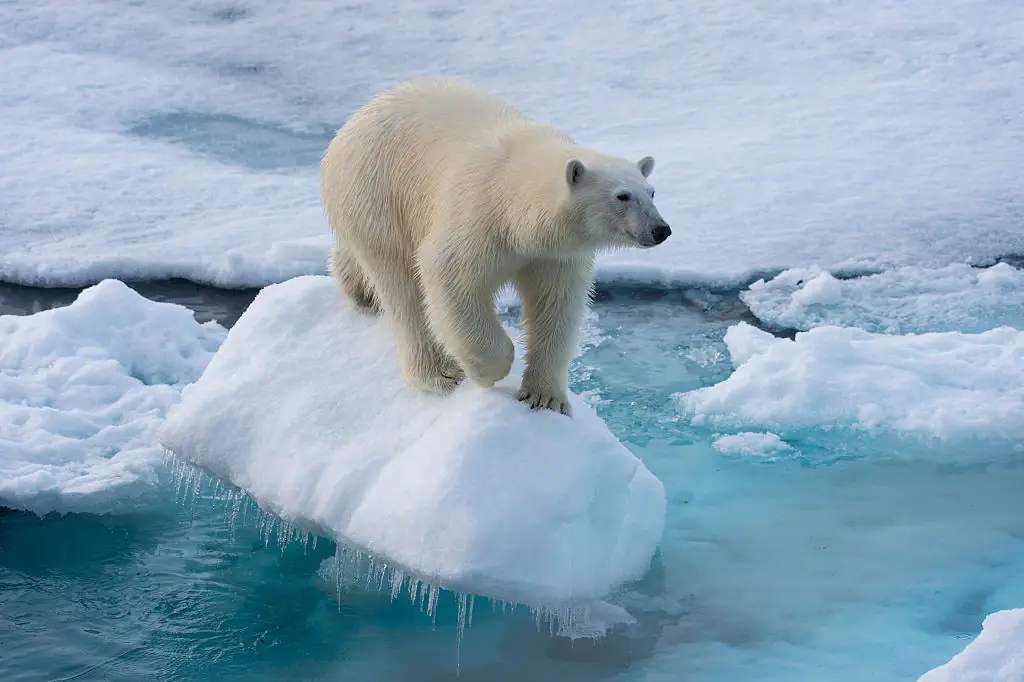
A picture of a polar bear has claimed the top prize in a photo award competition, leaving spectators mesmerized.
The image, which shows a young polar bear drifting off to sleep on an iceberg, was captured by British amateur photographer Nima Sarikhani and has now been credited with the top prize for Wildlife Photographer of the Year at the People's Choice Award.
The shot was picked from a shortlist of 25 images in a public vote that saw 75,000 nature and photography enthusiasts choose their favorite picture to win the prestigious award.
Speaking of the victory, Sarikhani said: "I am so honored to have won this year’s People’s Choice Award for the Wildlife Photographer of the Year, the most prestigious wildlife photography competition."
"This photograph has stirred strong emotions in many of those who have seen it," he continued. "Whilst climate change is the biggest challenge we face, I hope that this photograph also inspires hope. Polar bears are incredibly adaptable and, in some areas, increasing in number, and there is still time to fix the mess we have caused."
Dr Douglas Gurr, director of the Natural History Museum, which runs the annual Wildlife Photographer of the Year competition also spoke of the image, stating that the picture is a visual representation of the impacts of climate change and habitat loss.
"Nima's breathtaking and poignant image allows us to see the beauty and fragility of our planet," Gurr stated. "His thought-provoking image is a stark reminder of the integral bond between an animal and its habitat and serves as a visual representation of the detrimental impacts of climate warming and habitat loss."
Have a look at the image below:Sarikhani, who is from London, England, was on the search for polar bears in the Arctic Ocean in Norway’s Svalbard archipelago when he witnessed a young male climbing onto a small iceberg, using his paws to scrape away the ice to carve out a bed for himself before drifting off to sleep.
The image was later reposted to Instagram where hundreds of other nature enthusiasts also expressed their love for the unique shot.
"Huge congratulations @nsarikhani - such a beautiful photograph!! Extremely well deserved," wrote one user while another added: "The only real winner Image, it has so much emotional meaning, about what the ecosystem is actually for the ice bear. No other image in that contest, had so much meaning and emotions."
Others also asked if they could buy "copies" of the photograph due to how much they loved it.
Other images that were popular shortlisted options included the interaction between a pond turtle and a northern banded groundling dragonfly, and a starling murmuration forming the shape of a bird.
Two lionesses grooming a cub and two moon jellyfish illuminated by the aurora borealis in a fjord in Norway were also among some of the fan favorites but there could only be one winner in the end.
Congratulations to Nima Sarikhani on winning Wildlife Photographer of the Year at the People's Choice Award!