The explicit text messages of a 49-year-old man, who has been spared jail time despite being caught by paedophile hunters while he was trying to meet a boy for sex, have emerged online.
Bahram Hosseini, 49, had been texting with what he believed was a 14-year-old boy on the social network Kik, but he was in fact being duped by undercover organisation, Guardians of the North, who aim to catch and then incriminate paedophiles.
Hosseini had arranged to meet up with the supposed boy at Central Station in Newcastle, UK, after they had exchanged explicit messages, but once he arrived he was confronted by the group and later arrested. Hosseini had travelled 100 miles by train to the city from his home in Wakefield Road, Pontefract in North Yorkshire.
However, despite pleading guilty to attempting to meet a boy under the age of 16 following grooming, Hosseini was spared jail at Leeds Crown Court yesterday and has walked away a free man.
Catherine Silverton, the prosecutor in the case, said that Hosseini had sent messages to "Joey" (the name that the group gave the decoy), stating that he was a 48-year-old man who was looking for a boyfriend for "love or sex". Despite "Joey" repeatedly telling Hosseini that he was 14-years-old and lived with his mom, the man continued to send messages and trying to meet up with the boy.
A spokesperson for the Guardians of the North said in a statement:
"What shocked us most about this case was the element of planning that went into it. Hosseini even took photographs of his tickets while he was on the train and sent them to us."When we confronted him he pretended he couldn’t speak English which was insulting and made me angry. He had been communicating with us on social media in perfect English."I am glad we caught him before he went on to abuse a real child."
Hosseini and the Guardian's decoy had been chatting for around a week and a half before the meeting was arranged. At court he was issued with a 410 day jail term, which has been suspended for two years, a 15-day rehabilitation activity requirement, and will have to perform 100 hours of unpaid work. He was also ordered to sign onto the sex offenders register for 10 years and was handed an indefinite sexual harm prevention order.
In the footage that has emerged of the Guardians confronting Hosseini at the station, he can be seen saying he can't speak English, despite talking to the decoy in the language.
The Guardians of The North said they were shocked at the sentence, saying:
"I thought the sentence was a disgrace. Giving him a suspended sentence is not a deterrent at all."I am sure he will go on to do it again. He was not in any way remorseful. He poses a definite risk, and there is a good chance he will re-offend. Next time a real child could be involved."
The barrister in charge of the case said that Hosseini was sorry and ashamed of what he had done and for the embarrassment that he had caused his family. Judge Penelope Belcher, said: "No child was in in fact exposed to risk. But you did not know that and plainly you were willing to meet with a 14-year-old boy."
The judge also added that it would be matter for immigration and asylum tribunal as to decide if Hosseini should be deported from the country.
Despite the fact that he didn't actually assault anyone, it seems pretty mental that Hosseini is now allowed to walk the streets freely once more. Hopefully this will be enough of a shock to the system to he will refrain from performing an act like this again.
Police in the UK have been inundated with tens of thousands of comments after sharing a mugshot of a convicted burglar.
On January 27, West Yorkshire Police shared the photo to Facebook in an attempt to secure help from the public in the prison recall of 37-year-old Jonathan Cahill.
Writing in the post's caption, West Yorkshire Police explains: "Can you help us to locate Jonathan Cahill, who has been recalled to prison? He is 37 years old and is believed to be residing in the Wakefield area.
"Please share our appeal below and contact us if you can help our officers to locate him."
On the official website of West Yorkshire Police, it adds that Cahill is "medium build and approximately six feet tall" and is wanted after officials believe he "breached the terms of his release".
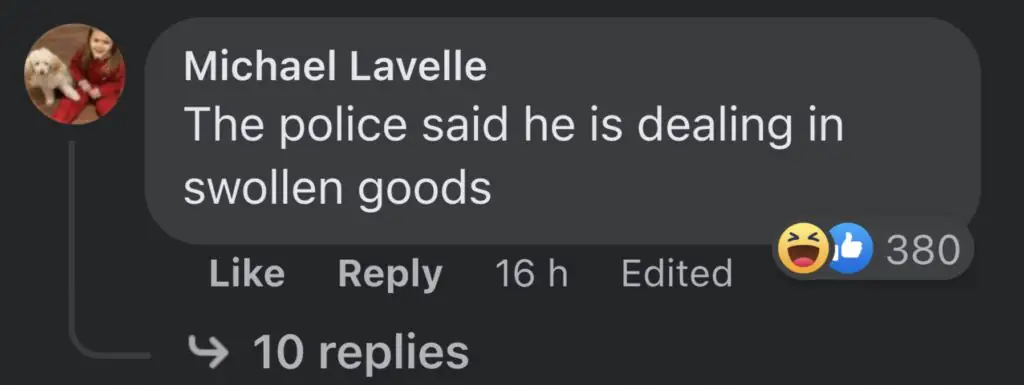
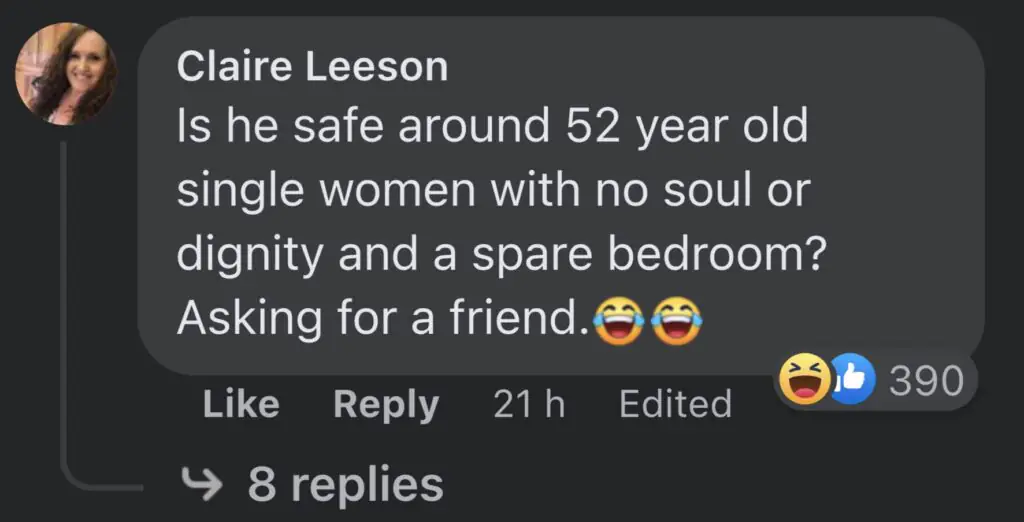
However, it turns out people still love a bad boy, as the post has received more than 66,000 comments - with very few of them actually being of any use to officers.
Yes, due to Cahill's smoldering good looks, he has since been given the nickname of the "fit felon", and the post was flooded with nothing but thirsty comments.
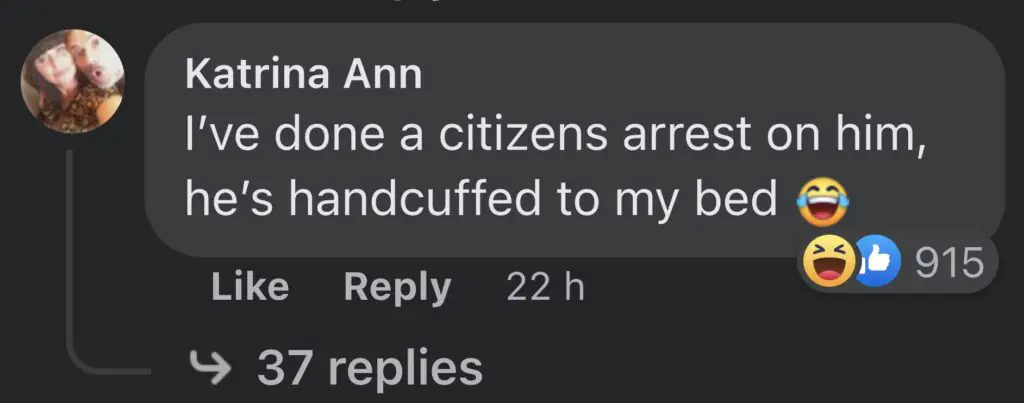
"I’ve done a citizens arrest on him, he’s handcuffed to my bed," one person wrote.
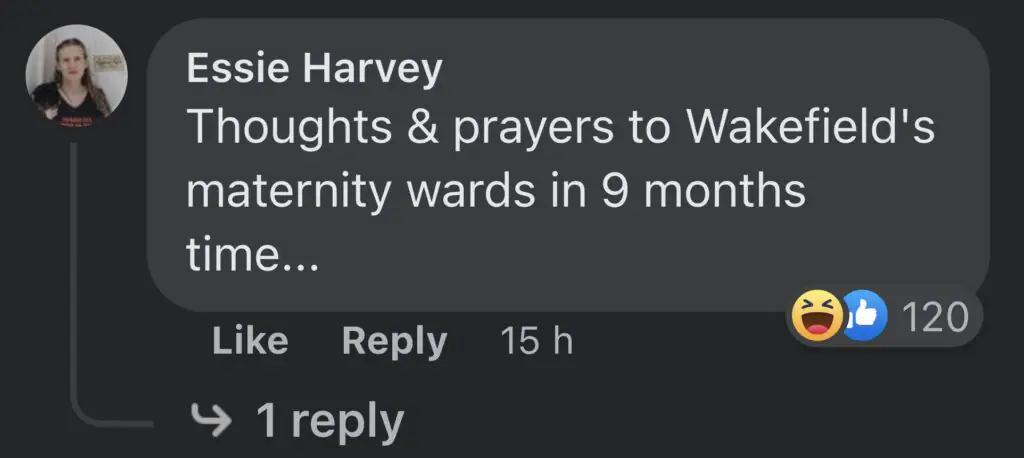
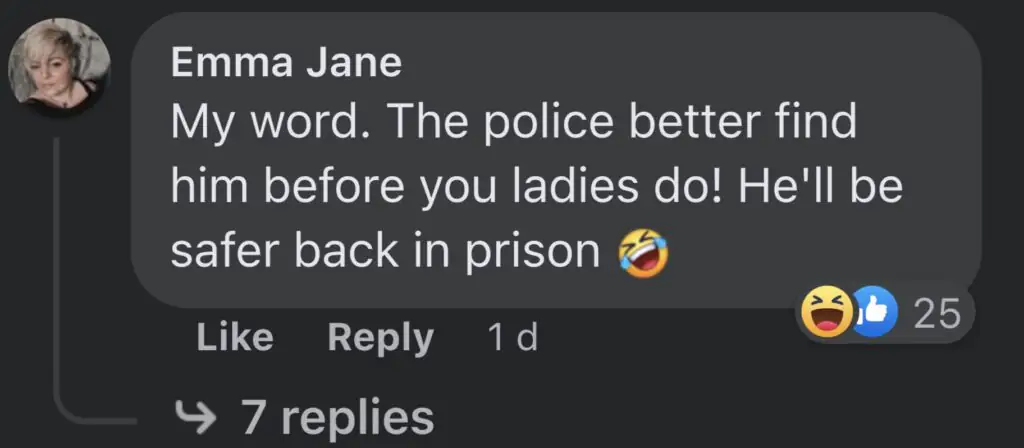
A second added: "Thoughts & prayers to Wakefield's maternity wards in 9 months time..."
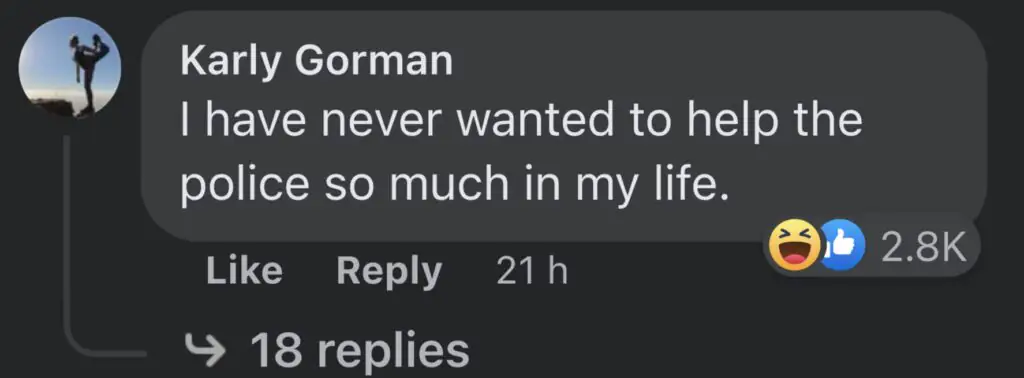
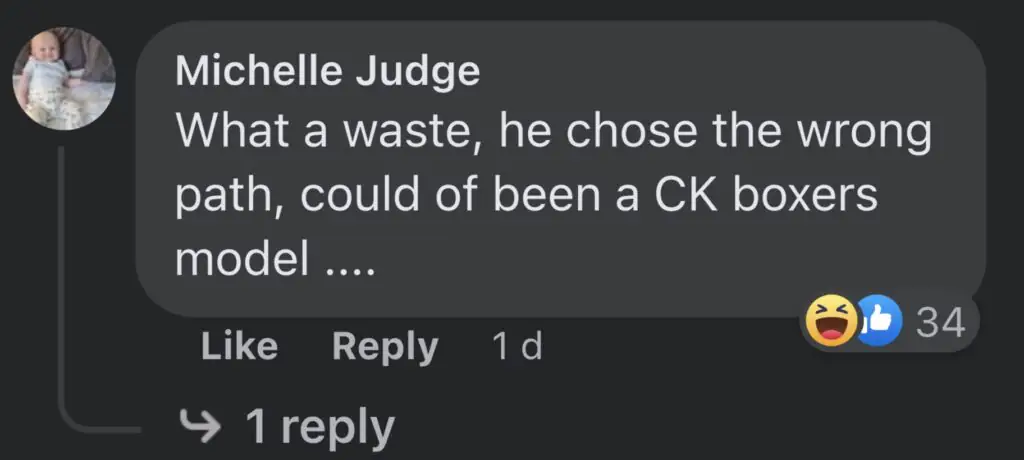
Another Facebook user added: "I have never wanted to help the police so much in my life."
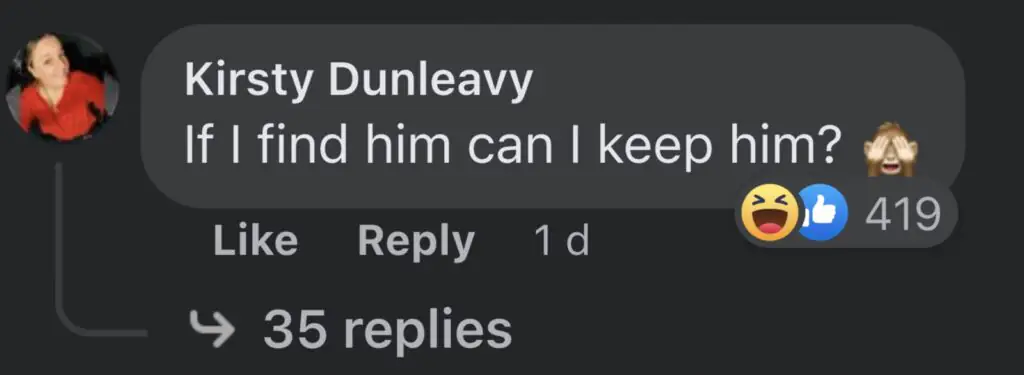
Another very unhelpful tip-off read: "He can't hear the sirens...my thighs are covering his ears."
Credit: Facebook
Credit: Facebook
Credit: Facebook
Credit: Facebook
Credit: Facebook
In all honesty, the comments are absolute gold, so I'm just going to keep going...
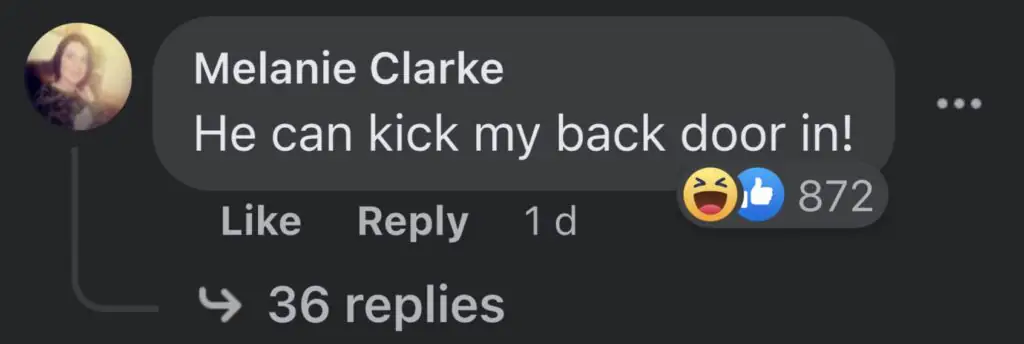
"He can kick my back door in," one person added.
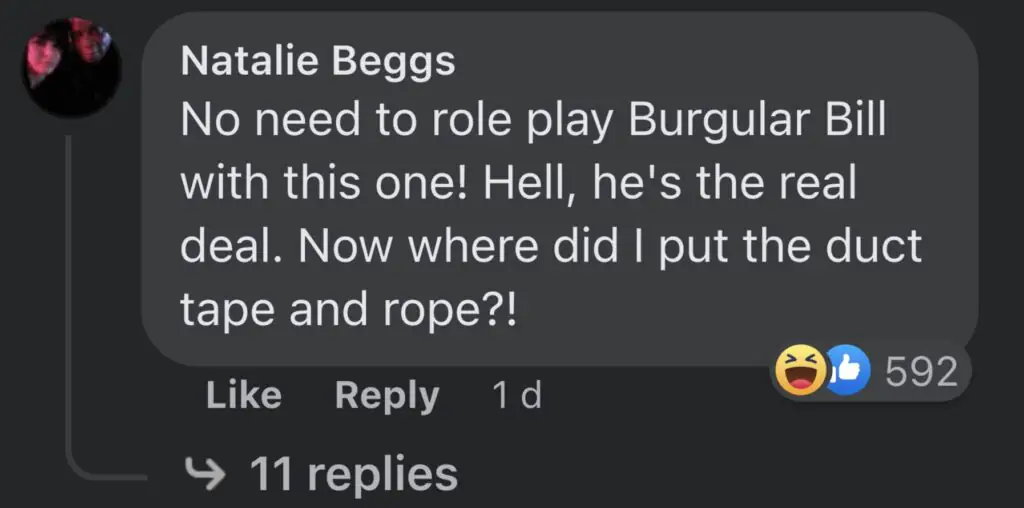
A sixth wrote: "No need to role play [Burglar Bill] with this one! Hell, he's the real deal. Now where did I put the duct tape and rope?!"
Credit: Facebook
Credit: Facebook
Credit: Facebook
Credit: Facebook
Credit: Facebook
If I'm being really honest, these were some of the tamest comments I could include.
And just in case you did have any information for the West Yorkshire Police, information can also be reported anonymously to the independent charity Crimestoppers on 0800 555111 or online.
Brittany Zamora, a 27-year-old married sixth grade teacher in Goodyear, Arizona, was arrested last March for allegedly engaging in a sexual relationship with one of her students. She groomed the victim, a 13-year-old boy, using the school's own social media app, Class Craft, on which teachers and students can chat. The parents discovered the illicit messages through Sentry Parental Control, an app they installed on their son's phone to monitor his activity.
Zamora is accused of having sex with the teen at least four times between February and March 2018. This includes one occasion in her car and one occasion in her classroom at Las Brisas Academy, while another student watched. For one tryst, the victim says she contacted him at midnight, drove to his grandparent's house, and waited for him to sneak outside.
Last January, police documents surfaced revealing a few of Zamora's suggestive text messages, such as "OMG, I love you" and "Omg lol you're so cute baby." During one conversation, she wrote, "I wish you could've stayed after with me." The boy replied, "Me too. I wish I could just hang out with you whenever we wanted." After one sexual encounter, the boy asks to sleep wiht her again, to which Zamora replied, "I know baby! I want you every day with no time limit... If I could quit my job and [have sex with] you all day long, I would."
Records obtained by The Arizona Republic reveal new messages between Zamora and the student. In one conversation, Zamora wrote, "Wyd?" The boy replied: "Thinking about your sexy self." Zamora wrote, "Aww baby (love heart eyes emoji) I wish you were with me." The boy replied, "I want u bby. .. when can we fuck again?" Zamora wrote, "I want you too baby so bad! Whenever we can you know I'm down. Like you for real get sexier to me every day lol." The boy replied: "I want to f*ck you so bad baby those times weren't enough." Zamora wrote, "Me neither baby! I want you every day with no time limit."
The records also include police interviews with the victim, who says their relationship started when he said goodbye to her after class one day, and she pulled him in for a kiss. Their relationship quickly escalated to sexually explicit conversations. "She said she wanted to give me a blow job and my stuff is really big and stuff like that," the boy recounted.
The 13-year-old said they had sex multiple times in Zamora's car and classroom, including one occasion with another male student in the room. He also said they engaged in sexual conduct during class; while the other students watched a movie, Zamora would "touch his stuff" while pretending to look in a drawer. On the app, she sent him a nude photo and a pic of herself in lingerie. The boy told police he sent her nude photos as well. They also exchanged physical notes and love letters, which were confiscated as evidence.
Zamora faces 10 counts of sexual conduct with a minor, two counts of molestation, two counts of furnishing sexually explicit material to a minor and one count of public indecency. She pleaded not guilty and is currently held in a Maricopa County jail on a $250,000 bond.
Netflix's new psychological thriller You follows a creepy bookstore manager who meets a beautiful customer and quickly becomes completely obsessed with her.
But how often do incidents like this happen in real life?
One young woman recently revealed how sinister a meeting with a stranger can become when she posted text messages she had received from a man she met on a train once.
[[imagecaption|| Credit: Twitter/@Lyndahx]]
Lynda, a 20-year-old student from Bromsgrove, England, briefly spoke to an unidentified man on her commute one day. She didn't give him her number, nor her social media, but the next thing she knew, she was getting messages from him.
"Yo it's me ------ from the train the other day... Got ur number from one of ur friends hope u don't mind [sic]," the initial message read.
When Lynda questioned how the man found her friends, he replied he had searched for her on Instagram and asked people they both followed about her.
When she told him she thought this was creepy, he insisted that he just wanted to get to know her and claimed he would reveal the friend who gave him her number on a date.
[[imagecaption|| Credit: Twitter/@Lyndahx]]
[[imagecaption|| Credit: Twitter/@Lyndahx]]
The situation became heated when Lynda told the man he was being "weird and invasive and there is no way you can decide for me that I'm going out with you".
Concluding she had "never been treated properly" and still refusing to reveal who had given out the digits, he called her a "b***h", complaining it had taken days to get her number and she was treating him like a stalker.
[[imagecaption|| Credit: Twitter/@Lyndahx]]
[[imagecaption|| Credit: Twitter/@Lyndahx]]
When Lynda posted the incident online, it shocked social media users, who named the incident "stalkerish" and advised the 20-year-old student to be safe.
"Make sure your curtains are closed sis! And have your security on lock. I have a feeling he didn’t get the number from a friend...," wrote one.
"Sis be safe and look out! He knows you take the train might 'bump' into you there," commented another. "Maybe go to the authorities. They'll probably dismiss you, but maybe your lucky and they keep it on record. He's a little too comfortable with crossing boundaries for this to be his first time."
A third wrote: "No, you are not overreacting one bit. He could have asked you directly, that day on the train, if he could contact you later. He's circumvented getting your consent already, and he's using extortion to try to get you to go out with him? Ew. Good on you for not accepting that."
A convicted pedophile walked 351 miles to meet an underage girl he had been talking to over instant messenger.
The incident took place in Wisconsin, where 32-year-old Tommy Lee Jenkins had begun speaking to a teenager identified only as "Kylee". But little did he know that he was actually speaking to a sheriff's deputy, the US Attorney's Office reported.
[[imagecaption|| Credit: Winnebago County Jail]]
Jenkins harassed the teenager, who he believed to be 14, imploring her to send him explicit photographs and meet him for sex, officials revealed.
According to court documents, the 32-year-old suggested that the girl get drunk with him and meet him in Indiana.
When the girl refused to meet him for sex, he subsequently set off on a 351-mile journey to where he believed she lived in Neenah, Wisconsin. Throughout the journey, the convicted pedophile kept her updated on his physical progress and continued to send her explicit messages.
[[imagecaption|| Credit: Pexels]]
Needless to say, Jenkins' hike did not end the way he expected to when he was confronted by authorities, specifically, officers and the FBI, it was revealed on Friday.
The 32-year-old was subsequently charged with using a computer to persuade, induce or entice a minor to engage in unlawful sexual activity - a crime which could see him behind bars for up to 10 years.
In his messages to "Kylee", Jenkins wrote that he wanted to have 500 children with the teen, beginning with a pregnancy this year, the Oshkosh Northwestern reported.
[[imagecaption|| Credit: Pexels]]
"Our nation faces an epidemic of child sexual abuse, with the Internet making it too easy for predators to communicate with children across the country," said US Attorney Matthew Krueger.
Jenkins' first brush with the law took place in 2011 when he was charged with two counts of repeated first-degree sexual assault of the same unidentified child. These were later reduced to four counts of child abuse, for which he was sentenced to four years on probation in 2012.
Some things are so morally reprehensible to so many people that the thought of a right-minded individual being in any way involved is unthinkable. However, spare a thought for the unsung heroes of crime prevention. In particular, the ones who have to watch content that might make the rest of us feel rather unwell.
Andrew Hughes (name changed) is a cybersecurity expert with experience working on some of the most horrific cases known to police. He spoke to VT to tell us what it’s like to be on the front line in the fight against cybercrime.
[[imagecaption|| Credit: Getty]]
VT: What are some of the cases that you’ve worked on?
“One of my first cases was for Durham Police. This guy, I think he was a postman, was texting 13 and 14-year-old girls. My job was to prove that he had sent pictures to this girl's phone. That included going through her pictures that she had sent and you have to describe them like ‘girl, believed to be X, in knickers and bra’. So you would have to write about it and it was horrible, especially considering I was only 20 at the time.”
VT: In regards to these cases, would you have to present evidence in court?
“As the job goes, you should always assume that it's going to end up in court. Otherwise, the job didn't concentrate on might end up in court. It’s bad in two ways. Number one, it makes you look bad professionally. You’ve got the whole jury, the law firm, the lawyers, the judge, all the public servants then they say ‘this guy doesn’t know what he’s talking about’. And it’s quite bad on you, too - because you’ll know when you're being torn apart.
"You don’t want to distress the victim, the family or the jury"
“Even if you know that it's for a small thing, the defence lawyer or the prosecution - whoever they’re acting for - will still rip you for that very small error. So you should always assume that it’s going to happen.”
VT: In terms of the kind of child porn cases, did you ever have to describe evidence that wasn't allowed to be shown in court due to its nature?
“So when we when we give reports, we always describe what we find and it’s levelled as well. It's called the COPINE scale - and it’s one to ten, ten being the worst. So you would say ‘I found this many level fives, this many level tens’ etc. Fairly low on the scale you’ve got stuff like ‘pictures of children in a suggestive manner’. It gets worse from there.
“That’s what the police and the CPS [Crown Prosecution Service] use to grade how severe it is. So instead of giving it to them, to save them that hassle, we say ‘we found this many of this type’ and you describe them. So they can look at them if they want, but usually that’s for the courts to consider themselves and decide.”
[[imagecaption|| Credit: Getty]]
VT: And that wouldn’t be shown to a courtroom in a semi-public sphere?
“It depends on the case. I think they would omit that if they could. If it was very high profile, they might want to make an example of the person by showing how bad the material is. But usually they would want to try and omit it where possible. You don’t want to distress the victim, the family or the jury.
"People use their phones for everything. It’s more the grooming cases which, if anything, are just as bad"
“The funny thing is, these forensic firms and the police are the only people who are allowed to store this kind of material. So no one else really ever sees it, unless you're the one who's buying it or producing it.”
VT: Do you have an area of speciality when it comes to computer forensics?
“What I specialise in is data theft - so evidence of people stealing material from businesses or in public scenarios as well. Say you borrowed my USB stick. I could prove whether you took some files off there when you shouldn’t have done. Mostly it’s corporate but it can be applied to any sort of scenarios. And mobile devices is another one that I specialise in.”
[[imagecaption|| Credit: Getty]]
VT: And is specialising in mobile devices quite important, when it comes to the cases you mentioned with the police?
“Definitely. People use their phones for everything. It’s more the grooming cases which, if anything, are just as bad. In the messages, the person who’s underage will be saying ‘I’m only this age’ to throw them off if they’re being creeped out. And they'll go ‘yeah, I don't mind lol’. They are still fully asking for these things that they shouldn’t be.”
VT: Did you have to have any sort of psychological tests or background checks before working on child abuse cases?
“Nothing, no. I was CRB checked when I joined but that wasn’t subject to my employment. The CRB check was supposed to happen before I started working on the cases but it didn’t. Purely because of workload. They relied on the new staff coming in to manage the workload of people who were leaving at the same time. Otherwise, they fell back and if they fell back, they lost the contracts.
"It's absolutely fine to want to leave because it is quite horrifying stuff. But you just sort of deal with it"
“It was very clear, if you missed four weeks’ worth of deliveries then the contract’s done. So we just had to dive in. Hence that first case that I had. They were literally like ‘this is the only one we can give to you - go’. There was support and there was guidance but you’re pretty much on your own.”
VT: Do you become desensitised to what you’re seeing?
“Yeah, I think you do. And so does anyone else in this job. You know, the child protection people, the police, the counsellors, the lawyers who deal with this sort of thing - I think they all do. You either desensitise yourself and get on with the job or it bothers you and you leave. It's absolutely fine to want to leave because it is quite horrifying stuff. But you just sort of deal with it.”
VT: Is there ever much humour in the office or is the work simply too sombre?
“Yeah, a lot of it. It sounds quite sick, but you do try and have a laugh. It’s difficult to describe. I could definitely tell by humour, by spending a lot of time with someone, without asking, if they’ve done this sort of job. Purely because most of the people I work with would have ended up in that situation anyway but sometimes you know. You’ll say ‘this guy’s a bit sick - he’s probably done police work’.”
[[imagecaption|| Credit: Getty]]
VT: The subject matter is still horrendous, so is this a coping mechanism?
“Yeah, definitely. I've seen some people grooming younger people and sending skat pictures and you look at it and it’s pretty sick but you laugh at it. Otherwise, you spend all day with this stuff in your head and it grinds you down quite a lot. Whereas if you get everyone round and everyone says ‘oh, that’s disgusting, that’s horrible’ and have a laugh, then you all sort of calm each other down a bit. You support each other that way.”
VT: Is the case of Matthew Falder, the prolific internet paedophile found guilty of 137 charges, a course for concern when it comes to what's possible using the dark web?
“Yeah. The dark web hasn't been around for that long and you used to have these weird chat rooms which were on the internet. But the dark web is this completely other-side-of-the-spectrum different sort of hole. No one really knows how big it is or what’s on there. It’s not regulated. It’s completely out there.”
[[imagecaption|| Credit: Getty]]
VT: Are there are a lot of police operations working against this kind of crime on the dark web?
“Like I said, it's unregulated. But from what I’ve heard, there are undercover dark web guys. A lot of the time, [the perpetrators] meet socially because they know that nothing can attribute them to their contacts because it’s all on the dark web. I have heard of a few attempts to meet up with people - coppers meeting up with paedophiles. Just like any other sting operation.”
VT: Is that a big area of focus for police or is that pretty uncharted waters?
“The fact is, in terms of child protection, that’s a police matter and the police just have no money to deal with that sort of stuff. They’re struggling to deal with people in the streets. They’re certainly not neglecting child protection in terms of digital forensics, but they’re limited in their options when it comes to proactively going out and finding these guys.”
VT: Have there been any big busts or interesting finds in the other cases?“Nothing major but the drugs ones are quite interesting. Back in the day when BlackBerrys were huge, we would have to go through them. Every BlackBerry had a memory card and any media would save onto it. And it’s really easy to recover deleted stuff from these memory cards.
"I think kids shouldn’t be online as young as they are. Especially because it’s just so open. It’s like a playground for anyone"
“So you’d get them and they’re like ‘no, I’m clean, I’ve done nothing wrong’ and they may have had messages on there which said ‘I’ve got this, I’ve got that, let me know if you need anything’ but BlackBerrys had really strong encryption.
“However, the memory card would tell a different story. It would have him wearing a 20 grand chain or with a brand new Beemer, when he’s unemployed, huge bags of weed, huge bags of coke, the girls they were banging… It wasn’t a big bust but it was such a quick win for us - just that little glitch in being able to take things off the memory card and not the phone.”
VT: Do you think social media plays a part in exposing children’s inherent vulnerabilities?
“Yeah, I do. I think kids shouldn’t be online as young as they are. Especially because it’s just so open. It’s like a playground for anyone. It’s a playground for kids. They’ve got movies, they’ve got games and all this kind of stuff. And it’s a playground for the other guys who are like ‘great, I’ve got access to these kids and if I’m careful, and I cover my tracks, no one knows I’m doing it’.”
[[imagecaption|| Credit: Getty]]
VT: What, in your opinion, should parents do to protect their children online?
“I would limit it, time-wise. That’s quite an easy first step. I would also limit it to phones and tablets because Windows is a very easy thing to hack into. Because it’s so widespread, there are so many vulnerabilities that are well known and sold on, it’s quite insecure by nature.
“Whereas Apple, iPhones, Samsung tablets - they’re less vulnerable. More so iOS. They’re not as vulnerable. I would also be careful about buying internet-connected devices, such as baby monitors and kid laptops. There was a company that made kid laptops aimed at two to seven-year-olds, to learn your numbers and that kind of stuff. There was a vulnerability it that allowed anyone on the internet to look through the webcam, control it, add messages and they’re not secure at all. They’re just sold on cheap to parents.”
[[imagecaption|| Credit: Getty]]
Andrew now works on the corporate side of cyber security but is acutely aware of the life experience he gained while working for the police. Looking over this kind of material is surely an upsetting job but, inevitably, someone has to do it.