


Entertainment News5 min(s) read
Stephen Hawking's wife made confession about their marriage

A new biography of renowned physicist Stephen Hawking reveals an apparently troubling side of his personal and professional behavior, contrasting sharply with his celebrated public image.
Written by Graham Farmelo and titled Hawking: His Life and Work, the book explores how the scientist allegedly treated his family, wives, and academic colleagues over the decades.
While Hawking revolutionized humanity's understanding of black holes and lived for more than 50 years after an ALS diagnosis, Farmelo describes him as an authoritarian figure who could be callous toward those closest to him.
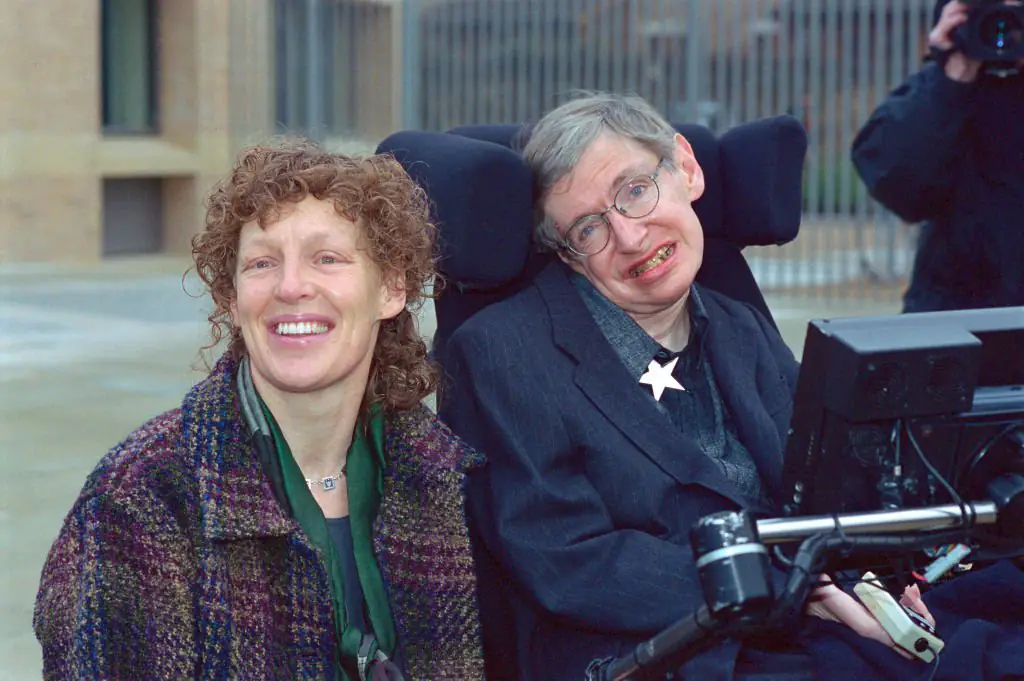
One of the most striking revelations centers on Hawking's second wife, Elaine Mason, whom he married in September 1995 after leaving his first wife, Jane Wilde.
Their relationship eventually raised serious concerns among his family and medical caregivers. Following their 2007 divorce, Elaine offered a stark assessment of their life together in a letter to Hawking's sister Mary, writing that she had felt like "Stephen’s prisoner."
Turmoil across two marriages
The biography details significant strain in both of Hawking's marriages. Before marrying Elaine, Hawking was married to Jane Wilde, whom he met shortly before being diagnosed with Amyotrophic Lateral Sclerosis at age 21 in 1963.
As his physical abilities declined, Jane handled much of his daily care while raising their three children. She later compared her husband to Shakespeare's King Lear, stating he was "possessed of a massive and fractious ego." She also wrote, "From being authoritative in the past, he became authoritarian."
The marriage unraveled after Hawking began an affair with Elaine, who worked as one of his nurses. During a 1989 argument at a holiday cottage in France, their son Timothy overheard Hawking issue an ultimatum regarding Jane's close relationship with family friend Jonathan Hellyer Jones: "If Elaine goes, Jonathan goes."
Later that year, on Christmas morning, Hawking exchanged gifts with his family before making a dramatic exit to be with Elaine. His daughter Lucy recalled the moment, saying, "He gave us all our presents in the morning and then my dad made this big thing of going off with Elaine, which I thought, [and] still think, was unnecessarily brutal."
During Hawking's subsequent marriage to Elaine, caregivers grew alarmed in 1999 after the physicist suffered several unexplained injuries, including cuts and broken bones. Nurses contacted university officials and Hawking's daughter, sparking two police investigations into potential domestic abuse.
Hawking strongly defended his wife at the time. "The stories in the media are completely false," he said. "My wife and I love each other very much. It is only because of her that I am alive today."
In March 2004, police closed the case after finding "no evidence to substantiate any assertion that anyone has perpetrated any criminal acts against Professor Hawking," and doctors observed that his bones were unusually brittle.
Controversial outings and associations
Beyond his domestic life, Farmelo's book examines Hawking's well-documented interest in adult entertainment and his connections to controversial figures. Despite his severe physical limitations, Hawking regularly visited strip clubs, including Stringfellows in London.
Club owner Peter Stringfellow recalled asking the physicist whether he wanted to talk about the universe or watch the dancers, to which Hawking replied, "The girls."
At his 60th birthday party in 2002, Hawking enjoyed a serenade from a Marilyn Monroe impersonator and watched can-can dancers perform what Farmelo termed an "exuberant, raunchy routine."
The biography also addresses Hawking's March 2006 trip to the US Virgin Islands for a physics conference co-sponsored by Jeffrey Epstein's foundation. Hawking attended a barbecue on Epstein's private island and took a submarine ride, during which Epstein later claimed in a 2017 text that he had "duct-taped" Hawking's head to a chair so he could go underwater.
Caltech physicist Kip Thorne said Epstein "appeared to be a sort of science groupie" and confirmed the attending scientists saw no abuse of underage girls, which became public knowledge weeks later.
Farmelo also clarifies that a 2026 photograph showing Hawking between two women in bikinis was actually taken in Florida in 2007 with his caregivers and "had no connection to Epstein."

Ruthlessness in science
Hawking's domineering nature extended to his immediate relatives and academic peers. His father, Frank, wrote in a journal years earlier that Stephen tended "to bully [his younger sister] Mary and to be very selfish," adding after one vacation that "Life was simpler without him."
Decades later, Hawking's mother, Isobel, remarked that he had become "a different person from the one I knew," while Mary said he "made no effort to communicate with either of us, except when we were of use."
In the 1990s, Hawking directed similar hostility toward Cambridge doctoral student Andrew Farley, whose research challenged Hawking's theory that black holes permanently destroy information. Instead of engaging in standard academic debate, Hawking repeatedly urged the university to expel Farley from his PhD program.
Farmelo calls the campaign "a disturbing example" of Hawking's authoritarian behavior and "an extreme position to take, by any standards." Although Farley earned his degree, his confidence was badly damaged, and Hawking later reversed his own scientific stance on black holes in 2004.
As longtime friend Kip Thorne told police during the 2004 investigation, "Although Stephen may appear helpless, he is one of the least helpless people I know."