ADVERT
UK2 min(s) read
Published 12:08 08 Jul 2026 GMT
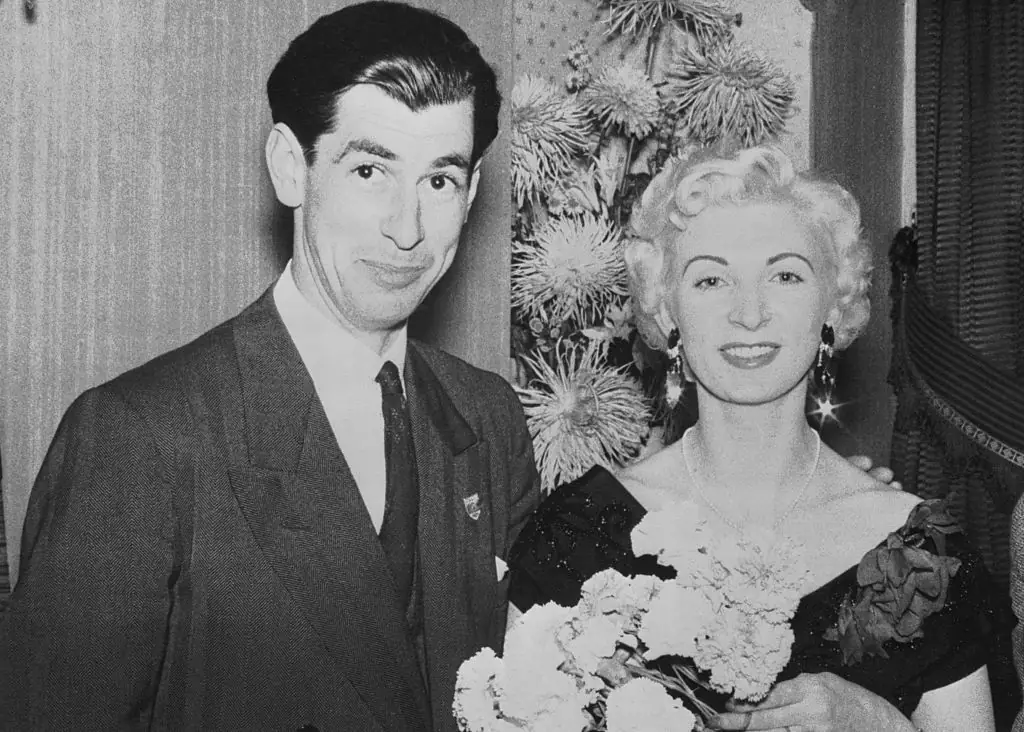
The last woman to be hanged in the United Kingdom has been granted a pardon by the King, 71 years after her execution.
On Wednesday (July 8), King Charles granted a conditional pardon to Ruth Ellis, a nightclub hostess who was executed at London's Holloway Prison on July 13, 1955, after being convicted of murdering her partner, David Blakely.
The late woman's family has been calling for a pardon, saying evidence that she was badly treated by her Blakely was never heard at her trial.
The UK's Deputy Prime Minister, David Lammy, announced the decision in the House of Commons.
"I have the honour to say that His Majesty the King has accepted our advice to grant Ruth Ellis a conditional pardon, the last woman to be hanged in the United Kingdom," he said.
"While the pardon does not claim she was innocent of killing David Blakely, it replaces the death penalty with a sentence of life imprisonment to recognise a profound injustice in this exceptional case," he added.
Ellis stood trial at the Old Bailey's Number One Court on June 20, 1955.
During proceedings, prosecutor Christmas Humphreys asked her one question: "When you fired the revolver at close range into the body of David Blakely, what did you intend to do?"
She responded: "It's obvious when I shot him I intended to kill him," per The Independent.
The confession proved decisive, as after deliberating for just 20 minutes, the jury found the 28-year-old guilty of murder.
Under the law at the time, a conviction carried a mandatory death sentence.
She was executed by hangman Albert Pierrepoint at 9:01AM, and was buried in an unmarked grave at Holloway Prison.
Ellis' death sparked public outrage and became a major moment in the growing movement to abolish capital punishment in Britain, which was eventually suspended a decade later in 1965.
us4 min(s) read
Published 11:40 23 Apr 2026 GMT
Warning: This article contains discussion of sexual abuse, which some readers may find distressing.
The last woman who was executed in the US had a short message shortly before her death.
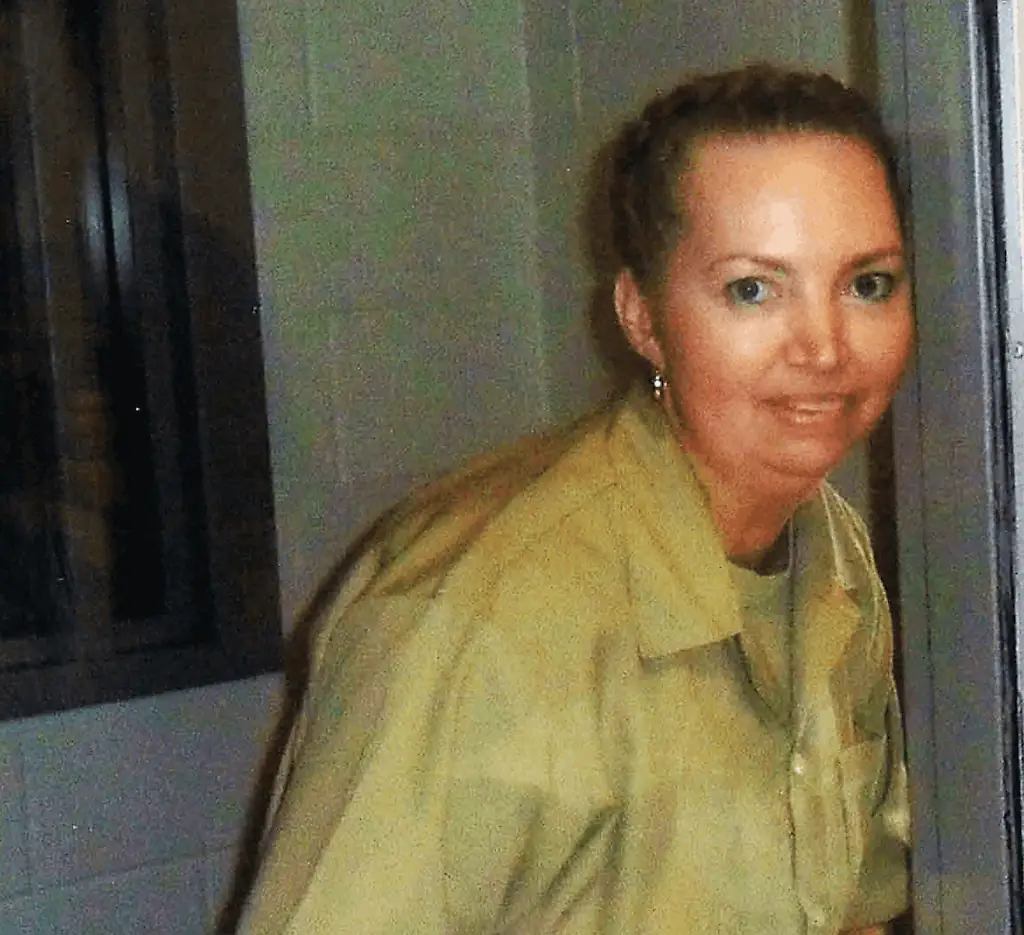
Lisa Montgomery was sentenced to death on April 4, 2008, a year after she confessed to killing a pregnant woman and kidnapping her baby.
The then-36-year-old strangled the pregnant Bobbie Jo Stinnett, 23, in Missouri in 2004, before performing a C-section on the body to cut her unborn baby out of her womb.
Stinnett would bleed to death as a result of her injuries, but the baby was healthy and safely returned to her family.
At the time of Montgomery's death, she was the only female inmate on federal death row in the US, being administered the lethal injection at a prison in Terre Haute, Indiana, on January 13, 2021.
The US Supreme Court lifted a last-minute stay of execution to allow proceedings to go ahead.
She became the 11th federal death row inmate to be executed by the Trump administration, following a 17-year hiatus in federal executions.
Montgomery also became the first female federal inmate to be executed by the US government in 67 years, after being pronounced dead at 1.31AM back in January 2021.
Her lawyer, Kelley Henry, condemned those who took part in the execution, claiming they "should feel shame."
She further accused the Trump administration of “unnecessary and vicious use of authoritarian power.”
Henry added on X: “The craven bloodlust of a failed administration was on full display tonight,
“Everyone who participated in the execution of Lisa Montgomery should feel shame.”
She further claimed: “The government stopped at nothing in its zeal to kill this damaged and delusional woman.
"Lisa Montgomery’s execution was far from justice. We should recognise [it] for what it was: the vicious, illegal and unnecessary use of authoritarian power. We cannot let this happen again.”
The death row inmate's face mask was removed during the process, after she was taken from a Texas prison to the Terre Haute facility.
When the prison guard asked if she had any last words, witnesses reported via BBC that she simply replied "no."
Given that she said nothing else, Henry claimed: “I don’t believe she has any rational comprehension of what’s going on at all.”
Montgomery was supposed to be executed the preceding month, but it was delayed after two of her lawyers contracted Covid.
Montgomery's lawyers claimed that she was permanently scarred emotionally, and that the "sexual torture" she experienced as a child worsened mental health issues that ran in the family.
They added that this torture included gang rapes as a child.
Prosecutors claimed at the trial that she was faking mental illness, highlighting that her killing of Stinnett was planned and involved detailed planning, such as research on how to perform a C-section.
But Montgomery's lawyer explained that testing and brain scans had supported the mental health diagnosis, adding: “You can’t fake brain scans that show the brain damage.”
They added that on top of being sexually and physically abused by her stepfather, she was also trafficked by her mother, according to her family members.
They explained that she tried to escape her horrible home life by getting married at 18, but both of her marriages resulted in more abuse.
She would lie about being pregnant numerous times, according to her former husbands, though she managed to give birth to four children of her own.
Montgomery's team claimed that the violent treatment she went through in her life was the same as being tortured, alleging that she was suffering from psychosis and was out of touch with reality at the time of the murder.
If you've been affected by any of the issues in this article, you can contact The National Sexual Assault Hotline on 800.656.HOPE (4673), available 24/7. Or you can chat online via online.rainn.org
us2 min(s) read
Published 16:41 06 Jul 2022 GMT
A California Governor has pardoned a woman who was convicted of murder as a teenager for killing a man who sexually abused and trafficked her.
Sara Kruzan was just 16 in 1994 when she robbed and murdered George Gilbert Howard in a motel room in Riverside, California. The following year, she was found guilty of first-degree murder and sentenced to life in prison.
According to the Los Angeles Times, it was reported that Kruzan met Howard when she was 11 years old, and soon after their meeting, Howard trafficked her and forced her to have sexual intercourse with other men.
In 2011, then-Governor Arnold Schwarzenegger reduced Kruzan's prison sentence to 25 years and included in his clemency petition of the chance of parole.
Two years later, in 2013, a Riverside judge lowered her sentence even further, and Kruzan was eventually released from prison that year when she was 35 years old. However, as the publication reported, her conviction impacted her ability to obtain work.
Watch Sara speak out back in 2014:On July 1, Governor Newsom pardoned Kruzan, who was sentenced to life imprisonment without parole, along with 17 others who were also granted clemency.
In Newsom's pardon, he declared that Kruzan had "provided evidence that she is living an upright life and has demonstrated her fitness for restoration of civic rights and responsibilities".
"Since then, Ms. Kruzan has transformed her life and dedicated herself to community service," Newsom said. "This act of clemency for Ms. Kruzan does not minimize or forgive her conduct or the harm it caused. It does recognize the work she has done since to transform herself."
While a governor's pardon does not overturn a conviction, a press release from the governor's office explained that the pardon does work to remove "counterproductive barriers to employment and public service".
However, Kruzan is still a convicted felon in California. Her legal team is now working to remove the criminal conviction and has sent a formal request to the Riverside County district attorney's office, asking them to examine the case again.
According to the LA Times, Kruzan says that the decision has released "these invisible chains that I didn't realize were still taloned in me".
"Do I wanna move forward with love? Or do I wanna move forward with fear, anger, and pain?" Kruzan said. "Now, I wanna move forward in love. And that takes a lot of courage to do that."
us3 min(s) read
Published 14:53 23 Nov 2025 GMT
You might have seen the news recently that the US state of Tennessee is set to execute the first woman for nearly 200 years, convicted murderer Christa Pike.
This is the story of the last woman to be executed in the United States - Lisa Montgomery.
Montgomery was sentenced to death in 2007, and that sentence was carried out via lethal injection at a prison in Terre Haute, Indiana, in January 2021.
Her case is a harrowing one, a seriously brutal one, and one that leaves many questions about the death penalty due to Montgomery’s team claiming she was mentally ill.
The 52-year-old was found guilty of strangling a pregnant woman then cutting the baby out of her and kidnapping it.
The terrible incident occurred in Missouri in 2004, when victim Bobbie Jo Stinnett was just 23-years-old.
Stinnett bled to death as a result of the injuries Montgomery gave her, but remarkably the baby survived and was returned to her family later.
When she was killed, Montgomery became the first woman to be federally executed in 67 years.
Since then other women had been killed, but by the state rather than the federal government.
During the process of carrying out the sentence, Montgomery was reportedly asked if she had any last words and replied simply ‘no’.
While her actions were no doubt shocking and wrong, Montgomery’s lawyer argued that she was a ‘damaged and delusional woman’ and said that the sentence was ‘far from justice’.
Kelley Henry, who had represented Montgomery, argued that everyone who took part in the execution ‘should feel shame’.
"The government stopped at nothing in its zeal to kill this damaged and delusional woman," she said.
"Lisa Montgomery's execution was far from justice."
Her argument was based around the fact that her client had claimed to be mentally ill and traumatized from abuse as a child.
It’s true that she was sexually and physically assaulted to a shocking extent by her father as a child - treatment that was tantamount to torture, her lawyers argued.
They further argued that at the time of the crime she was in a period of psychosis and detachment from reality.
However, the victim’s family argued that she deserved to be executed regardless because of the horrific and violent nature of her crimes.
She lured Stinnett in after the pair realized a shared love for dogs online.
When visiting her house, she overpowered the young woman and strangled her before cutting her baby out of her.
When police found Montgomery, she was cradling the baby claiming it as her own.
Eventually she confessed to the murder and was sentenced to death.
us2 min(s) read
Published 10:48 13 Jan 2021 GMT
The only woman on death row in the US, Lisa Montgomery, has been executed.
After a last-minute stay of execution was lifted by the US Supreme Court, the 52-year-old was killed by lethal injection at a prison in Terre Haute, Indiana, the BBC reports.
Montgomery's case attracted widespread media attention after her lawyers argued against her execution on the grounds that she was mentally ill and had suffered abuse as a child.
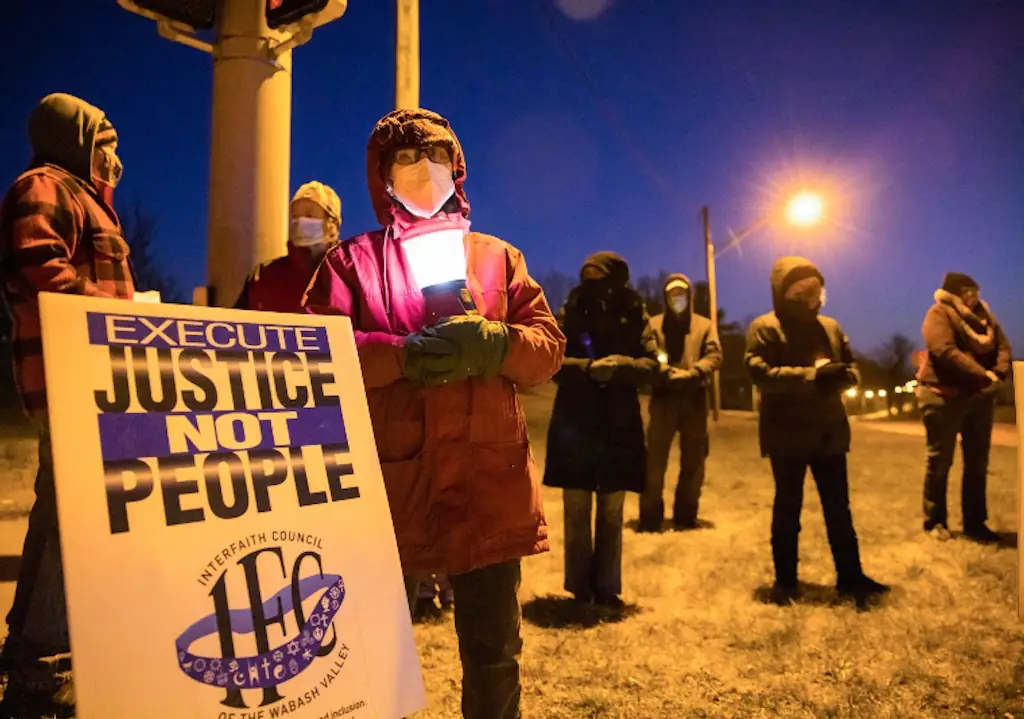
Pictured below are anti-death-penalty protestors who attempted to save the 52-year-old's life.
Montgomery was sentenced to death in 2007 after she strangled a pregnant woman to death in Missouri before cutting out and kidnapping her baby.
Her victim, Bobbie Jo Stinnett, 23, went on to bleed to death.
Montgomery is the first woman to be put to death by the US government in 67 years.
Witnesses report that Mongtomery's face mask was lifted at the execution, and she was asked if she had any last words, to which she replied "no".
The 52-year-old was pronounced dead at 01:31 (06:31 GMT).
As per the BBC, Montgomery's lawyer, Kelley Henry, said that everyone who had participated in the execution "should feel shame".
"The government stopped at nothing in its zeal to kill this damaged and delusional woman," she said in a statement. "Lisa Montgomery's execution was far from justice."
The execution was postponed twice; first as a result of the ongoing pandemic and a second time by a judge, before it was cleared by a Supreme Court ruling to take place in the early hours of Wednesday (January 13).
Late on Monday evening, a judge halted the execution until a mental competency hearing had been held, with Montgomery's lawyers drawing attention to the fact that she was mentally unwell and had been born with brain damage.
Montgomery was physically and sexually abused by her father, the BBC reports, and family members revealed that she was trafficked by her mother, with her lawyers comparing what she endured to torture.
It was argued by her defense team that at the time of her crime, she was psychotic.
This view was supported by 41 current and former lawyers and human rights groups including the Inter-American Commission on Human Rights.
uk news4 min(s) read
Published 10:04 16 Jul 2025 GMT
A British grandmother awaiting execution by firing squad in Bali has issued a chilling final wish.
Lindsay Sandiford, a former legal secretary from Redcar, was arrested in May 2012 after arriving in Bali from Bangkok. Authorities found £1.6 million ($2.1 million) worth of cocaine in her suitcase – and she's spent more than a decade awaiting execution ever since.
Indonesia’s drug laws are among the strictest in the world. Trafficking offences are often punished by execution, typically by firing squad.
Convicted individuals are taken to a field, offered the choice to sit or stand, and shot by a line of armed soldiers aiming for the heart. If the prisoner survives the initial volley, the commander is required to deliver a final shot to the head.
Although executions are rare, the threat is very real. Indonesia last carried out executions in 2015, but over 130 people (both Indonesian nationals and foreign citizens) are currently on death row.
At the time of her arrest, Sandiford claimed she had been coerced by a criminal gang who had threatened her family, The Guardian reported at the time.
However, her story changed during police questioning. Facing the possibility of a death sentence, she admitted to being recruited by Julian Ponder, a British antiques dealer living in Bali, and his partner, Rachel Dougall. Sandiford later participated in a police sting operation that led to the arrest of Ponder and another man, Paul Beales.
Dougall and Beales were not charged with trafficking. Dougall was sentenced to one year in prison for failing to report a crime, while Beales received four years for possession of hashish. Ponder was convicted of narcotics possession and served six years in prison. Sandiford, despite cooperating with police, was charged with trafficking and ultimately sentenced to death.
Her defence team argued she had been forced into smuggling and was suffering from mental health issues. Even the prosecution had requested a 15-year sentence rather than execution. But the panel of judges imposed the death penalty in January 2013.
Unable to afford a lawyer, Sandiford relied on a fundraising campaign to bring an Indonesian lawyer to Bali for her appeal, which was ultimately rejected. A final appeal to the Indonesian Supreme Court was also unsuccessful.
Since then, she has been held in Kerobokan Prison, a facility originally built for 300 inmates but now holding more than 1,400, according to the Daily Mail. Riots and violence are reported to be common. Sandiford has spent her time knitting items to sell in support of her legal efforts and has taught the skill to fellow inmates.
Heather Mack, an American who served a 10-year sentence in the same prison for the murder of her mother, described Sandiford as becoming increasingly isolated. "I am friends with Lindsay but she has been difficult to speak to recently," Mack said, per The Mirror. "She spends all day pretty much alone in her cell and doesn't mix so much with the other prisoners. She snaps at me for no reason but I still make an effort with her."
Mack also recounted the moment Sandiford witnessed two fellow inmates being taken away to be executed. "They had turned their lives around and were different people to when they were convicted, so everyone thought they would be OK," Mack said. "But when Lindsay witnessed them being taken away to face death, she realised that her own end was nearing. That's when the stark reality set in."
Sandiford has since spoken openly about her state of mind and her acceptance of what may come. "It won't be a hard thing for me to face anymore," she told Mack. "I might not have chosen this kind of end, but then again, dying in agony from cancer isn’t exactly appealing either. I do feel I can cope with it. But when it happens I don't want my family to come. I don't want any fuss at all. The one thing certain about life is no one gets out alive."
Despite her situation, she has expressed gratitude for having lived to see her children grow up and to meet her grandchildren. Her chilling final wish? "My attitude is 'If you want to shoot me, shoot me. Get on with it'," she said.
Sandiford’s story is a stark reminder of the high stakes faced by foreigners accused of drug trafficking in Indonesia.