


UK7 min(s) read
Former Scientologist who now protests against religious movement reveals biggest myth that people get wrong

A former Scientologist who spent years recruiting people into the organization has opened up about what he believes is one of the biggest misconceptions surrounding the controversial movement.
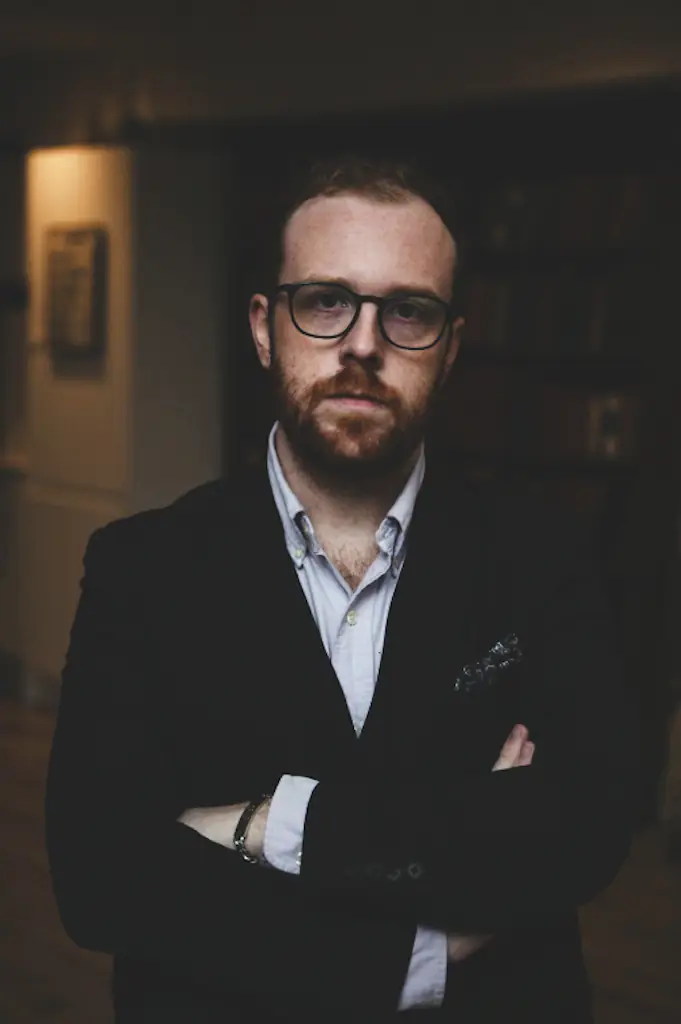
Alex Barnes-Ross joined the Church of Scientology in London at just 15 years old and eventually rose to become its director of book sales, a role that saw him spend countless hours bringing new members into the church.
Today, he is one of the UK’s most outspoken former Scientologists.
Through his YouTube channel, Apostate Alex, and protests outside Scientology buildings around the country, he now campaigns against the organization and pushes for greater protections for survivors of high-control groups.
'A totalitarian, extremist belief system'
Scientology was founded in the 1950s by L. Ron Hubbard, and it is defined as a religion providing a precise framework for understanding "one’s true spiritual nature and one’s relationship to self, family, groups, Mankind, all life forms, the material universe, the spiritual universe and the Supreme Being," according to the Church of Scientology’s website.
For decades, the organization has faced severe criticism. In an exclusive interview with VT.co, Barnes-Ross denounced the movement as a "totalitarian, extremist belief system," accusing it of human trafficking, modern slavery, and aggressively harassing critics due to a lack of government oversight.
The ex-member explained that much of his activism now centers around changing UK legislation surrounding coercive control.
"I've really been kind of leading away on the legislative change that we need here in the UK. So, for example, at the moment, coercive control is recognized as a crime under the Serious Crime Act 2015, but only when it occurs within a domestic setting.
"So if your boyfriend, your wife, your domestic partner, were to coerce and control you, it's an offence. But if anybody else was to do exactly the same thing, it's not a crime," he explained.
He said he is working alongside many groups, including the Family Survival Trust, to push for legal reforms that would also apply to religious groups and cults "because they use the same coercive control tactics, but it's not currently an offence".

The misconception people still get wrong about 'disconnection'
One of the most controversial practices linked to Scientology is "disconnection," where members are encouraged to cut ties with certain people in their lives.
But according to Barnes-Ross, many people misunderstand how the policy actually works.
He said the idea that you have "no communication" with your family, with your friends, loved ones, is "not the case".
Instead, he explained that the issue comes down to whether someone is seen as critical of the organization.
"If your relative is critical of the organization, then you're not allowed to speak to that person… you're not allowed to have any relationship or communication whatsoever with that person," he said. "It doesn't matter whether they're a family member, a friend, or a distant colleague or anything.
"Regardless of who they are, if they're critical [of] Scientology, you're not allowed to have any communication with them," he added.
Barnes-Ross said his own parents were never Scientologists and were unhappy about him devoting his life to the church as a teenager.
"You know, I signed the one billion-year contract dedicating my life to work with this organization. And so my parents weren't overtly against it in terms of they never spoke out publicly or anything, but it was enough of a problem that Scientology was, let's say, coaching me on how to handle that situation. And it came very close to disconnecting from my parents," he revealed.
While he never cut ties with them, he revealed he had disconnected from his uncle, who later passed away, before they were able to repair their relationship.
.jpg_LXZ6vi?tr=f-webp,q-70,w-1024)
'The policy is to destroy my life utterly'
Barnes-Ross shared that he has faced years of intimidation and harassment since publicly criticizing the religion.
"I am the target of a prolific and sustained campaign of harassment, orchestrated by the Church's Office of Special Affairs, and Scientology has a practice called fair game," he told us.
"Scientology claims that the fair game policy was cancelled, but if you actually read it, the cancellation says, 'We're cancelling the policy known as fair game, but the treatment of suppressive people, i.e., ex-members and critical people, remains the same.' So, on paper, technically, the policy is cancelled, but what the policy says to do remains in force," he said.
Barnes-Ross claims the backlash has been severe: his social media has been flooded with hate tweets, his front door was kicked in, and his employer, landlord, friends, and family have all received targeted messages from Scientologists.
He also alleges that the Church has tried to cancel his speaking engagements and launched a defamatory smear website against him.
"The policy is to destroy my life utterly. That's what the policy says, and that's what they're trying to do. And it is currently being investigated by the police as a targeted hate crime," he said.
Despite the intimidation, Barnes-Ross maintains that the harassment has only strengthened his determination to continue speaking out as the retaliation proves that Scientology is "an organization that stifles free speech [and] attempts to intimidate critics into silence".
While he admits the experience is scary, he insists it only shows "why change needs to happen to stop this organization from continuing to abuse people".
Supporting people trying to leave Scientology
The activist now uses his experience to help former members. He said he receives weekly pleas for help, ranging from relatives looking for guidance to "under-the-radar" members who want to leave but fear being completely cut off from their families.
To meet these needs, his approach is personalized: "The number one thing is just to listen to them and say, and ask, 'what do you need?'
"And whatever resources they require, whether that be, you know, someone picking you up and helping you escape their compound down in Sussex, whether it be reuniting them with family members, whether it be career counselling or peer support, it's very much as whatever it is they need. We'll jump in to try and help them," he added.

For Barnes-Ross, being vocal about his experience is a way to right past wrongs.
Having previously worked in recruitment for the Church, he now feels a responsibility to help people escape.
"I have a platform that I feel is only right to use to try and stop the abuse," he said. "The sort of person that stands up to bullies.
"This is an organization that the UK government found in the 1970s, was socially harmful, that a high court judge found in 1984, was dangerous, sinister, and corrupt. And yet, has been allowed to carry on in exactly the same way as it operated back then to this day."
Ultimately, he argues that the solution must be legal: "We need to really do something from a legislation perspective that will stop this organization from continuing to abuse people."
"It's not about the beliefs, it's about the behaviors, and this is an organization that is behaving in a simply unacceptable manner," he concluded.
To hear more about Barnes-Ross' journey, you can check out his YouTube Channel.