


UK5 min(s) read
Woman who found out her parents were brother and sister in her 20s reveals her initial reaction to the news

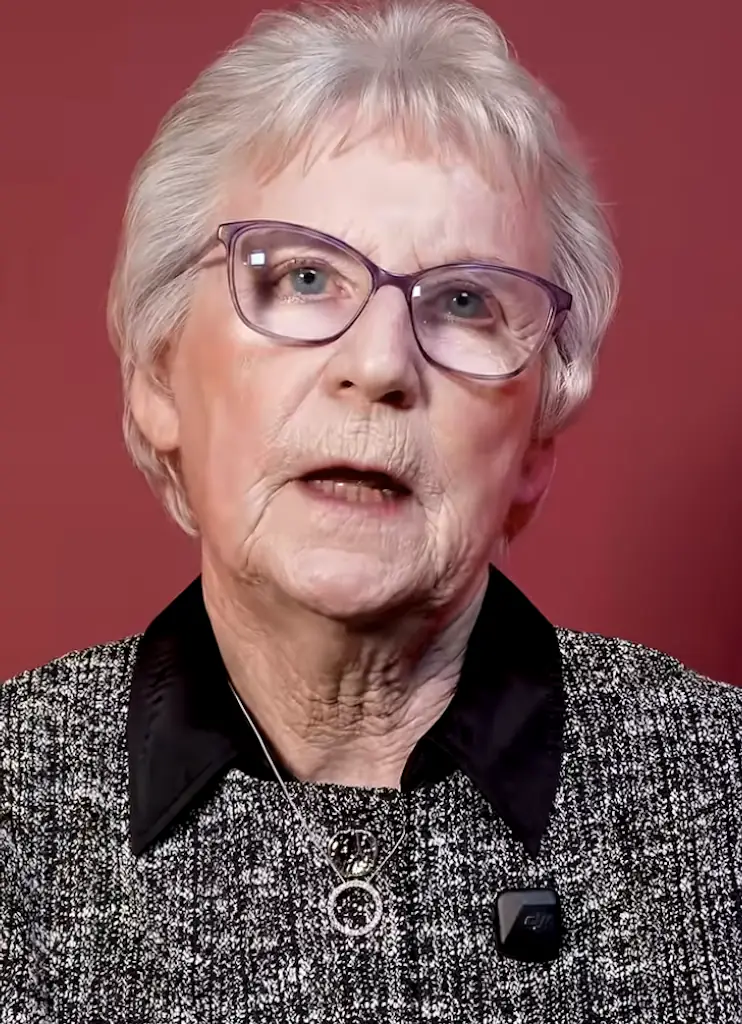
Teresa Weiler grew up in a happy, comfortable home in West London after being adopted at the age of two and a half. Raised in a Catholic household by a senior civil servant and his wife alongside two older brothers and an adopted younger sister, she enjoyed a childhood filled with sports, music, and a good education.
For over two decades, she knew nothing about her biological origins before her adoption, and the question rarely crossed her mind until her older brothers began marrying and having children.
Seeing her first nephew born sparked a strong desire in Weiler to settle down, get married, and start a family of her own. Because there were no records or photographs of her life before age two and a half, she became curious about her genetic background.
Determined not to upset her adoptive parents or make them feel as though her upbringing was lacking, she secretly contacted local social services in her early 20s to locate her birth records.
Her inquiry led her to a small room at an office in Islington, North London, where she was handed a file to read without being allowed to make copies.
Inside, she learned that her biological mother had been an unmarried 16-year-old who placed her in the care of the London County Council because she could not raise a baby alone.
As Weiler continued reading down the page, she saw the details regarding her biological father and realized he was her mother's 14-year-old brother.
An immediate sense of revulsion and shame
Processing the discovery in a strict Catholic environment where even premarital sex was frowned upon proved overwhelming for Weiler. Recalling the shock of reading the file, she said in an episode of OMG Stories: Up Close, "I felt that no one would want to know me. I felt sick. I felt revulsion."
Because incest was a severe taboo across society, she felt convinced that the circumstances of her conception explained why she had been left in a children's home as an infant.
Without any counseling or support from the office staff, Weiler walked the streets afterward trying to make sense of what she had read. She became certain that if anyone learned the truth, they would look at her with the exact same disgust she felt toward the file.
Fearing rejection from her loved ones, she vowed on the spot to keep the secret hidden forever.
Driven by fear and a lack of medical guidance at the time, Weiler made a life-altering decision within days of reading her records. She assumed that having children of her own would carry a high risk of passing on severe physical or mental developmental delays.
Unwilling to risk a child's health, she abandoned her dream of marriage and motherhood, pulling away from romantic relationships whenever they grew serious and dedicating herself instead to her career in social care and her role as a devoted aunt.

Meeting her biological mother
Before locking the secret away, Weiler had placed her name on an adoption contact register, which eventually produced a match with her biological mother.
Hoping to learn whether the relationship had been consensual or the result of an assault, Weiler secretly visited the provided address. For the first time in her life, she saw people who shared her physical features, noticing an unmistakable resemblance to both her biological mother and a man sitting in the corner who was introduced as a friend, whom Weiler was certain was her biological father.
Although seeing the two appear comfortable together eased her fears of an assault, the meeting quickly unraveled when Weiler's pent-up anger spilled out in a barrage of unanswered questions.
Her biological mother suggested they reschedule for a calmer conversation and gave Weiler a phone number, but when Weiler called two weeks later, the line was disconnected and the rented flat had been vacated without a forwarding address.
Feeling rejected a second time, Weiler buried the truth for the next 20 years.
Breaking the silence
The secret finally came out in Weiler's early 40s while a close friend, who also directed the addiction clinic where she worked, was driving her home after an arm operation.
During a casual conversation about adoption, the truth tumbled out, leaving Weiler distressed and bracing for judgment. Instead, her friend immediately reassured her that her parents' actions had nothing to do with her character or worth, and pointed out that modern genetic understanding showed her fears about having children had been unfounded.
Encouraged by that support, Weiler traveled to London to tell her adoptive parents, who were heartbroken only because she had carried the burden alone for two decades instead of letting them reassure her.
After receiving the same unconditional love from her siblings and friends, Weiler eventually shared her story in a national newspaper at the urging of a journalist.
Hundreds of people in similar situations reached out to thank her, transforming a source of lifelong shame into a platform to help others. Reflecting on how much her life has changed since going public, Weiler said, "I'm not keeping it a secret. I'm shouting it from the rooftops."