ADVERT
US4 min(s) read
Published 11:23 24 Jul 2026 GMT
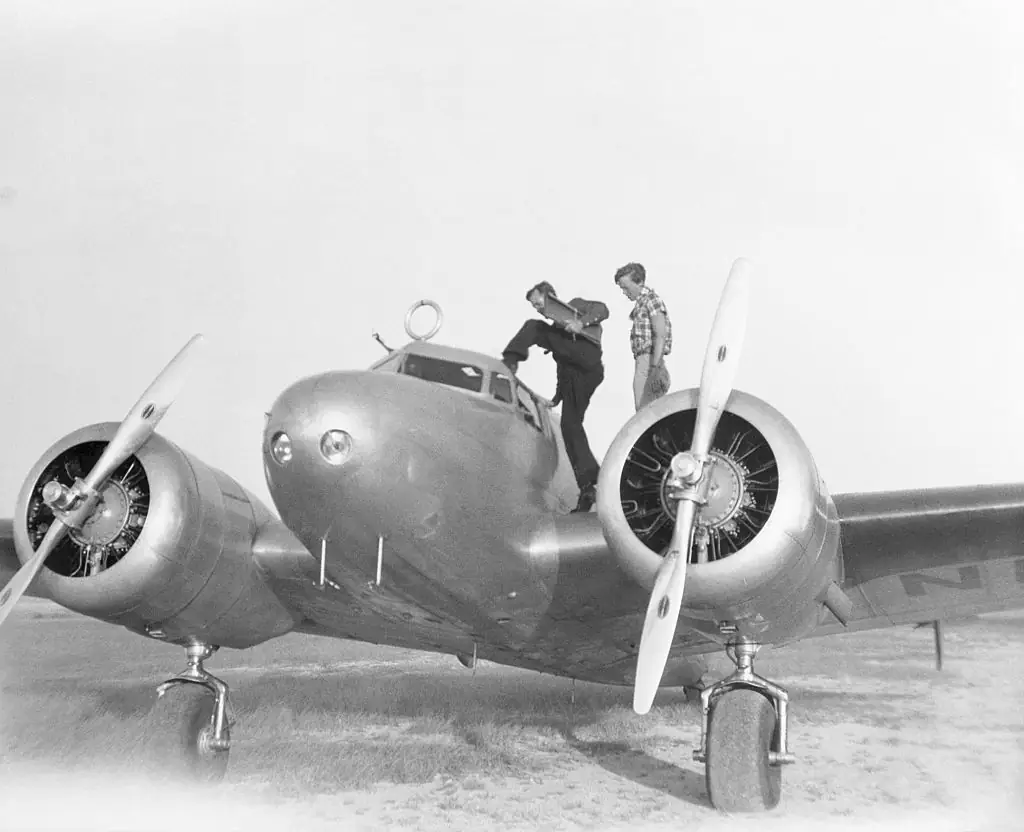
An experienced pilot claimed to have found Amelia Earhart's lost plane in the Pacific Ocean, almost 90 years after she went missing.
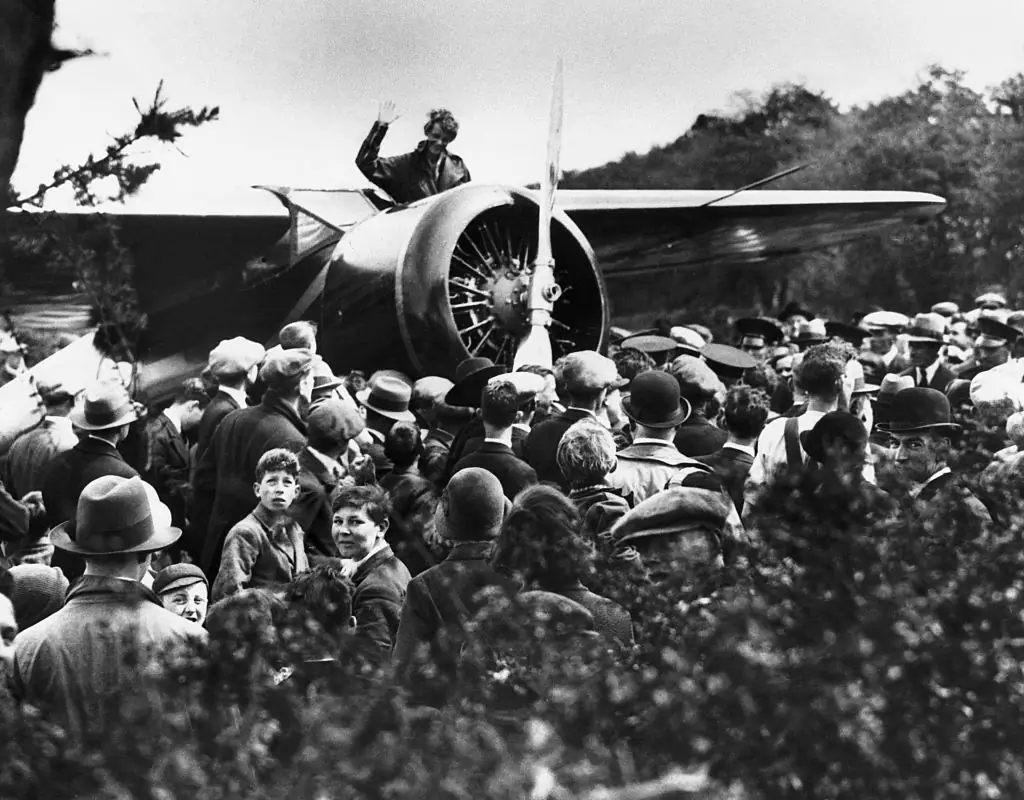
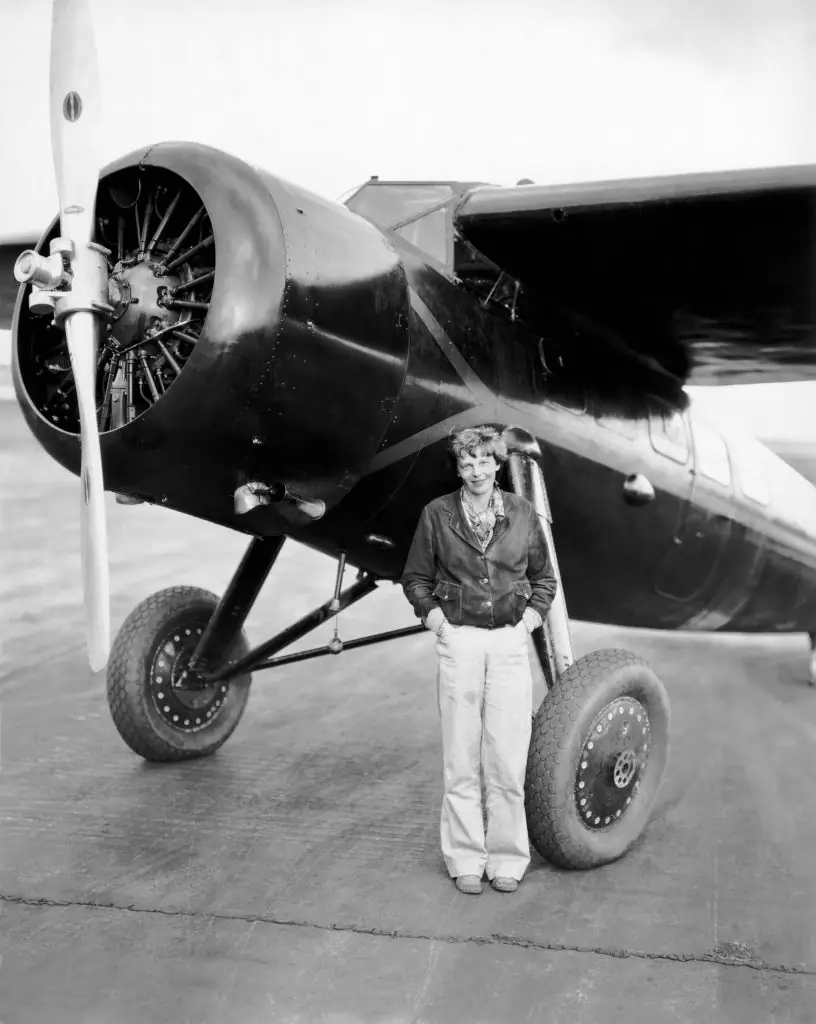
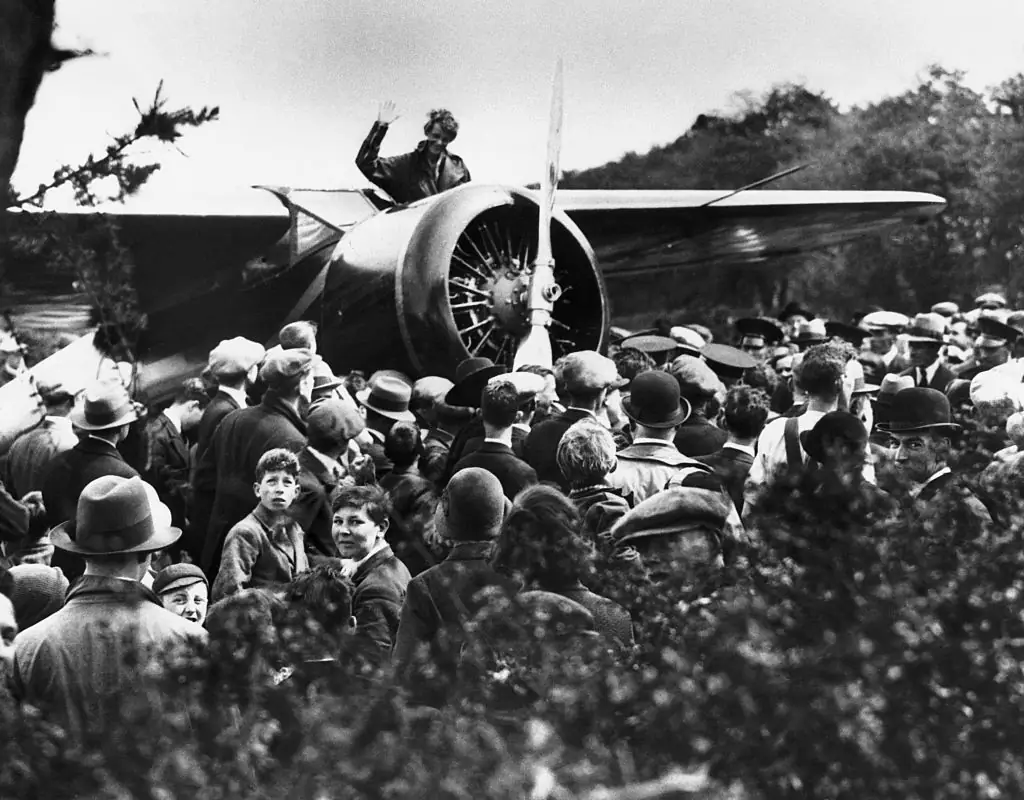
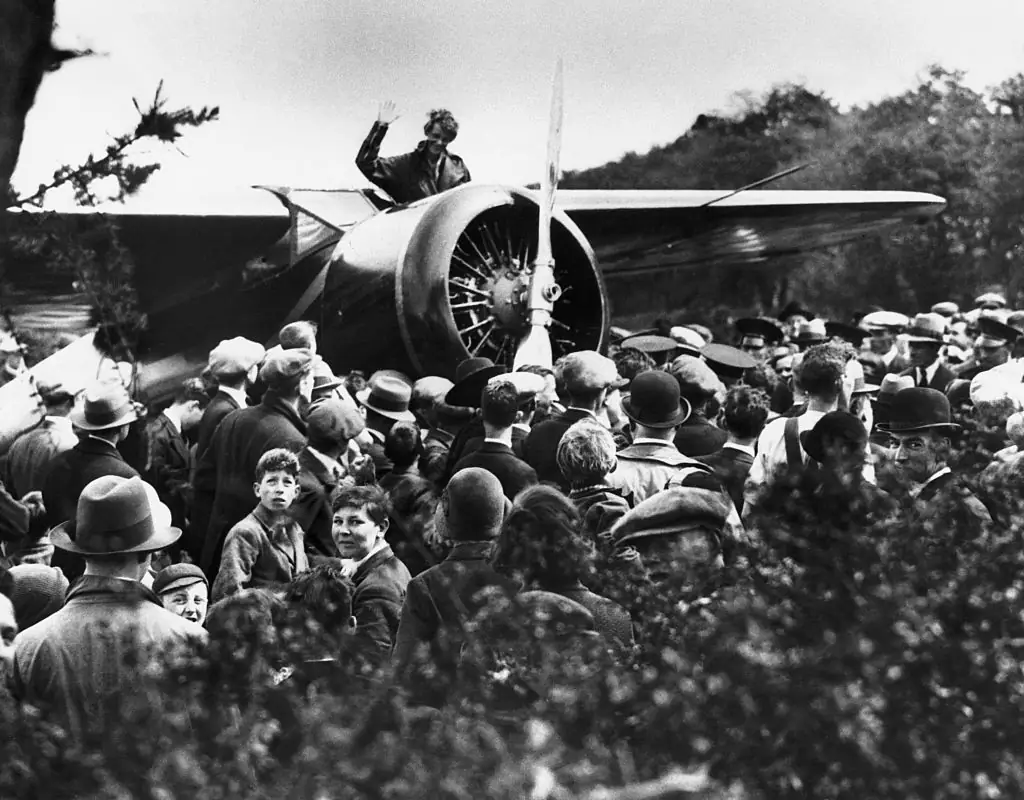
Amelia Earhart made a name for herself as one of the world's most accomplished explorers in the early 20th century, even becoming the first ever woman to fly solo across the Atlantic Ocean.
The Kansas native set several impressive aviation records, while also advocating for equal rights for women at the time.
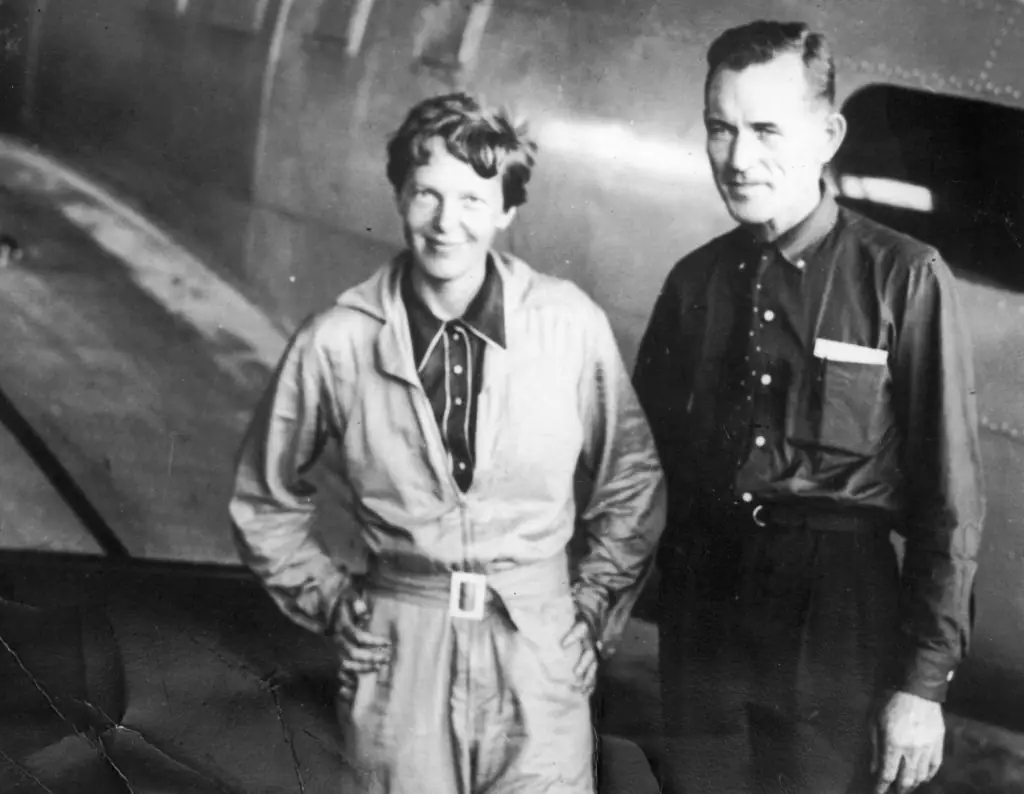
But in 1937, she set out to circumnavigate the world, undertaking the 29,000-mile journey with navigator Fred Noonan.
When she set off from New Guinea for Howland Island with the plan of refueling on July 2, 1937, she, Noonan and the plane would vanish.
They were never seen again despite having the assistance of the US Coast Guard, and nearly 100 years on, there is still no trace of the plane or the remains of those onboard despite the efforts of several search teams.
But now, a pilot claims he has found her plane on Google Earth, of all places.

Justin Myers, a pilot with decades of flying experience, told Popular Mechanics that he believed he found an image of Earhart's lost airplane.
He said that satellite images on Google Earth revealed that there may be something on Nikumaroro Island in the Pacific, as he started to have a look after watching a documentary on her final flight
Myers explained: "To be totally honest, my interest started after watching a documentary on the National Geographic Channel.
"It was the next day when curiosity about Nikumaroro Island took me to looking on Google Earth."
As he first looked at the uninhabited island in the Pacific, he admitted that he wasn't looking for the lost Lockheed Electra 10E in particular.
"I was just putting myself in Amelia and [her navigator] Fred’s shoes," the pilot claimed, adding that he tried to imagine, as a pilot, "where I would have force landed a light twin aircraft in their position, lost and low on fuel."
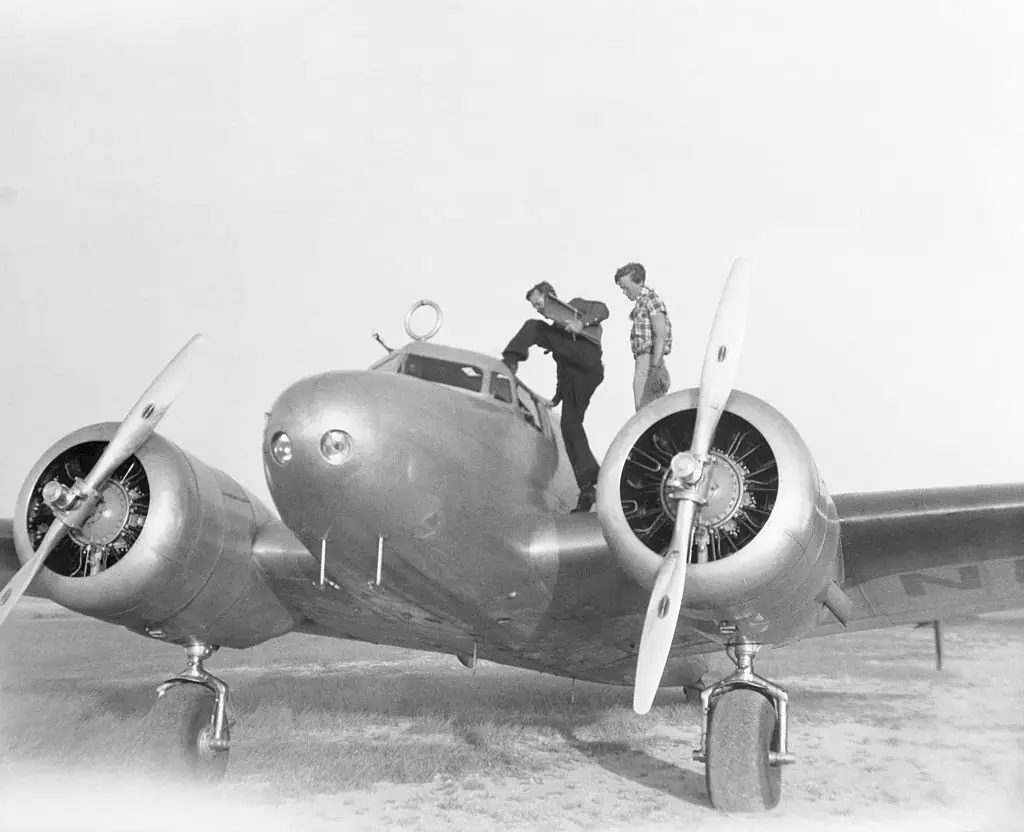
He then zoomed into an area where he believed they may have tried to land, noticing a "dark-coloured, perfectly straight object" that measured around 39 feet, matching Earhart's plane.
"I used the measuring tool on Google Earth and to my surprise and mild little shiver it measured approximately 39 ft," Myers explained in a blog post.
He told the publication: "It looked man-made, it looked like a section of aircraft fuselage. That was remarkable by itself, let alone the possibility it was Electra 10E NR16020, even though the measurements looked the same."
The pilot said that he thought he spotted more plane debris, believing he may have been lucky at first.
He admitted that there was "an element of luck" in finding the first image, explaining: "I managed to catch some photos before being covered over again by passing weather systems."
Numerous agencies were contacted by Myers, but they ignored his claims, with the National Transportation Safety Board explaining that the island wasn’t its jurisdiction.
Myers then filed a report with the Australian Transport Safety Bureau, but they never got back to him.
He also reached out to Purdue University and an expedition company, but he did not hear back from either.
Myers isn't the first to believe that he has found the plane debris, with many being proved wrong before him, but this isn't discouraging his search.
He further highlighted: "The bottom line is, from my interests from a child in vintage aircraft and air crash investigation, I can say that is what was once a 12-metre, 2-engine vintage aircraft."
The pilot acknowledged that it may not be Earhart's aircraft, adding that it may be "the answer to another mystery that has never been answered."
us4 min(s) read
us5 min(s) read
us news4 min(s) read
Published 09:28 11 Jul 2025 GMT
us news4 min(s) read
Published 11:00 06 Nov 2024 GMT
world4 min(s) read
Published 16:52 29 Jan 2024 GMT
Published 12:02 12 Aug 2025 GMT
Nearly 90 years after Amelia Earhart’s ill-fated disappearance in 1937, one pilot believes he may have cracked the mystery of her lost plane.
Earhart's passion for flying began in 1920 after taking her first flight as a passenger with veteran pilot Frank Hawks.
She worked as a telephone company clerk to pay for her flying lessons and bought her first plane in 1921.
Just a year later, she became the first woman to fly at 14,000 feet, and in 1932, she made history as the first woman, and second person ever, to fly solo nonstop across the Atlantic - solidifying her place as a trailblazer in aviation.
Earhart’s final journey began with her and navigator Fred Noonan departing Oakland, California, for their round-the-world flight, stopping in Miami, crossing South America, the Atlantic, Africa, India, and South Asia.
On July 2, 1937, they left Lae, Papua New Guinea, aiming to refuel at Howland Island, but somewhere over the Pacific, they lost radio contact and vanished, sparking one of the world’s greatest aviation mysteries.
For 88 years, many theories emerged about their fate, from crashing into the sea to becoming castaways on a remote island, or even being captured by the Japanese.
Now, a pilot named Justin Myers, with nearly 25 years of experience in the air, is convinced he has discovered the wreckage of Earhart’s Lockheed Electra 10E on a remote Pacific island.
While Earhart’s disappearance has sparked numerous expeditions, Myers’ discovery is unique. Unlike others who have long been obsessed with Earhart's fate, the pilot only began his investigation after watching a documentary about the aviator.
“To be totally honest,” Myers told Popular Mechanics, “my interest started after watching a documentary on the National Geographic Channel. The next day, I started looking at Nikumaroro Island on Google Earth.”
Nikumaroro, a small island in the Pacific, has long been suspected to be the final resting place for Earhart’s plane or, at the very least, the wreckage of the aircraft.
Numerous trips over the years have uncovered artifacts such as improvised tools and pieces of Plexiglas believed to be from the Electra, though no conclusive evidence has ever been found.
For Myers, the breakthrough moment came when he started applying his expertise as a pilot to the aerial images of the island.
“I was just putting myself in Amelia and Fred’s shoes,” he explained. As he studied the Google Earth images, he began to notice an unusual, straight-edged object that seemed to match the dimensions of the Electra’s fuselage.
After measuring the objects, Myers was taken aback by the resemblance to airplane debris. “It looked man-made,” he noted, adding that he even identified what seemed to be a partially exposed radial engine.
The pilot said the measurements and observations all aligned with the size and shape of the Electra 10E that Earhart and Fred Noonan were flying when they disappeared.
While he was excited by his findings, the response he received from aviation authorities was less enthusiastic. He sent his research to the U.S. National Transportation Safety Board (NTSB), but they redirected him to the Australian Transport Safety Bureau (ATSB), leading to a report that, to date, has seen little progress.
Myers also contacted Purdue University, which has been involved in the search for Earhart’s plane, but has not received any response from them.
This lack of follow-up is not entirely surprising, as Myers is far from the only person claiming to have found the missing plane.
Back in 2024, underwater drone images from Tony Romeo's Deep Sea Vision had revealed a structure that appeared to resemble an airplane - only for Romeo to later retract the statement and admit it was a rock formation.
Despite such setbacks, Myers remains confident that what he found on Google Earth is more than just a coincidence.
“I managed to catch some photos before being covered over again by passing weather systems,” Myers explained.
He believes his discovery is not the result of wishful thinking but rather a stroke of luck combined with the right knowledge and technology.
Published 16:29 07 Jul 2025 GMT
It is a mystery that has captivated the world for 88 years, but scientists now believe they have finally found Amelia Earhart’s lost plane.
Amelia Earhart, born in Kansas on July 24, 1897, found her passion for flying in 1920 after taking her first flight as a passenger with veteran pilot Frank Hawks, later saying: “As soon as I left the ground, I knew I had to fly," per Daily Mail.
She worked as a telephone company clerk to pay for her flying lessons, and bought her first plane in 1921.
Just a year later, she became the first woman to fly at 14,000 feet, and in 1932, she made history as the first woman - and second person ever - to fly solo nonstop across the Atlantic.
Despite exhaustion, cold, and mechanical failures that nearly ended the flight in disaster, Earhart landed in Northern Ireland, proving her determination and skill.
Later that year, she became the first woman to fly solo nonstop across America, solidifying her place as a trailblazer in aviation.
Earhart’s final journey began with her and navigator Fred Noonan departing Oakland, California, for their round-the-world flight, stopping in Miami, crossing South America, the Atlantic, Africa, India, and South Asia.
On July 2, 1937, they left Lae, Papua New Guinea, aiming to refuel at Howland Island, but somewhere over the Pacific, they lost radio contact and vanished, sparking one of the world’s greatest aviation mysteries.
For 88 years, countless theories emerged about their fate, from crashing into the sea to becoming castaways on a remote island, or even being captured by the Japanese.
Now, scientists believe they have finally found Earhart’s lost plane.
A team from Purdue University claims they have located Earhart’s Lockheed Model 10-E Electra off the coast of Nikumaroro, a remote island in Kiribati nearly 1,000 miles from Fiji.
The site is near her intended flight path and the location where four distress calls were traced, providing compelling evidence.
Their discovery is based on satellite imagery showing a strange object on the ocean floor just feet from the shoreline. Researchers report that the object’s size and composition are an almost exact match for Earhart’s plane.
Richard Pettigrew, executive director of the Archaeological Legacy Institute (ALI), which is joining the mission, said: “What we have here is maybe the greatest opportunity ever to finally close the case. With such a great amount of very strong evidence, we feel we have no choice but to move forward and hopefully return with proof.”
Among the strongest evidence are radio bearings from Earhart’s distress calls recorded by the US Navy, Coast Guard, and Pan American World Airways, all converging near Nikumaroro.
In 2017, a forensic analysis of bones discovered on the island in 1940 determined the dimensions matched Earhart’s more closely than 99% of the population.
Artifacts found on the island, including a woman’s shoe, a compact case, a jar of freckle cream, and a medicine vial, all date back to the 1930s.
Researchers also point to the Bevington Object, a photographic anomaly captured three months after her disappearance that appears to show part of the Electra’s landing gear on the island’s reef.
The latest clue is a 2020 satellite image showing the object has remained in the same lagoon spot since at least 1938.
ALI joined the investigation after private citizen Michael Ashmore noticed the object in 2015 Apple Maps imagery, prompting the team to collect 26 additional satellite images from 2009 to 2021 and three more from Google Earth between 2022 and 2024.
“This object in the satellite images is exactly the right size to represent the fuselage and tail of the Electra,” ALI said in a statement. “It also appears to be very reflective and is likely to be metallic.”
The mission, named the Taraia Object Expedition, will unfold in three phases: an on-site examination, a full-scale archaeological excavation, and the recovery of the suspected aircraft remains.
“We believe that the result of this Phase-1 field examination will probably be the confirmation that the Taraia Object is indeed the Lockheed Electra aircraft,” the team shared. “This work, then, is likely to solve one of the greatest mysteries of the 20th century.”
The mission follows several past attempts, including a 2019 National Geographic-supported expedition by famed explorer Robert Ballard, which found no trace of the aircraft, and a 2017 TIGHAR mission that deployed search dogs detecting the scent of human remains but recovered no physical evidence.
However, current researchers argue these outcomes do not rule out their theory, stating: “The plane ending up in the deep water is not actually a likely scenario, given what we know about the prevailing winds and currents along the northwestern edge of the island.”
Earhart’s connection to Purdue University adds another layer to the mission, as before her final flight, she was hired by Purdue to advise women on career opportunities.
“About nine decades ago, Amelia Earhart was recruited to Purdue,” said current Purdue president Mung Chiang. “The university president later worked with her to prepare an aircraft for her historic flight around the world.”
Steve Schultz, Purdue’s general counsel, told NBC News: “We believe we owe it to Amelia and her legacy at Purdue to fulfill her wishes, if possible, to bring the Electra back to Purdue.”
Now, nearly 90 years after she vanished, scientists believe they are closer than ever to solving the mystery of what happened to Earhart.
Nearly nine decades after legendary aviator Amelia Earhart vanished during her attempt to fly around the world, a new investigation may finally reveal what happened to her.
Earhart, already a global icon as the first woman to fly solo nonstop across the Atlantic, set out in 1937 with navigator Fred Noonan to become the first woman to circumnavigate the globe by air. They departed in a specially modified Lockheed Electra on March 17, but an early crash forced them to postpone the trip.
After repairs, they launched a second attempt on June 1, 1937, making a series of fuel stops along the way. But on July 2, with most of their journey behind them, Earhart and Noonan took off from Lae, Papua New Guinea, bound for Howland Island, and were never seen again.
Despite global efforts, no conclusive evidence of their fate has ever been found. That could change soon.
Later this year, Purdue University, which originally helped fund Earhart’s ill-fated flight, will send a research team to a remote island in the Pacific based on a promising lead. Satellite images from 2015 appear to show the outline of a plane submerged near Nikumaroro, a small atoll once called Gardner Island. If confirmed, it could finally solve one of aviation’s greatest mysteries.
Nikumaroro has long been suspected as the site where Earhart and Noonan may have crash-landed. In 1940, human bones and several items, possibly belongings of the missing aviators, were discovered on the island, including a freckle cream, per ABC.
Initially, the remains were identified as male, but later analysis suggested they more closely matched a woman of Earhart’s height and build. Forensic anthropologist Richard Jantz noted: “If the bones do not belong to Amelia Earhart, then they are from someone very similar to her.”
Over the years, more intriguing finds emerged. In 1991, The International Group for Historic Aircraft Recovery (TIGHAR) found fragments of a 1930s-era shoe heel, similar to footwear Earhart was photographed wearing. However, the shoe size was larger than what she was believed to wear, casting doubt.
TIGHAR also discovered a sheet of scrap metal, which was initially unidentified, Wired reports. Later photo analysis showed it may have matched a repair done to Earhart’s Electra before her second takeoff.
In 2010, a small bone fragment recovered from the island was speculated to be a finger bone (possibly Earhart’s) but testing was inconclusive, and it couldn’t even be confirmed as human, according to NBC.
In 2012, a cosmetic jar believed to contain freckle cream was found at a possible castaway site. TIGHAR director Ric Gillespie pointed to its significance: “We know that Earhart had freckles and was self-conscious about them. This type of product was marketed exclusively to women in the U.S. during the 1930s.” One shard of the broken jar appeared to have been used as a cutting tool.
Then in 2015, satellite images surfaced showing what some researchers believe to be the silhouette of a plane partially buried in sand near Nikumaroro. While some believe it could be the Electra, Gillespie remains skeptical, suggesting the object might actually be a washed-up coconut tree.
Now, Purdue University plans to put those satellite images to the test. A new research team will travel to Nikumaroro to investigate the potential crash site and search for aircraft debris.
If confirmed, the discovery could finally bring closure to a decades-old mystery that has captivated historians, aviation buffs, and conspiracy theorists alike.
All eyes will be on what the team uncovers beneath the waves, and whether they’ll finally answer the question that’s lingered since 1937: What really happened to Amelia Earhart?
The truth behind an image many believed to show the final resting place of Amelia Earhart's lost plane has finally been revealed.
Earhart, an American aviation pioneer, disappeared over the Pacific Ocean on July 2, 1937, along with her flight navigator, Fred Noonan, while attempting to become the first female pilot to circumnavigate the world.
Mystery has surrounded her disappearance, with no trace of her, Noonan, or her Lockheed 10-E Electra plane, ever being found.
While most historians believed she must have crashed and sank into the Pacific Ocean, other conspiracy theories have emerged, including that she may have made an emergency landing on a nearby island or that she was captured by Japanese forces.
One of the wilder theories was that Earhart survived, changed her name, and became banker Irene Craigmile Bolam, however, Bolam sued the publishers of a book that originated this theory and reportedly reached an out-of-court settlement.
One of the more convincing potential sightings of Earhart's Electra came after South Carolina-based deep-sea explorer Tony Romeo and his Deep Sea Vision team stumbled upon what he believed could be the wreckage of the plane.
They captured a sonar image of an aircraft-shaped object in the Pacific Ocean during a three-month expedition to find Earhart’s Lockheed 10-E Electra, but have now confirmed the disappointing truth.
After further investigation, they have confirmed that the potential breakthrough was in fact nothing more than a rock formation, which had a similar shape to an aircraft.
Romeo said in a statement, as cited by the New York Post: "While this outcome isn’t what we hoped for, we are continuing our search for another 30 days to cover over 1,500 square nautical miles.
"The global response to our initial discovery has been truly inspiring, a testament to Amelia and the pull of her incredible story."
Romeo, who is a pilot and former US Air Force intelligence officer, had sold all of his commercial properties to pay for the $11 million search and remains committed to finding a breakthrough in the case.
Earhart had started her journey from Lae, Papua New Guinea, with plans to refuel on Howland Island before continuing their journey to Honolulu and their final destination of Oakland, California.
However, Earhart's radio transmissions ended up going silent after she faced a strong headwind in Lae, and despite a 16-day search by the US Navy and Coast Guard, no trace was found of her whereabouts.
Earhart - who was 39 at the time of her disappearance - was officially declared dead on January 5, 1939, around a year and a half after she vanished.
Over the resulting nine decades, many expensive searches have attempted to locate any trace of where she and her plane may have ended up. All have so far been unsuccessful.
Romeo and his 16-person team had begun their investigation in September 2023, starting from Tarawa, Kirbati, a port near Howland Island, and used an unmanned submersible to scan 5,200 square miles of the ocean floor.
A blurry image appearing to show an airplane-shaped object was found around a month into the search, over 16,000 feet below the surface and around 100 miles off Howland Island.
While the images caused a frenzy, sonar experts had warned it was too hazy to verify whether or not it was the long-lost plane.
A second expedition launched by Romeo has now, sadly, confirmed that what was believed to potentially be the plane is actually just a rock formation in a similar shape.
The company is continuing its search to discover the truth of where Earhart and her plane ended up.
An intriguing discovery by pilot and former US Air Force intelligence officer Tony Romeo has reignited interest in one of America's most enduring mysteries - the disappearance of aviation pioneer Amelia Earhart.
Now, Romeo is confident he's finally found Earhart's Lockheed 10-E Electra plane that disappeared during her famous attempt to circumnavigate the globe in 1937.
Romeo believes a sonar image captured during a high-tech unmanned submersible expedition may finally provide answers to this decades-old enigma.
The vanishing of Amelia Earhart and her navigator, Fred Noonan, over the Pacific Ocean has long perplexed researchers, giving rise to various conspiracy theories over the years - from alleged Japanese imprisonment to suspicions of espionage.
Now, Romeo's sonar image has sparked renewed hope in uncovering the truth.
As reportedly by Business Insider, Romeo's journey began with a personal passion for the Earhart mystery, coupled with years of contemplation and research.
He successfully raised $11 million from selling commercial properties to fund his mission, which utilized a cutting-edge $9 million unmanned submersible known as the Hugin drone, manufactured by Norwegian company Kongsberg.
A 16-member research crew also accompanied Romeo on this ambitious undertaking, covering 5,200 square miles of the ocean floor during a 100-day voyage that began in September 2021 in Tarawa, Kiribati.
"This has been a story that's always intrigued me, and all the things in my life kind of collided at the right moment," Romeo explained to Business Insider. "I was getting out of real estate and looking for a new project so even though I really started about 18 months ago, this was something I've been thinking and researching for a long time."
Approximately one month into the expedition, the team captured a sonar image resembling an aircraft submerged about 100 miles from Howland Island, a significant location in the Earhart mystery. However, the discovery wasn't made in real-time but on the 90th day of their voyage, making it impractical to return for a closer examination.
Despite its blurry appearance, Romeo firmly believes the image represents Earhart's distinctive aircraft due to its unique shape.
Speaking to NBC's TODAY show, Romeo said: "Well you’d be hard-pressed to convince me that’s anything but an aircraft, for one, and two, that it’s not Amelia’s aircraft.
"There’s no other known crashes in the area, and certainly not of that era in that kind of design with the tail that you see clearly in the image."
Experts have expressed interest in the finding, with Dorothy Cochrane, a curator at the Smithsonian Institution's National Air and Space Museum, suggesting the reported location aligns geographically with the suspected crash site of Earhart's flight.
Nevertheless, some remain cautious, emphasizing the need for clearer images and specific details such as the plane's serial number before making definitive conclusions. Andrew Pietruszka, an underwater archaeologist at the Scripps Institution of Oceanography, stated: "Until you physically take a look at this, there's no way to say for sure what that is."
Romeo intends to return to the area to obtain better images, employing autonomous or robotic submersibles equipped with cameras and sonar to closely examine the object resting more than 16,500 feet beneath the ocean's surface.
While there is no certainty yet, Romeo's discovery has ignited hope of solving the Amelia Earhart mystery once and for all. If the object indeed turns out to be Earhart's plane, it could be a historic breakthrough, bringing closure to a decades-old enigma that has continued to captivate people worldwide.
For now, the legacy of Amelia Earhart - the first woman to fly solo across the Atlantic and the United States - endures, and her story remains a source of fascination and inspiration for generations.