


US6 min(s) read
Barack Obama takes dig at Donald Trump when discussing 'biggest danger' facing the world
.webp_SmgFsc?tr=cr-292.0.1244.952,f-webp,q-70,w-100)
Former US President Barack Obama took the stage at Manchester’s Co-op Live Arena for a one-night event as part of his A Conversation With tour.
Hosted by writer and broadcaster Afua Hirsch, the discussion offered a wide-ranging examination of current global challenges, the decline of public trust, and the ways communities can work toward a better future.
Addressing a full crowd, Obama spoke candidly on a range of modern issues, including lighthearted topics like online cat videos alongside serious concerns regarding the erosion of shared facts.
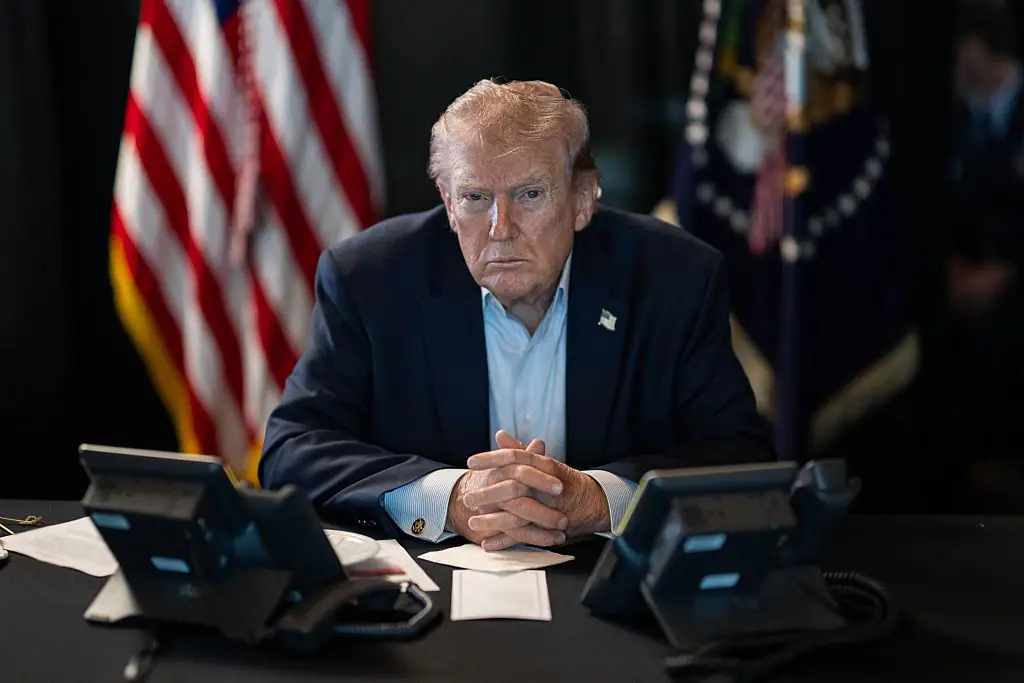
Throughout his remarks, he included several subtle comments directed toward his successor in the White House, President Donald Trump. He also touched on foreign policy, praising Andy Burnham’s commitment to Ukraine, and noted that entering the White House at a relatively young age helped him relate to the everyday issues people face.
The main focus of the evening remained centered on the digital age, the role of leadership, and the power of shared human experiences.
.jpg_5nklUk?tr=cr-0.0.1024.683,f-webp,q-70,w-1024)
The threat of online misinformation
A major topic of discussion was what Obama defined as a "splintering" of information driven largely by digital platforms, labeling it as one of the biggest dangers facing society today. He pointed out that online platforms often prioritize engagement over accuracy, which distorts public discourse and isolates individuals.
“It turns out that a lot of what keeps you hooked is anger, resentment, fear, along with lust and cat videos,” Obama said. “It’s an interesting map of the human brain. So we all became trapped in our silos.”
He explained the difficulty of finding an effective solution, noting that heavy government regulation carries significant risks.
“It’s a hard nut to crack because one solution is to control what is on the internet. Obviously China does that and now you have state control and that has its own dangers. So, the medicine may be worse than the disease.
“On the other hand, it is very hard to function in any kind of democracy if we don’t have an agreement on the basic baseline of facts. We can have 1,000, 20,000, 100,000 opinions about stuff, but if we can’t agree on basic facts like, you know, vaccines prevent diseases and have been really useful, or the planet is getting warmer…
“We can argue about how to respond [to these issues]. We can still have a lot of arguments, but we can’t have arguments about facts, about what happened, about what’s true and what’s false.
“What ends up happening is that we can’t debate each other if we are denying just basic things that are provable. What ends up happening is we think each other are all crazy, we lose social trust, we stop believing that the other person is operating in good faith. I think what we are going to have to do is find ways to rebuild social trust, validation, authority, belief in facts.”
Reconnecting through shared stories
Beyond technology, Obama stressed the role of storytelling in building empathy and bringing people together. He observed that modern society faces a broader crisis involving a loss of faith in hopeful and unifying narratives.
“I try to lift up stuff that tells a particular story that is close to me, that is a story that says we are wildly different and specific in our experiences and our traditions and our roots and our families and traumas, and we are deeply connected in so many ways.
“Stories that tell us that. Stories that remind us of that, that we pass on to our children so they can walk through Manchester with all its diversity and feel like ‘you know what, I know that person and I understand them and I trust them and I’m not fearful because they are part of me in some way. I can relate.’”
He noted that political leaders must offer more than just technical proposals to truly connect with the public.
“When I give advice now to younger politicians who are coming up and I tell them ‘if all you are doing is reciting facts and 10 point plans, you are missing the point’. We need governments that can execute policy and 10 point plans, but we also need political leaders who can tell a story about why we should want to work together and why we should care for each other.”
A lesson from local history
Concluding his speech, Obama referenced an episode from Manchester’s history, pointing to the local cotton workers who refused to touch slave-picked American cotton during the American Civil War. While discussing his Presidential Center initiative, he highlighted how historical movements demonstrate the capacity for positive change.
“We are reminding people of what’s possible, how change gets made. It begins with the Declaration of Independence, and the suffragette movement, the civil rights movement, the abolitionist movement and what it does is it reminds us that we are part of this ongoing story.
“That is where you get hope from, it’s just reminding ourselves that as frustrating as the moment feels now, we’ve been through worse. We’ve managed to get through it and not only get through it but make things better.
“I was reminded, being here in Manchester, of just this wonderful story of the cotton workers here in Manchester during the American Civil War. At a time when their livelihoods depended on cotton [...] a bunch of British, working class workers who are hungry and not sure if they are going to be able to hold things together, they sit there and they collectively say ‘we are going to stand with those who are fighting for freedom, even though it is going to cost us’.”
“I think if we can tell each other those stories and pass them to our children and our grandchildren, we’ll get through these times too.”
The event ended as Obama exited to Bruce Springsteen’s Land of Hope and Dreams, leaving the audience with a renewed perspective on working toward a better future.