


US4 min(s) read
Body language expert makes observation about Trump's 'revealing' handshake with UK PM Andy Burnham

A body language expert has made a concerning observation about Donald Trump's "extremely revealing" handshake with UK Prime Minister Andy Burnham.
The 80-year-old president and Burnham, who replaced former PM Keir Starmer in July, had their first face-to-face bilateral meeting at the UN General Assembly in New York.
During the meeting, the leaders discussed the UK and US relationship, trade, immigration, the Middle East, and the Falkland Islands.
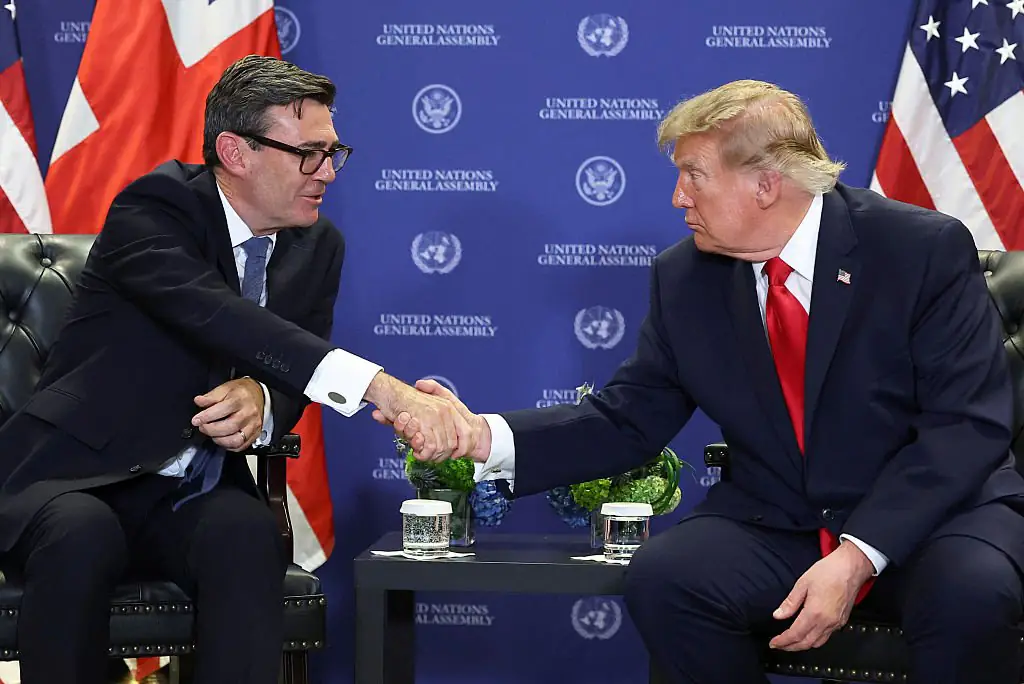
The "extremely revealing" handshake
Psychologist Peter Collet examined Trump and Burnham's "extremely revealing" handshake at the meeting, commenting that Trump was seated on the right-hand side of the screen, which put him at a "disadvantage".
"He initiates the handshake by extending his hand palm up, thereby giving Burnham the opportunity to assume the upper handshake - In other words, to dominate the handshake - But this is actually one of Trump's little ruses, and it's something he does standardly with other heads of state," Collet said.
The expert said the move usually allows the US leader to "slightly flex his bicep and to thereby control the handshake," but he doesn't actually do that in this "one instance".
"It's almost as though he's got the opportunity to strong-arm Burnham, but decides not to do it. And I think this provides an interesting little clue to what actually happens throughout the encounter," he added.

Burnham's body language shifted during the immigration discussion
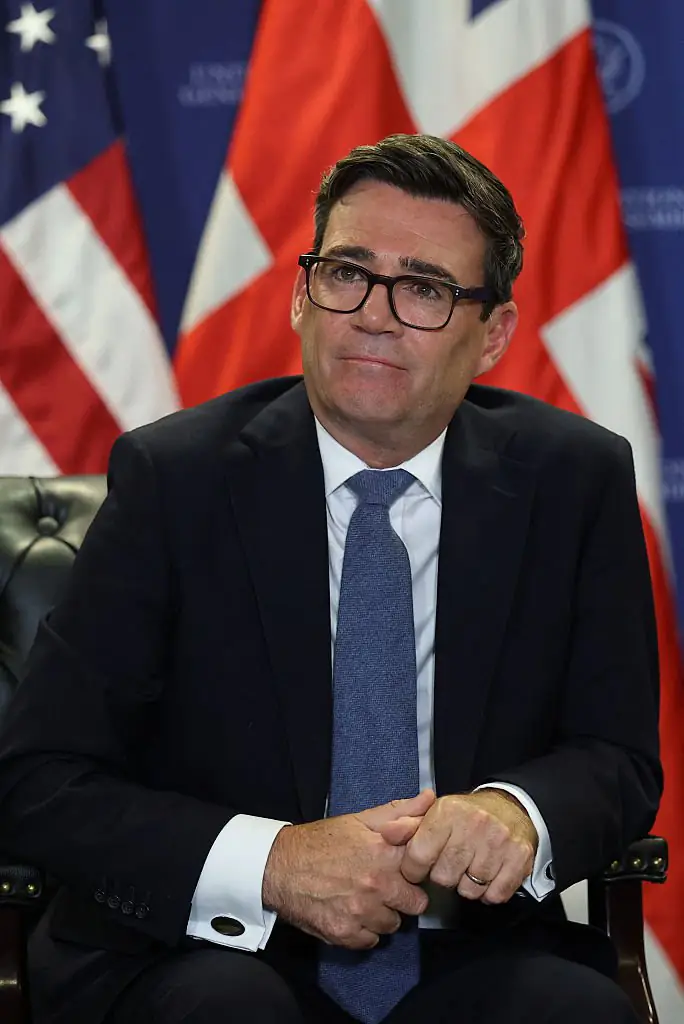
Collet then turned his attention to Trump and Burnham's hand postures and noted that they "adopted" variant hand clasps.
"Sometimes they're weaving their hands to their fingers together like this. Sometimes they're actually holding their hands, one in the other," he said.
The expert explained that the gesture is "essentially self-protective and self-calming," but there was a moment when Burnham shifted away from that posture, and that was when Trump was talking about immigration.
Because the topic is "extremely sensitive and potentially quite threatening" to Burnham, Collet said the PM, who was previously the mayor of Manchester, clenched one fist and wrapped his other hand around it.
"Now, this is a highly defensive posture, and it's potentially aggressive, but what it shows us is that Burnham is not happy with the raising of this particular topic," the expert said.
Lack of eye contact and communication styles
Collet also spoke about Burnham's gaze throughout the first half of the meeting, pointing out that the 56-year-old hardly looked at Trump when he was speaking, and instead turned his attention to the press in the room.
"He's not giving him signs of respect. He's not being attentive. He's not being subordinate," he said.
Trump, on the other hand, craned his head whenever Burnham was speaking to the press, and on one or two occasions, he was even seen nodding his head as a sign of approval.
The expert also spoke about the difference in communication styles that both leaders shared throughout the meeting, stating that as Trump is the host, he "tries to project this image of somebody who's very relaxed, personable, intimate, knowledgeable, and unfazed - that comes across quite convincingly."
Meanwhile, Burnham comes across as "uncharismatic" and instead, he is "sitting in the corner slightly diminunative."
"Burnham has every reason to be anxious and concerned about this unpredictable scenario," he said. "He's fairly stiff... He's polite. He strikes me as a kind of version of Clark Kent with his glasses there, especially the way in which he draws attention to them by occasionally touching them."
Despite those signs of tension, the expert said Burnham ultimately achieved what he needed to from the meeting.
"His job is to make sure that nothing goes wrong, and he actually succeeds pretty well in the sense that he at the end of the day, what we see is a pretty workable relationship between the two," Collet concluded.