


US3 min(s) read
The horrific reality of death by 'America's forgotten execution method'

Amid the ongoing rhetoric around the death penalty in the United States following the failed execution of Christa Pike, and the upcoming livestream of Nidal Hasan’s execution, the forgotten process once considered a more humane way to execute people has faced renewed scrutiny.
With death penalty regulations in the 27 states that still use it as punishment, most now only utilize three methods, with them being electrocution, firing squad, and lethal injection.
Horrifying death penalty method that is still used
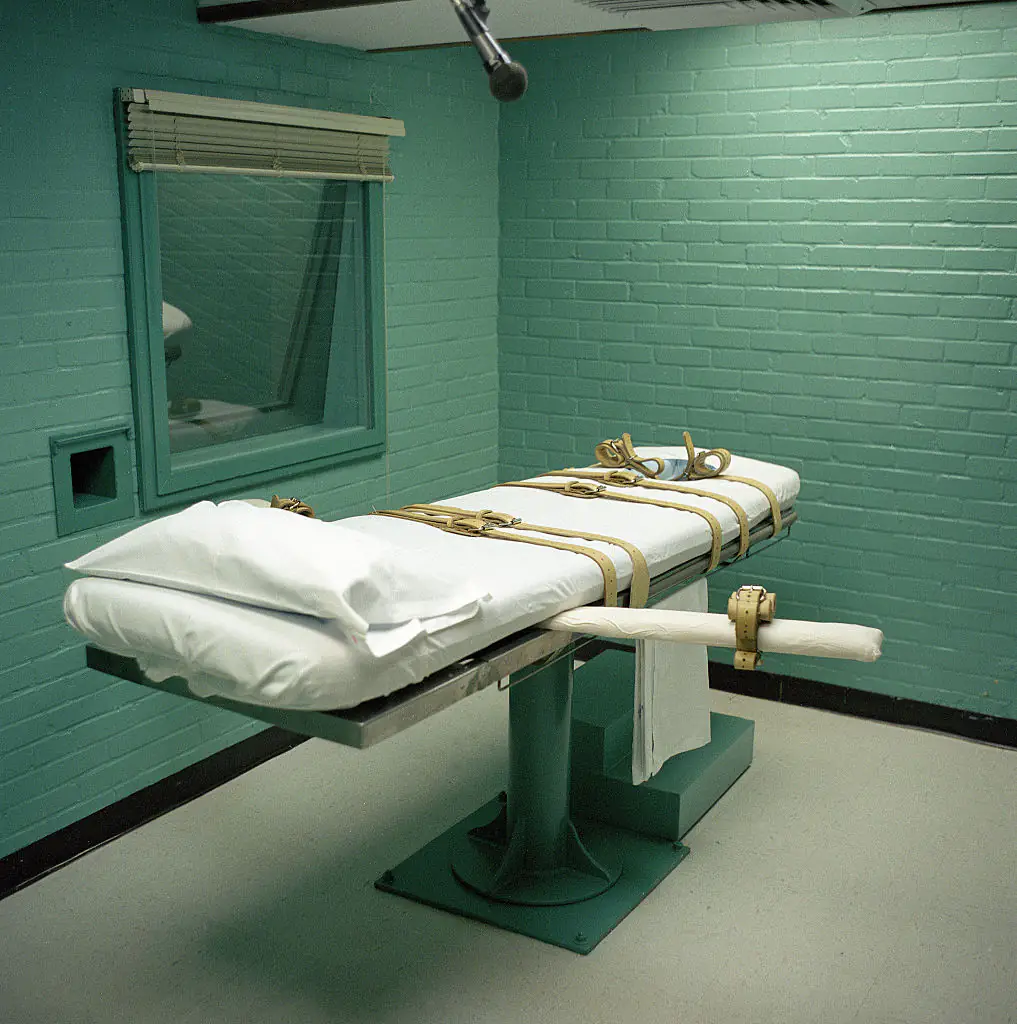
However, in a handful of states, one approach still makes up part of their regional constitution, despite it rarely being used, with that technique being the use of a gas chamber.
The approach to capital punishment was once viewed by the US as a more humane alternative that ensured quick, painless deaths, but this proved to be inaccurate, with the method cited as one that did the opposite, prolonging suffering and becoming increasingly controversial.
The technique was first used on Chinese immigrant Gee Jon, who was convicted of murder in 1924, and was consequently handed the death penalty.
While officials had believed that this approach was preferable to more conventional methods, it transpired that it was anything but.
Psychiatrist Alan M. Hamilton advocated using cyanide gas, which prevents the body's cells from receiving the oxygen required to function.
However, preparations for the execution quickly ran into problems, with officials finding it tricky to obtain the cyanide required, while several prison guards reportedly resigned rather than take part.
An initial plan to pump the gas directly into Jon's cell failed, forcing authorities to improvise, eventually building a makeshift gas chamber inside the prison's butcher shop and testing the setup on cats before proceeding with the execution.
On the day of Jon's execution, the chamber's heating system failed, causing some of the cyanide solution to collect in puddles rather than remain suspended as gas, before Jon appeared to lose consciousness within seconds, despite continuing to move his head for several minutes before officials declared him dead.
Despite the disturbing circumstances, authorities initially described the execution as a success, despite many condemning the method as barbaric and questioning whether it could ever be considered humane.
The gas chamber nevertheless gained popularity across the United States, with several other states adopting lethal-gas executions during the 1930s.
In 1983, Mississippi prisoner Jimmy Lee Gray displayed severe distress during his execution and repeatedly struck his head against a metal bar. Nine years later, Arizona prisoner Donald Harding reportedly gasped and convulsed for more than ten minutes before dying.
Walter LaGrand, who was executed in Arizona in 1999, became the last person to die in a traditional cyanide gas chamber in the United States before the later return of lethal-gas methods.
Gas still used in modern executions

However, in 2024, Alabama turned to nitrogen hypoxia after difficulties carrying out lethal injections in the cases of Kenneth Eugene Smith and Alan Eugene Miller, with the technique involving administering nitrogen to deprive the body of oxygen.
Witnesses reported that he underwent prolonged movements and appeared to experience distress during the procedure, but state officials defended the execution method, despite criticism from witnesses and opponents of capital punishment.
Miller's subsequent execution using nitrogen hypoxia also prompted reports of shaking, struggling and gasping, once again raising questions about claims that the method provides a humane death.
With Pike’s failed execution forcing officials to consider other alternatives, the use of lethal gas illustrates the difficulty of reconciling claims of a controlled, humane death with reports of visible distress and prolonged physical reactions.