


US3 min(s) read
Doctor who attempted to save Alex Pretti's life makes shocking claim about how ICE agents reacted after shooting him
.webp_SmgFsc?tr=cr-292.0.1244.952,f-webp,q-70,w-100)
Federal immigration and Border Patrol agents shot and killed 37‑year‑old ICU nurse Alex Pretti during an enforcement operation in Minneapolis on January 24.
Pretti, a registered nurse at the Minneapolis Veterans Affairs Health Care System, was killed in what authorities described as a confrontation with officers involved in immigration enforcement. His death has sparked protests and criticism of federal tactics in the city.
In court filings tied to litigation challenging federal actions in Minneapolis, a licensed physician provided a sworn affidavit describing his efforts to reach and treat Pretti after he was shot.
According to the doctor, ICE agents initially prevented him from reaching Pretti, even after he identified himself and asked to help. The affidavit is circulating publicly and has contributed to scrutiny of how agents responded to the incident.
National and state officials have reacted strongly to the fatal shooting. Minnesota’s governor and attorney general have demanded investigations and questioned federal narratives.
Hundreds of people protested in the hours after the killing, with local leaders calling for restrictions on federal immigration operations.
Doctor says he identified himself and was initially blocked
The physician’s sworn statement recounts that shortly after hearing noise outside his apartment, he saw federal agents and civilians yelling near the scene where Pretti was shot. The doctor says he did not witness Pretti attacking any agents before shots were fired.
He wrote that he approached ICE agents and informed them he was a physician but was repeatedly asked for his physician’s license, which he did not have with him. The affidavit states agents near Pretti were not performing CPR as the victim lay on his side and appeared to be in critical condition, and that he insisted they allow him to assess the wounds.
When an agent finally permitted him to approach after a pat‑down, the doctor says he began CPR on Pretti and stayed until EMS personnel arrived.
In describing what he saw, the doctor noted that Pretti had at least three bullets in his back and additional wounds, and that federal agents appeared to be counting bullet wounds rather than checking for a pulse or performing chest compressions before he was allowed to assist.
Growing controversy and broader reactions
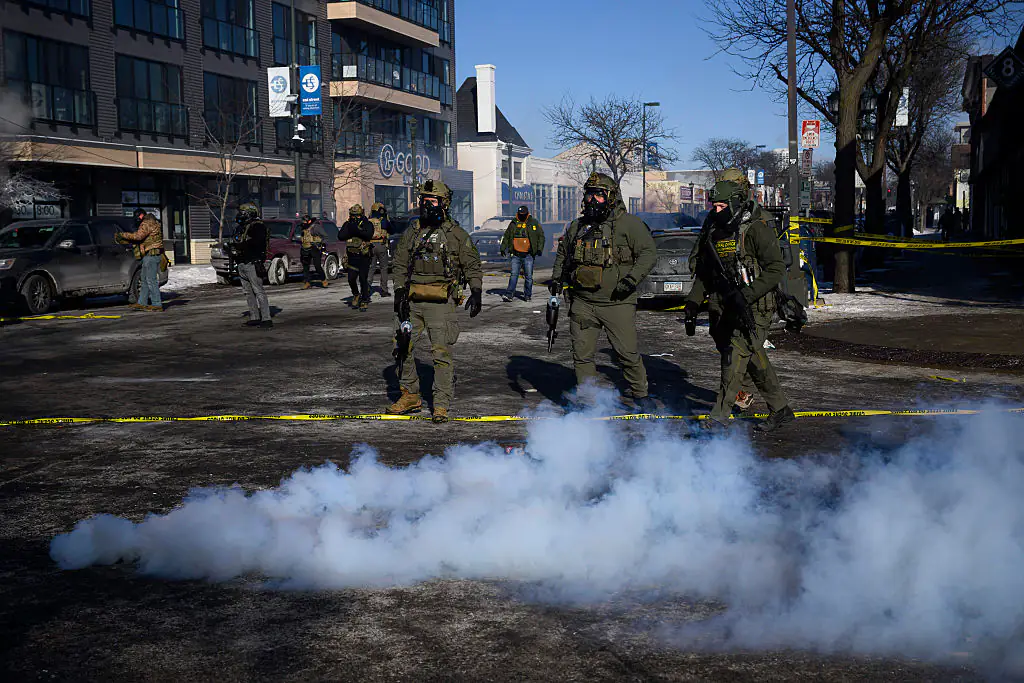
The deadly encounter triggered tensions between federal and local authorities in Minneapolis. Protesters have gathered to demand accountability and to oppose the presence of ICE and other federal immigration agents in the city, with clashes reported near the shooting site.
Federal officials have defended the agents’ actions, with the Department of Homeland Security saying Pretti posed a threat. However, numerous eyewitness accounts and bystander video reviewed by major news outlets show Pretti holding a phone rather than a weapon just before being shot, a detail that has fueled criticism of the official narrative.
Local leaders, including Minneapolis and Minnesota officials, have loudly condemned the shooting and urged investigations into federal conduct. Demonstrations have extended beyond Minneapolis, reflecting national debates over immigration enforcement and use of force by federal officers.