


US4 min(s) read
Legal expert explains why ICE shooting of Alex Pretti, in Minnesota could be lawful under U.S. use-of-force law
.jpg_I4Ebof?tr=cr-0.338.2730.3068,f-webp,q-70,w-100)
A man has died following a shooting involving federal immigration officers in Minneapolis, prompting protests, political backlash and questions over whether the use of force was lawful.
The man has since been identified as Alex Jeffrey Pretti, a 37-year-old Minneapolis resident and registered nurse.
According to the Department of Homeland Security (DHS), federal officers were conducting what they described as a targeted operation when Pretti became involved in a confrontation with agents.
DHS claims Pretti was armed with a handgun and resisted officers during a physical struggle, leading one agent to fire shots. Pretti was pronounced dead at the scene.

However, video filmed by bystanders and shared online has raised questions about what happened in the moments before shots were fired.
Some footage appears to show Pretti being restrained during a chaotic scuffle, with conflicting interpretations over whether a firearm was visible or being handled at the time.
State and local officials have called for further investigation, and the shooting remains under review.
But how may law enforcement justify the shooting?
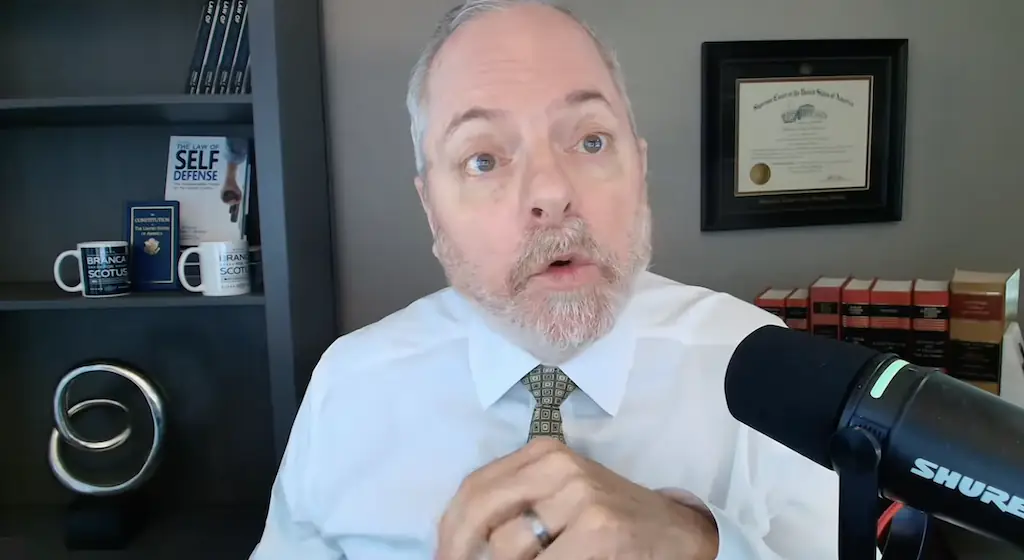
Self-defence and use-of-force attorney Andrew Branca, who specialises in analysing police and civilian shootings under US law, says the legality of the incident will ultimately hinge on how officers’ actions are assessed under the standard of “objective reasonableness”.
In his YouTube video analysing the shooting video, Branca emphasises that, under US Supreme Court precedent, officers are not judged on hindsight or perfect information, but on what a reasonable officer could have believed at the time.
In his YouTube video analysing the shooting, self-defence attorney Andrew Branca said:
“The officers have to have a reasonable perception of an imminent threat of unlawful deadly force harm. That’s it.”
He added: “Their perception does not have to be correct. Their perception has to be reasonable.”
According to Branca’s analysis, several factors would typically be relied upon by law enforcement to argue that the use of deadly force was lawful:
• A physical struggle in a volatile, crowded environment, which increases the risk of sudden escalation
• A perceived firearm during that struggle, which courts generally treat as an immediate deadly force threat
• The possibility that officers believed the individual was attempting to access or retain a weapon
• Reliance on warnings or reactions from fellow officers, such as hearing another officer shout that a gun was present
• The absence of a legal duty for police to retreat, unlike civilians in some states
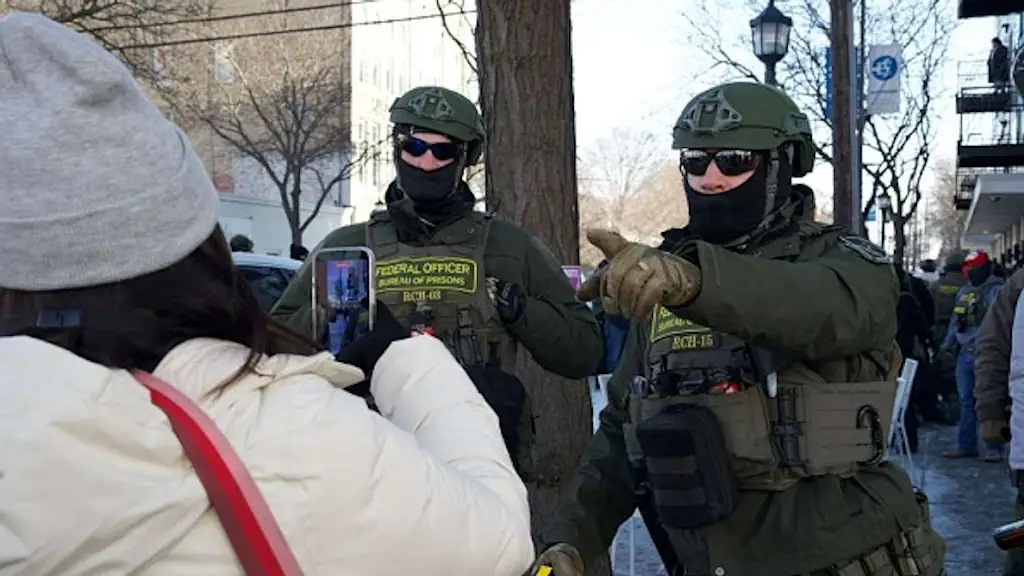
Branca also notes that the number of shots fired does not, on its own, determine whether force was excessive.
“You’re allowed to continue using deadly defensive force, continuing to fire shots until you can actually ascertain that the threat has been neutralized.“ he says, adding that reaction-time delays and multiple officers firing simultaneously are common in high-stress encounters.
The disputed facts still remain central to this story.
Branca stresses that his analysis is based on general legal principles rather than a final determination of what occurred.
The applicability of those principles depends on facts that are still disputed, including whether Pretti was visibly armed and how officers perceived the situation in real time.
Independent investigations are ongoing, and officials have said additional evidence, including body-worn camera footage, may be reviewed.
Until those inquiries are complete, no court has ruled on whether the shooting was lawful.
Branca’s assessment represents one interpretation of how existing use-of-force law could be applied, rather than a definitive legal conclusion.