


US3 min(s) read
Donald Trump gives new update on when $2,000 checks for almost every American could be handed out
.jpg_I4Ebof?tr=cr-0.338.2730.3068,f-webp,q-70,w-100)
Donald Trump has provided another update on the proposed $2,000 checks the he alleged would be delivered to most US citizens as a result of his tariffs.
Now, he’s given a bit more clarity on the timeline.
Donald Trump promised most Americans would receive the stimulus checks.
These checks have been reported for a while now, and just about every angle has been covered.
That includes when they’ll arrive, how much will be given out, if they’ll arrive at all, who will be eligible, and who actually paid the tariffs anyway - that one is particularly important.
But now the President has given the most concrete update we’ve had in a while on the status of the plan, and it looks like the timeframe for the $2,000 bonus cash has shifted somewhat.
At first, it even seemed as if the POTUS had forgotten about the plan altogether.
Read into that what you will.
.jpg_KxNZRz?tr=cr-0.0.1024.683,f-webp,q-70,w-1024)
When are the $2,000 checks Donald Trump promised set to arrive?
Well, that’s up for some debate as well, but at least we have some new info from Donald to run with.
When initially asked about his timeframe for the checks in November, he said ‘probably in the middle of next year [2026]’.
Now, in a new and wide-ranging interview with the New York Times, Trump has given some more clarity.
Well, in his own inimitable style, anyway.
When asked, Trump responded: "I did do that? When did I do that?"
Then, after catching on, he clarified: "Well, I am going to – the tariff money is so substantial that’s coming in, that I’ll be able to do $2,000 sometime.
“I would say toward the end of the year."
So, there you have it - we’ve moved back a little bit, but he’s still somewhat confident that most Americans will receive their $2,000 at some point.
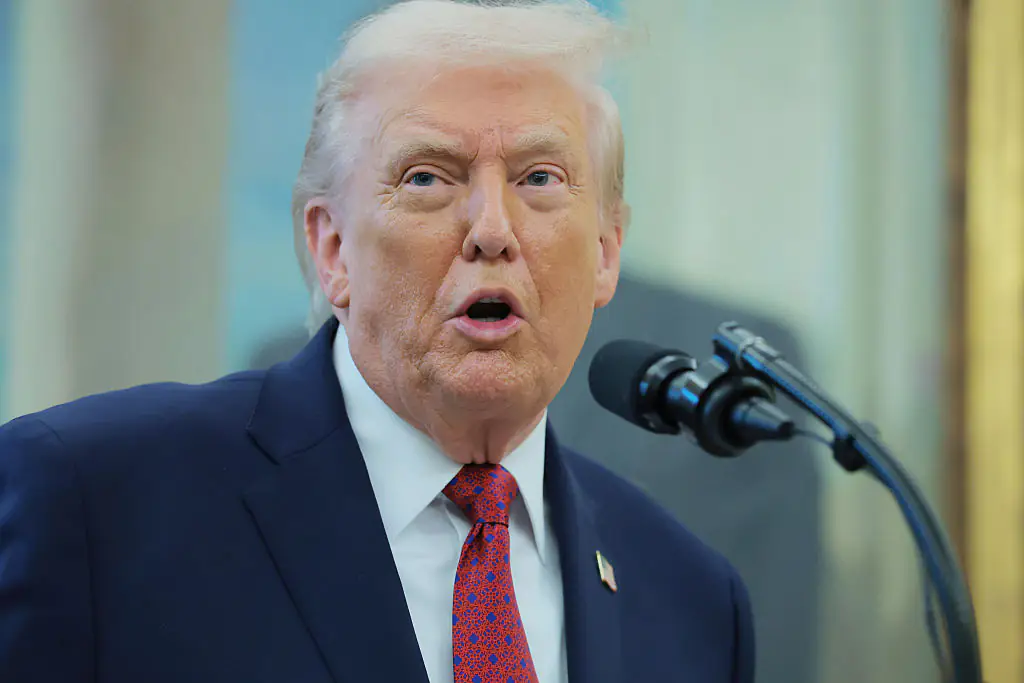
Not everyone thinks this is a good idea
A number of significant sources have questioned whether giving out $2,000 rebates to millions of people is a great idea.
Among those to voice their concern is the Committee for a Responsible Budget, who estimate that the checks could cost $600 billion, which is more than double the yearly amount the tariffs have raised.
Again, ask yourself who pays those tariffs and at what stage in the process.
The organization said: "With our national debt quickly approaching an all-time high and annual budget deficits approaching $2 trillion per year, it is imperative that policymakers focus on actually reducing deficits and putting debt on a downward path,
"Additional tariff revenue should be used to reduce deficits – as several administration figures have stated is the intention – instead of passing that revenue onto taxpayers in the form of cash dividends."