


US2 min(s) read
Trump gives worrying response after being asked for update on $2,000 checks he promised to give to almost everyone in America
.webp_SmgFsc?tr=cr-292.0.1244.952,f-webp,q-70,w-100)
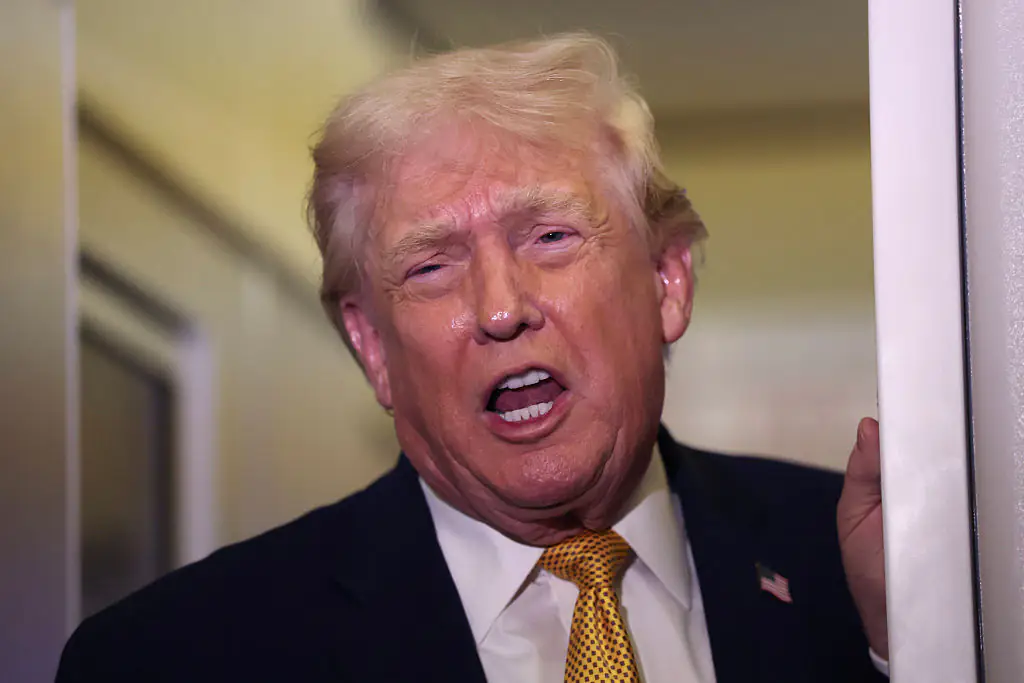
In a recent interview, President Donald Trump seemed to forget his earlier pledge to send $2,000 checks to most Americans, a promise based on revenue from tariffs. The interview, which took place in the Oval Office, caught the president off guard when New York Times reporter Katie Rogers reminded him of the commitment.
Trump, who had previously made statements suggesting the payments would come before the 2026 midterm elections, appeared confused and asked, “I did do that? When did I do that?”
After some hesitation, he clarified that he was thinking of a different program—the $1,776 bonus for service members. Despite the mix-up, Trump insisted that the $2,000 checks would likely be distributed toward the end of the year, relying on the substantial tariff revenue expected to be collected.
Trump addresses tariff-funded checks for Americans
The promise to send $2,000 checks to middle- and low-income Americans was initially based on the revenue generated by Trump’s tariffs. While the exact timeline for the payouts remains unclear, Trump told reporters that the money coming in from tariffs would make the payments possible. “The tariff money is so substantial that’s coming in, that I’ll be able to do 2,000 sometime, I would say, toward the end of the year,” he said.
However, doubts have been raised about whether there would be enough revenue to support the plan. According to the Committee for a Responsible Federal Budget, sending $2,000 checks to most Americans would cost approximately $600 billion, which exceeds the tariff revenue expected. As of September 30, $90 billion had been raised by tariffs, a figure that falls short of the estimated cost for the payouts.
Legal challenges and inflation concerns
The ongoing legal battle over the tariffs could affect whether the promised checks materialize. The U.S. Supreme Court is set to rule soon on the legality of the tariffs, and if the decision goes against the administration, it could result in a refund of the tariff revenue.
Additionally, the idea of using tariff revenue to fund the checks has raised concerns about inflation. Treasury Secretary Scott Bessent has expressed worries about the inflationary effects of distributing the windfall, urging Americans to save rather than spend the money if it arrives.
Republican lawmakers have also voiced their concerns, noting the potential for tariff-funded payments to exacerbate existing inflation, which, while lower than previous years, remains a concern.