ADVERT
US5 min(s) read
Published 11:24 02 Jul 2026 GMT
Eight death row inmates in Idaho could become the first people to face a horrific new $1.2 million execution method that has been described as "prolonged and agonizing".
On July 1, Idaho became the only state in the US where condemned prisoners will automatically face a firing squad instead of lethal injection, which is the method most commonly used in modern America.
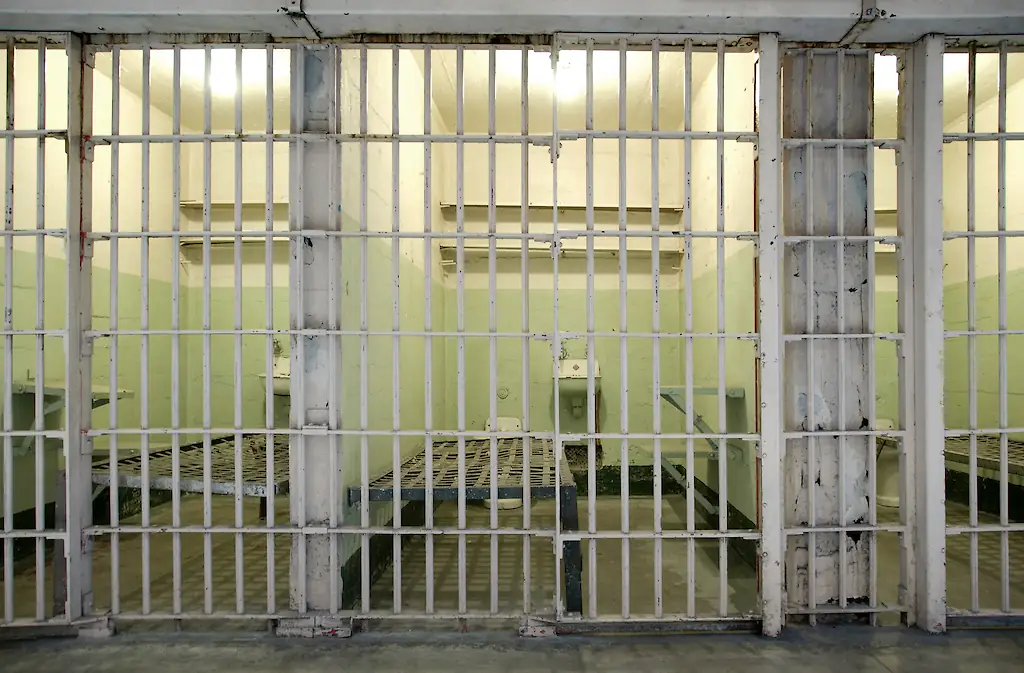
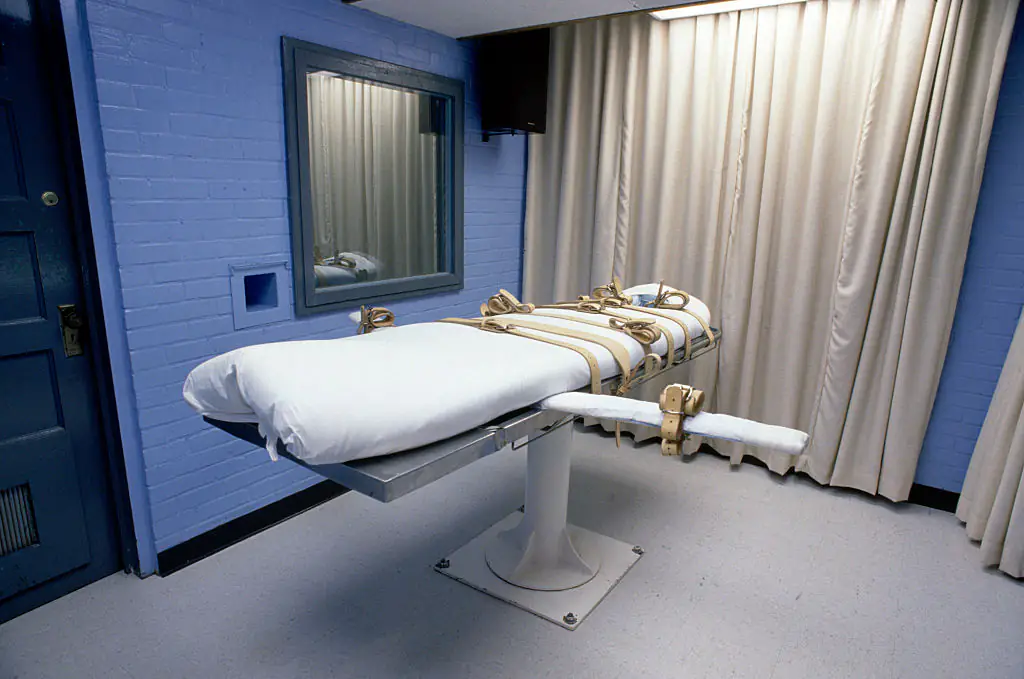
State officials have revealed exactly how the executions will take place inside the state's newly renovated execution chamber, which cost over a million dollars.

Idaho currently has eight inmates on death row, including seven men and one woman, all convicted of murder.
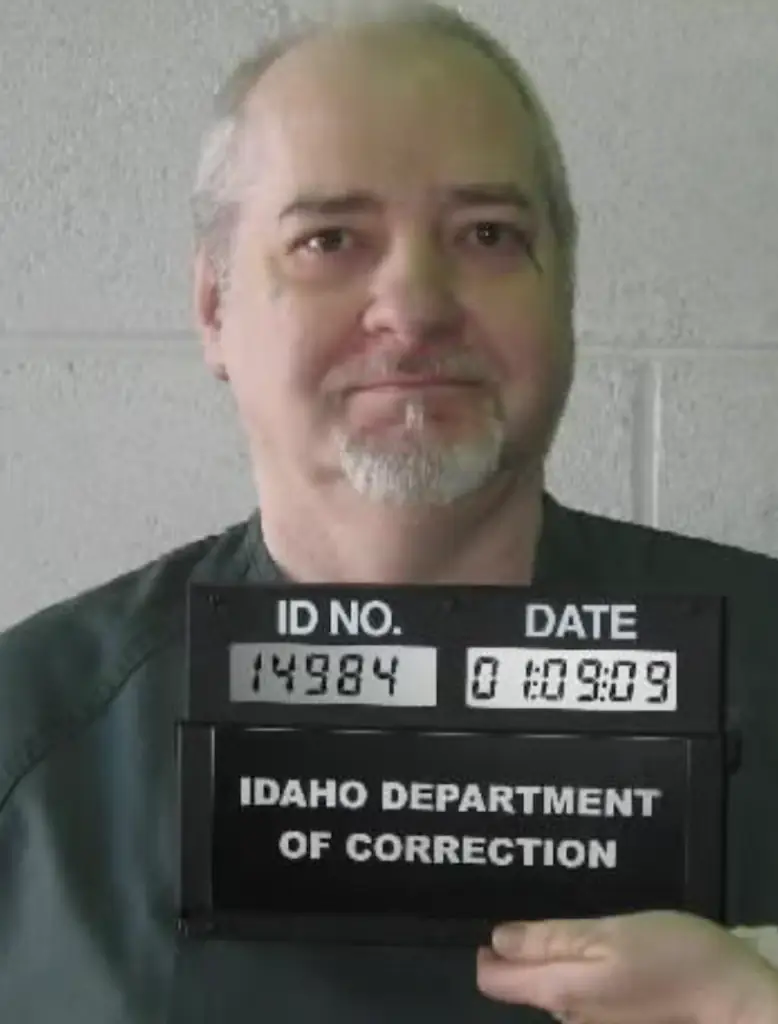
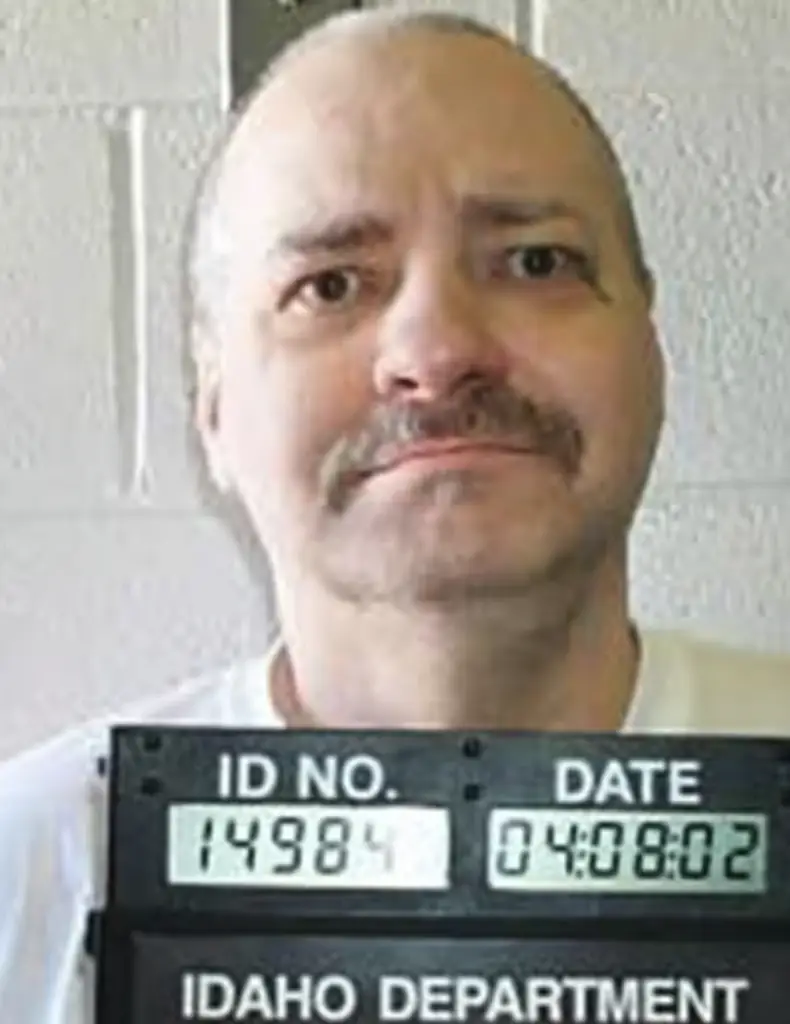
The move followed the state's failed attempt to execute convicted serial killer Thomas Eugene Creech in February 2024.
Execution staff spent about an hour trying to find an intravenous line for lethal injection, puncturing Creech several times before eventually abandoning the execution.
The incident sparked scrutiny of the method and led to lawmakers adopting firing squads as a more reliable alternative.
Unlike other execution methods, Idaho will rely on volunteer law enforcement officers rather than prison staff, the Daily Mail reported.
Each firing squad will consist of six officers, with three designated to fire the fatal shots while two alternates remain on standby.
A sixth officer will serve as team leader, loading the state-owned rifles and overseeing the execution.
The identities of the volunteers will remain confidential under Idaho law, with only the prison director and deputy director knowing who the shooters are.
Not every officer is eligible to volunteer, as participants must be certified Idaho law enforcement officers with at least three years of Peace Officer Standards and Training certification.
They must also have no disciplinary findings involving excessive force or firearms and cannot be related by blood or marriage to either the inmate, the victim, or their families.
Before qualifying, each volunteer must repeatedly hit a heart-sized target during firearms testing without missing.

Taxpayers have spent more than $1.2 million upgrading the state's execution facility.
Construction work cost more than $900K, while architectural design and engineering added another $314K.
The state has also bought five Daniel Defense DD5-P rifles chambered in .308 Winchester, complete with scopes, suppressors, and bipods, at a cost exceeding $24,000.
On the day before an execution, inmates will be offered a mild sedative, with an additional dose available several hours before the execution.
The prisoner will then be strapped into a specially designed execution chair while medical equipment monitors their heart activity.
A target will be placed over the inmate's chest before the prison director reads the death warrant and offers the prisoner a final opportunity to speak. They may also request an eye covering.
The three volunteer shooters will then stand around 10 yards away behind a protective wall and will shoot through a narrow opening.
Officials say the design is meant to limit the shooters' exposure and lower the potentially traumatic effects of carrying out the execution.
Once ordered, each officer will fire a single .308-caliber round simultaneously toward the inmate's heart.
Medical personnel will then monitor heart activity using an electrocardiogram for up to two minutes.
If the inmate is still alive, prison officials can authorize a second volley of shots before the county coroner officially pronounces death.
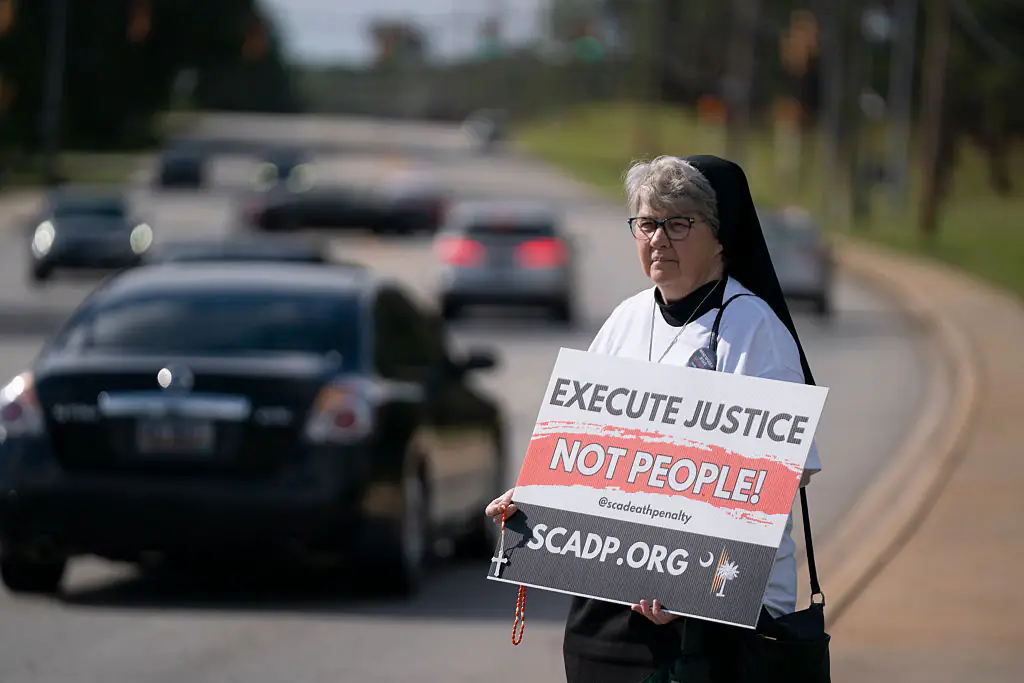
Idaho has become the seventh state to authorize firing squads as an execution method, with more states now permitting death by gunfire than at any other point in US history.
Many people in support of the method have argued that it is a dependable way of carrying out executions after years of problems involving lethal injection drugs and failed procedures across the country.
However, critics have contended that the law change does not address the ethical concerns surrounding capital punishment.
Robin Maher, executive director of the Death Penalty Information Center, slammed the policy, saying: "Every new execution method in history has been introduced with the promise that it will be foolproof and 'more humane' than the previous method. Unfortunately, those promises have always been broken."
She added that Idaho officials had spent more than $1 million of taxpayer money implementing "a firing squad - a method of execution that has already proven to be as flawed as any other".
Responding to the criticism, IDOC Director Bree Derrick told the Idaho Statesman: "The Idaho Department of Correction recognizes the gravity of carrying out a court-ordered execution and the responsibility that comes with it.
"Our procedures are designed to ensure that any execution is conducted in a secure, orderly, and dignified manner while safeguarding the rights of all individuals involved and maintaining the safety and security of staff, witnesses, and the public."
us2 min(s) read
Published 15:59 26 Mar 2026 GMT
us3 min(s) read
Published 11:07 17 Mar 2024 GMT
us3 min(s) read
us5 min(s) read
us3 min(s) read
Published 11:01 27 Jun 2023 GMT
One US state has made a major change to the default method of execution for convicted child sex abusers.
On Monday, the Idaho House unanimously passed a bill to allow the death penalty for adults who sexually abuse children age 12 and younger in Idaho, with the default method of execution being firing squad.
As reported by Idaho Capital Sun, House Bill 380, cosponsored by Rep. Bruce Skaug, R-Nampa, would allow the death penalty for aggravated lewd conduct with children age 12 and younger, a new criminal charge created within the bill.
The bill would also add mandatory minimum prison sentences for cases of aggravated lewd conduct with minors, applying only to the abuse of children aged 16 and under, that don’t meet the bill’s proposed criteria for death penalty eligibility.
Skaug told House lawmakers: "Unfortunately, Idaho has some of the widest or most lenient statutes on rape of a child in the nation."
In 2008 the US Supreme Court blocked death penalties for child rape in Kennedy v. Louisiana, while a child rape death penalty law was passed in Florida two years ago.
Skaug added that five other state are considering death penalty bills in cases of child rape.
He added that the death penalty would rarely be used under the bill, with the Idaho Department of Correction listing nine people currently on death row in Idaho.
The bill was passed by the Idaho House on Monday with 63 votes in favor and none against.
In order to become law, Idaho bills must pass the House and Senate, and avoid the governor’s veto. Currently, Idaho law only permits the death penalty in cases of first-degree murder with aggravating circumstances.
It comes after Idaho Governor Brad Little signed a bill into law last week making firing squad the state's main execution method.
Under the new bill, lewd conduct against minors age 12 and younger would only be eligible for the death penalty if it involve at least three aggravating factors, with more than a dozen aggravating factors listed in the bill.
These include already being found guilty of a crime that requires sex offender registration, committing lewd conduct against the same victim at least three separate times, being in a position of trust or having “supervisory or disciplinary power over the victim,” penetration with a penis, kidnapping, human trafficking the child, torture, using force or coercion, or being armed with a weapon.
A serial killer who has been on death row for 41 years has had his execution called off by authorities for the tenth time.
Thomas Eugene Creech was supposed to be the third death row inmate in the US to be executed so far this year.
But a mere hour after Creech went into the death chamber, Department of Correction Director Josh Tewalt canceled the execution after it was determined that “the medical team could not establish an IV line,” according to the Idaho Department of Correction’s website.
“I made the decision to stand down the execution based on the professional advice of our medical team,” Tewalt said in the statement, adding that he would allow Creech’s death date to expire and not try again that day. “It was the right decision.”
The Department of Correction did not reveal how many times the execution of Creech was attempted between 10 and 11AM.
But Federal Defender Services of Idaho said in a statement on February 28 that they “tried and failed 10 times to access Tom’s veins in both of his arms and both legs.”
Federal defenders referred to it as a “botched execution,” claiming that the serum officials had planned to use was “mysteriously acquired pentobarbital.”
“We are angered but not surprised that the State of Idaho botched the execution of Thomas Creech,” they said, adding: “This is precisely the kind of mishap we warned the State and the Courts could happen when attempting to execute one of the country’s oldest death-row inmates in circumstances completely shielded in secrecy despite a well-known history of getting drugs from shady sources.”
Creech - a convicted murderer on death row since 1983 - was found guilty of at least five killings in three states and is suspected in some others, according to the Associated Press.
Listed as one of eight death row inmates in the state, Creech was put on death row for fatally beating a prisoner in Ada County.
In 1981, Creech murdered David Jensen – a young, disabled man, who was behind bars for car theft – by subjecting him to a brutal beating with a battery-filled sock.
Over 40 years later, on the night before Creech was set to be executed, he met with his wife.
For his last meal, Creech opted for fried chicken, mashed potatoes with gravy, corn and rolls. He ate ice cream for dessert.
At 8:34AM on Wednesday, the United States Supreme Court issued orders in which it denied any pending applications to halt the killer's execution.
Those invited to attend his execution were taken into a gallery at around 10AM.
Authorities have not set a new new date for Creech’s execution.
In his statement on Wednesday, Tewalt spoke about the plan to use alternative execution methods.
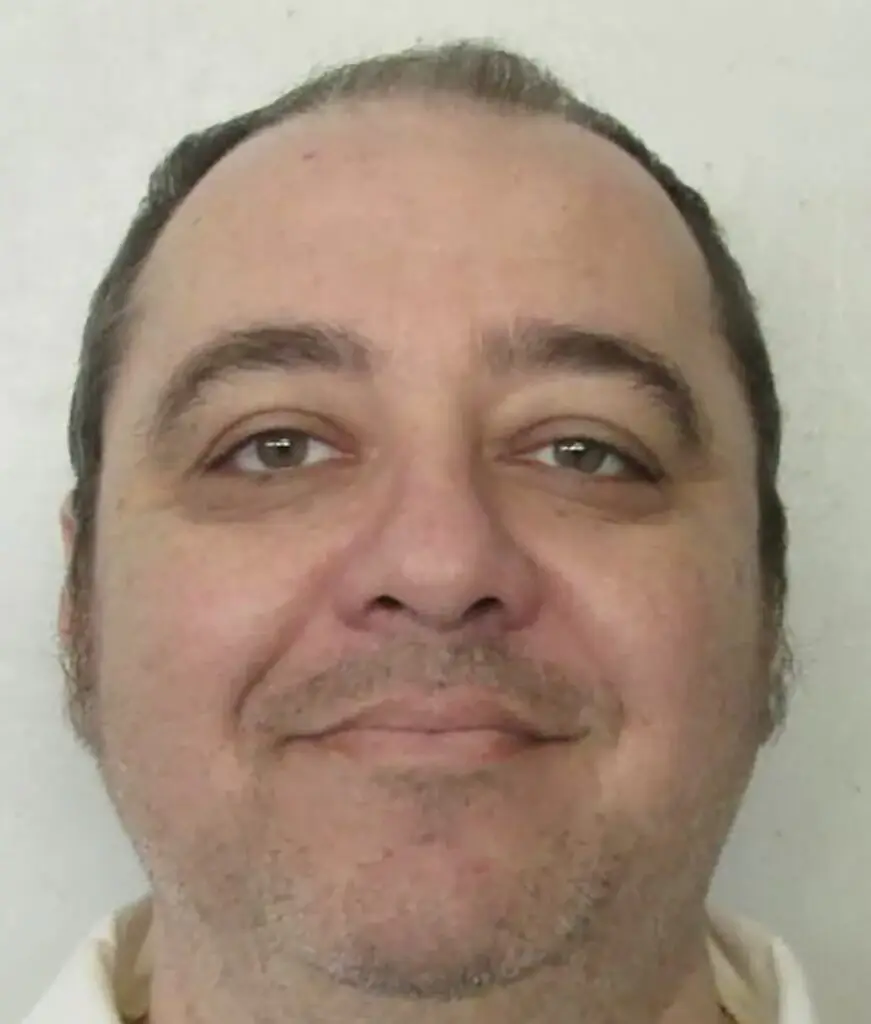
In January, Alabama executed the first US citizen with nitrogen gas in what Kenneth Eugene Smith’s lawyers referred to as an “experimental, never-before-used method” and which led to backlash after witnesses watched on as Smith convulsed during his execution.
A death row inmate can be put to death by firing squad in some states including South Carolina.
Published 14:49 31 Aug 2023 GMT
A controversial new death penalty method that will be used on an Alabama prisoner has been described as "unprecedented and untested".
As previously reported, Alabama is expected to become the first state to execute a prisoner by using nitrogen hypoxia - a method that involves forcing the inmate to breathe only nitrogen, which drains their body of oxygen and eventually kills them.
This was disclosed on Friday (August 25) after the office of Alabama Attorney General Steve Marshall asked the state Supreme Court in a court filing to set an execution date for death row inmate Kenneth Eugene Smith, 58.
The decision to introduce this execution style was first authorized in Alabama - as well as Oklahoma and Mississippi - in 2018 during a shortage of drugs used to carry out lethal injections, but the state has not employed the method to carry out a death sentence as of yet.
The new approach also comes after the state botched three executions in 2022, including Smith's own last November. The Associated Press reported that during the execution, state officials struggled to access a vein for the lethal injection until they found one of his two vital intravenous lines.
According to Alabama Department of Corrections Commissioner John Q. Hamm, executioners couldn’t successfully locate the death row inmate's second line despite trying "several locations." By the time the death warrant expired at midnight, Smith was left on the gurney for hours, unaware that his execution had failed.
"At some point before midnight, Defendants [ADOC] stopped their attempted execution of Mr. Smith, but not before inflicting grave physical pain and emotional trauma, the likes of which the human brain is not able to process," Smith’s attorneys alleged in a motion against ADOC.
While the state is now determined to get it right by using nitrogen hypoxia on Smith, it has already faced scrutiny due to the constitutionality of the procedure.
The Equal Justice Initiative - a legal advocacy group that has worked on death penalty issues - remarked that Alabama has a history of "failed and flawed executions and execution attempts" and "experimenting with a never before used method is a terrible idea," as cited by ITV.
"No state in the country has executed a person using nitrogen hypoxia and Alabama is in no position to experiment with a completely unproven and unused method for executing someone," Angie Setzer, a senior attorney with the Equal Justice Initiative added.
Robin Maher, the executive director of the Death Penalty Information Center, echoed the same sentiment in an interview with Huffington Post, telling the outlet that Alabama "is the very last state that should now experiment using an unprecedented, untested procedure with unknown consequences".
For further context, Smith was one of two hitmen convicted of capital murder for the murder-for-hire killing of a preacher’s wife, Elizabeth Dorlene Sennett.
Prosecutors said he and his friend, John Parker, were paid $1,000 each by Charles Sennett, the pastor of the Westside Church of Christ in Sheffield, Alabama, in 1988 to forcefully take his wife's life, per CBS News.
According to news reports, the reverend asked the inmate and Parker to carry out the killing as he was in debt and wanted to collect on insurance. In addition to this, Sennett was reportedly having an extramarital affair at the time.
Elizabeth was stabbed over and over again with a six-inch survival knife and suffered a total of ten stab wounds - eight to her chest and two to her neck - which resulted in her death.
After the gruesome murder, the victim's husband took his own life when investigators began to focus on him as a possible suspect, per court documents, as reported by Daily Mail.
Speaking about the heinous crime, Attorney General Marshall said in a statement, cited by WPTZ: "It is a travesty that Kenneth Smith has been able to avoid his death sentence for nearly 35 years after being convicted of the heinous murder-for-hire slaying of an innocent woman, Elizabeth Sennett."
Published 14:38 22 Jan 2024 GMT
The Alabama death row inmate set to be executed on Thursday knows exactly how to feels to be led into a "death chamber" - because he's already been there once before.
Kenneth Smith, a 58-year-old inmate at the Holman Correctional Facility in Alabama, is set to face an unprecedented execution method in the United States.
On Thursday (January 25), Smith is scheduled to be judicially killed using nitrogen hypoxia, a technique that has never been used for capital punishment in the country.
Prior to his scheduled execution, Smith will be transported to the facility's "death cell" on Tuesday - the name given to the holding unit for condemned prisoners awaiting their demise. According to The Guardian, this cell is located roughly 20 feet from the death chamber where - unless Smith is granted a last-minute reprieve - he will be executed.
Unbelievably, this is a feeling and experience Smith knows all too well.
In November 2022, Alabama's Department of Corrections placed Smith in the death cell as they prepared to execute him by lethal injection.
On November 17, 2022, guards placed Smith in handcuffs and leg irons and led him to the execution chamber, where he was strapped tightly to the gurney. Smith’s lawyers later details his experience in court documents, writing: "[Smith] believed that he would die soon and that there was nothing more that could be done".
But despite preparing himself for imminent death, it never came.
During that ill-fated execution, he endured four hours on the gurney as officials struggled to find a suitable vein for the procedure.
Smith was subjected to numerous puncture holes in his body and even suspended upside down during the ordeal.
The Guardian reported at the time that at 10:00PM that day, a three-person IV team - their identities concealed behind green, blue, and red scrubs - entered the chamber and prepared to administer the drugs that would end Smith's life. This was a lethal cocktail of midazolam hydrochloride, rocuronium bromide, and potassium chloride.
Blue Scrubs secured a tourniquet around Smith's upper arm and inserted a needle. When Smith protested, claiming the needle was piercing his muscle, Blue Scrubs reportedly responded: "No, I'm not."
Following the failed attempt, Green Scrubs resorted to striking Smith's right hand and repeatedly inserting needles into it. Smith said he experienced excruciating pain with each jab, as the needles went in and out, moving under his skin.
When the team could not locate a suitable vein, Blue Scrubs instructed the prison guards to flip the gurney backward. This peculiar maneuver positioned Smith with his feet pointing towards the ceiling and his head bowed to the ground.
Subsequently, the IV team exited the chamber, leaving Smith in this distressing position for several minutes. Upon their return, they restored the gurney to its original position.
Clad in face masks and shields to protect against potential blood splatter, Red Scrubs wielded a large-gauge needle. He attempted to insert it beneath Smith's collarbone, aiming to initiate a central line IV in his subclavian artery.
Despite five or six attempts, the needle proved unsuccessful. In a final effort, a deputy warden repositioned Smith's head to provide a clearer path for the needle, intensifying the harrowing ordeal.
All of the attempts were unsuccessful.
Now, a mere 14 months later, Smith faces a return to the death cell and the prospect of another execution attempt. However, this time, the protocol is different and untested.
The novel execution method awaiting Smith involves nitrogen gas, which has never been utilized in capital punishment in the US. The process involves forcing the inmate to breathe pure nitrogen, depriving them of the oxygen required to sustain vital functions.
This approach to execution has raised ethical concerns and has been rejected by veterinarians for euthanizing most animals, except for pigs.
Smith's previous execution attempt has taken a significant toll on his mental health, leading to a diagnosis of post-traumatic stress disorder (PTSD). He now relies on a combination of medications, including those for migraines, insomnia, anxiety, and depression, which are often associated with severe trauma.
Smith, who is currently on death row at William C. Holman Correctional Facility, was convicted for the 1988 murder of Elizabeth Dorlene Sennett; the culmination of a tragic plot involving her husband, a local minister entangled in an affair, and debt. Smith was one of two men convicted of capital murder for the murder-for-hire killing of a preacher’s wife, Elizabeth Dorlene Sennett.
Prosecutors said Smith was paid $1,000 by Charles Sennett, the pastor of the Westside Church of Christ in Sheffield, Alabama in 1988, to forcefully take his wife's life, per CBS News.
Prosecutors have confirmed that they will be seeking the death penalty against Bryan Kohberger, who is accused of murdering four university students in Moscow, Idaho.
Kohberger, 28, is currently facing four counts of first-degree murder and one count of felony burglary after four students were killed at their home off-campus last November.
Kaylee Goncalves and Madison Mogen, both 21, and Xana Kernodle and Ethan Chapin, both 20, were stabbed to death in the late-night attack on November 13, while two others in the home were unharmed.
Following a six-week manhunt, Kohberger was arrested on suspicion of the murders, but a judge entered a "not guilty" plea on his behalf in May after he chose to "stand silent" in court.
In a new court filing, prosecutors wrote: "Considering all evidence currently known to the State, the State is compelled to file this notice of intent to seek the death penalty."
Top prosecutor Bill Thompson added that the case met the standard for the death penalty as the acts were "especially heinous, atrocious or cruel" and "exhibited utter disregard for human life".
The statement read: "The State gives this notice based on the fact that it has not identified or been provided with any mitigating circumstances sufficient to prohibit the triers of fact from considering all penalties authorized by the Idaho legislature including the possibility of a capital sentence.
"Consequently, considering all evidence currently known to the State, the State is compelled to file this notice of intent to seek the death penalty."
Investigators revealed that DNA had been found on a "leather knife sheath" at the scene and documents which were unsealed in January showed that police collected a knife, Glock pistol, black gloves, a black hat, and a black face mask while searching Kohberger's home.
Police also seized his white 2015 Hyundai Elantra, which eyewitnesses had claimed to see in the area around the time, and dismantled the vehicle.
Kohberger's attorney has criticized the prosecution for relying on investigative genetic genealogy - which is when DNA from crime scenes is used to identify suspects through other genetic DNA profiles or matches - calling it a "bizarrely complex DNA tree experiment".
According to the prosecution, the FBI went to public DNA sites to match the results found on the knife sheath, allowing them to hone in on Kohberger as the main suspect.
Kohberger had been studying for a PhD in criminology at Washington State University, just eight miles across the Idaho/Washington border from Moscow, where the murders took place.
Following the news that the death penalty would be sought, Goncalves' family said they were "grateful" for the decision, adding in a statement: "We continue to pray for all the victims families and appreciate all the support we have received."
Kohberger's trial is due to begin on October 2.