


US3 min(s) read
Expert reveals grim reason why very few human remains may be found after Florida Learjet 60 crash

A funeral director has revealed why investigators could face an extraordinarily difficult task recovering and identifying the remains of the nine people killed in the Florida Learjet 60 crash.
Raymond Whitaker has spent over 40 years working in the funeral industry, claiming his experience preparing bodies has given him an insight into what can be expected of the remains of the nine who died on board.
Expert reveals grim reason human remains may never be found
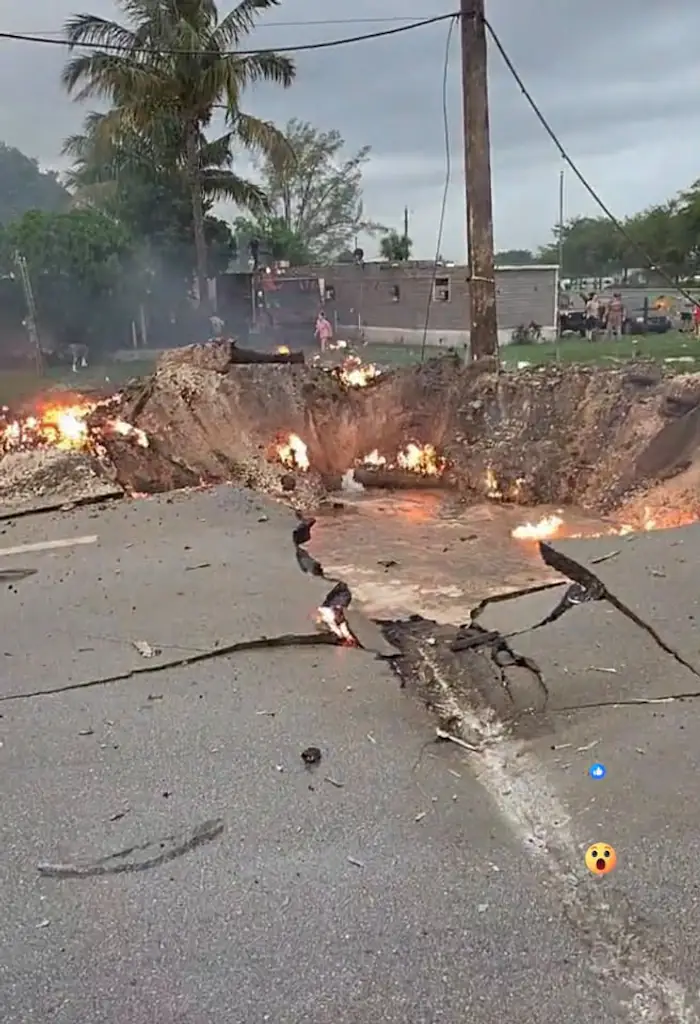
The Learjet 60 crashed near Greenacres, Florida, last Sunday, November 1, after reportedly plunging thousands of feet in little more than a minute, with Whitaker explaining that the combination of several factors could make recovering human remains particularly challenging.
He said: "When a plane hits at that speed, in that fireball, what the science says about the bodies, why identification takes months, and what families actually face when they ask the most painful question, is there anything to bring home?"
Air traffic control recordings captured the aircraft descending from 35,250 feet to 8,750 feet in just over a minute, with first officer Nathalia Filgueiras declaring a Mayday before reportedly saying: "We're going to hit the ground,” after initially reporting moderate icing and turbulence.
Whitaker said the speed at which the aircraft descended, combined with its forward velocity, would have created an enormous impact force, and while the precise impact speed has not yet been released by investigators, he explained that the human body can only withstand a limited amount of acceleration before sustaining catastrophic damage.
He claimed: "When an airplane traveling at several hundred mph stops in zero distance, that is when it hits the ground and goes nowhere, the G forces reach into the hundreds."
He continued: "At that level of force, and I say this with absolute respect for the nine people on board, the human body no longer retains its shape. Bone, internal organs, soft tissue, all experience the same force in the same instant."
The funeral director also added that the subsequent fire could further complicate the recovery process, with Jet A fuel, commonly used in aircraft, reaching extremely high temperatures, with concentrated fires potentially exceeding 1,000C.
Whitaker explained that the body can be destroyed at such high temperatures, and after such a devastating impact, formal identification could potentially take weeks to months, and may never provide an accurate answer, with some of the remains feasibly destroyed.
Additional factors that may play a part in making the identification process unachievable

An additional complication is the possibility that the aircraft began breaking apart before it hit the ground, with NTSB board member Tom Chapman previously warning that investigators could find debris some distance from the main crash site.
Whitaker explained that if the aircraft broke apart while still in the air, debris and human remains could have been carried away from the main impact site, meaning recovery teams have to search a considerably larger area than the crater itself.
He claimed: "That means the search area is not just the crater on Military Trail. It is a much wider zone that includes yards, rooftops, parking lots, and anywhere the wind carried material."
The funeral director also added that the presence of rainwater could pose another issue when finding and identifying the remains: "Water does not just make access difficult. Water dissolves biological evidence. Water carries bacteria that accelerate decomposition. Every hour of rain is another hour that the chance of recovering usable DNA decreases."
As yet, the investigators haven’t confirmed whether any of the remains of the nine victims on board have been located or identified.