


US4 min(s) read
Forensic expert analyzes Jeffrey Epstein's autopsy photos and claims he died in a different way than previously thought

A forensic expert has come forward with a new assessment of the 2019 death of convicted sex offender Jeffrey Epstein, arguing that the financier was killed in prison rather than taking his own life.
Speaking to BBC Newsnight, Professor Michael Freeman explained that his review of the New York City medical examiner's file suggests Epstein was strangled, most likely from behind.
Freeman, who has previously served as a cause-of-death expert to US attorneys general in death-in-police-custody cases, including that of George Floyd in Minnesota, published his research and the medical examiner's files after presenting his findings in London on Monday evening.
His conclusions are based on files and photographs from the official autopsy report provided to him by Epstein's brother, Mark Epstein, who has consistently maintained that his brother was murdered. Freeman did not examine the body in person, and his research has not yet been peer-reviewed, though he emphasized that his analysis is independent and that he was not paid by Mark Epstein.
Evidence of a suspected assault
According to Freeman, the autopsy photographs and files reveal physical signs pointing toward an assault. He pointed to a deep hemorrhage in Epstein's left shoulder, as well as facial injuries that appear consistent with being struck. Freeman argued that the overall evidence aligns most closely with strangulation via a ligature, which he believes was subsequently used to suspend Epstein's body from a bunk bed in his cell.
Freeman identified what appear to be fingernail marks located above the ligature mark on Epstein's neck. He told the BBC that these marks "would be consistent with strangulation, particularly from behind. And the attempt by the victim to try to remove the ligature from the neck".
Looking at the totality of the files, Freeman stated that "the injuries and the way the body was found don't match up. There's only one remaining explanation then, and that is that the death was as a result of a homicide."
He also raised concerns about procedural gaps, mentioning that in an investigation of a hanging in custody, he would have expected a photograph to be taken before the body was lowered.
The official findings
Freeman's assessment directly contradicts the 2019 ruling by the New York City medical examiner's office, which determined that Epstein's injuries were consistent with suicide and found no defensive wounds typical of a homicide.
Dr. Barbara Sampson, who was the chief medical examiner at the time of the autopsy and ruled the death a suicide, has previously stated: "I stand firmly behind our determination of the cause and manner of death for Mr. Epstein."
The medical examiner who performed the autopsy also told the Department of Justice (DoJ) Office of the Inspector General that the injuries were indicative of suicide by hanging rather than homicide by strangulation, reiterating the absence of defensive wounds.
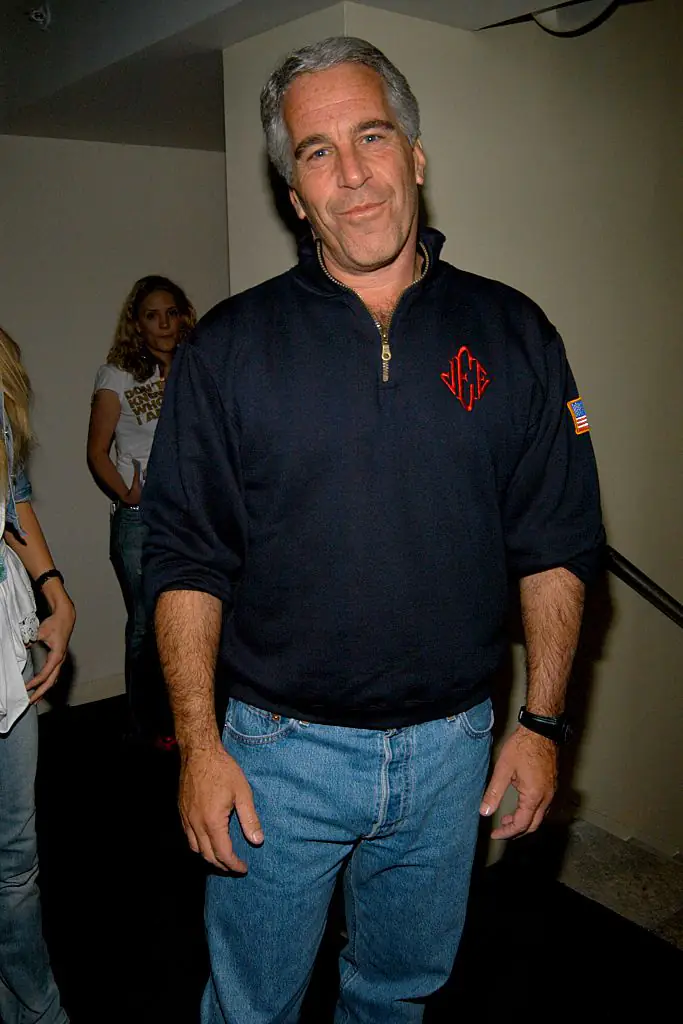
A DoJ investigation into Epstein's incarceration detailed that the prison guard who discovered Epstein on August 10, 2019, immediately called a second colleague for assistance, lowered the body to the floor, and began resuscitation efforts.
The report also showed that Epstein's death occurred at the Metropolitan Correctional Center in New York City just one month after he had been briefly placed on suicide watch. At the time of his death, Epstein was awaiting trial on federal sex trafficking charges involving a network of underage girls, having previously pleaded guilty in 2008 to soliciting prostitution from a minor.
Addressing questions and skepticism
When pressed on who might be responsible for killing Epstein if his interpretation of the evidence is accurate, Freeman said he had "no idea". He added: "That is not something I have an opinion about. That isn't any part of any investigation that I've done."
Freeman also pushed back against suggestions that his conclusions veer into conspiracy theory territory, inviting outside scrutiny of the files he made public. "I have the luxury of being able to say, don't take my word for it, let everybody look at it," he said. "If you think I'm still a conspiracy theorist because I'm looking at something that looks like a strangulation and say, I think it is a strangulation and I don't think it could be a hanging, show me where I got it wrong."
He concluded by welcoming informed critiques from other experts: "I'm wide open to that. I'm an academic. I'm quite happy to hear people's theories on things that are informed," he said.