


US3 min(s) read
Joe Rogan speaks out on 'problem' he has after Renee Good killing in blunt statement
.webp_QQJmGo?tr=cr-345.0.1535.1190,f-webp,q-70,w-100)
Joe Rogan has sparked a heated conversation with his recent comments on the fatal shooting of Renee Nicole Good and the role of Immigration and Customs Enforcement (ICE) agents in the United States.
In a discussion on his podcast, The Joe Rogan Experience, Rogan did not hold back his criticism, claiming that ICE agents are increasingly being viewed as "murderous military people" by the American public.
Rogan’s Critique: ICE Agents as “Villains” in the Eyes of the Public
During his conversation with Republican Senator Rand Paul of Kentucky, Rogan referred to Good’s death as "horrific" and expressed deep concerns about the broader implications of ICE’s presence in American cities.
Rogan emphasized how the public perception of ICE agents has shifted, stating: "After that woman was shot, unfortunately, I mean, everything's unfortunate about it. But one of the real problems is now, ICE are villains. And now people are looking at them like murderous, military people, that run the streets of our city."
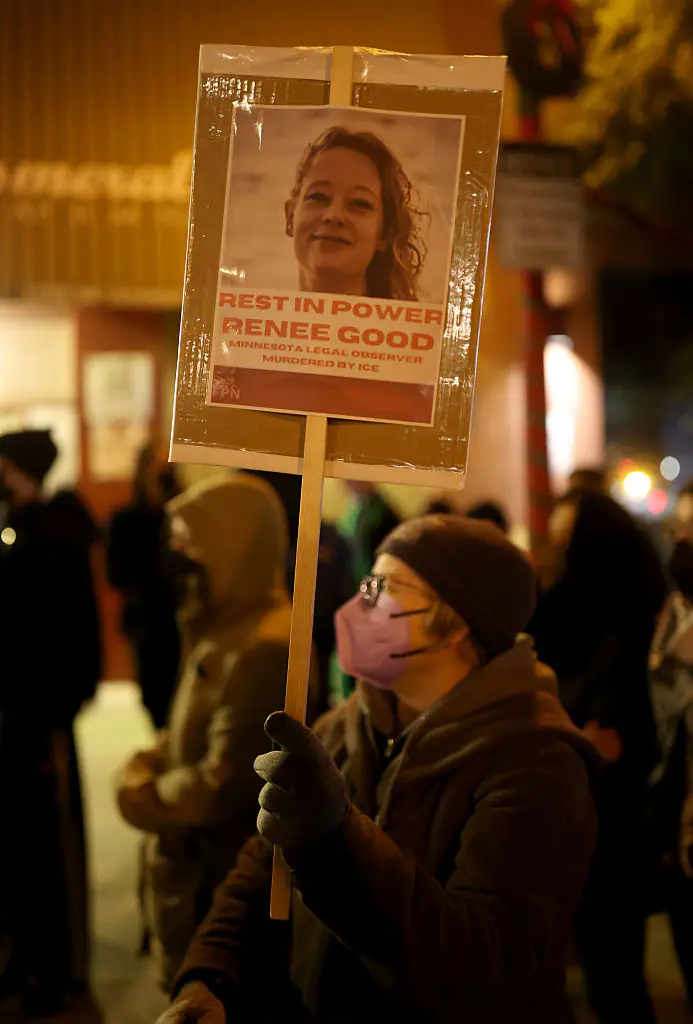
Rogan raised particular concerns about the lack of transparency with ICE agents, pointing out the stark differences between police officers and ICE officers when it comes to accountability.
"If you get arrested by a cop, you're allowed to ask the cop, 'what is your name and badge number?' And you could film that cop," Rogan explained.
"But if you get arrested by an ICE agent, you have no such right, you're wearing a mask, they don't have to tell you s**t. That's a problem, that's a problem on our city streets."
Rogan’s frustration extended beyond the incident itself. He questioned whether the use of force was justified, especially when considering the life of a U.S. citizen.
"To watch someone shoot a US citizen, especially a woman, in the face... It just looked horrific to me," Rogan said. "When people say it's justifiable because the car hit him, it seemed like she was turning the car away."
He continued, asking: "Is there no other way to handle this?"
He further noted that while many Americans understand the necessity of police forces, there’s a significant concern about the role ICE plays in immigration enforcement, particularly regarding how they operate in local communities.

ICE’s Response: Defending Their Actions
In response to Rogan’s remarks, the Department of Homeland Security (DHS) defended the agency’s actions in Minneapolis.
Tricia McLaughlin, DHS Assistant Secretary for Public Affairs, addressed Rogan’s criticisms during an appearance on Fox News.
In reference to Rogan’s podcast discussion, McLaughlin remarked: "If Tim Walz and Mayor [Jacob] Frey would let us in their jails, we wouldn’t have to be there at all."
McLaughlin made a point of clarifying the agency’s priorities, stating that ICE is targeting "680 illegal aliens that include murderers, rapists, child pedophiles, people who, whether you’re Republican or Democrat, you would never want these people to be on your streets or [to be] your neighbors."
She argued that ICE is forced to operate with a "physical presence" on the ground due to the lack of cooperation from state and local law enforcement.
McLaughlin also expressed the DHS’s desire for more accountability in their actions, stating, "We want to give accountability for it and we want to give answers."
The Bigger Picture: ICE and Public Perception
Rogan’s criticism of ICE touches on a deeper issue surrounding the militarization of law enforcement and the agency’s controversial tactics.
He likened ICE’s presence in the streets to that of a "Gestapo," raising concerns about the moral implications of aggressive immigration enforcement.
"Are we really going to be the Gestapo? 'Where are your papers?'" he questioned, emphasizing the personal liberties at stake.