ADVERT
US4 min(s) read
The last US polio patient who relied on an iron lung has died at the age of 78, after spending most of her life within the machine.
Martha Lillard, from Shawnee, Oklahoma, contracted polio when she was just five years old, in 1953.
Lillard had celebrated her fifth birthday, on June 8, 1953, at Joyland amusement park in Kansas, and just over a week later, on June 17, 1953, she woke up with a sore throat and pain in her neck. When she was taken to hospital, she was diagnosed with polio.
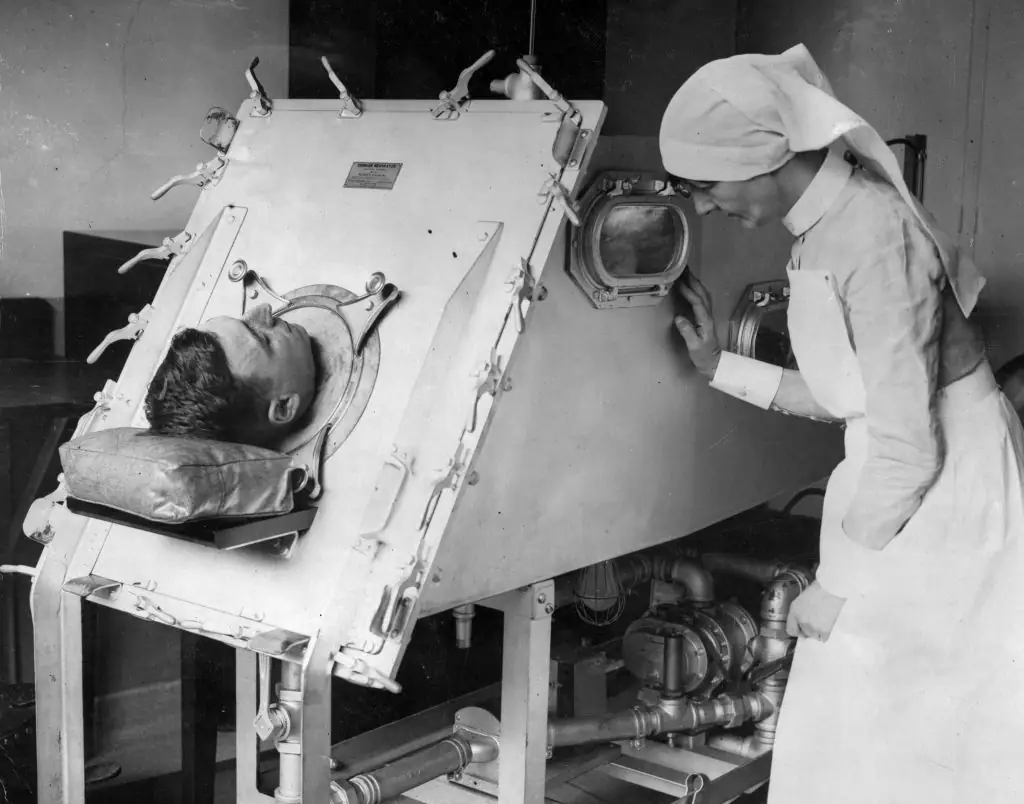
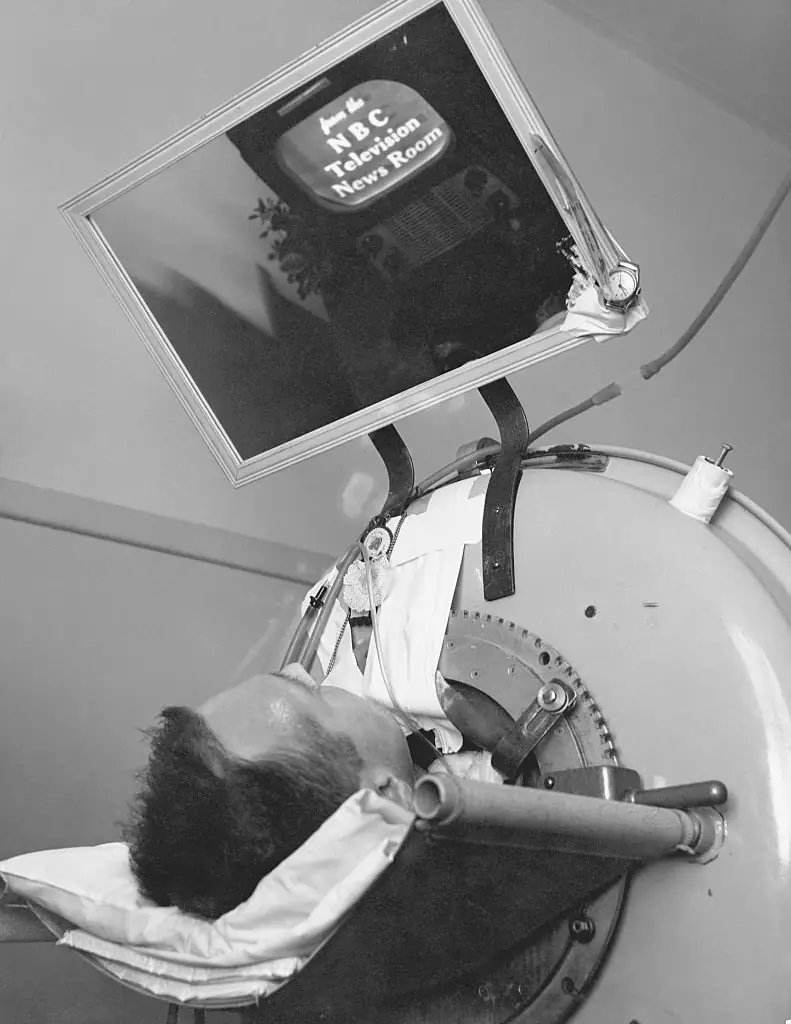
After spending six months in hospital, Lillard was placed into an iron lung - a negative pressure ventilator - to help her breathe, which she eventually chose to use for the rest of her life, sleeping in it at night.
Lillard told NBC News in a 2013 interview that it was "a huge relief" being put into the machine, adding: "It feels wonderful, actually, if you’re not breathing well. It makes all the difference when you’re not breathing."
Lillard died on June 26 in Oklahoma, per her online obituary, with her family paying tribute to her incredible life.
Despite being confined to the iron lung Lillard attended grade school for two hours daily before completing the rest of her education through tutoring.
Her condition did not stop her living life to the fullest, as her family made it possible for her travel, taking road trips to Missouri in a custom trailer, and staying at hotels with doors wide enough to accommodate Lillard's iron lung machine.
Lillard was also able to drive for a period of time, showing that she was not going to let her circumstances stop her.
Cindy McVey, her younger sister, told the Associated Press on Friday: "They told her she wasn’t supposed to live past 20 years old.
"She had the enthusiasm and the drive to continue living and make the best of her life."
McVey believes the effects of a long-term case of Covid-19 contributed to Lillard's death, stating that her sister's death certificate lists chronic pulmonary failure and post-polio syndrome as her causes of death.
Lillard's death comes two years after that of Paul Alexander, from Texas, who spent over seven decades within an iron lung after contracting polio at six years old.
He was paralyzed from the neck down by the disease, but went on to earn a law degree, write his own memoir, and even paint using a brush held in his mouth.
Alexander died on March 11, 2024, also aged 78, after being recognized by Guinness World Records as the "longest iron lung patient".
Thankfully, polio is now an extremely rare disease, with only 51 wild cases of the virus being recorded in 2025, but before vaccines were widely available, it was one of the most-feared diseases in the US, leaving thousands of people - mostly children - paralyzed.
Iron lungs helped to save thousands of lives during the epidemics, but were only intended to be used for a short time.
The machines were slowly phased out by the late 1950s as vaccination campaigns expanded, and other breathing devices which were inserted directly into the throat began to be used instead.
According to the Centers for Disease Control and Prevention, widespread vaccination reduced annual US polio cases to fewer than 100 in the 1960s, and fewer than 10 in the 1970s.
Polio was declared eliminated in the US in 1979, meaning it was no longer routinely spread among the public.
According to CNN, in later years, Lillard used the internet to learn about many topics, including her disease, which had left her paralyzed from the neck down, though she regained the use of her legs and partial use of her left arm through therapy, and was able to spend many years living independently and even making her own meals.
Lillard even met her husband online, having met him on a chat room following the September 11, 2001, terrorist attacks in New York, after she wanted to understand more about what happened.
According to McVey, Lillard spent over 20 years speaking to Baha Salh, who was from Egypt, until he was finally able to obtain a visa to travel to Oklahoma, where they finally married in February.
McVey added: "They were really soul mates. He’s extremely brokenhearted."
During the pandemic, Lillard - who already had less than 25 percent lung capacity - contracted Covid-19 twice, making the last five years of her life extremely difficult as it became harder for her to breathe. She spent almost 24 hours a day within the iron lung for the last two years of her life, according to McVey.
In recent years, McVey and Lillard had desperately searched for someone who would be able to fix the iron lung, which was one of several Lillard had had in her lifetime.
McVey tearfully added: "But since she’s the last one, we don’t need that anymore."
us4 min(s) read
health3 min(s) read
us5 min(s) read
celebrity3 min(s) read
The man who lived in an iron lung for 70 years has sadly passed away at the age of 78.
Paul Alexander, perhaps better known as "Polio Paul", was left paralyzed after contracting polio in 1952 when he was just six years old.
He had been living inside the machine that aids his breathing since he was a young child.
As per The Guardian, Paul was playing outside his home in Dallas, Texas, when his head started pounding.
Upon a quick inspection, his mother sent him straight to bed to rest but it wasn't long before his condition worsened until he got to the point where he could hardly move, swallow or cough.
His mom took him to the doctors where healthcare professionals concluded that they could not save the little boy, but after one doctor re-analyzed him and rushed him to the theater to perform "an emergency tracheotomy to suction out the congestion in his lungs" he was given a slim chance of living - though he could not breathe on his own anymore.
While Paul eventually recovered from the polio infection, his body remained paralyzed from the neck down and after 18 months, he was allowed to go home.
His GoFundMe page was updated on Tuesday, revealing he had passed away on Monday.
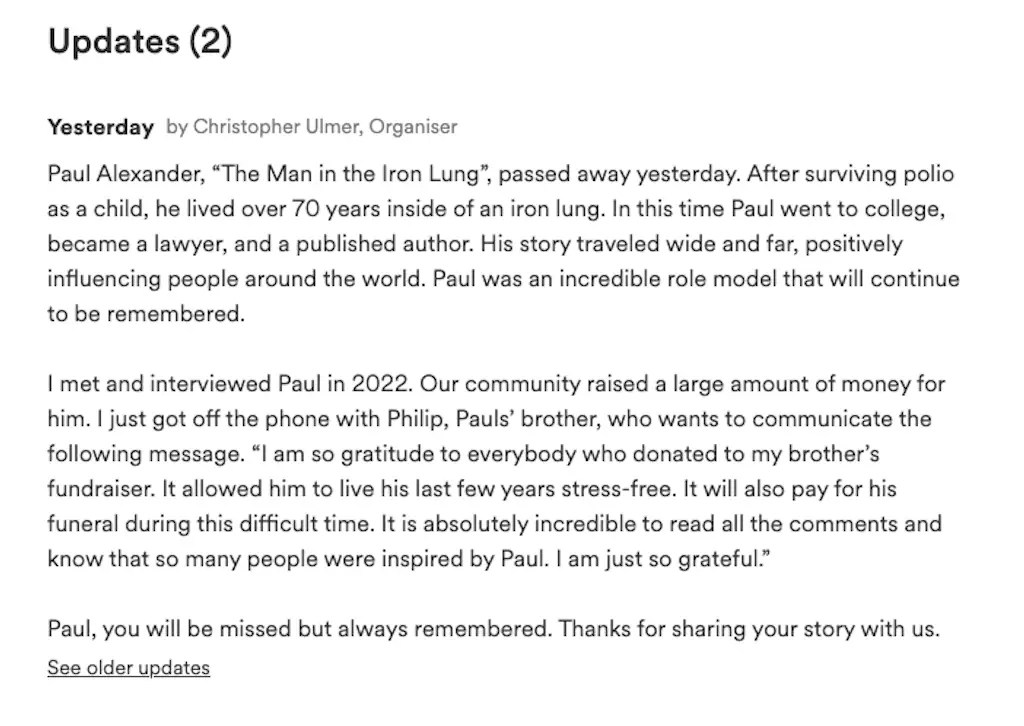
It reads: "Paul Alexander, 'The Man in the Iron Lung', passed away yesterday. After surviving polio as a child, he lived over 70 years inside of an iron lung. In this time Paul went to college, became a lawyer, and a published author.
"His story traveled wide and far, positively influencing people around the world.
Speaking during a documentary about his condition, he said: "People didn't like me very much back then, I felt like they were uncomfortable around me."
When asked what he did all day being confined to the machine, AKA his "old iron horse", he responded: "Well, the same thing everybody else does. I woke up, brushed my teeth, washed my face, shaved, and had some breakfast.
"I just needed a little bit of help," he added.
"I would read, or study something, paint a picture, or do some drawing. I hated just watching TV."
Paul had a tough time getting accepted into college, but with his dreams of becoming a lawyer hanging in the balance, he managed to persuade the establishment to let him in. They stated that he could study if only he gets the polio vaccination and remains under the watchful eye of a fraternity, to which he accepted.
Amazingly, he went on to pass all of his Bar exams and became a qualified lawyer.
Not only that, but he also went on to write a book with his mouth, in the hopes that it would provide people with inspiration to persevere through hardships.
Speaking of his motivation to write, he said: "No matter where you're from or what your past is, or the challenges that you could be facing, you can truly do anything. You've just got to set your mind to it and work hard."
"My story is an example of why your past or even disability does not have to define your future," he added.
According to the World Health Organization, "wild poliovirus cases have decreased by over 99% since 1988, from an estimated 350,000 cases in more than 125 endemic countries to six reported cases in 2021. Of the three strains of wild poliovirus (type 1, type 2 and type 3), wild poliovirus type 2 was eradicated in 1999 and wild poliovirus type 3 was eradicated in 2020" though the disease still remains a threat to those who have not been vaccinated.
82-year-old Mona Randolph, of Kansas City, Missouri, is one of the few people left in the United States who has to use the iron lung machine.
Randolph was just 20 years old when she contracted polio, a disease that attacks the spinal chord, causing paralysis and, sometimes, death. While the polio vaccine had been approved in 1955 - the year before Randolph contracted it - she wasn't fortunate enough to get it in time due to the fact that adults were considered to be at lower risk than children.
For Randolph, the symptoms started with nothing more than a headache, before she had a fever and became sensitive to sound and light. “I couldn’t stand to hear people talking in the kitchen. They’d whisper and it would hurt my ears. I couldn’t stand any light,” Randolph told the Kansas City Star, which was the first news outlet to report her story.
After spending a few days being sick, Randolph was taken to a hospital in Kansas City. Doctors immediately put her on an iron lung, a large mechanical respirator that uses negative air pressure to push air in and out of the lungs in patients who can’t breathe without assistance. The contraption was commonplace at the time but is rarely used in the present day.
Speaking to BuzzFeed News, Brian Tiburzi, executive director of Post-Polio Health International, estimates that between "three and five" iron lungs are still being used in the US.
For Randolph, while she survived polio, her left arm was paralysed and she became dependent on family and friends for help. Sadly, despite coming off of the iron lung, Randolph developed post-polio syndrome in the 1980s - a condition that is characterised by the weakening of the muscles that can happen years after recovery from polio.
Due to the fact that it took an incredible amount of effort to breathe, Randolph opted to begin using the iron lung again.
The 82-year-old spends her nights in the respirator, which moves her lungs so that she can breathe. In the daytime, she uses a much simpler machine.
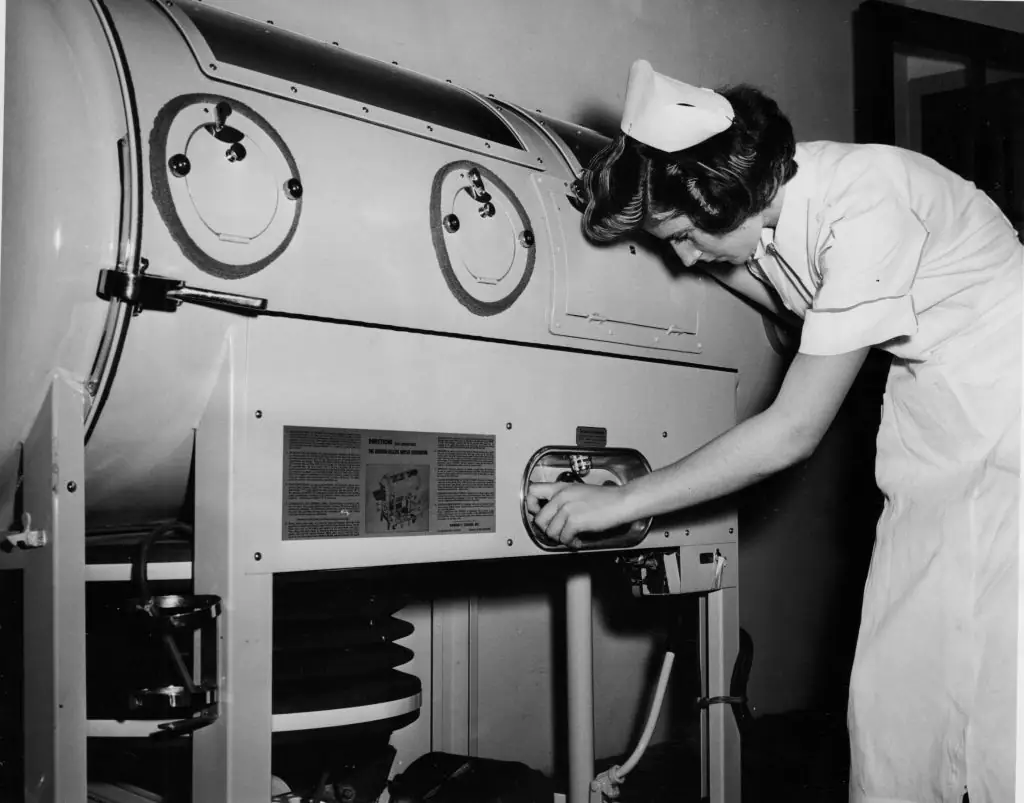
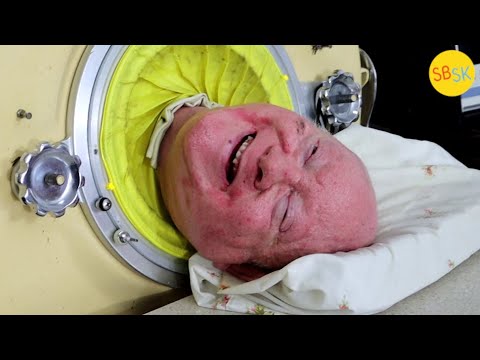
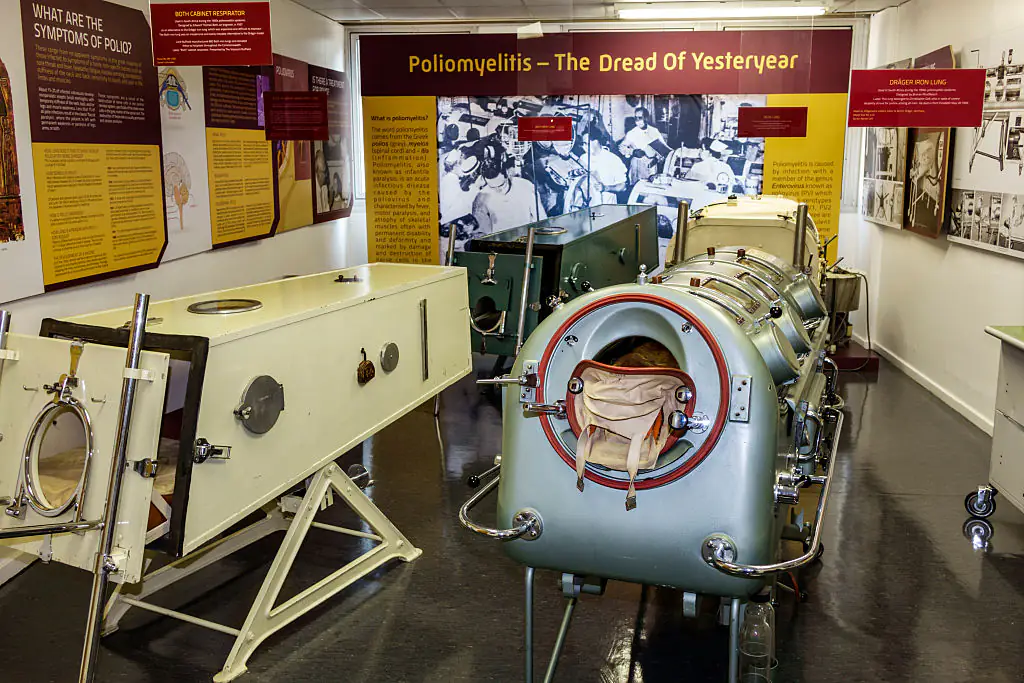
The iron lung is an airtight, six-foot-long metal tube that covers Randolph's entire body up to her neck. According to the Star, Randolph calls it her Yellow Submarine and, despite the fact that it is incredibly loud once it has been switched on, it is the only way she is able to sleep at night. She has been using it for the past 36 years.
The machine was developed in the 1920s and was aimed at helping patients breathe after they suffered from weakened or paralysed muscles in the chest - something which was often fatal. The machines became pretty much obsolete after the vaccine was implemented in the 1950s.
Speaking to the Star about how people can avoid getting polio, Randolph said that she believes “getting vaccinated is the thing to do” and that “it’s a personal decision". "But something like vaccinations that you can see the proof of with epidemics just seems more logical,” she said.
“I looked for years to find someone who knew how to work on iron lungs,” said Paul. “Brady Richards, it’s a miracle that I found him.”
When Brady brought it into his workshop to fix, it was so old that his younger staff were completely baffled by it. But they managed to fix it, and Paul's iron lung is back in top condition. Right now, Paul's writing a book about his life. How you ask? By using a pen in his mouth.How was Paul Alexander, the man who spent the vast majority of his life in an iron lung, able to survive for 70 years?
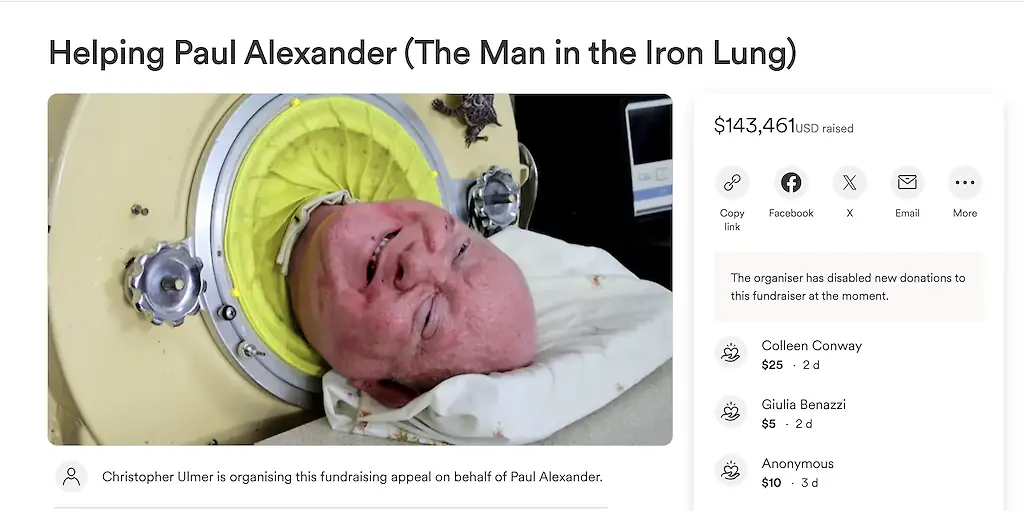
As previously reported, the late man - perhaps better known as "Polio Paul" - sadly died at the age of 78. His death was announced on Tuesday (March 12) in an update shared on the GoFundMe page set up to help with his housing and health care.
"Paul Alexander, 'The Man in the Iron Lung', passed away yesterday," the page read. "After surviving polio as a child, he lived over 70 years inside of an iron lung. In this time Paul went to college, became a lawyer, and a published author. His story traveled wide and far, positively influencing people around the world. Our community raised a large amount of money for him."
Alexander's brother also shared a message of his own, writing: "I am so [grateful] to everybody who donated to my brother’s fundraiser. It allowed him to live his last few years stress-free. It will also pay for his funeral during this difficult time. It is absolutely incredible to read all the comments and know that so many people were inspired by Paul. I am just so grateful."
In the summer of 1952, Alexander contracted polio at the height of the epidemic when more than 21,000 paralytic polio cases were recorded that year in the United States, according to the US Centers for Disease Control and Prevention.
According to The Guardian, his mom took him to the doctors where healthcare professionals said that there was nothing to be done for him. He was left on a gurney in a hallway, barely breathing.
However, one doctor decided to re-analyze him and rushed him to the theater to perform "an emergency tracheotomy to suction out the congestion in his lungs". Three days later, he woke up to his body being engulfed in a machine that "wheezed and sighed".
While Paul eventually recovered from the infection, the disease left him paralyzed from the neck down and unable to breathe on his own. But he was able to survive thanks to the iron lung, a gigantic metal cylinder that varies air pressure.
"The doctors told us Paul could not possibly live," his mother Doris Alexander said in his autobiography, per CNN. "There were a few times when the electrical power failed and then the lung had to be pumped by hand. Our neighbors would run over and help us pump it."
The late man spent seven decades in the medical machine and was even declared by Guinness World Records in March 2023 the longest-surviving iron lung patient in the world.
How did the Iron lung keep Alexander alive for more than 70 years?
The iron lung was invented by a team at Harvard University who wanted to counteract one of the most alarming symptoms of acute polio: Muscle paralysis. If paralysis affected the chest muscles, the person couldn’t breathe independently and would mostly die. Therefore, investigators looked to technology for a way to keep these patients alive.
As explained by the Science Museum, the device has a respirator that "worked by pushing air into the lungs by method of artificial respiration called External Negative Pressure Ventilation (ENPV)".
"The bellows sucked air out of the box in which the patient was sealed. As the air pressure in the box fell, the patient’s lungs automatically expanded, drawing fresh air into the diaphragm," it read. "When the bellows allowed air back into the box, the air pressure rose and the patient's lungs deflated passively, pushing air out of them."
The "whoosh" from the medical device became the reassuring sound of the patient's breathing.
Alexander had high ambitions and did not want to spend his whole life trapped in a metal coffin so he invented a technique that allowed momentary freedom.
At the age of 8, he learned to breathe on his own for up to three minutes by gulping in the air "like a fish" and swallowing it into his lungs, per The New York Times. After a year of perfecting his breathing with physical therapist Mrs Sullivan, he managed 180 seconds of unassisted breathing and was given a puppy, Ginger, for his efforts.
Despite the odds being stacked against him, 21-year-old Alexander became the first person to graduate from a Dallas high school without physically attending a class.
He then got into Southern Methodist University in Dallas - despite repeated rejections by the university administration - and went on to study law at the University of Texas at Austin.
For many years, Alexander was a lawyer in Dallas and Fort Worth, representing clients in court in a suit and a wheelchair that held his paralyzed body upright.
Our thoughts continue to be with his family and friends.
A man who suffered from the effects of polio was forced to live inside an iron lung machine and has been doing so for the past six decades.
In one of the world's most exceptional cases, Paul Alexander AKA 'The Man in the Iron Lung', has been living inside a machine that aids his breathing after contracting the poliovirus when he was just six years old.
In the following five days after contracting the life-threatening disease, his existence changed completely.
As per a detailed feature by The Guardian, it was reported that Paul was playing outside of his home in Dallas, Texas when his head started pounding.
Upon a quick inspection, his mom sent him straight to bed to rest but it wasn't long before his condition worsened until he got to the point where he could hardly move, swallow or cough.
His mom took him to the doctors where healthcare professionals concluded that they could not save the little boy, but after one doctor re-analyzed him and rushed him to the theatre to perform "an emergency tracheotomy to suction out the congestion in his lungs" he was given a slim chance of living - though he could not breathe on his own anymore.
While Paul eventually recovered from the polio infection, his body remained paralyzed from the neck down and after 18 months, he was allowed to go home.
Speaking during a documentary about his condition, he said: "People didn't like me very much back then, I felt like they were uncomfortable around me."
When asked what he did all day being confined to the machine, AKA his "old iron horse", he responded: "Well, the same thing everybody else does. I woke up, brushed my teeth, washed my face, shaved, and had some breakfast.
"I just needed a little bit of help," he added.
"I would read, or study something, paint a picture, or do some drawing. I hated just watching TV."
Paul had a tough time getting accepted into college, but with his dreams of becoming a lawyer hanging in the balance, he managed to persuade the establishment to let him in. They stated that he could study if only he gets the polio vaccination and remains under the watchful eye of a fraternity, to which he accepted.
Amazingly, he went on to pass all of his Bar exams and became a qualified lawyer.
Not only that, but he also went on to write a book with his mouth, in the hopes that it would provide people with inspiration to persevere through hardships.
Speaking of his motivation to write, he said: "No matter where you're from or what your past is, or the challenges that you could be facing, you can truly do anything. You've just got to set your mind to it and work hard."
"My story is an example of why your past or even disability does not have to define your future," he added.
According to the World Health Organization, "wild poliovirus cases have decreased by over 99% since 1988, from an estimated 350,000 cases in more than 125 endemic countries to six reported cases in 2021. Of the three strains of wild poliovirus (type 1, type 2 and type 3), wild poliovirus type 2 was eradicated in 1999 and wild poliovirus type 3 was eradicated in 2020" though the disease still remains a threat to those who have not been vaccinated.