


US4 min(s) read
Legal expert gives verdict on whether charges are possible after woman, 37, is shot dead by ICE agent in Minneapolis
.webp_QQJmGo?tr=cr-345.0.1535.1190,f-webp,q-70,w-100)
A dramatic confrontation between a Minneapolis woman and an ICE agent has sparked legal debate after the woman was fatally shot during an attempt to flee.
Despite the controversy surrounding the use of deadly force, one former federal prosecutor argues that the woman’s actions could amount to a serious federal crime - even if she didn’t mean to hit the officer.
Renee Nicole Good, 37, was shot and killed by an Immigration and Customs Enforcement agent after she drove her car in the agent’s direction during the encounter.
Former Chief Assistant U.S. Attorney Andrew C. McCarthy says that based on the video footage, it doesn’t appear Good was trying to intentionally run over the officer - but that may not matter legally.
“[E]ven if the woman was mainly trying to get away (which is what it looks like to me), she was engaged in an actionable assault on a federal officer, a felony under Section 111 of the federal penal code,” McCarthy wrote in a National Review article.
Legal expert explains how ‘intent’ doesn’t change the charge
McCarthy emphasized that an assault charge doesn’t require physical contact to be considered a felony.
“To constitute assault, there need not be battery,” he explained.
“If the agent is put in reasonable fear of imminent harm, that’s enough,” McCarthy added, recalling a previous case he prosecuted where a man was convicted for appearing to swing at a probation officer - even though no contact was made.
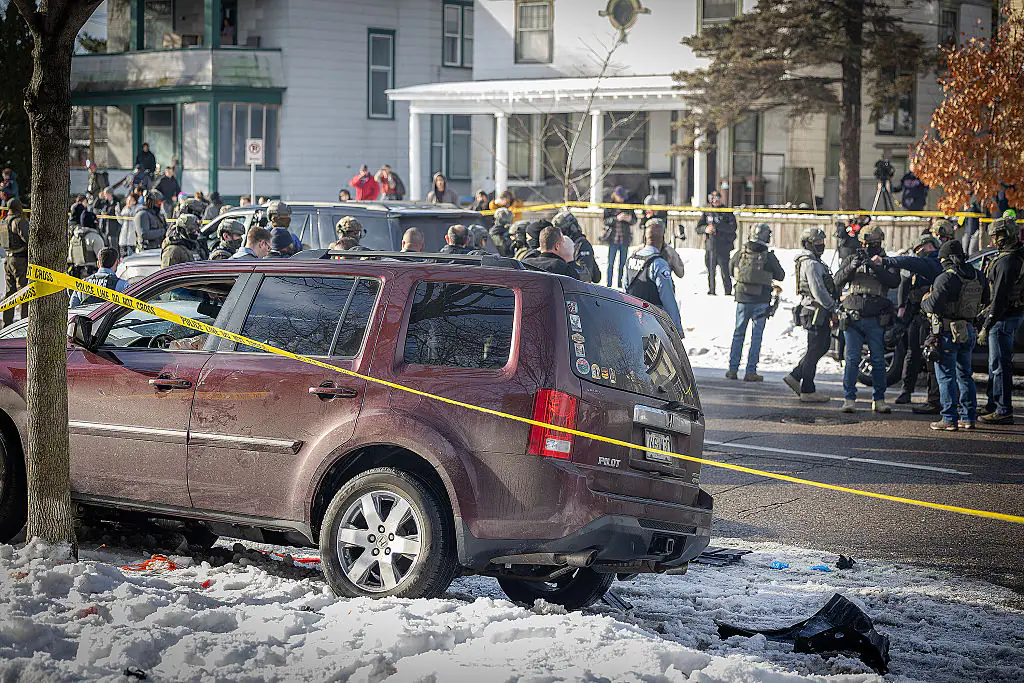
The former prosecutor noted that using a vehicle in such a case could drastically increase the potential sentence.
“In fact, in this instance — unlike in my case all those years ago — if the assault or intimidation is carried out with ‘a deadly or dangerous weapon,’ the penalty is up to 20 years’ imprisonment,” he wrote. “That’s a weighty felony offense.”
McCarthy acknowledged that while Good might have been trying to escape, her driving toward the officer still put him at risk.
“Even if you believe, as I’m inclined to believe based on what we’ve seen so far, that the woman was just trying to get away, she did so by swiping the car in the agent’s direction,” he wrote.
“She may not have intended to run him over, but she sure didn’t appear to be trying to avoid running him over if that was necessary to escape.”

ICE agent unlikely to face charges after deadly shooting
While some are calling for accountability, McCarthy believes the ICE agent’s use of force was justified and lawful. He pointed to well-established legal precedent.
“It is settled Fourth Amendment law that a police officer may use deadly force against a fleeing suspect if he has a good-faith belief that the suspect poses a significant threat of death or serious physical injury to the officer or others,” McCarthy wrote.
“Here, I believe the driver was in the act of committing a dangerous assault when the agent opened fire,” he continued.
“And the driver’s reckless operation of the vehicle, coupled with the fact that she was heedless of harming armed law enforcement agents as they were carrying out their official duties, underscores that it was reasonable to believe she posed a serious threat to the agents and others.”
Others heavily dispute this claim, given that Good only nudged the ICE agent, who fired a shot through her front windscreen, before discharging two more through the side window when he was safely out of the way.