ADVERT
US3 min(s) read
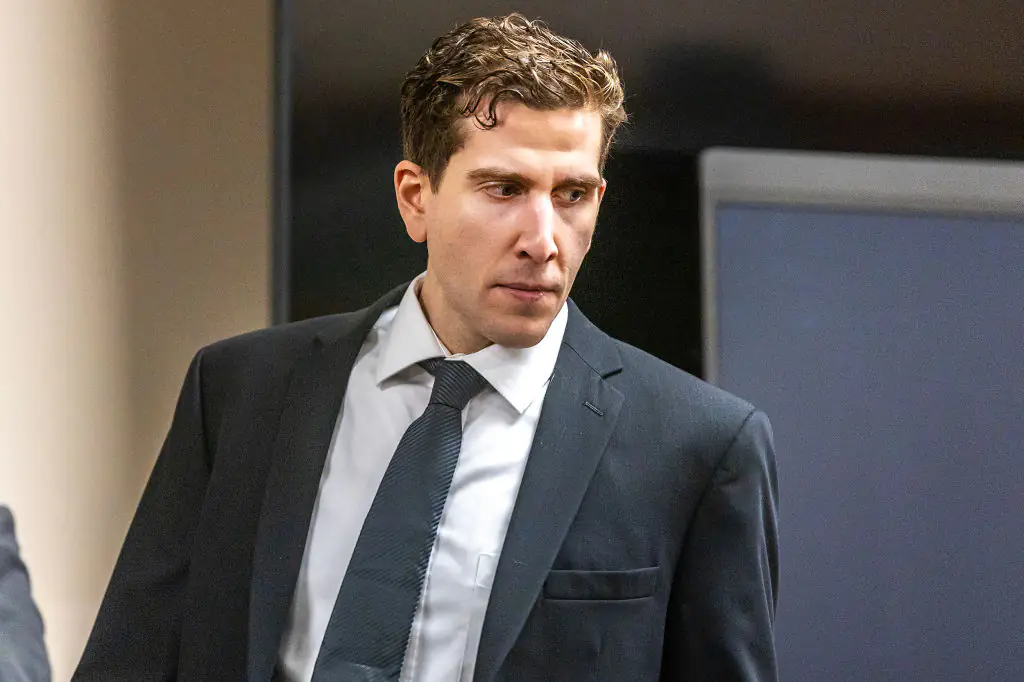
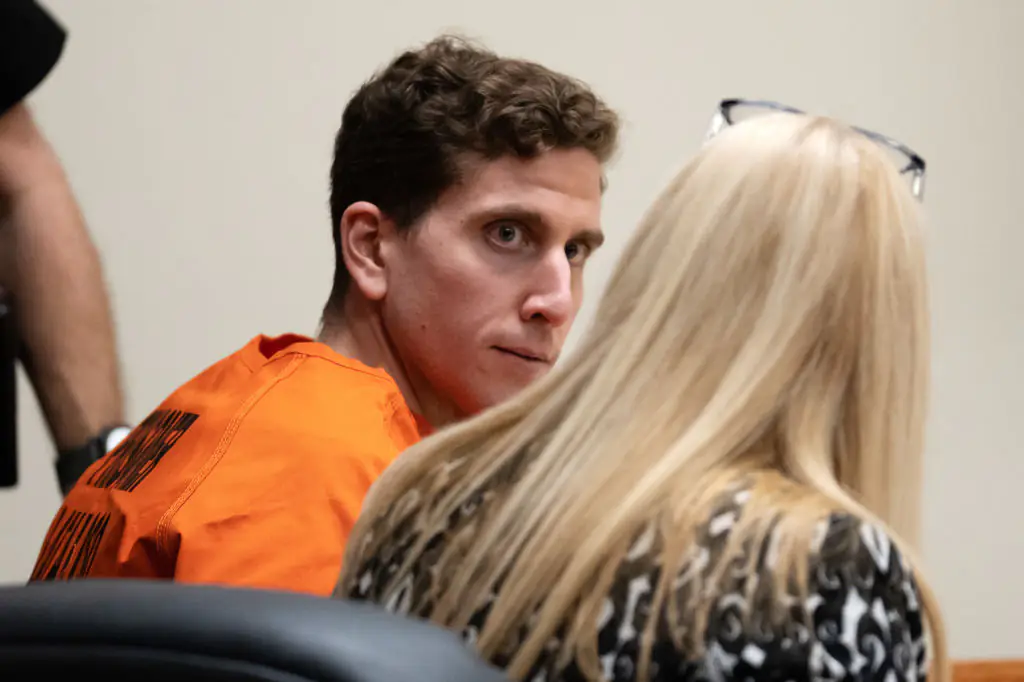
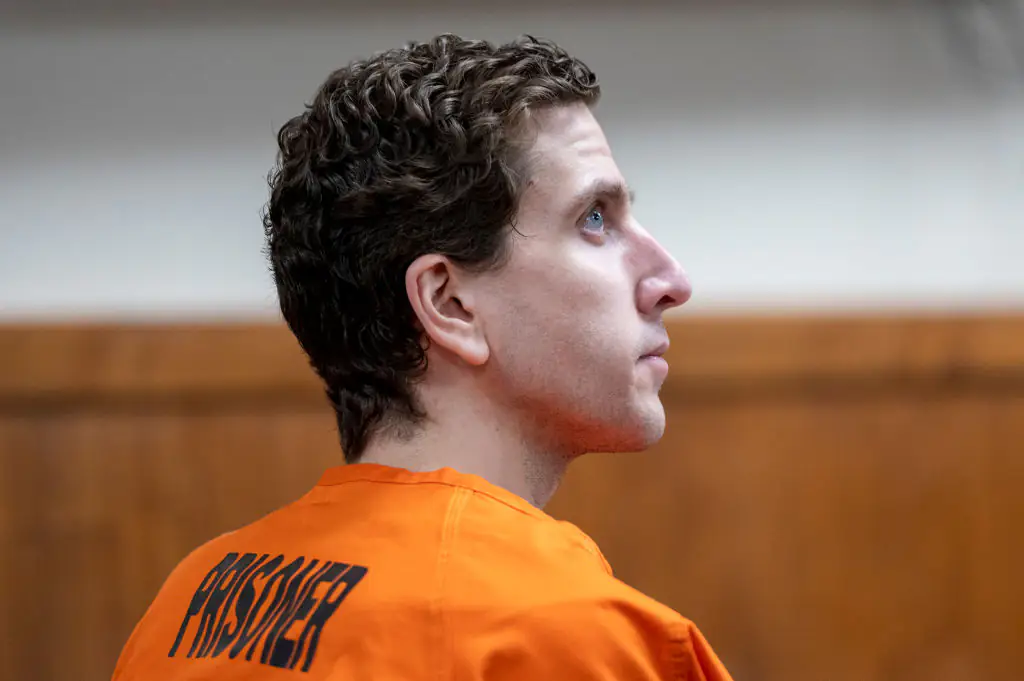
Bryan Kohberger is trying to withdraw his guilty plea through a post-conviction petition. He is currently serving four consecutive life sentences without the possibility of parole for the murders of four University of Idaho students. If his petition succeeds, his case will go back to trial, putting the death penalty back on the table for prosecutors.
The push for a new trial comes as Kohberger claims his defense attorneys misled him into entering his plea. He claims his counsel fabricated a story about a horrific experience touring death row, advised him to lie, and promised a legal victory through a false plea. At his original plea hearing, the judge asked Kohberger if he was pleading guilty because he was guilty, to which Kohberger answered, “Yes”.
Despite Kohberger's efforts to overturn his conviction, the actual probability of him walking free remains extraordinarily low. Legal experts note that withdrawing a plea simply resets the judicial clock to a pre-trial state rather than granting release. Furthermore, a public reversal by a key digital forensics expert has made the prosecution's case significantly stronger if a new trial occurs.
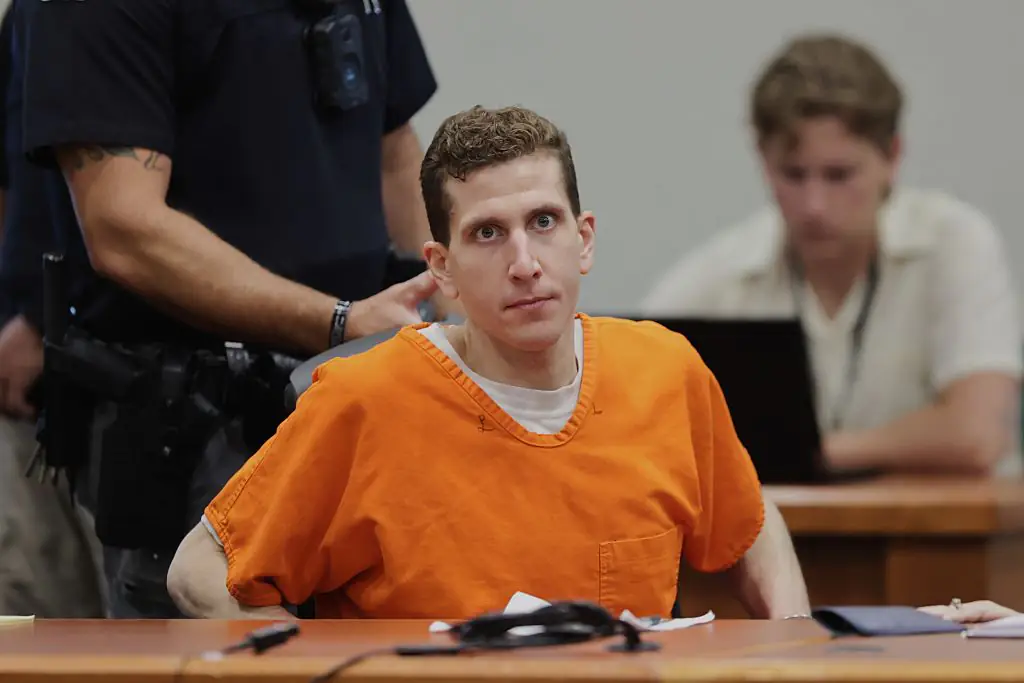
Sy Ray, a former Arizona homicide investigator and digital forensics expert originally hired by the defense team, has publicly changed his stance on the evidence. Ray now states that investigators missed highly incriminating data that points directly to Kohberger.
During a recent podcast appearance, Ray expressed total support for a harsher sentence, stating, “Bring back the death penalty. I am all for this.”
He explained that Kohberger's smartphone data is far more damaging than what was previously revealed to the public. Ray added, “I 100% believe that the offender, who is Bryan Kohberger- there's no alternative theory in my head at this point. I 100% believe he's been in the house before."
These new statements directly contradict Ray's own expert report from January 2025. In that original filing, Ray concluded that the geolocation data did not provide evidence of an association between Kohberger and the victims or their residence.
He had also stated (via Fox News), “I am unable to locate any period of time between June 23, 2022 and November 13, 2022 where Mr. Kohberger's mobile device is in the same specific area as any of the deceased's mobile devices.”
Ray now claims that closer analysis reveals repeated collisions between Kohberger’s phone and victim Madison Mogen’s phone. Based on this updated analysis, Ray stated, “I believe Maddie was the target.”
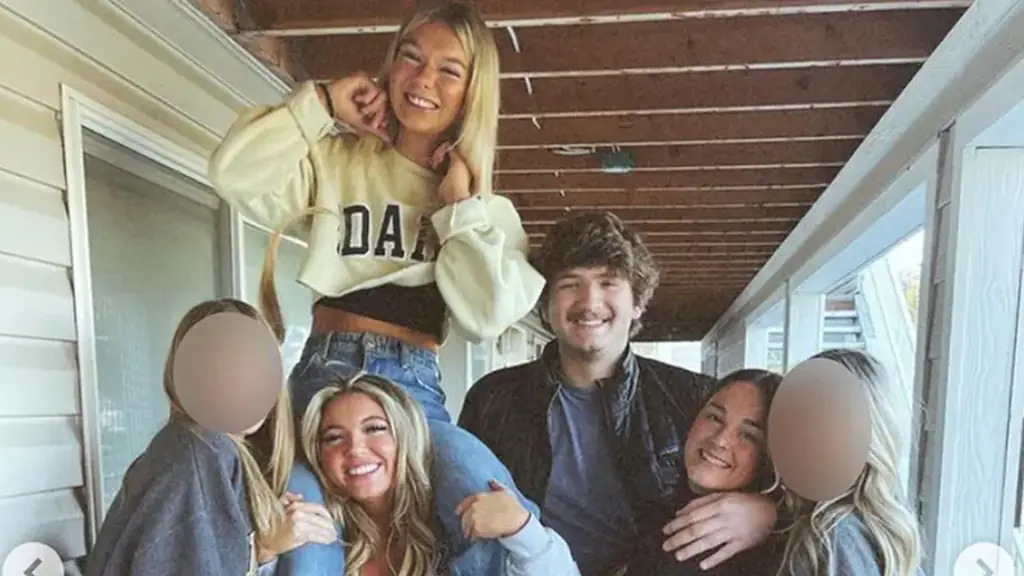
The families of the victims have reacted to the petition with a mix of frustration and readiness for a potential courtroom battle. Shanon Gray, an attorney representing Kaylee Goncalves’ family, described Kohberger as the mosquito you just can't seem to swat, adding to The Guardian, “He's a narcissist who thinks he's the smartest,”
The family remains unfazed by the possibility of the judge granting Kohberger's request. Kristi Goncalves stated to Newsweek that she believes the petition will go “nowhere... but in the case that a judge were to accept it and give him a new trial, we're all for it. So either way, we're like, it is what it is.”
us3 min(s) read
us4 min(s) read
us3 min(s) read
us news3 min(s) read
Bryan Kohberger, who is serving four life sentences for the murders of four University of Idaho students, is attempting to withdraw the guilty plea that spared him from standing trial, as well as the death penalty.
The 30-year-old admitted to the killings in July 2025 as part of a plea agreement that avoided the possibility of being put to death and provided favorable living conditions.
However, he has now filed a petition for post-conviction relief in Idaho's Ada County District Court, arguing that his conviction should now be overturned.
Court records now show Kohberger is representing himself in the filing.
According to documents obtained by NBC News, Kohberger now claims his defense team provided "ineffective" legal representation and alleges he was "convinced to falsely confess" to murders he insists he did not commit.
He further argued that he was led to believe whether he was actually guilty was irrelevant when deciding whether to accept the plea agreement.
In the filing, Kohberger claimed he was "advised to lie" and told he would secure a "legal victory" by entering what he described as a "false plea."
His former lawyers have not publicly commented on the allegations.
The claims mirror remarks Kohberger recently made during an interview with The New York Times, where he again maintained his innocence and argued he had been manipulated into pleading guilty.
"My actual innocence is my truth, and the plea, hinged on by false promises and blatant disinformation, MUST be withdrawn," he said in a statement provided to the newspaper.
Kohberger also dismissed prosecutors' version of events, describing it as a "myopic narrative" and a "work of fiction."
He argued that the evidence against him was never fully scrutinized because the case never reached trial.
"Its faulty premises were never challenged at trial," he said.
He added: "Circumnavigated by a broken plea, the trial never provided the public the clarity conducive to closure, and justice shall remain abjectly miscarried unless that plea is withdrawn."
Kohberger admitted last year to murdering four University of Idaho students four years ago, killing Madison Mogen, 21, Kaylee Goncalves, 21, Xana Kernodle, 20, and Ethan Chapin, 20 — during an attack at an off-campus home in Moscow, Idaho.
At the time of the killings, Kohberger was studying for a doctorate in criminal justice. During his guilty plea, he admitted breaking into the house and killing four of the six students inside the house. However, he has never publicly explained what motivated the attacks.
Before filing the latest petition, Kohberger had not previously indicated he intended to challenge his guilty plea.
Idaho Attorney General Raúl Labrador said his office would continue pursuing justice for the victims and their families.
"My heart goes out to the families of Madison, Kaylee, Xana, and Ethan, who have already endured unimaginable loss and now must face today's deeply painful news," he wrote on X.
The family of Kaylee Goncalves also criticized Kohberger's latest claims and accused The New York Times of giving him another platform.
In a statement, they described him as "the mosquito you just can't seem to swat" and said the interview "had little else to offer beyond a guilty man once again claiming he is innocent."
The Goncalves family previously opposed the plea agreement, saying they wanted Kohberger to face a full trial and potentially the death penalty.
Responding to his latest legal challenge, they said: "He wants another chance to roll the dice."
They added: "The defendant will get another day in court - a welcome break from solitary confinement: a ride, perhaps different food, photos taken, and the spotlight once again fixed on him and his supposed 'innocence'."
Bryan Kohberger has claimed, a year on from his sentencing, that a recent "discovery" may prove his innocence in the Idaho murders.
Back in July 2025, Kohberger was handed four life sentences for the murders of four University of Idaho students: Madison May Mogen, Kaylee Jade Goncalves, Xana Alexia Kernodle, and Ethan James Chapin in their home.
Renewed attention has been brought to the case following the release of Netflix crime documentary The Idaho Murders: College Nightmare on July 29.
But now Kohberger, who is serving four life sentences for the crime, is attempting to withdraw the guilty plea that spared him from standing trial, as well as the death penalty.
He has requested the withdrawal in a petition for post-conviction relief filed in Idaho’s Fourth Judicial District Court, as reported by People.
The convicted murderer wrote in the affidavit attached to his petition that his legal team didn't inform him of some key evidence that was turned over by prosecutors in plea discussions.
He suggests that this evidence would have changed his decision to plead guilty.
Kohberger wrote in the filing: “Namely, clumps of hair found in Ethan Chapin’s hands.”
According to a report from the Trace Evidence Unit at the Federal Bureau of Investigation in January 2023, results of laboratory testing on evidence found at the crime scene included this information.
The report detailed that debris was found in Chapin's right hand, as well as Kernodle's left hand, with their bodies found just mere feet apart.
It further added that the debris was “examined for hairs microscopically consistent with hairs in the head hair sample” from Kohberger, but this wasn't found.
A filing from his attorney, Anne Taylor, on June 6, 2025, detailed this just one month after Kohberger's plea deal was made with prosecutors.
The "clumps of hair" description isn't included in any filings or records, with it instead featuring in the book Broken Plea, which was written by former FBI agent Christ Whitcomb about the murders.
Kohberger's petition and affidavit bring up some of the same points made by the former federal agent, as he looked to find the reason for the “unexplained plea”.
Whitcomb has claimed since the release of his book in May that the “clumps of hair” in Chapin’s hand had not been tested, as Kohberger claimed there was a “failure of further inquiry” into this evidence.
A court document earlier this year revealed that a DNA expert named Ruth Ballard was hired by Kohberger's defense to test the debris in Chapin's hand.
She examined one hair from the right hand” of Chapin, finding it to be “morphologically consistent with Decedent Chapin’s own reference hair.”
It is unknown if Kohberger knew of these findings prior to the petition, or if he plans to claim that there were other samples of hair left untested by the FBI or experts.
He further argued that he was led to believe whether he was actually guilty was irrelevant when deciding whether to accept the plea agreement.
In the filing, Kohberger claimed he was "advised to lie" and told he would secure a "legal victory" by entering what he described as a "false plea".
The claims mirror remarks Kohberger recently made during an interview with The New York Times, where he again maintained his innocence and argued he had been manipulated into pleading guilty.
"My actual innocence is my truth, and the plea, hinged on by false promises and blatant disinformation, MUST be withdrawn," he said in a statement provided to the newspaper.
Prosecutors have confirmed that they will be seeking the death penalty against Bryan Kohberger, who is accused of murdering four university students in Moscow, Idaho.
Kohberger, 28, is currently facing four counts of first-degree murder and one count of felony burglary after four students were killed at their home off-campus last November.
Kaylee Goncalves and Madison Mogen, both 21, and Xana Kernodle and Ethan Chapin, both 20, were stabbed to death in the late-night attack on November 13, while two others in the home were unharmed.
Following a six-week manhunt, Kohberger was arrested on suspicion of the murders, but a judge entered a "not guilty" plea on his behalf in May after he chose to "stand silent" in court.
In a new court filing, prosecutors wrote: "Considering all evidence currently known to the State, the State is compelled to file this notice of intent to seek the death penalty."
Top prosecutor Bill Thompson added that the case met the standard for the death penalty as the acts were "especially heinous, atrocious or cruel" and "exhibited utter disregard for human life".
The statement read: "The State gives this notice based on the fact that it has not identified or been provided with any mitigating circumstances sufficient to prohibit the triers of fact from considering all penalties authorized by the Idaho legislature including the possibility of a capital sentence.
"Consequently, considering all evidence currently known to the State, the State is compelled to file this notice of intent to seek the death penalty."
Investigators revealed that DNA had been found on a "leather knife sheath" at the scene and documents which were unsealed in January showed that police collected a knife, Glock pistol, black gloves, a black hat, and a black face mask while searching Kohberger's home.
Police also seized his white 2015 Hyundai Elantra, which eyewitnesses had claimed to see in the area around the time, and dismantled the vehicle.
Kohberger's attorney has criticized the prosecution for relying on investigative genetic genealogy - which is when DNA from crime scenes is used to identify suspects through other genetic DNA profiles or matches - calling it a "bizarrely complex DNA tree experiment".
According to the prosecution, the FBI went to public DNA sites to match the results found on the knife sheath, allowing them to hone in on Kohberger as the main suspect.
Kohberger had been studying for a PhD in criminology at Washington State University, just eight miles across the Idaho/Washington border from Moscow, where the murders took place.
Following the news that the death penalty would be sought, Goncalves' family said they were "grateful" for the decision, adding in a statement: "We continue to pray for all the victims families and appreciate all the support we have received."
Kohberger's trial is due to begin on October 2.
More than a year after the brutal murders of four University of Idaho students, Bryan Kohberger faced sentencing Wednesday in a Boise courtroom, but offered no explanation for his actions.
The 30-year-old former criminology PhD student was handed four consecutive life sentences without the possibility of parole for the November 2022 killings of Madison Mogen, Kaylee Goncalves, Xana Kernodle, and Ethan Chapin.
He was also sentenced to 10 years for burglary and ordered to pay nearly $290,000 in restitution to the victims’ families.
As families and survivors sat in the courtroom waiting for answers, Kohberger was given the opportunity to speak. Rising slightly from his seat, he delivered just three words: “I respectfully decline.”
Judge Steven Hippler, who oversaw the hearing, addressed the moment directly. “The more we struggle to seek explanation for the unexplainable, the more power and control we give to him,” Hippler said, per Fox News. “In my view, the time has now come to end Mr. Kohberger’s 15 minutes of fame.”
Kohberger had previously pleaded guilty to four counts of first-degree murder earlier this month, avoiding a death sentence through a plea agreement.
Prosecutors said he broke into the students’ off-campus home in the early hours of November 13, 2022, and used a military-style Ka-Bar knife to carry out the attack, BBC News detailed.
Investigators believe he began by killing Mogen and Goncalves in an upstairs bedroom before moving to the main floor to stab Kernodle and Chapin. All four students were found dead in their beds.
The crime shocked the nation and prompted a lengthy investigation that led authorities to Kohberger, a graduate student at nearby Washington State University.
In a press conference following the sentencing, White House Press Secretary Karoline Leavitt addressed the families' grief, saying (via NBC News): “We are so sorry for the pain and the grief you have experienced at the hands of such a vicious and evil killer. Our nation grieves with you.”
She added: “If it were up to President Trump, he would have forced this monster to publicly explain why he chose to steal these innocent souls.”
Leavitt concluded her remarks by honoring the victims and offering condolences to their parents: “May God bless everyone affected by this unimaginable tragedy, especially the parents who lost their children.”
Meanwhile, prosecutors requested that the court extend the no-contact orders barring Kohberger from communicating with the victims’ families.
Those orders currently expire in January 2027, but prosecutors are seeking to lengthen them by an additional 99 years to protect the families from future harassment or trauma.