


US4 min(s) read
Lindsay Clancy sparks furious backlash as people spot sticker on her wheelchair during trial

Lindsay Clancy has sparked backlash among trial watchers after observers spotted a strange sticker on her wheelchair during the trial.
The pink sticker, reading "#sidebah," was attached to a drink holder carrying a Diet Coke on Clancy’s wheelchair in a picture captured on Wednesday (September 2) as jurors continued deliberating in the Massachusetts mother-of-three’s murder trial.
The phrase appears to reference the way Clancy’s defense attorney, Kevin Reddington, pronounces "sidebar" in his Boston accent.
Sticker sparks outrage among trial watchers
Reddington, who has passionately defended Clancy and held her hand during difficult moments of the six-week trial, has become something of a feminist icon among some supporters of postpartum moms.
It remains unclear whether Clancy herself placed the "#sidebah" sticker on her wheelchair.
However, the seemingly lighthearted reference left some online users angry given the circumstances surrounding the trial.
"#LindsayClancy has the audacity to put a 'joke' sticker 'SideBah' on her drink holder?!?!!! Does she think that’s all a joke?!" one person wrote on X.
"The kids are in the ground and she thinks this is a damn joke ?? Tell me that’s not who she is," another wrote.
Clancy claims she suffered from severe postpartum psychosis
Clancy is on trial for murdering her three children, Cora, 5, Dawson, 3, and eight-month-old Callan, using exercise bands inside the family’s Duxbury, Massachusetts, home.
The former labor and delivery nurse then slit her wrists and throat before throwing herself from the second story of the house, leaving her partially paralyzed.
Clancy argues that she should be found not criminally responsible for the killings because she was suffering from severe postpartum psychosis at the time.
Her mental health has been at the center of the trial.
Clancy’s mother, mother-in-law, sister, friends, and former co-workers testified that she struggled after giving birth to Callan.
Her former mother-in-law, Susan Clancy, testified that Clancy had become anxious, paranoid, and suicidal while the psychiatric treatment she received was failing to help.
"She felt unwell. She had insomnia. She was losing her appetite. She was very anxious and sad," Susan Clancy said. "She was begging for help."
.webp_Wzfz8s?tr=cr-0.0.720.405,f-webp,q-70,w-1024)
Defense slams Clancy’s mental health treatment
Reddington argued that Clancy was misdiagnosed and overmedicated, sharply criticizing the psychiatric care she received before the deaths.
During closing arguments, he showed jurors one picture of the Clancy family appearing happy, followed by another showing Clancy in the hospital.
"How does this turn into this?" he asked. "How? Because of the damn medicine and the lousy medical care that she got."
Prosecutor Jennifer Sprague called criticism of the mental health system "a distraction" and said Clancy deliberately killed the children because they were stopping her from taking her own life.
"She was depressed. She was exhausted. She was done. She didn’t want to try anymore. She felt damaged," Sprague said. "But those kids, those kids were her protective factor. Those kids were keeping her from ending her misery."
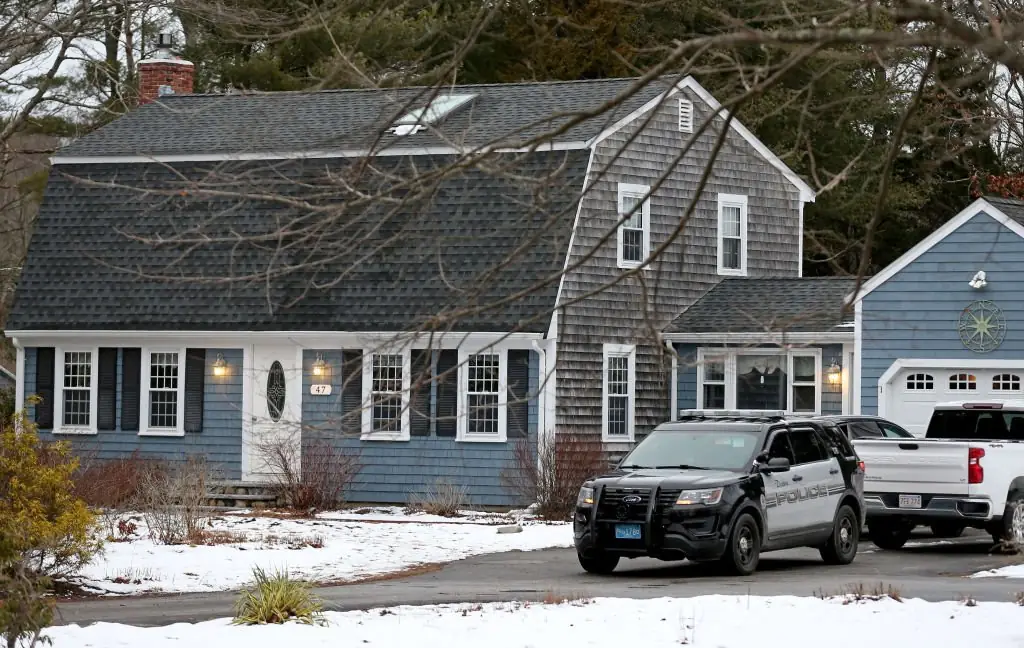
Jury deadlock takes dramatic turn
The 12-person jury, made up of nine women and three men, has repeatedly struggled to reach a verdict.
Jurors first informed Sullivan on Tuesday that they could not unanimously agree before sending another note Wednesday saying they remained at an impasse.
Thursday brought the clearest note yet, as the foreperson said one juror would not follow the judge’s instructions on reasonable doubt.
Sullivan then questioned each juror privately before rereading his reasonable doubt instructions and ordering them to continue deliberating.
Reddington sought to remove the disputed juror, while Sprague argued the judge’s instruction was enough and no further action was needed.
Sullivan ultimately declined the defense's request to remove the juror.
The jury is now expected to return on Friday for a seventh day of deliberations.
If convicted, Clancy could face a sentence as severe as life in prison. If she is found not guilty, she could be released or remain confined in a mental health facility.