Loading...
US2 min(s) read
us2 min(s) read
us3 min(s) read
us4 min(s) read
us2 min(s) read
Published 15:22 12 Jun 2026 GMT
A man who spent 17 years in prison for a crime he always insisted he didn't commit was eventually freed after a remarkable discovery revealed a near-identical lookalike may have been responsible all along.
Richard Anthony Jones was convicted over a 1999 robbery in Kansas despite repeatedly maintaining his innocence and having an alibi.
Several people testified that he was attending his girlfriend's birthday party when the robbery took place, but prosecutors argued otherwise and a jury ultimately found him guilty.
Jones was sentenced to 19 years behind bars and for years, he continued fighting to clear his name.
His breakthrough came when attorneys working with innocence organizations uncovered another man who closely matched the description given by witnesses.
That man, Ricky Lee Amos, reportedly looked so much like Jones that even people involved in the case struggled to tell them apart.
According to investigators, Amos also had connections to the location linked to the robbery and matched details witnesses had provided at the time.
When witnesses were later shown photos of both men, they could no longer confidently identify Jones as the robber.
After spending 17 years in prison, he was finally released in June 2017.
Following his release, Jones sought compensation under a Kansas law designed to help people who have been wrongly convicted and the outcome resulted in a life-changing payout.
Jones was awarded $1.1 million by the state, along with a certificate of innocence that formally cleared his name.
He also had records relating to his conviction expunged and was granted access to counseling and healthcare benefits.
Kansas Attorney General Derek Schmidt said the case met the requirements laid out under the state's mistaken-conviction statute.
"We are committed to faithfully administering the new mistaken-conviction statute the legislature enacted," Schmidt said in a statement at the time.
Although investigators came to believe Amos may have been responsible for the crime, he was never prosecuted.
By the time Jones was exonerated, the statute of limitations had expired.
Jones' attorney, Alice Craig, previously said her client did not appear to hold any personal resentment toward the man believed to be his doppelganger.
"I don't think so, because it's not Ricky's fault that this happened," she said.
For Jones, the ruling brought an end to a legal battle that lasted nearly two decades and finally restored his freedom after losing 17 years of his life to a case of mistaken identity.
Published 14:22 20 Dec 2018 GMT
In 1999, Richard Anthony Jones was convicted for the aggravated robbery of a woman in a Walmart parking lot. He served 17 years for the crime, all the while maintaining that he had nothing to do with it. In fact, he even had a solid alibi for the time of the incident - but nobody believed him on account of how perfectly he fit the witness' description of the perpetrator.
Jones' case caught the attention of The Innocence Project, who believed his story and figured that he must have had a lookalike out there somewhere. And, sure enough, after a bit of searching, they found him. His name was Ricky Amos, and he looked almost indistinguishable from Jones at the time of the robbery.
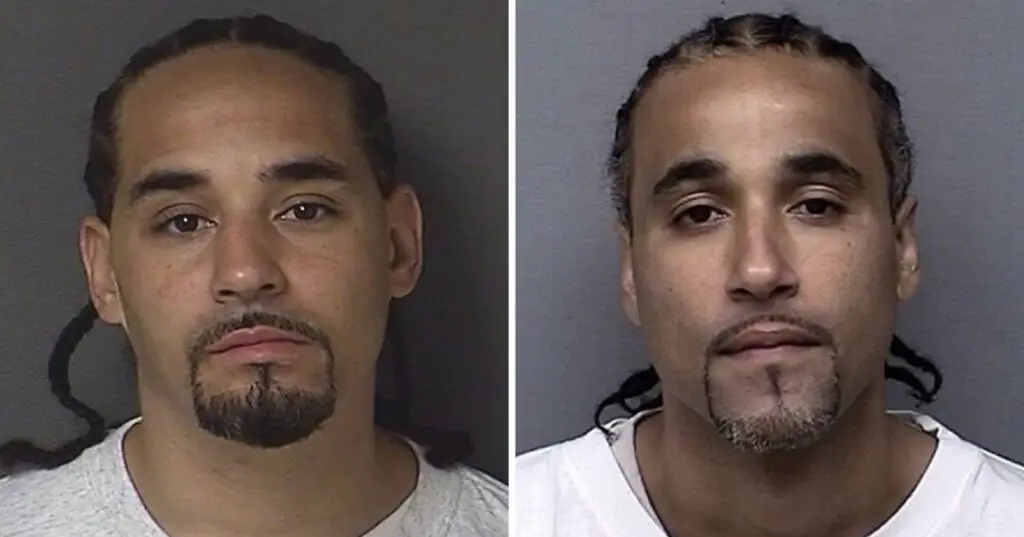
Here are their mugshots:
On the left is Jones, and on the right is Amos. It's easy to see how the two could be confused, and a just a quick glance could convince someone that they were twins.
Once this was discovered, the case was reopened, Jones was re-trialed, and was found to have been telling the truth all along. He was innocent.
Unfortunately, the almost two decades behind bars had taken its toll on the man - now a 42-year-old grandfather - and he has since spoken about how hard it's been to adjust.
"It took a big chunk of my life that I can never get back," said Jones in an interview. "It was a hard pill to swallow ... At that time I was pretty much trying to be responsible as a father. I was not perfect, but I was a big part of their lives, and when I got incarcerated it was hard for me because I was used to being around for my kids ... I am just trying to get stable in my everyday life. I am still transitioning."
Now, he's been awarded compensation for his suffering.
Earlier this year, Jones filed a petition with the 10th Judicial District Court of Kansas, seeking about $65,000 for each year of wrongful imprisonment, as well the cost of attorney's fees and costs. The total of all this came to $1.1 million - a sum that the wrongfully-convicted man has now received.
On top of this, the court ordered that Jones would also receive a certificate of innocence, that his arrest record and conviction would be expunged, that any biological samples of his would be destroyed, and that he would receive counseling and state healthcare benefits for the next two years.
"We are committed to faithfully administering the new mistaken-conviction statute the legislature enacted," Kansas Attorney General Derek Schmidt said in a statement. "In this case, it was possible on the existing record to resolve all issues quickly, satisfy all of the statute's requirements, and agree to this outcome so Mr. Jones can receive the benefits to which he is entitled by law because he was mistakenly convicted."
Jones apparently bears no ill will towards Amos, but is disappointed that his doppelganger has never owned up to the crime.
Published 16:32 14 Jan 2023 GMT
A man has just been awarded $1 million in compensation after spending 17 years behind bars for a crime committed by another person who bore a striking resemblance to him.
Ricky Jones, 41, was falsely imprisoned in 2000 after a jury found him guilty of aggravated robbery.
However, years later, the mistake was discovered after the victim and witnesses to the crime were shown an image of his doppelgänger. In an unfortunate coincidence, his name also happens to be Ricky, PEOPLE detailed (though at least his surname, Amos, is different).
Jones had been just 24 when he was convicted of the 1999 robbery of a woman in a Walmart parking lot in Roeland Park, Kansas.
However, he had a solid alibi. According to ABC7 Chicago, Jones was close to 10 miles away at a birthday party with his girlfriend in Kansas City, where he was seen by multiple witnesses.
Despite his alibi, he was blamed and convicted anyway, given his striking resemblance to Amos.
His conviction was based upon eyewitness accounts that described the attacker as being slender and light-skinned Black or Hispanic with dark hair, The Washington Post reported. After going to prison, Jones appealed his sentence numerous times, but he was repeatedly denied.
Years later, both Jones and Amos were at the same correctional facility, where they realized the striking similarity.
After this was brought to the attention of the courts, Tamara Scherer, the robbery victim, said in an affidavit: "I am no longer certain I identified the right person at the preliminary hearing and trial. If I had seen both men at the time, I would not have felt comfortable choosing between the two men and possibly sending a man to prison."
Following the case of mistaken identity Jones told ABC News: "I hope and prayed every day for this day to come, and when it finally got here it was an overwhelming feeling [...] Once I had seen his picture beside mine and I seen the resemblance me and him had, I just knew.
"It was understandable why other people would say the same thing."
At his exoneration hearing in 2017, Jones revealed: "It was hard. I won't say it was easy because it wasn't, but I made it through."
When he was finally released, Jones received a certificate of innocence and $1 million compensation from the state of Kansas. "When it comes to my kids, it's been a rough ride, but they are now at an age where they can understand," he said, adding: "I don't believe in luck, I believe I was blessed."
Published 15:26 31 Aug 2018 GMT
In 1999, Richard A. Jones was convicted of aggravated robbery. Police and eyewitnesses believed he was the man who robbed a woman in the parking lot of a Walmart in Roeland Park, Kansas. The thief attempted to steal her purse, then stole her cell phone, hopped in a car with others and drove away. The eyewitness descriptions were vague, describing the thief as a thin, light-skinned black or Hispanic man with dark hair.
Jones told police that on the day of the crime he was at a Memorial Day party with friends and family. He said he never left his house and presented alibi witnesses who testified that he was them. Jones was found guilty by a jury and sentenced to 19 years in prison. At the time, he was 25, and had two young daughters. Prosecutors based their case solely on eyewitness identifications; no DNA, fingerprints or physical evidence linked him to the crime.
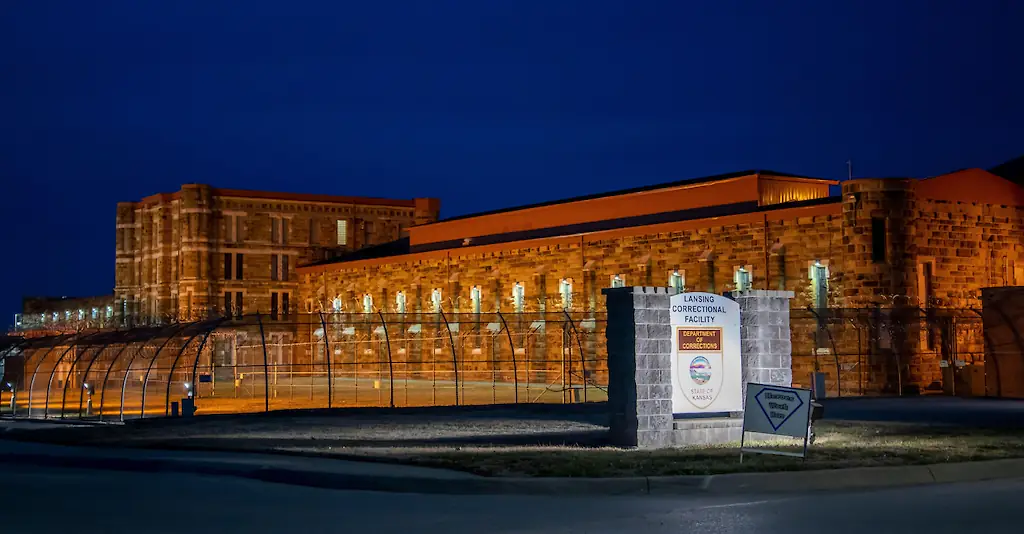
While serving his time at Lansing Correctional Facility, Jones maintained his innocence. However, he lost all of his appeals to overturn the conviction. Bitter and confused, he sat behind bars, the years passing him by. Then one day everything changed. Inmates said he looked just like another prisoner at the facility, Ricky Amos. That's right, his doppelgänger even had the same first name.
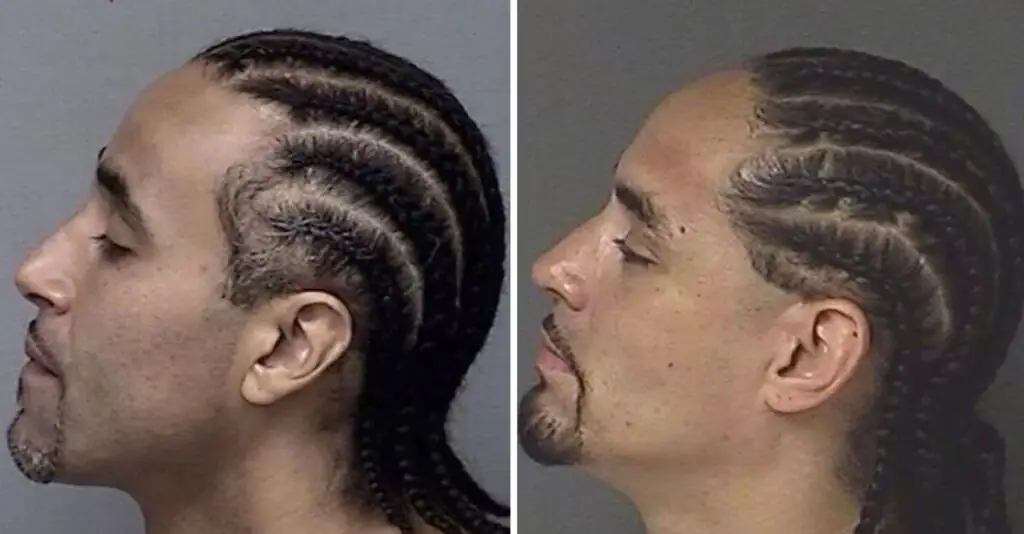
When you line their mugshots side by side, the resemblance is uncanny. The two share the same braided hairstyle, the same goatees, the same eyes, eyebrows and complexion. "We were just like, holy crap," said Jones’s attorney, Alice Craig, speaking to the Washington Post. Her team discovered that in 1999, Amos lived near the scene of the robbery. Meanwhile, Jones lived across the state line in Kansas City.
The case quickly unraveled, nearly two decades after Jones' conviction. Here's what actually happened on May 31, 1999, as reported by WaPo and The New York Times: Three men spent Memorial Day driving around Kansas City, smoking crack-cocaine. When they ran out, they drove to another neighborhood to get more. A man named Rick, whom they barely knew, joined them in and said to drive to Walmart. Ricky Amos stole the woman's phone and hopped in the getaway car, and Richard A. Jones got pinned for the crime.
The case was reopened, and the eyewitnesses were called back to court. After viewing photographs of the two men side by side, they testified they could no longer say Jones was the robber; and had they been shown those two photographs in 1999, they never would have erroneously chose him. The judge threw out the conviction and ordered Jones’ release from prison.
Today Jones is 42. His daughters are 24 and 19. And he is a grandfather. "It took a big chunk of my life that I can never get back," said Jones in an interview. "It was a hard pill to swallow. ... At that time I was pretty much trying to be responsible as a father. I was not perfect, but I was a big part of their lives, and when I got incarcerated it was hard for me because I was used to being around for my kids. ... I am just trying to get stable in my everyday life. I am still transitioning."
On Wednesday, Jones filed a petition with the 10th Judicial District Court of Kansas, seeking about $65,000 for each year of wrongful imprisonment, as well the cost of attorney's fees and costs. That adds up to $1.1 million in compensation from the state, although no amount of money can truly make up for such a painful loss of time. Jones is also seeking help with tuition, housing assistance and counseling, so he can move forward with his life.
[[youtubewidget||https://www.youtube.com/watch?v=yp7hekWOcLw]]
“This compensation is relatively small given the unfathomable hardship of 17 years of wrongful imprisonment,” wrote his laywers in the petition, reported by The Kansas City Star. "It is hard to imagine how Mr. Jones can truly get a fresh start without the assistance sought having lost so many years behind bars when he could have been getting an education, developing his skills, and pursuing and rising within his chosen profession."
The petition is pending. Jones was convicted of robbery, but the judicial system robbed him, stealing 17 years of his life. Jones told ABC he wants to work with The Innocence Project to help give freedom to others who were wrongfully convicted.
Hopefully the 'doppelgänger case' raises awareness about the flaws in convictions based on eyewitness identifications, which are famously unreliable. Especially since, during the lineup, Jones' photograph was the only image out of six to be that of a light-skinned man. What happened to Jones should never happen to anyone again.
Published 16:49 27 Nov 2021 GMT
Thousands of people have raised over $1.3 million for a Missouri man who was exonerated earlier this week after spending 43 years in prison.
Per the Washington Post, Kevin Strickland was convicted in 1979 for the murders of 20-year-old John Walker, 21-year-old Larry Ingram, and 22-year-old Sherrie Black that took place the year prior. Strickland was sentenced to life imprisonment without the chance of parole for 50 years.
However, after spending over four decades behind bars, a now-62-year-old Strickland was exonerated earlier this week after Judge James Welsh noted a lack of physical evidence to link him to the crime scene. Additionally, family members provided alibis for his whereabouts and the admitted killers said he was not present at the scene of the triple murder.
Additionally, The New York Times adds that Walsh highlighted that the only eyewitness, Cynthia Douglas, later wished to recant her testimony in the case. Douglas was also the only survivor of the attack, to which Walsh said in court: "By all accounts, Douglas was hysterical at the time, suffering from two gunshot wounds and having just witnessed the execution of three friends."
However, despite being one of the longest-standing wrongful convictions in United States' history, Strickland was not eligible for any compensation from the state of Missouri.
His attorney, Tricia Rojo Bushnell, told the Post: "Missouri is not going to pay Mr. Strickland a dime, but the whole world is going to make sure he’s compensated."
Bushnell was referring to a recent GoFundMe page that was set up in order to help Stickland "establish himself in a home and provide for his basic needs upon his release from prison."
Despite the page aiming for an initial goal of $7,500, more than 23,000 donations have resulted in a current total of more than $1.3 million.
And in a recent update on the page, Bushell - who is also the executive director of the Midwest Innocence Project - wrote: "Thank you all for your support! All funds go directly to Mr. Strickland, who the state of Missouri won't provide a dime to for the 43 years they stole from him."
A year after Strickland's conviction, Douglas had reportedly started to confide in those close to her that she had misidentified Strickland, the Times reports.
In 2009, she contacted the Midwest Innocence Project, writing in an email: "I am seeking info on how to help someone that was wrongfully accused.
"This incident happened back in 1978, I was the only eyewitness and things were not clear back then, but now I know more and would like to help this person if I can."
Ms. Douglas passed away in 2015.
In Tuesday's ruling, Judge Welsh wrote: "The Court’s confidence in Strickland’s convictions is so undermined that it cannot stand, and the judgment of conviction must be set aside. Absent Douglas’s positive, unequivocal identification of Strickland, there would have been no charge, no trial, and certainly no conviction."
Due to Missouri law, only those exonerated as a result of DNA evidence are eligible for monetary compensation.
Published 17:20 02 Jan 2021 GMT
A newly exonerated Philadelphia man has been awarded $9.8 million after he spent 28 years in prison for a murder he didn't commit.
Per The Philadelphia Inquirer, the settlement is one of the largest ever in the city's history.
In 1991, 21-year-old Chester Hollman III - a man with no criminal record who worked as an armored-car driver - was pulled over by cops in Center City. He was later charged with the murder of a University of Pennsylvania student, who had died after being shot in a botched street robbery.
Hollman maintained his innocence from the moment he was arrested, Complex reports.
[[youtubewidget||https://www.youtube.com/watch?v=Oczngl64brA]]
Then, in July 2019, a 49-year-old Hollman was released from prison, after spending nearly three decades behind bars.
As reported at the time by ABC News, a judge ordered Hollman to be released after witnesses recanted testimony and investigators found police had withheld evidence that would have possibly pointed to the true perpetrators of the crime.
ABC News adds that two witnesses who had originally testified at the 1993 trial recanted their earlier testimony, now saying that they did not see Hollman at the scene of the murder.
[[twitterwidget||https://twitter.com/ajplus/status/1345038288076345344]]
In 2019, Hollman's longtime lawyer Alan Tauber revealed that Hollman had no anger towards the witnesses, describing them as "victims too".
At the time of his exoneration, Assistant District Attorney Patricia Cummings also said in court:
"I apologize to Chester Hollman.
"I apologize because he was failed, and in failing him, we failed the victim, and we failed the community of the city of Philadelphia."
And on Wednesday (December 30), after being awarded a $9.8 million payout, Hollman said in a statement, per the Inquirer: "There are no words to express what was taken from me.
"But this settlement closes out a difficult chapter in my life as my family and I now embark on a new one."
Hollman's monumental payout is just $50,000 short of the record for settlements of its kind in the Philadelphia - a distinction held by the $9.85 million agreement the city struck in 2018 with Anthony Wright.
Wright had spent 25 years locked away for a 1991 rape and murder that DNA evidence later proved he did not commit.
In fact, Wednesday's agreement is just the latest in a string of seven-figure settlements that have arisen due to claims of misconduct by Philadelphia police in the late 1980s and 1990s.
The Inquirer reports that over a dozen exonerations have cost the city more than $35 million since 2018.