


US3 min(s) read
Medical conditions that will be exempt from draft if US goes to war as age of enlistment for military raised significantly

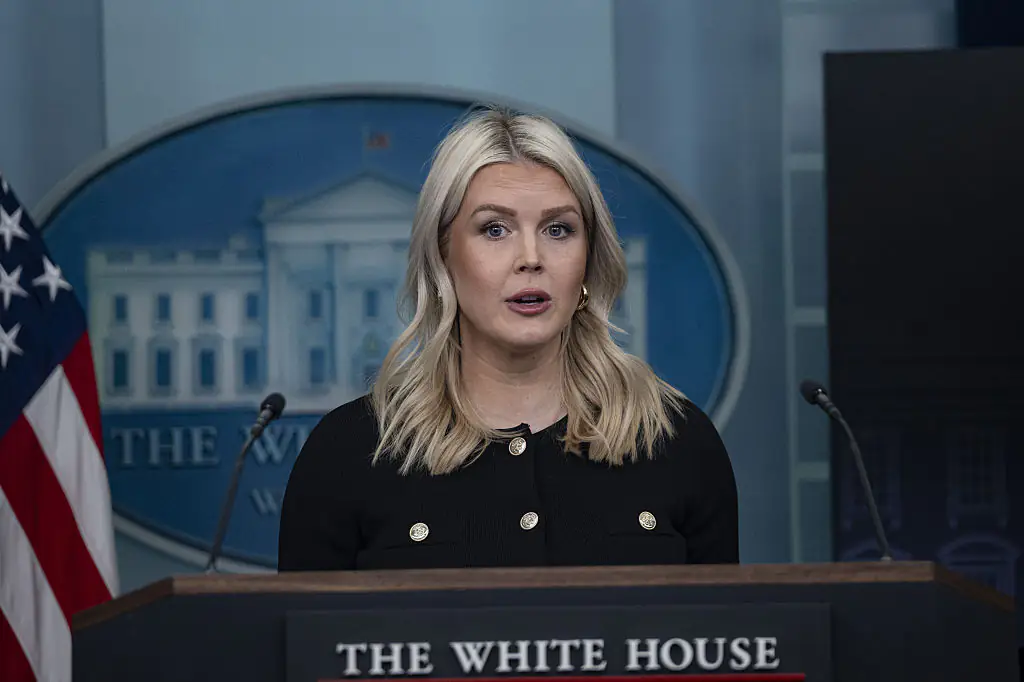
During America’s ongoing fighting with Iran, White House Press Secretary Karoline Leavitt was asked on Sunday Morning Futures to reassure concerned American parents who fear a military draft could be introduced.
The question focused on worried mothers asking whether 'we’re going to have a draft, that they’re going to see their sons and daughters get involved in this.'
Leavitt responded by saying a draft is not currently part of President Donald Trump’s plan, but added that he 'wisely keeps his options on the table.'
At the same time, Defense Secretary Pete Hegseth signaled a more open-ended approach, telling CBS News: "We’re willing to go as far as we need to in order to be successful."
U.S. laws around compulsory military service
Under U.S. law, compulsory military service is allowed in extreme circumstances.
Provisions in the United States Constitution and 10 U.S. Code § 246 permit conscription during emergencies or serious national security threats.
If enacted, it would generally apply to able-bodied men aged 17 to 45 who are U.S. citizens, or who have declared intent to become citizens, as well as certain women, including members of the National Guard and some healthcare workers.
The United States has deployed conscription in six major conflicts previously: the American Revolutionary War, American Civil War, World War I, World War II, Korean War, and Vietnam War.
The draft officially ended in January 1973, when the military transitioned to an all-volunteer force, although the system remains in place as a backup.
Who is and isn't eligible to be conscripted?
Today, all men aged 18 to 25 living in the U.S., including immigrants, regardless of documentation status, must register with the Selective Service System.
However, there is currently no clear sign that conscription will be used in the war with Iran.
If a draft were introduced, certain groups could qualify for exemptions.
According to the Selective Service System, these include individuals on non-immigrant visas, people who were continuously institutionalized before turning 18 through age 25, those confined to their homes due to medical conditions, and conscientious objectors who oppose war on religious or moral grounds.
Exemptions could be given to those with mental health issues - depression, bipolar disorder, PTSD to name just a few.
What’s more, those with heart problems will likely be exempt as well - particularly those who require medication.
Asthma or a respiratory condition? That could see you sit this one out, although it’s not clear.
This is a hypothetical draft anyway, so it’s all guesswork.
If you have a musculoskeletal condition such as scoliosis or if you are missing a limb, it’s unlikely you’ll be called to aid the fighting.
Those with neurological conditions, or those who have suffered a stroke, as well as the blind and deaf, might be allowed to stay out of then combat as well.
This doesn’t mean that there won’t be other jobs found for people who don’t meet the medical requirements to be drafted to the front line.
Chronic illness sufferers could be asked to stay at home and find other things to do too.
But it’s not just medical issues that could get you out of active service.
Active-duty service members, students at military academies, ministers, and some elected officials may also be exempt.
Meanwhile, the fighting continues in the Middle East, with Iran denying Trump’s claims that peace talks are gathering pace.