


US4 min(s) read
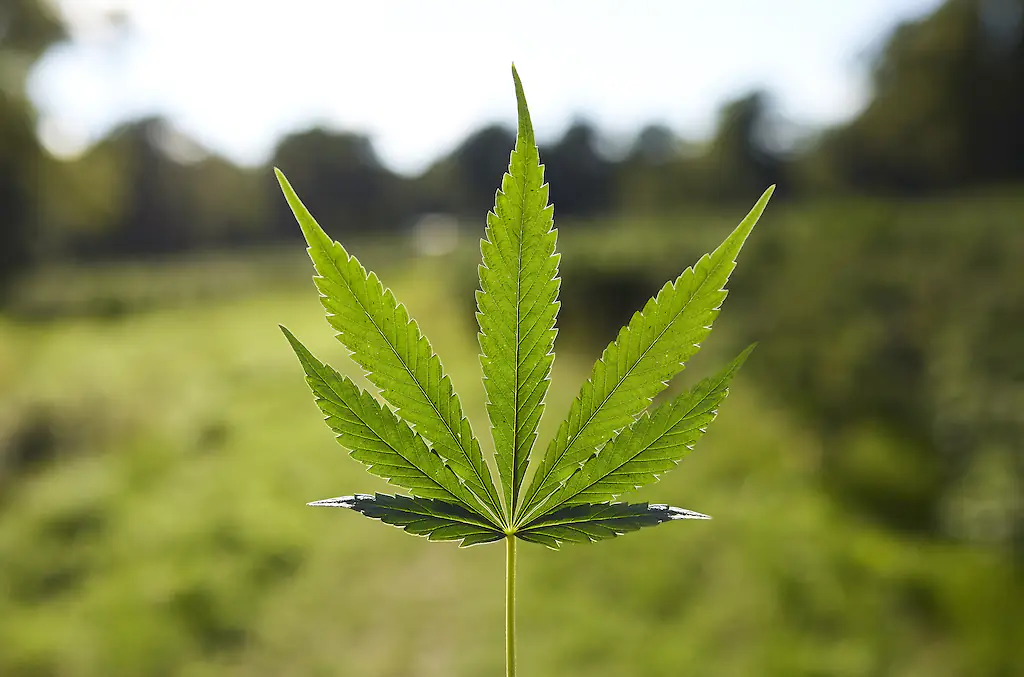
Millions of Americans could soon be free to smoke weed after Donald Trump reclassifies marijuana
.jpg_I4Ebof?tr=cr-0.338.2730.3068,f-webp,q-70,w-100)
If you work a job that comes with a mandatory drug test, Donald Trump's marijuana reclassification might have just changed the rules quite significantly.
On April 23, the Department of Justice signed an order moving medical marijuana from Schedule I, the same federal category as heroin and LSD, down to Schedule III, alongside the likes of ketamine and Tylenol with codeine.
Buried inside the order is a legal tangle that could change the rules for roughly four million American workers.
What's the actual loophole?
Federal drug testing in the United States runs on a chain of authority.
The Department of Transportation's rules (the famous 49 CFR Part 40) depend on guidelines set by the Department of Health and Human Services, and those HHS guidelines only authorise workplace testing for Schedule I and Schedule II substances.
Schedule III drugs have never been on the federal five-panel drug test.
That's simply because they've never needed to be.
Which means the moment marijuana fully completes its move to Schedule III after a crunch DEA hearing scheduled for June 29, the legal foundation for testing it arguably collapses.
No HHS authority means no certified labs, no certified labs means no valid tests.
No valid tests means - in theory - no more federal drug testing for weed.
Who does this actually affect?
Roughly four million commercial driver's licence holders are subject to federal drug testing, and marijuana accounts for nearly 60 percent of all positive results in the FMCSA's Drug and Alcohol Clearinghouse.
But it's not just truckers.
The same HHS-governed testing framework covers airline pilots, aviation maintenance workers, bus drivers, train engineers, subway operators, ship captains, pipeline workers, air traffic controllers and personnel transporting hazardous materials.
In other words, if it moves and carries people or fuel, there's a decent chance the person operating it gets tested under rules that may be about to lose their teeth.
Is anyone in Washington actually worried?
The National Transportation Safety Board filed an official comment with the DEA back in July 2024, warning that rescheduling 'would, upon becoming effective, immediately prohibit continued testing of safety-sensitive transportation employees for marijuana use.'
NTSB Chair Jennifer Homendy submitted written congressional testimony warning of 'a serious negative impact on transportation safety' if the rule went through without a fix.
The American Trucking Associations has written to Transportation Secretary Sean Duffy voicing 'deep concern.'
ATA CEO Chris Spear was rather more blunt about the whole thing: "Want to smoke weed at home? Smoke weed at home.
"If it's legal, fine. But do not get behind the wheel of an 80,000-pound vehicle."

But isn't the government saying the rules won't change?
Former Transportation Secretary Pete Buttigieg told Congress last year that rescheduling 'would not alter DOT's marijuana testing requirements' because marijuana is 'identified by name, not by reference to one of those classes' in the testing regulations.
Current Transportation Secretary Sean Duffy has publicly echoed the same position.
The DOT's official notice dated 19 December 2025 confirms that 'until the rescheduling process is complete, the Department of Transportation's drug testing process and regulations will not change.'
The key words here being 'until' and 'complete.'
Legal experts are less convinced the reassurance holds up once rescheduling actually finishes.
Brandon Wiseman, a trucking compliance attorney and president of Trucksafe Consulting, put it plainly: HHS mandatory guidelines 'allow regulated employers to test only for drugs listed in Schedule I or II of the Controlled Substances Act.'
The way Wiseman sees it, that wording 'arguably strips DOT and FMCSA of their authority' to test drivers for marijuana on a federal drug panel.
What happens next?
All eyes now turn to June 29, when the DEA opens an expedited administrative hearing that could move all marijuana, not just medical cannabis, down to Schedule III.
The hearing is scheduled to conclude no later than July 15, then a final ruling would follow.
If that rule lands without a 'safety carve-out' written in, either by Congress, HHS or an executive order, then the legal basis for testing America's safety-sensitive workforce for marijuana may simply evaporate.
Your boss could still run their own company drug tests, of course. But the federal mandate, the one that pulls CDLs, grounds pilots and ends careers, would be running on fumes.
So if you drive a truck, fly a plane or operate a subway train, the official advice remains the same today as it was yesterday: do not use marijuana.
Just don't be surprised if, somewhere between June and the autumn, the rulebook you've been working under suddenly reads very differently.