


US4 min(s) read
PSA Flight 182: pilot's haunting final words to his mother before crash killed 144
.jpg_I4Ebof?tr=cr-0.338.2730.3068,f-webp,q-70,w-100)
In the final seconds before PSA Flight 182 hit the ground in San Diego, an unidentified voice in the cockpit said five words into the recorder.
After that there was only silence until impact.
144 people died, and it remains the deadliest aviation disaster in California history and one of the worst in the United States.
What happened on September 25, 1978
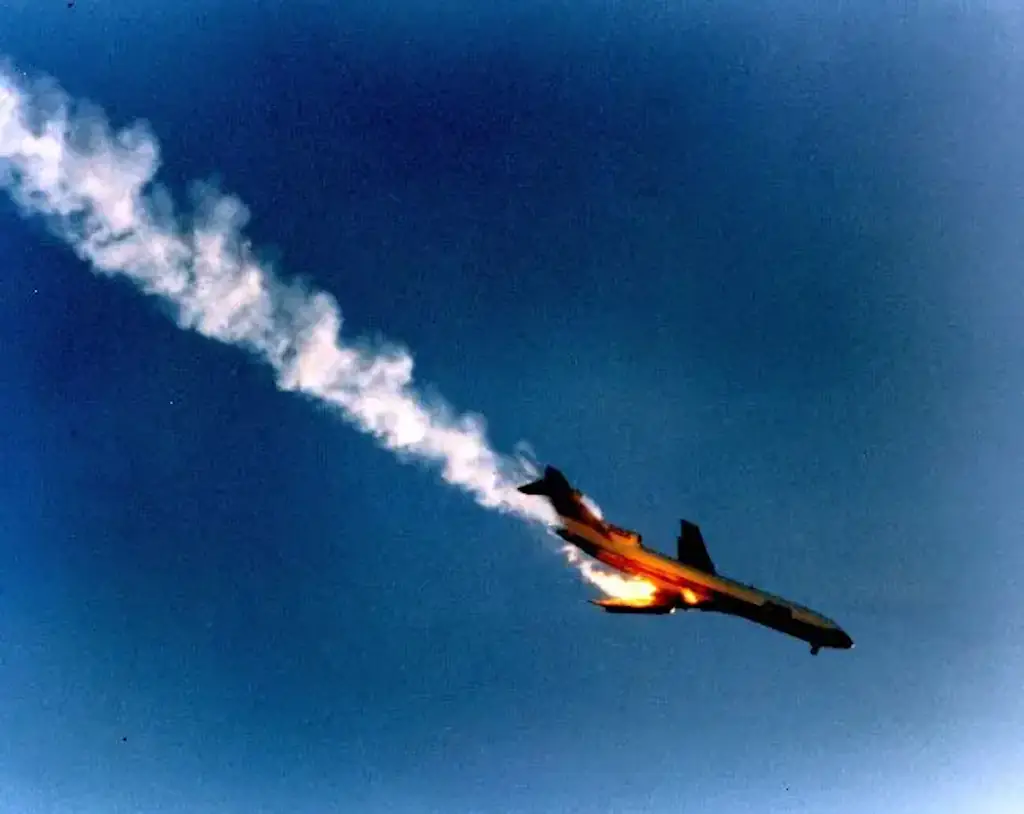
Pacific Southwest Airlines Flight 182, a Boeing 727 carrying 135 passengers and crew, was on approach to San Diego's Lindbergh Field from Sacramento when it collided mid-air with a Cessna 172 light aircraft at approximately 2,600 feet.
The Cessna, a two-seat training plane with a student pilot and instructor on board, had been visible to the PSA crew earlier in the approach.
Air traffic control cleared Flight 182 to maintain visual separation, meaning the crew were responsible for keeping the smaller plane in sight.
They lost it.
The cockpit recording
The transcript from the cockpit voice recorder captures the moment it went wrong.
First Officer Robert Fox, 38, asked: "Are we clear of that Cessna?"
Flight Engineer Martin Wahne replied: "Supposed to be."
Captain James McFeron, 42, laughed. "I saw him at one o'clock, he's probably behind us now."
He was not behind them. He was directly below them.
Seconds later, the two aircraft collided. Fox's voice is the one that confirms it.
"We're hit man, we are hit."
McFeron radioed the tower: "Tower, we're going down, this is PSA."
Then: "This is it baby!"
Then the unidentified voice, widely believed to be a crew member or a pilot in the jump seat, speaking to his mother for the last time.
"Ma, I love you."
The Boeing 727 slammed into the North Park residential neighbourhood of San Diego at full descent speed.
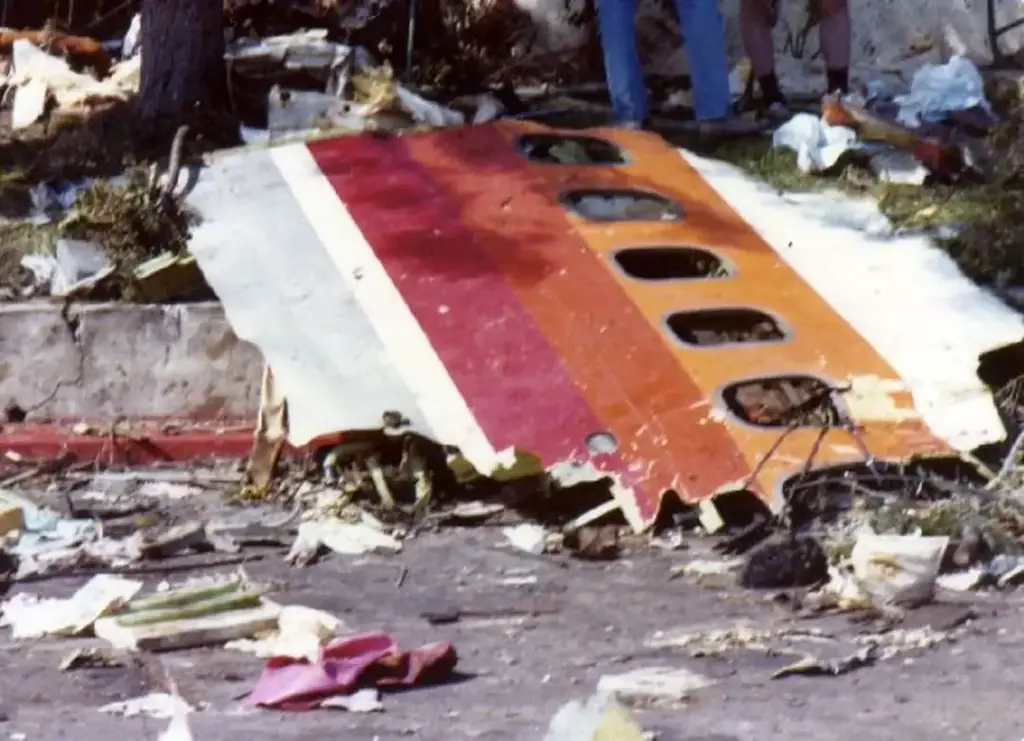
It destroyed or damaged 22 homes. Everyone on both aircraft and seven people on the ground were killed.
The 144 dead
135 people aboard Flight 182. Two aboard the Cessna. Seven on the ground in their homes or on the street. Total: 144.
The crash site covered several city blocks. Wreckage, personal belongings, and human remains were scattered across the neighbourhood.
First responders described scenes that many of them never recovered from.
The deadliest aviation disaster in history, the Tenerife runway collision in 1977, killed 583 people just 18 months before Flight 182.
In that case, too, a pilot's chilling final words were captured on the cockpit recorder as he watched another aircraft heading straight for him.
What the investigation found
The National Transportation Safety Board determined that the crew of Flight 182 failed to comply with the visual separation clearance they had been given.
They were supposed to keep the Cessna in sight at all times. When they lost visual contact, they did not tell the tower.
McFeron's comment, 'I saw him at one o'clock, he's probably behind us now', was the critical moment.
He assumed the Cessna had passed safely. It had not. The smaller aircraft was still below and ahead of them, invisible from the 727's cockpit windows at that angle.
The NTSB also cited contributing factors in the air traffic control procedures in use at the time.
Controllers were authorised to rely on visual separation even when radar-based separation was available. That policy was changed as a direct result of the crash.
What changed afterwards
The PSA 182 disaster led to a major overhaul of air traffic rules at the busiest airports in the United States.
The City of San Diego says the crash 'caused the revision of air traffic rules applicable to the busiest airports across the US'.
Terminal Control Areas were expanded. Transponder requirements were tightened. The rules around visual separation clearances were rewritten to prevent the exact scenario that killed 144 people on a clear Monday morning in September.
On the 45th anniversary in 2023, San Diego Air and Space Museum president Jim Kidrick said: "It is important to never forget the men and women who lost their lives that day."
A memorial stands in North Park at the site of the crash. The neighbourhood rebuilt. The rules were rewritten. The cockpit recording, with its laughter, its panic, and its final five words to a mother, has never been forgotten.
For more stories about aviation, read VT's coverage of a pilot who let his children fly a plane before it crashed and the alarming five-word text an off-duty pilot sent his wife after trying to crash an aircraft mid-flight.