


US4 min(s) read
Psychologist highlights one incident that he believes 'gave the game away' that President Trump 'has dementia'

A psychologist has pointed to a specific incident that he believes “gave the game away” in suggesting that President Trump “has dementia".
Dr. John Gartner believes the president’s repeated cognitive assessments weren’t just standard check-ups but ongoing efforts to monitor a known condition.
Speaking to The Daily Beast, he pointed to Trump’s public bragging about acing the Montreal Cognitive Assessment (MoCA) tests, saying the pattern of testing suggests something more serious.
"You could maybe justify giving someone the MoCA once, just on their age, just as part of a physical," Dr. Gartner said.
"If you’re giving it to him three times, that means you’re not assessing dementia. That means you’re monitoring dementia."
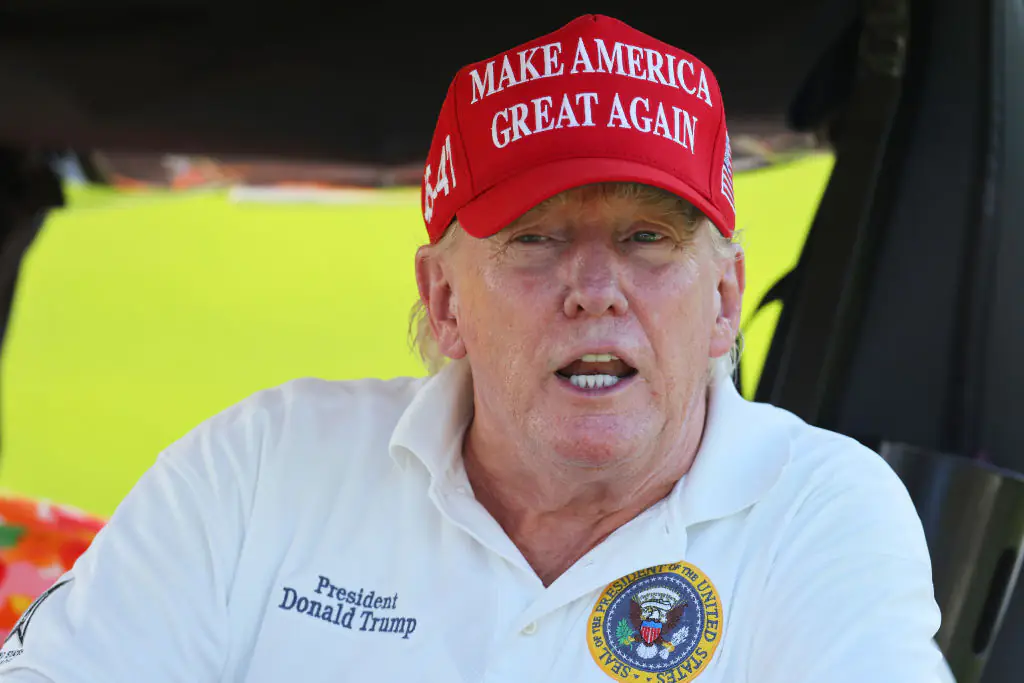
Trump’s test talk raised red flags
In April, Trump said he “got every answer right” on the MoCA and doubled down on the claim in October, calling it a “very hard” test.
“They have Jasmine Crockett, a low IQ person. AOC is low IQ,” he said.
“You give her an IQ test, have her pass, like, the exams that I decided to take when I was at Walter Reed.”
“I took– Those are very hard– They're really aptitude tests, I guess, in a certain way, but they're cognitive tests. Let AOC go against Trump. Let Jasmine go against Trump. I don't think Jasmine– The first couple questions are easy: a tiger, an elephant, a giraffe, you know."
"When you get up to about five or six, and then when you get up to 10 and 20 and 25, they couldn't come close to answering any of those questions," he added.
According to Dr. Gartner, this boast is more of a red flag than a flex. “You know, he kind of gave the game away again, as he often does,” he said, adding that repeated testing suggests ongoing concern about Trump’s cognitive state.
“I think they’re giving him cognitive tests and MRIs every six months to monitor the progress of his dementia, and/or strokes," he shared.
Dr. Gartner added that recent behavior may reflect a “mental status change,” noting, “We have to judge people against their own baseline, and if somebody doubles their rate of speed, that’s a mental status change of some kind.”

DOJ image removal adds to public suspicion
Questions about Trump’s mental fitness come as another controversy involving the president continues to escalate.
Last week, a photo of Trump with Jeffrey Epstein was temporarily removed from a Department of Justice document release before being reinstated, fueling allegations of a cover-up.
The DOJ said the image - one of at least 13 files pulled from the website - was removed due to concerns from victims.
"Out of an abundance of caution," the DOJ said, the image was flagged by the Southern District of New York for review. It was later restored with no alterations.
Deputy Attorney General Todd Blanche dismissed claims that the photo was pulled to protect Trump.
"There are dozens of photos of President Trump already released to the public seeing him with Mr Epstein," he told NBC News. "So the absurdity of us pulling down a photo, a single photo, because President Trump was in it, is laughable."
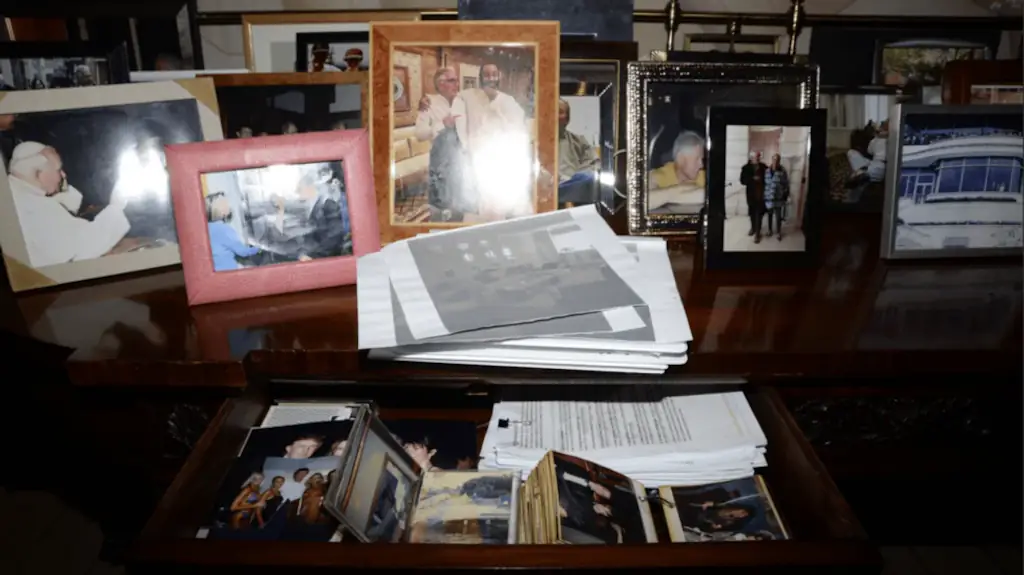
But critics across the political spectrum aren’t satisfied. According to BBC News, Congressman Thomas Massie accused the DOJ of breaking the law: "They are flouting the spirit and the letter of the law," he said, adding that he is drafting contempt charges against Attorney General Pam Bondi.
Survivors and legal experts also blasted the DOJ for its handling of redactions. Attorney Gloria Allred said some images included names and nude photos of survivors that should have been protected.
"We have had to notify the Department of Justice about names that should have been redacted that weren't redacted," she said. "This is further trauma to survivors."
Ashley Rubright, who was abused by Epstein starting at age 15, added: "There’s no way that that’s just to protect the victims’ identities, and there better be a good reason."
DOJ official Jay Clayton later admitted that the review process was vulnerable to human and machine error.
He said many faces were blurred even when not all women were confirmed to be victims, citing the difficulty of identifying everyone.