


US4 min(s) read
Question everyone has about why Harambe was killed has been answered amid 10-year anniversary
.jpg_xKEaT0?tr=cr-0.328.2730.3058,f-webp,q-70,w-100)
It has officially been 10 years since Harambe, the gorilla who once lived in Cincinnati Zoo, was shot dead after a child fell into his enclosure.
The moment went down in internet history as one of the great tragedies of recent times, as while zoo officials had asked gorillas to go back inside, Harambe stayed out and even approached the boy on May 28, 2016.
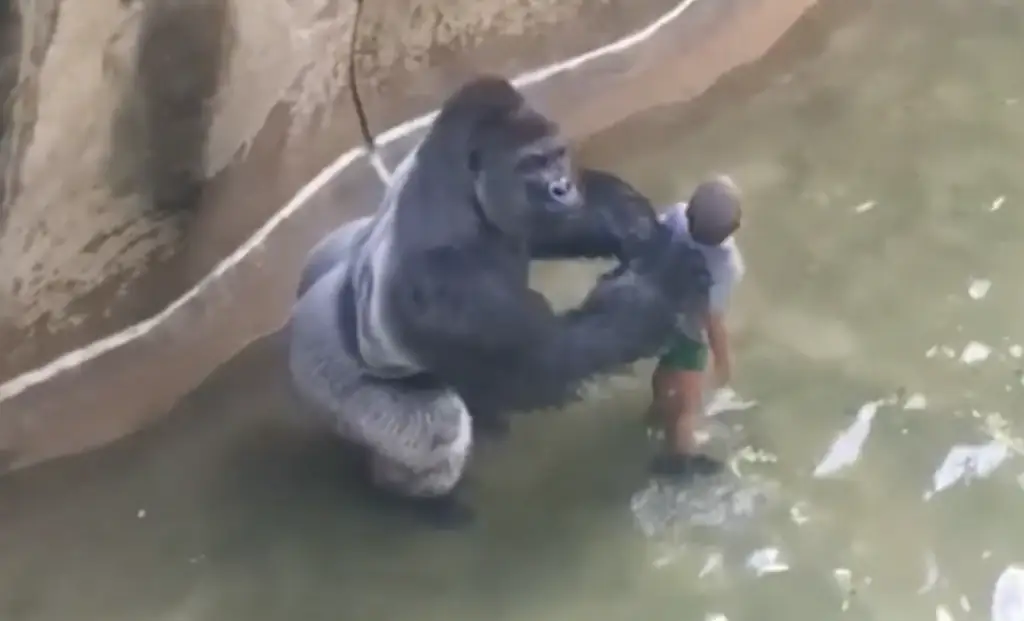
Before long, the western lowland gorilla could be seen splashing around in the water, grabbing, dragging, and throwing the three-year-old boy.
Onlookers started to film the incident, with Harambe carrying the boy through the enclosure and even propped him up when he tried to sit, pushing him over when he stood.
In videos of the incident, the visiting crowd could be heard becoming more concerned for the boy, before the gorilla was killed with a shot to the head, with the boy still between his legs.
Why was Harambe killed?
Many feel like death was harsh on the gorilla, who would've been as confused as the boy.
The three-year-old was taken to hospital, though his injuries were determined not to be life-threatening.
Harambe's reputation went viral online, and posthumously shot to fame and became one of the most recognisable memes of 2016.
Questions on the fatal shooting of the great ape were addressed in the documentary Harambe, which was released on September 24, 2023 - World Gorilla Day.
Speaking to UnchainedTV, documentary director Erik Crown revealed why the gorilla wasn't tranquilized instead of being killed.
He claimed that "tranquilizers don't work the way people think of in movies."
"You don't fire a tranquilizer dart and somebody goes down, it actually puts the system into overdrive which then shuts the system down," Crown explained.
"It can take up to 20, 25 minutes to become active, especially inside of a large gorilla. That may have agitated Harambe, may have led to a different outcome or a very dangerous outcome for the boy."
The director added: "As much as we would have liked to have seen a non-lethal ending to it, I don't believe the zookeepers necessarily had a choice with the way their program runs, and that is exactly why we feel we should not have endangered animals in captivity anymore."
Harambe's behavior
Crown also pointed out that "people argue different things" about how the gorilla acted towards the child, but he believes Harambe was trying to return the child to his family.
As proof, the director explained that the gorilla carried the toddler out of the water to a higher point.
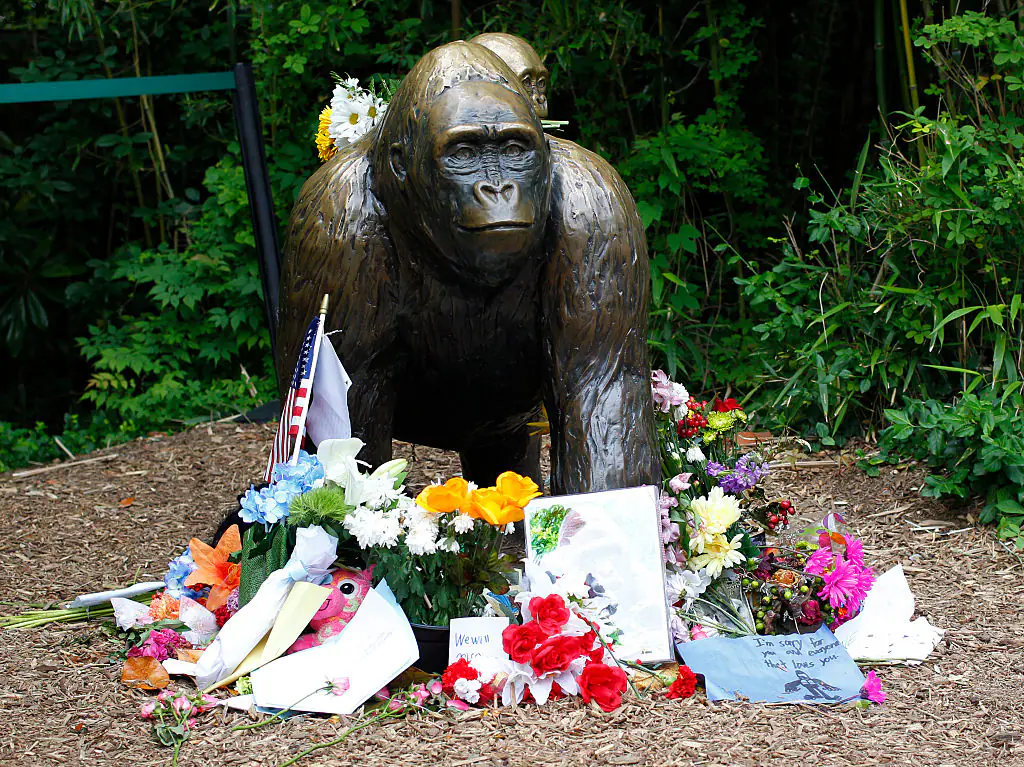
The gorilla was immortalized in 2021 when a seven-foot-tall statue of him was erected on Wall Street, New York, facing the famous bull sculpture.
It would later be moved to the Facebook HQ in California, and another tribute was made to the ape two years later.
This one is less official, but a bridge in Mauldin, South Carolina, was named the "Harambe Memorial Bridge" on Google Maps in 2023, but sadly, the city called it something else.
White House's statement on Harambe
The White House took to social media yesterday (May 27) to pay tribute to the late ape, calling him a "legend."
They wrote: "On this day in history, Harambe would have celebrated another birthday. An icon that became part of internet history, American culture, and an entire generation’s timeline.
"Tomorrow marks 10 years since we lost him. Ten years since the moment the world stopped scrolling and collectively mourned something bigger than a meme," it read.
"He became a symbol of loyalty, strength, chaos, unity, and the strange beauty of the internet bringing millions of people together for one cause: never forgetting Harambe," they stated.
The White House said that his "legacy lives on," calling the gorilla a "true patriot."