


US3 min(s) read
RFK Jr. wants to deregulate 'miracle drugs' popular with influencers despite warnings they are 'not for human consumption'

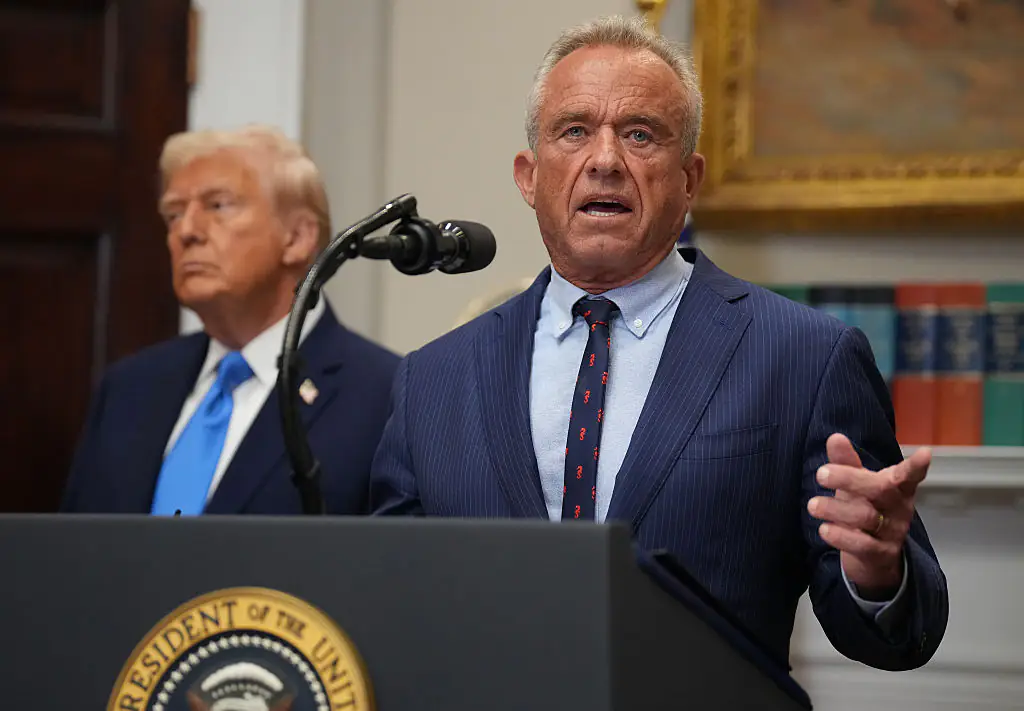
New peptide suppliers with FDA approval could soon flood the market with high-demand products, as U.S. health secretary Robert F. Kennedy Jr. has hinted at loosening regulations.
Kennedy, the son of the late President John F. Kennedy, plans to partially deregulate 14 injectable peptides, including the TikTok-popular BPC-157 and the celebrity-backed Sermorelin, in an effort to make access both safer and easier for consumers.
What has RFK Jr. said?
Revealing his plan on The Joe Rogan Experience podcast, Kennedy explained: “Within a couple of weeks, we will have announced some kind of new action,” and added: “My hope is that [these peptides are] going to get moved to a place where people have access from ethical suppliers.”
Peptides are short chains of amino acids that naturally occur in the body and act as biological messengers. In simple terms, they function as “signaling molecules” that direct the body on how to allocate its energy and resources. Over the past 18 months, peptides have surged from a niche biohacking tool to a major wellness trend, with a projected market worth of $81.5 billion by 2034.
Some peptides that have already been approved by the U.S. Food and Drug Administration are widely used medicines, such as insulin and GLP-1 drugs like Ozempic and Wegovy, which have undergone extensive safety and efficacy testing.
What does peptide regulation say?
In contrast, many of the peptides currently trending online occupy a legal gray area. They lack FDA approval and long-term safety data, even as celebrities, wellness influencers, holistic practitioners and Kennedy himself promote them as potential fixes for issues ranging from weight loss and digestive problems to wrinkles.
Regulatory changes in 2023 helped fuel this previously unregulated market. That year, the FDA tightened restrictions on compounding pharmacies by moving certain peptides from “class 1” to “class 2”. As a result, many pharmacies stopped offering them. According to Kennedy on Rogan’s podcast, dedicated users then turned to questionable overseas supply chains to obtain the substances. He now intends to reverse that classification, moving peptides back to class 1 and allowing compounding pharmacies to legally produce and sell them again.
At present, many consumers bypass restrictions by buying substances labeled as “research peptides” online. The label implies they are meant for laboratory study rather than human use, allowing buyers to claim they are purchasing them for experimentation in personal “research labs”. While injecting them is technically illegal, the loophole has made peptides easy to obtain.
The situation has produced both gray- and black-market supply chains, pushing much of the peptide trade underground.
Industry figures say regulatory change could reshape that market. Jay Campbell, an author, prominent voice in the U.S. peptide community and founder of BioLongevity Labs, believes returning peptides to class 1 would substantially boost adoption among medical professionals. “[Moving peptides to FDA] class 1 will dramatically improve interest and dramatically improve market awareness, because the clinical community has been afraid of using peptides because of that class 2 designation,” he said.

Campbell also predicted that Kennedy might eventually restrict imports of peptides from abroad, which could narrow the supply chain but improve product quality.
“It’s a good thing, from a net benefit standpoint, because obviously the products are going to be higher quality [if] everything will be sourced in the United States,” he said. “From my understanding, [the FDA is] going to massively cut back on Chinese and Indian raw material manufacturing [of peptides next]. … There’s going to be a much smaller group of peptide providers or vendors, peptide costs will go up, and manufacturing costs will go up."