


US3 min(s) read
Simulation explains how firing squad executes prisoners without knowing the killer

A simulation has revealed how a firing squad will execute prisoners without knowing the killer.
The method has sparked renewed interest after it was announced earlier this week that former Army major Nidal Hasan was going to be killed by firing squad on December 3, 2026, at Fort Hood, Texas.
President Donald Trump approved of the execution just days after the botched execution of Christa Pike on September 30.
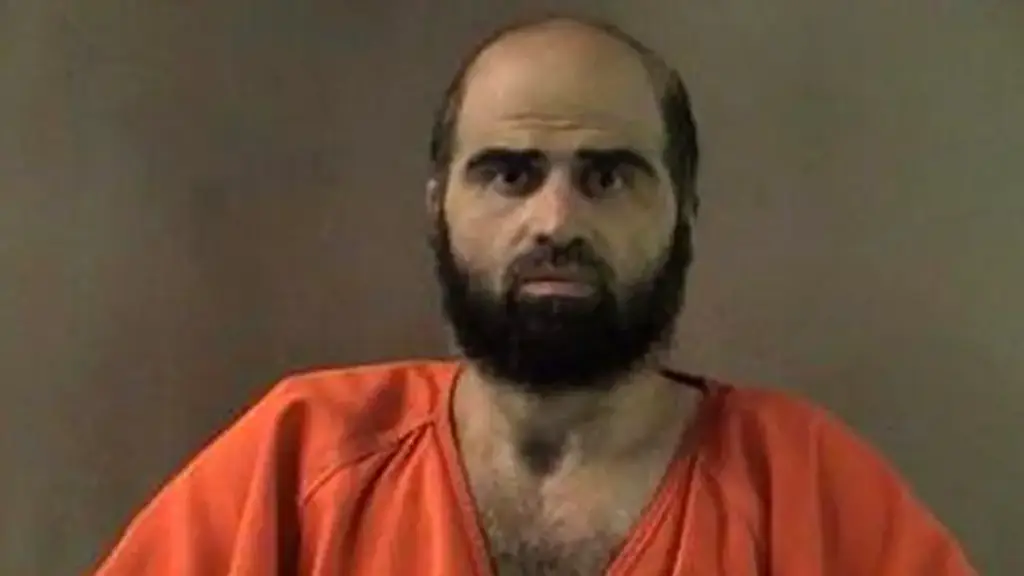
Hasan was found guilty of terrorism and murder after carrying out a shooting at Fort Hood on December 5, 2009.
The 56-year-old was convicted of 13 counts of premeditated murder and 32 counts of attempted premeditated murder after killing 12 US service members, a civilian, and injuring 32 others at the Texas Army base.
He was shot and paralyzed from the waist down in the gunfire and was sentenced to death in 2013.
Simulation reveals how the firing squad will execute prisoners
Hasan is set to become the first U.S. military service member to be killed by firing squad since 1945.
News of his execution has prompted some users to question how the process would work.
One simulation shared on TikTok explains a technique historically associated with firing squads, where a group of soldiers is assembled to fire at a condemned prisoner at the same time.
However, there is one important detail: not every bullet is "real".
"One of the rifles is loaded with a blank instead of a live bullet," the narrator said. "Even though the blank cannot kill anyone, the gun still makes a loud sound and kicks back when the trigger is pulled. This makes it feel the same as firing a real bullet."
The soldiers are not told which rifle contains the blank, so none of them "know for sure" whether they fired a deadly shot.
"Because of this, there is doubt about who actually caused the prisoner's death," they said. "Each soldier can believe there is a chance that they were not the one who killed the prisoner."
This method is meant to "protect the soldiers' mental health" so that the responsibility is "shared among the group".
"This uncertainty is meant to help the soldiers deal with their feelings. Taking part in an execution can be very upsetting, and knowing they might not be directly responsible can reduce guilt and stress," the narrator added.
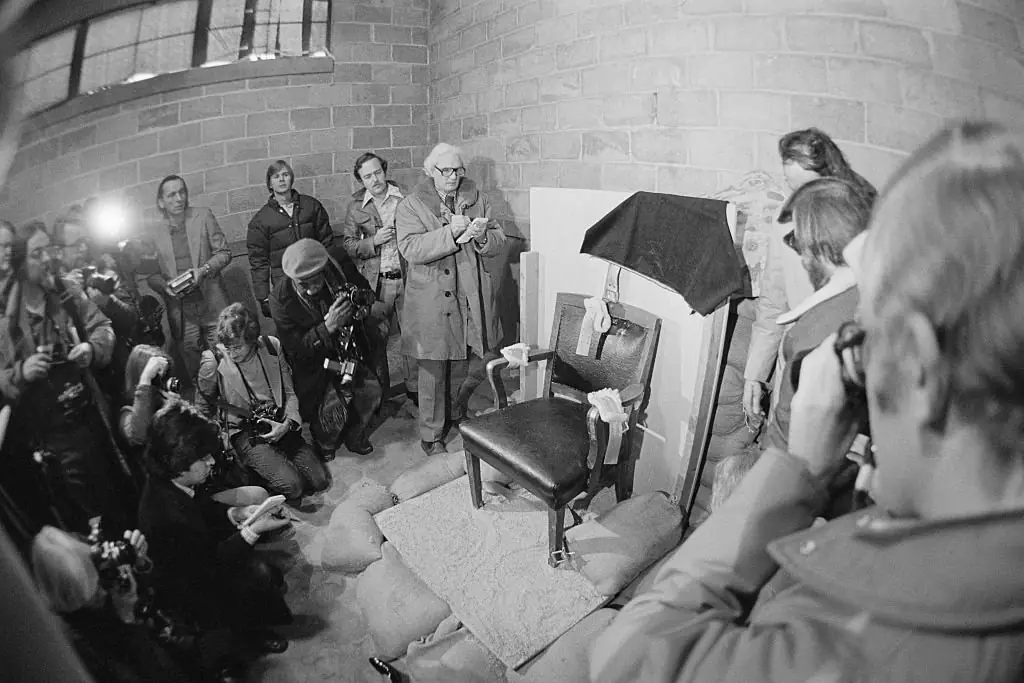
Hasan admitted to carrying out the attack during his trial and told jurors that he had "switched sides" in what he described as America's war with Islam.
He also said he wanted to stop American soldiers from being deployed to kill fellow Muslims, while government lawyers argued that Hasan did not want to go on an impending deployment to Afghanistan.
The shooting was initially described as workplace violence rather than terrorism by the Department of Defense.
Pentagon spokesperson Sean Parnell confirmed the decision to proceed with execution in a statement.
"Secretary of War Pete Hegseth has recommended, and President Donald J. Trump has approved, Death by U.S. Army firing squad for convicted terrorist Nidal Malik Hasan, the jihadist who opened fire on unarmed American soldiers at Fort Hood in 2009.
"The Secretary of the Army will set the time and place of the execution. Judgment day for Hasan has finally come," he added.