


US5 min(s) read
Trump makes dramatic move after all major TV networks announce they're boycotting him

Donald Trump has announced a dramatic move following his ban on CNN, MS Now, and Politico from the White House, amid a retaliatory broadcaster boycott.
The controversial US leader who imposed a ban on CNN from the White House last week, prompted a collective response from the country’s leading network television channels, with ABC, CBS, CNN, NBC, and Fox News all boycotting their coverage of Trump at the United Nations General Assembly on Monday.
Trump's dramatic move following boycott
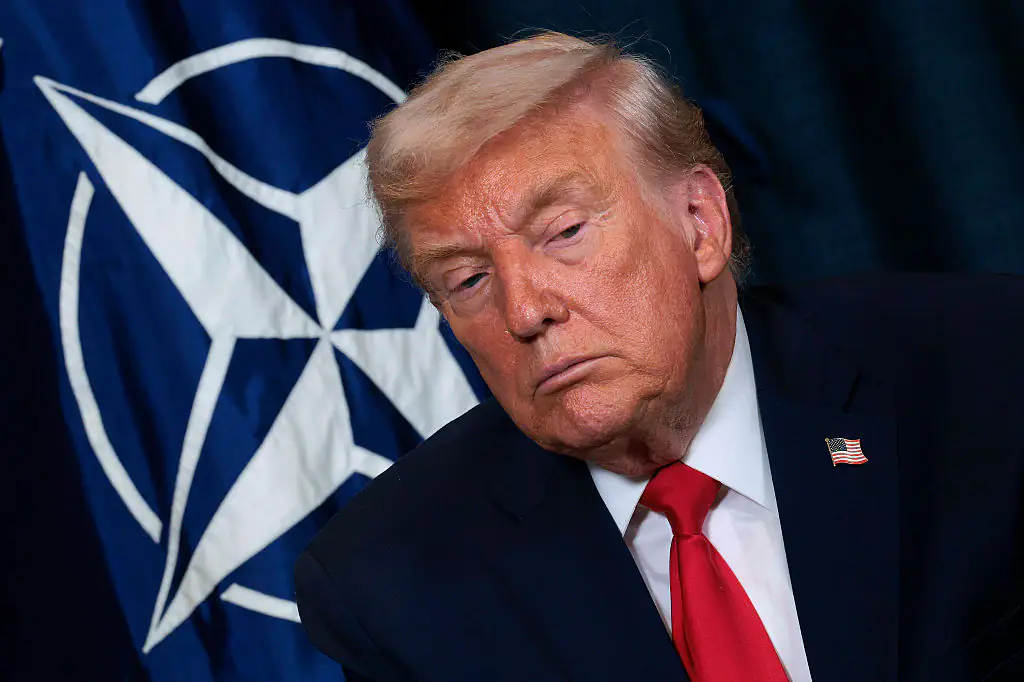
After suspending coverage, Trump confirmed he is launching a new 24-hour streaming service from the White House.
The new service, branded Trump TV, began broadcasting on Monday evening, with the administration presenting it as a way for viewers to watch presidential events directly.
“TRUMP TV IS STREAMING NOW. 24/7, updated in real time, with top past moments, announcements, and the latest and greatest from the administration all in one place. Not every big moment has made it on your tv, now it can,” the administration announced.
Its first broadcast was a speech Trump delivered at Mount Rushmore on July 3, with the launch coming after a dramatic day in which tensions between the president and several major news organizations intensified.
The news channels jointly announced that they were suspending their participation in the television pool until further notice.
The networks are responsible for distributing footage of presidential events to other media outlets and broadcasters around the world.
The five organizations said their position was based on the importance of independent reporting on government.
“The public has a vital interest in receiving accurate, independent information about its government. No administration should restrict a news organization because it objects to its reporting,” their joint statement said.
The dispute became particularly visible on Monday afternoon when the networks declined to broadcast Trump's ribbon-cutting ceremony for a newly opened presidential helipad before he left Washington for a two-day trip to New York, where he was set to address the UN General Assembly.
The White House instead streamed the event on its own social media accounts.
However, the sound from Marine One, which was sitting behind Trump on the newly opened helipad with its engine running, reportedly made it difficult for viewers to hear much of what the president was saying.
Some networks did later broadcast portions of Trump's news conference with New York City Mayor Zohran Mamdani.
Trump addressed the supposed boycott during the appearance, appearing to suggest that he was not concerned by the decision.
“It’s interesting because they said where they were going to boycott me, but they never boycott me, so I wasn’t very worried about that,” he claimed.
“Look at all that press,” Trump added while gesturing towards the large group of reporters outside Gracie Mansion.
The confrontation was not limited to the TV pool, but also extended to several publications, including The New York Times and The Washington Post, which said they would temporarily stop publishing photographs taken by their own still photographers of the president, with the move described as a show of solidarity with the television networks.
The White House responded quickly, dismissing the criticism: “Access changes are nothing new. What is new, however, is the sudden claim that it becomes sacred only when the outlets are friendly to the Radical Left,” the administration said.
“The rule was never ‘every outlet gets in.’ It was always ‘our side stays in.’”
Trump and White House face legal repercussions
Meanwhile, CNN, MS Now and Politico filed a lawsuit against the Trump administration seeking to restore their access to the White House.
The lawsuit names Trump, White House communications director Steven Cheung, Secret Service Director Sean Curran and Chief of Staff Susie Wiles as defendants.
In the 27-page filing, the outlets described the decision to bar their journalists from the White House as an attack on press freedoms.
The filing said Trump's announcement that the organizations were being excluded “could not be a more direct assault on the First Amendment nor a more blatant violation of our most fundamental constitutional principles.”
A hearing in the case is scheduled for Wednesday afternoon before US District Judge Timothy Kelly, who had previously ruled during Trump's first presidency that the White House could not bar CNN correspondent Jim Acosta from the premises.
Trump subsequently criticized the choice of judge on Truth Social and indicated that his administration would appeal if the court ruled against it.
“They have drawn a great Judge, for them, a man who ruled in favor of Jim Acosta, who now seems to have disappeared from the Planet,” Trump wrote.
“In other words, almost without question and, as usual, we’ll go for appeal.”
The latest confrontation is not the first time Trump's administration has clashed with a major news organization over access, having removed the Associated Press from pooled access after the wire service declined to adopt the administration's preferred terminology referring to the Gulf of Mexico as the “Gulf of America.”
The latest dispute began after the White House declined to credential CNN on Monday when it was scheduled to provide the television pool.
CNN would have been responsible for supplying footage of Trump's New York trip, including his meeting with Mamdani and an expected encounter with French President Emmanuel Macron during the UN General Assembly.
Although the television pool was suspended, Trump's movements continued to be covered by journalists from newspapers, radio organisations and wire services, alongside still photographers and the White House's own camera operation.
Trump has defended the restrictions by arguing that certain news organisations should not have access to the White House.
“They’re very bad for the country, very bad for national security … So we’ll see how it works out,” he claimed.