ADVERT
US3 min(s) read
Published 08:04 17 Jul 2026 GMT
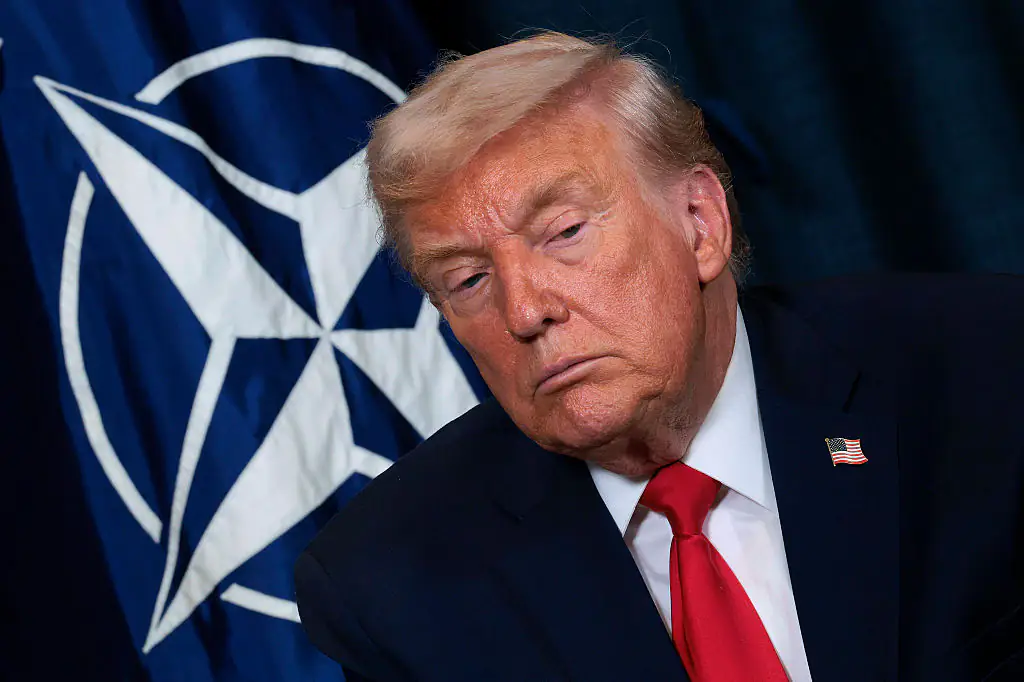
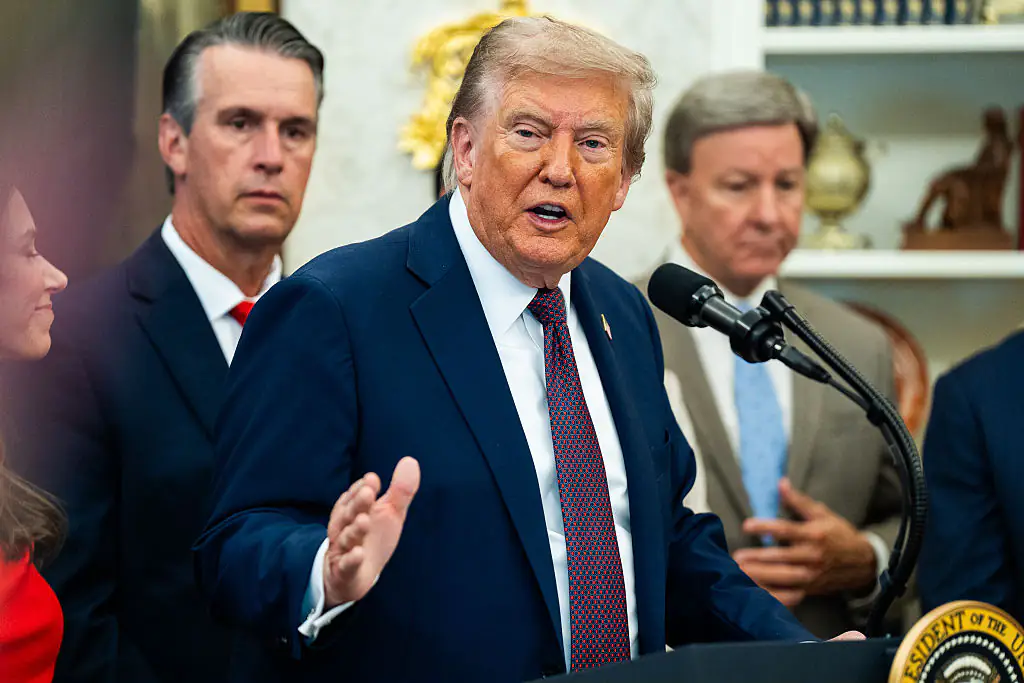
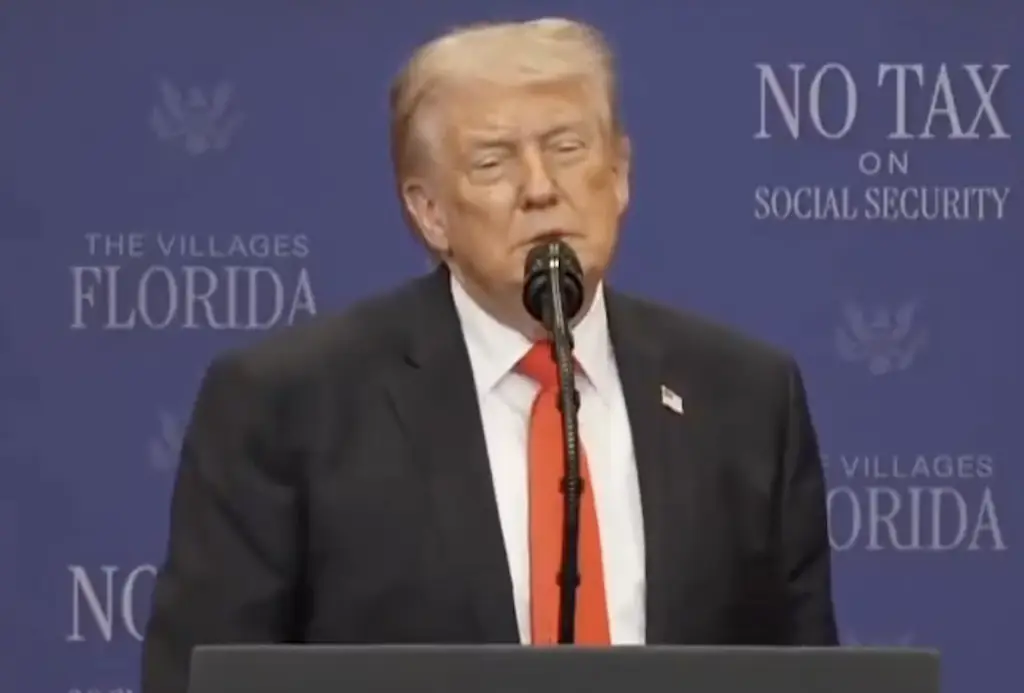
Despite rumors circulating online that Donald Trump was planning on introducing a three-day working week, it appears that those touted plans have been shelved, for now at least.
After gaining traction on social media, with searches for "Trump three day work week" surging in recent weeks, videos and posts claiming the US president had approved a 32-hour working week spread drastically.
The misinformation comes at a time when the future of the traditional working week remains a major talking point.
Countries around the world have been trialling four-day working weeks, while growing concerns over workplace stress, burnout, and demands for greater flexibility have fueled calls for shorter working hours.
The latest wave of false claims appears to have resurfaced on TikTok, where videos posted between late September and October alleged that Trump had introduced either a three-day or 32-hour working week.
Some of the clips featured AI-generated news presenters announcing the fabricated policy, while others recycled footage originally shared earlier in the year.
The rumor first gained widespread attention in April after an X user claimed in a viral post that Congress had passed legislation limiting the standard work week to 32 hours. The post went on to attract more than two million views.
A month later, a TikTok creator posted a video making similar claims, which was viewed more than 11 million times before multiple news organisations debunked it.
Although interest in the story faded after fact-checkers confirmed it was false, the claim has since re-emerged across social media.
Some confusion may have stemmed from a genuine proposal introduced in January by a group of progressive congressional staffers, who suggested implementing a 32-hour working week for employees on Capitol Hill.
However, the divisive proposal only applied to congressional staff, not the wider US workforce, and it was withdrawn just one day after being introduced following criticism.
According to research from Google's DeepMind, creating realistic-looking fake images, videos, and audio has become one of the most common forms of generative AI misuse, outpacing many other types of AI-generated misinformation.
Responding directly to the viral claims, X's AI assistant Grok stated: "The claim that Trump is making the standard work week 32 hours with no taxes on overtime is not true.
"There's no evidence of such a policy from Trump. The idea likely stems from a separate proposal, the 32-Hour Workweek Act, introduced in 2023, which hasn't passed and isn't linked to him."
Data released by the American Psychological Association's Work in America survey found that 22 percent of respondents in 2024 said their employer offered a four-day working week.
With the length of a working week, and emphasis on work-life balance becoming increasingly important to workers, organisation 4 Day Week Global, which coordinates four-day workweek trials around the world, reported that participating companies saw a 42 percent decrease in employee resignations alongside a 36 percent increase in revenue, adding to the evidence that shorter working weeks can benefit both employers and staff.
us5 min(s) read
us3 min(s) read
us5 min(s) read
us3 min(s) read
us2 min(s) read
Published 17:29 12 Aug 2021 GMT
Published 17:25 02 Dec 2025 GMT
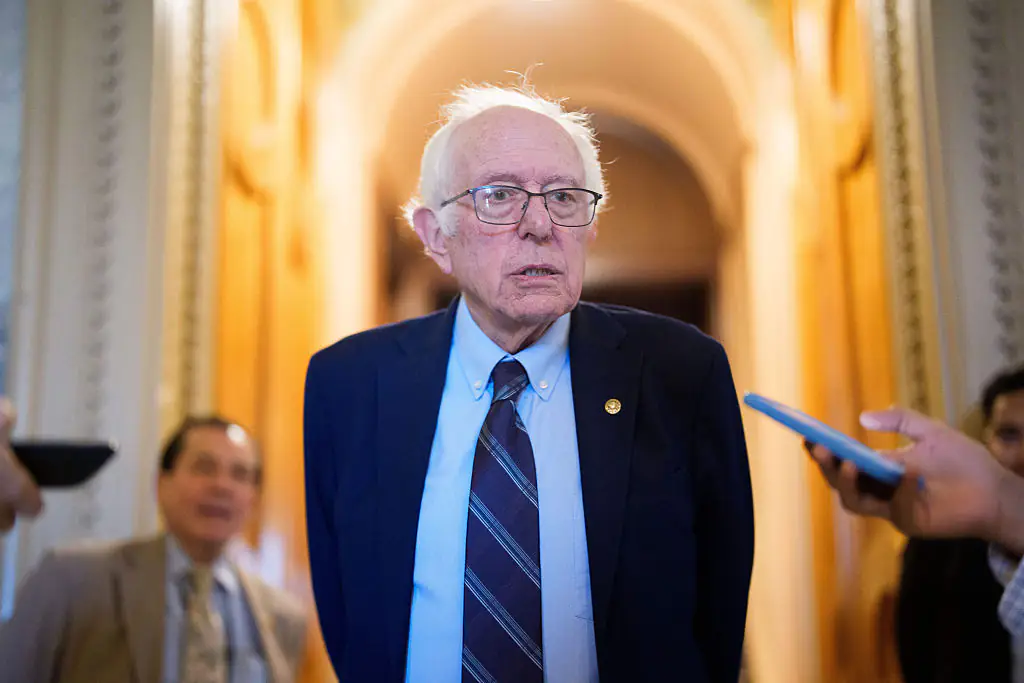
As artificial intelligence (AI) continues to reshape industries and improve productivity, Senator Bernie Sanders sees an opportunity for a profound shift in the way we work.
In a recent appearance on the Joe Rogan Experience, Sanders proposed that AI's rise in productivity should be used to reduce the traditional workweek, providing more free time to workers.
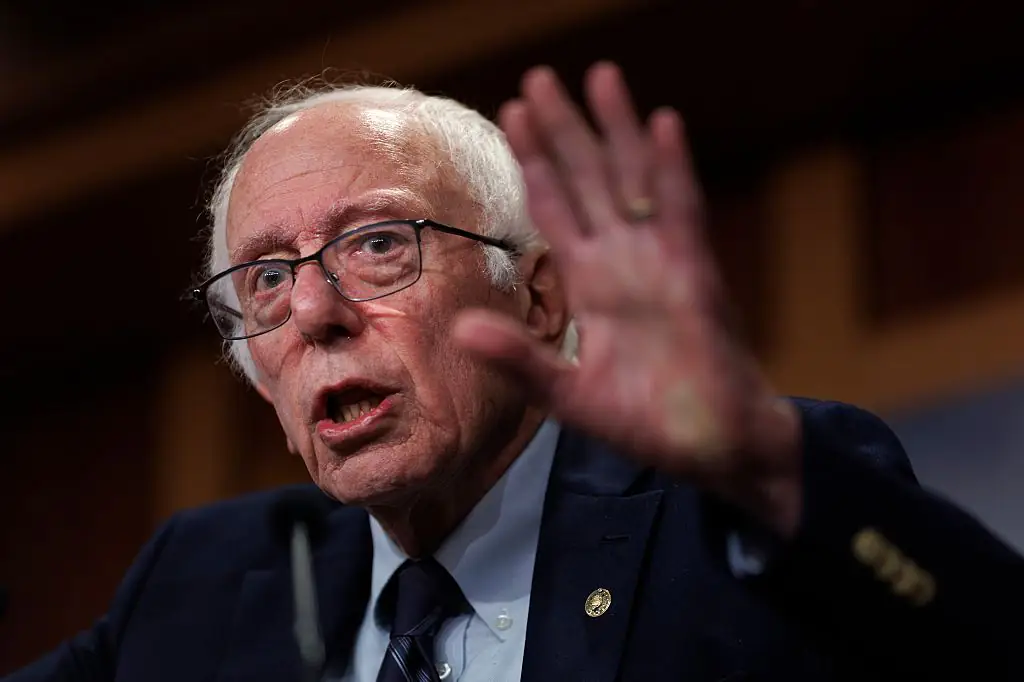
"You're a worker, your productivity is increasing because we give you AI, right?" Sanders said. "Instead of throwing you out on the street, I'm going to reduce your workweek to 32 hours."
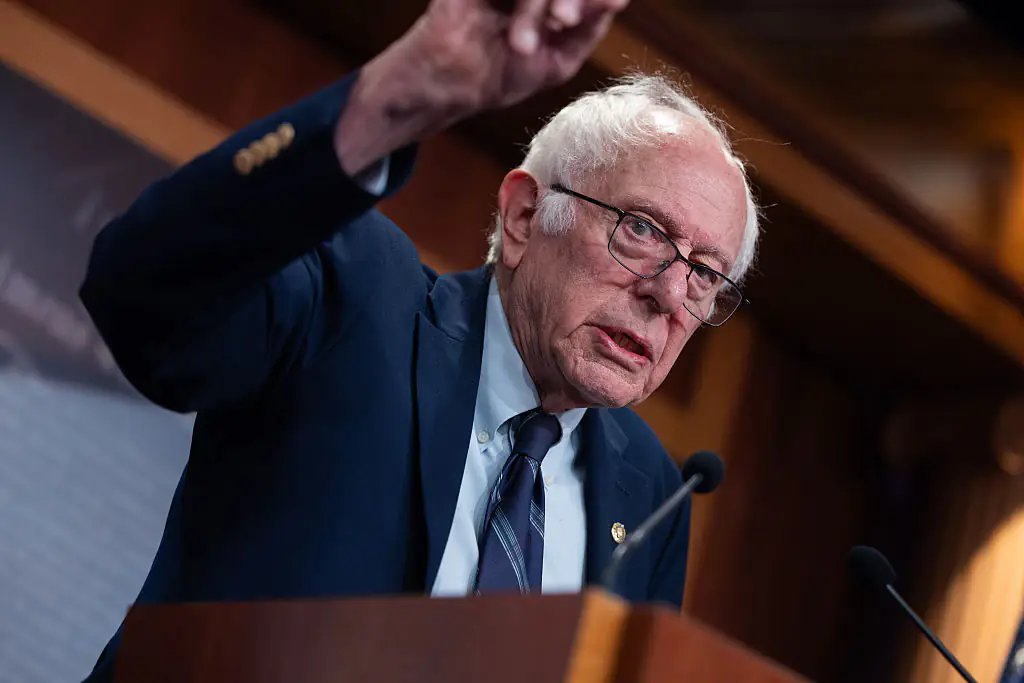
Sanders' bold vision includes the introduction of the "Thirty-Two Hour Workweek Act," which he first introduced last year.
This bill would require employers to pay overtime for any hours worked beyond a 32-hour workweek, essentially moving toward a four-day workweek.
Sanders argues that with the increase in efficiency brought by AI and automation, workers should not have to continue working 40 hours a week.
"Let's use technology to benefit workers," Sanders said. "That means, give you more time with your family, with your friends, for education, whatever the hell you want to do. You don't have to work 40 hours a week anymore."
While the idea of a 32-hour workweek has gained traction in certain circles, it is still a controversial subject, especially in industries that are heavily impacted by automation and AI.
Sanders’ plan would roll out gradually over four years, giving businesses time to adapt to the changes.
However, Sanders' concerns go beyond just the potential benefits of AI in the workplace. In an interview with NBC News, Sanders warned that the rapid rise of AI also presents significant risks, particularly in the realm of warfare and wealth inequality.
"I think we are not all that far away from the development of robotic soldiers," Sanders remarked.
"Right now, politicians — at least sometimes — have to worry about loss of life when they decide to go to war. If you don’t have to worry about loss of life, and what you worry about is loss of robots, what does that mean for issues of war and peace globally? It’s a big issue."
Sanders expressed concern that if AI leads to the development of autonomous robots for warfare, the stakes of global conflicts could be radically changed.
"If you don’t have to worry about loss of life, and what you worry about is loss of robots, what does that mean for issues of war and peace globally?"
The rise of robotic soldiers could fundamentally alter the morality of war, making it easier for countries to engage in conflict without the same ethical concerns tied to human casualties.
While AI and automation offer new opportunities, Sanders believes they also exacerbate existing wealth inequality.
As the billionaires of Silicon Valley - figures like Elon Musk, Jeff Bezos, and Mark Zuckerberg - invest heavily in AI, Sanders fears that these technologies will concentrate wealth and power even further.
"Today, before we have seen the full implications of robotics and AI, you’re looking at unprecedented wealth and income concentration," Sanders said. "The top 1% of Americans own more wealth than the bottom 93%."
Sanders warned that this concentration of wealth could have far-reaching consequences for the economy and democracy.
"All of these zillionaires — the Musks, the Ellisons, the Bezoses, the Zuckerbergs — are investing hundreds and hundreds of billions of dollars into AI and robotics.
What is the result of all that?" With AI allowing these tech moguls to amass even more wealth, Sanders fears that it will lead to a significant erosion of democracy.
"It will mean even more wealth and even more political power for these guys at the top, while our democracy gets weaker and weaker. Working people will see a significant decline in their standard of living unless we turn this around."
Sanders' concerns are not limited to the economic consequences of AI; he is also deeply worried about its potential to disrupt the job market.
Musk and other tech moguls have warned that AI and robotics could soon replace most jobs, making work "optional."
Sanders highlighted the implications of such a shift, stating, "Musk recently said that ‘AI and robots will replace all jobs. Working will be optional.’ But what the hell does that mean if it’s going to replace all jobs?"
This profound change raises questions about the future of work and how individuals will sustain themselves in an AI-driven economy.
Sanders pointed out that there has been little discussion in Congress or in the media about how society will cope with such dramatic job displacement.
"There has been far, far, far too little discussion among the American people, in the media and certainly in Congress about the implications of AI and robotics," Sanders said.
Published 08:51 03 Sep 2025 GMT
President Donald Trump dismissed viral social media rumors suggesting he had died, addressing the speculation during a nearly 50-minute press event at the White House on Tuesday.
The 79-year-old leader said he was well aware of the chatter, though he had not seen the online posts himself.
Trump jokes about rumors and media double standards
Fox News correspondent Peter Doocy asked Trump about the “death rumors” that gained traction over the Labor Day weekend, when he had no public events on his schedule.
“I have heard, it’s sort of crazy… It’s so fake,” Trump said in response, via The Telegraph. “I was very active this Labor Day.”
The president added that the media seemed quick to speculate about his health but had given former President Joe Biden a pass in similar situations.
“I didn’t do any [public events] for two days, and they said there must be something wrong with him. Biden would not do them for months… and nobody ever said there was anything wrong with him,” Trump said, drawing laughter from the room.
Social media fuels 'Where is Trump?' trend
On Friday, the hashtag #whereistrump began trending as users speculated about his absence. Paparazzi had photographed Trump traveling to and from his golf club in Sterling, Virginia over the weekend, but that did little to tamp down speculation.
Trump was originally expected to spend the holiday at his Bedminster, New Jersey golf club but chose to remain in Washington, D.C. instead.
He was spotted golfing with his granddaughter Kai on Saturday, and on Sunday he teed off with former NFL coach Jon Gruden.
A viral photo of Trump with conservative radio host John Fredericks added fuel to the controversy.
Skeptics online ran the image through AI analysis tools, claiming it was doctored or outdated. Fredericks, however, insisted the photo was authentic.
“This photo was taken August 31, 2025 … by my wife Anne on her phone at approximately 4:00 PM EST after golf & lunch at Trump National Golf Club in Sterling, Virginia,” he clarified on X.
Trump's health: What we know
Questions about Trump’s health continue to circulate, though his team insists he remains fit for office. In July, White House press secretary Karoline Leavitt disclosed that Trump has chronic venous insufficiency, a condition that causes mild leg swelling but is common in older adults, according to Mail Online. His physician confirmed the diagnosis as benign, noting there was no evidence of serious arterial disease.
The doctor also acknowledged bruising on the back of Trump’s hand, attributing it to irritation from frequent handshakes and the president’s daily use of aspirin for cardiovascular health.
Vice President JD Vance has repeatedly reassured the public about Trump’s stamina, saying the president routinely works later than most younger staffers. “He’s the last person making phone calls at night, and the first one to wake up in the morning,” Vance said last week.
Despite the rumors, Trump’s appearance and extended remarks Tuesday suggested that reports of his demise were, as he put it, “greatly exaggerated.”
Published 11:00 02 May 2026 GMT
Donald Trump's late-night Truth Social habits have become so well-documented at this point that they've sparked their own side industry of analysis.
And one term in particular keeps cropping up: 'sundowning.'
Critics, including California Governor Gavin Newsom, have used the word to suggest the 79-year-old president's after-dark posting sprees might point to something more concerning than a man who simply doesn't like sleeping.
But what does the term actually mean, and is it being used fairly?
To understand why people are reaching for the word in the first place, it helps to look at the behavior they're talking about.
In recent months, Trump has fired off rapid-fire bursts of Truth Social posts late at night and into the early hours.
According to The Daily Beast, one recent spree saw him share 48 posts in 36 minutes, before resuming again at 6:00am.
Another night, he posted 19 times in 12 hours, including 10 times in a 20-minute window around midnight.
The posts have ranged from attacks on political rivals like Newsom, Pope Leo, and NATO, to sharing AI-generated images of himself, to easily debunked claims about domestic policy.
Trump himself has long described himself as a 'late-night person,' telling Sean Hannity back in 2023 that he sleeps 'not much.'
Vice President JD Vance told Fox News in September that Trump sometimes calls him at 12.30am, then again at 6:00am 'about a totally different topic.'
'Sundowning,' also known as 'sundown syndrome,' is a real and well-documented medical phenomenon, not a casual insult.
According to the Alzheimer's Association, it refers to a cluster of symptoms that people living with Alzheimer's or dementia can experience from late afternoon through the evening and into the night. It is not a disease in itself, but a set of behaviours associated with dementia.
Common symptoms include:
The Alzheimer's Association says up to two in three people with Alzheimer's experience sundowning at some point during their illness. It's most common in the middle and later stages.
The exact cause isn't fully understood, but doctors think a few things may be at play.
One leading theory is that disrupted circadian rhythms (the body's internal sleep-wake clock) play a major role.
Fading light, low lighting, mental and physical exhaustion from a long day, and confusion from shadows can all act as triggers.
The Cleveland Clinic also lists sleep deprivation as a factor that can make sundowning significantly worse, which becomes a vicious cycle: the worse the sleep, the worse the symptoms, the worse the sleep again.
This is where things get more complicated, and where it's worth being careful.
Trump has not been diagnosed with dementia or Alzheimer's.
His White House physician, Dr Sean Barbabella, declared him in 'excellent health' at his last reported physical, and the president has repeatedly claimed perfect scores on the Montreal Cognitive Assessment, a screening tool designed to detect early signs of cognitive impairment.
The White House has firmly rejected suggestions that anything is amiss.
Deputy Chief of Staff Stephen Miller previously said Trump 'can work harder, has a better memory, more stamina and energy than a normal mortal,' and suggested the headline should be 'The Superhuman President.'
Crucially, doctors say sundowning is not something you can diagnose from a single behaviour or even a single evening.
In a 2020 interview on the Cleveland Clinic's YouTube channel, geriatric psychiatrist Dr Ryan Hall explained that sundowning 'is something caregivers notice over time, not something you diagnose from a single behaviour or a single evening.'
In other words, late-night posting on its own, even a lot of it, is not enough to point to anything medical.
The reason the word keeps surfacing is largely political.
Newsom's press office has openly used 'sundowning' to mock Trump's late-night sprees.
After one recent spree, the office quipped 'So… about last night,' directly linking the timing of Trump's posts to symptoms associated with cognitive decline.
That came against a wider backdrop.
Democratic Congressman Jamie Raskin recently called for the White House physician to perform a comprehensive cognitive assessment on Trump, citing what he called 'increasingly incoherent, volatile, profane, deranged, and threatening' public statements.
Some MAGA-aligned commentators have also publicly questioned the president's recent behaviour.
But for now, the suggestion that Trump is 'sundowning' remains a political talking point, not a medical finding.
As one IBTimes analysis put it, applying a clinical framework like sundowning to anyone requires evidence well beyond timestamps on social media posts.
So could late-night Truth Social storms be a sign of something? Possibly.
Could they just be the habits of a 79-year-old who has always preferred working in the small hours and has never been shy about saying exactly what's on his mind? Also possibly.
Without sworn medical testimony or a documented diagnosis, the answer, for now, is that nobody outside the president's medical team really knows.
Whether voters find that reassuring is, as ever, another question entirely.
Published 16:34 13 Apr 2026 GMT
Donald Trump's wellbeing is being questioned after he went on a posting spree on Sunday night (April 12).
The US President, 79, posted 12 times in a span of around six hours, ranging from updates on Iran to nonsense memes which left many scratching their heads.
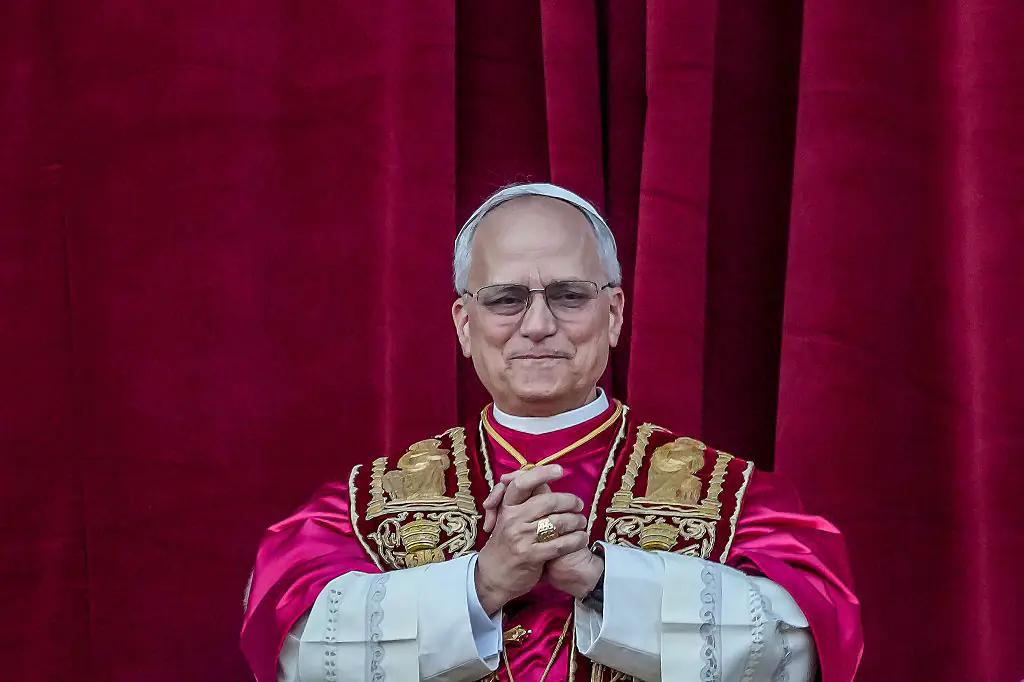
Trump has recently criticized the Pope in a long-form post, where he called Leo XIV "weak on crime" and "terrible on foreign policy."
He spoke about liking Leo's brother more as he is "all MAGA," claiming that he also didn't want a Pope who advocated for Iran to have a nuclear weapon, or one "who thinks it’s terrible that America attacked Venezuela".
While the Pope eluded to world leaders with "hands full of blood," he outright stated this morning (April 13) that he has "no fear of the Trump Administration."
“I will not enter into debate. The things I say are not meant as attacks on anyone,” the Pope stated.
Democratic content creator Harry Sisson took to X to speak about Trump's behaviour last night, claiming that the President is "having a mental episode right now."
He listed all of Trump's posts out here:
Sisson claimed: "He’s not sleeping, he’s pretending to be Jesus, and he’s posting all night. He’s not well."
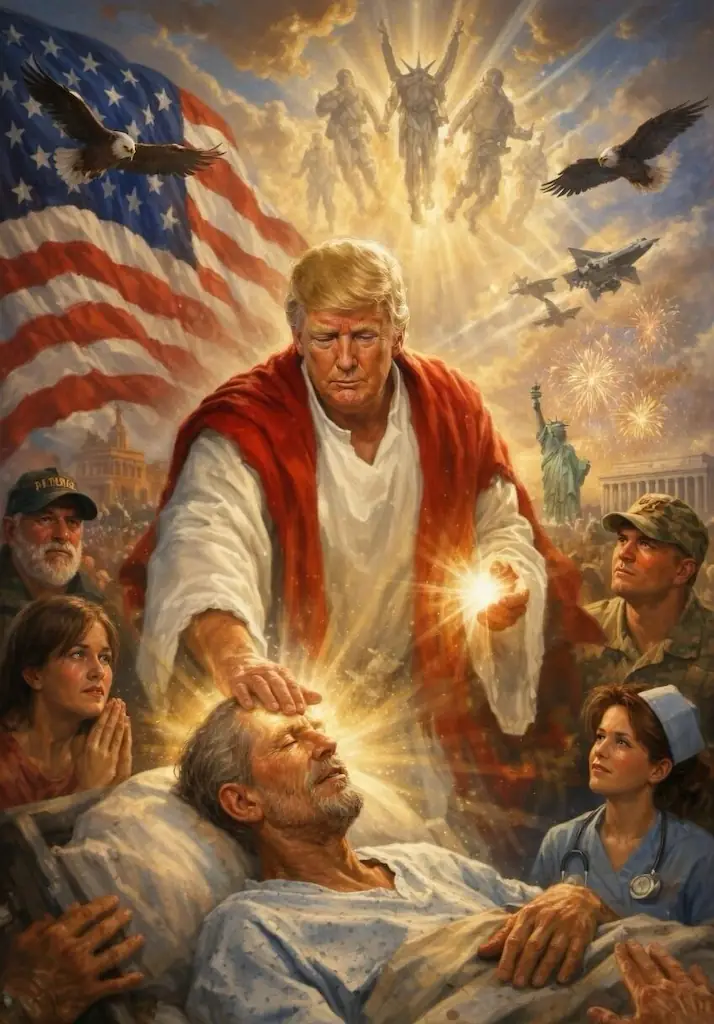
Trump has since deleted the post including an AI image which depicted him as Jesus Christ, after backlash from MAGA who accused him of blasphemy.
The President had also spoken about potentially blowing Iran "to hell" as talks over the Strait of Hormuz are yet to come to a full conclusion, with the world's economy continuing to suffer.
The President unsurprisingly caused a stir online by posting an image that depicts him as Jesus Christ himself, after the Pope criticized the President for his role in the Iran war.
Trump posted the photo just minutes after openly criticizing the leader of the Catholic Church, where he is seen in robes similar to that of Jesus'.
He can be seen looking of higher power, while healing an elderly man who appears unwell in a hospital bed, as nurses, veterans and soldiers can be seen surrounding him as he has his hand on the head of the sick man.
There are some patriotic symbols in the background, such as the American flag, the Statue of Liberty, the Lincoln Memorial and an eagle soaring through the sky.
A variation of warplanes can also been seen in the background, as well as what look to be figures emerging from heaven as fireworks are being set off.
It is not clear why the President posted this, as no caption was given, though it has now been taken down.
Donald Trump has left Twitter perplexed by sharing a bizarre three-word statement.
The former president, 75, had the statement posted to shared to Twitter by his spokesperson Liz Harrington yesterday (August 11), and it was shared with no clarification or context, Independent reports.
The statement simply read: "Bullies never fight."
The short address was also shared by the Director of Communications for Save America and Donald J Trump, Taylor Budowich.
Washington Examiner is also reporting that the cryptic message was also sent to all recipients of the former president's email list on Wednesday.
The statement did not go unnoticed on the social media website, and people were quick to speculate about what the former president could have meant by the three-word address.
One person simply questioned: "LOL. What the f**k is going on?"
A second, meanwhile, questioned why Trump could still post statements via his staff to Twitter after being banned from the platform earlier this year.
They wrote: "why is she allowed to keep posting statements from someone who is banned from Twitter? [sic]"
A third jokes: "He sounds like he is having an excellent morning."
Another Twitter user mockingly commented: "So true: 'BULLIES NEVER FIGHT'. They usually incite others to do it for them while they hide in a White House bunker."
Meanwhile, another simply pondered: "Succinct, yet vague."
Then there were some Twitter users who simply used the president's statement as a chance to imitate it with their own three-word statements.
One wrote: "Purple monkey dishwasher."
A second added: "Yellow matter custard."
The Independent reports that Maggie Haberman, a senior correspondent for The New York Times, speculated that the president was referring to the resignation of Andrew Cuomo as the governor of New York following sexual assault allegations.
Trump was permanently banned from Twitter in January in the wake of the January 6 assault on the Capitol "due to the risk of further incitement of violence".