


US4 min(s) read
Warning issued to Americans who are not married as US citizens may receive $1,745 payment after Trump promise
.jpg_I4Ebof?tr=cr-0.338.2730.3068,f-webp,q-70,w-100)
Americans could be in line for a payment of $1,745 - but new warnings suggest that those who are not married may need to pay close attention to how the potential payout could be structured.
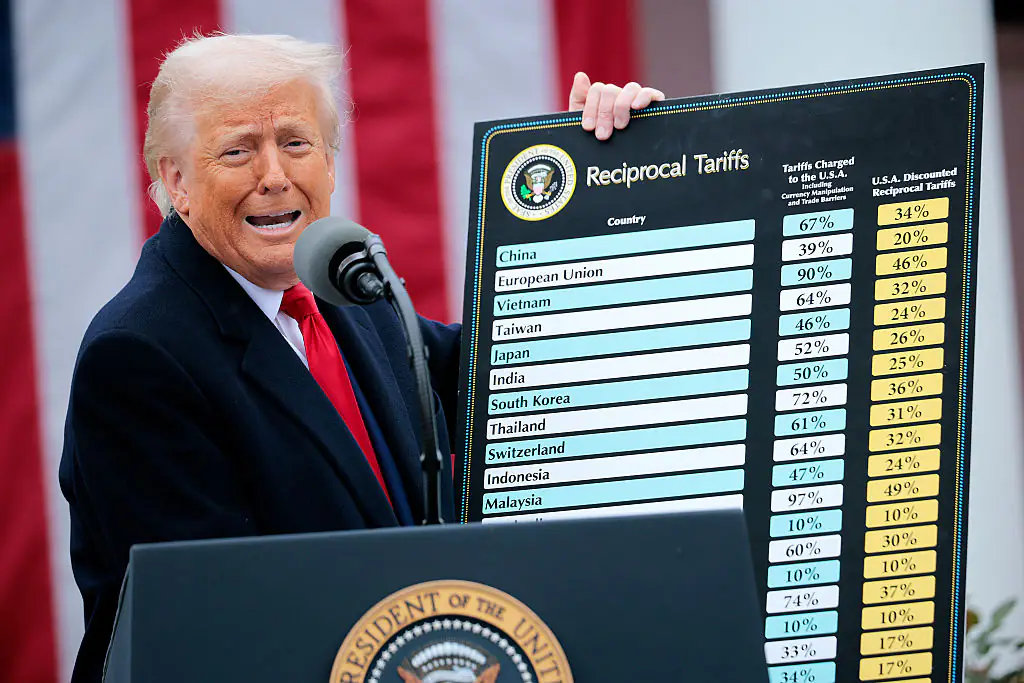
The proposed payment stems from Donald Trump’s long-discussed idea of issuing a 'dividend' to citizens using money generated from tariffs on imported goods.
While the figure was initially floated at around $2,000 per person, newer estimates suggest the amount could land closer to $1,745 - and not everyone may benefit in the same way.
What is the $1,745 payment Americans may receive?
The potential $1,745 payment is tied to Trump’s proposal to redistribute revenue collected through tariffs.
These tariffs - essentially taxes on imported goods - have brought in significant sums for the US government, and Trump has repeatedly suggested that some of this money could be returned directly to Americans.
The idea has often been compared to pandemic-era stimulus checks, where payments were sent directly to eligible citizens to help with rising costs.
However, while Trump previously spoke about payments of 'at least $2,000', analysts and reports now suggest that a more realistic figure could be lower - around $1,745 depending on how the funds are calculated and distributed.
Crucially, the plan has not yet been formally approved, and no payments have been issued so far.
Experts have also pointed out that there are still major questions around whether there is enough tariff revenue to fund such payouts at scale.
.jpg_hQkwUu?tr=cr-0.0.1024.683,f-webp,q-70,w-1024)
Warning issued to Americans who are not married
While much of the focus has been on married couples, new warnings indicate that Americans who are not married could also be affected — particularly when it comes to how eligibility thresholds are applied.
In previous stimulus-style programs, income limits played a key role in determining who qualified.
For example, individual earners were subject to different thresholds than couples filing jointly, which often doubled the income cap.
If a similar system is used again, single Americans could find themselves hitting eligibility limits more quickly than married couples — potentially reducing or even eliminating their payment.
At the same time, earlier guidance suggested that 'high-income' individuals would not qualify for any payment at all, though no official threshold has been confirmed.
This has led to uncertainty, with experts warning that differences in filing status — single versus married - could significantly impact how much money individuals ultimately receive.
In other words, while couples have been warned about how payments may be combined, single Americans are now being urged to consider how income caps could affect them individually.
When could the payment hit your bank?
As for when Americans might actually receive the money, there is still no clear answer.
Trump has previously suggested that payments could arrive sometime in 2026, with earlier comments pointing to a possible mid-year or later timeline.
However, he has also been inconsistent when discussing the plan, at times saying he is seriously considering it and at others suggesting no final commitment has been made.
Before any payments can be issued, several hurdles would likely need to be cleared.
For one, legislation may be required to authorize the distribution of funds - something that officials have acknowledged as a necessary step.
There is also the question of whether the tariffs themselves will remain in place, as legal challenges could impact the amount of revenue available to fund the payments.
Until these issues are resolved, any timeline remains speculative.
The bottom line
While the prospect of a $1,745 payment will be appealing to many Americans, there are still significant uncertainties surrounding the proposal.
From eligibility rules and income thresholds to payment amounts and timing, very little has been finalized.
Warnings are now being issued not just to married couples, but also to single Americans - highlighting that filing status could play a crucial role in determining who gets paid and how much.
For now, the plan remains a proposal rather than a confirmed policy.
And until further details are announced, Americans are being advised to stay cautious - and avoid assuming that any money will arrive in their bank accounts just yet.