


US2 min(s) read
What is the ‘Thucydides Trap’? Why Xi Jinping just brought it up during his meeting with Trump

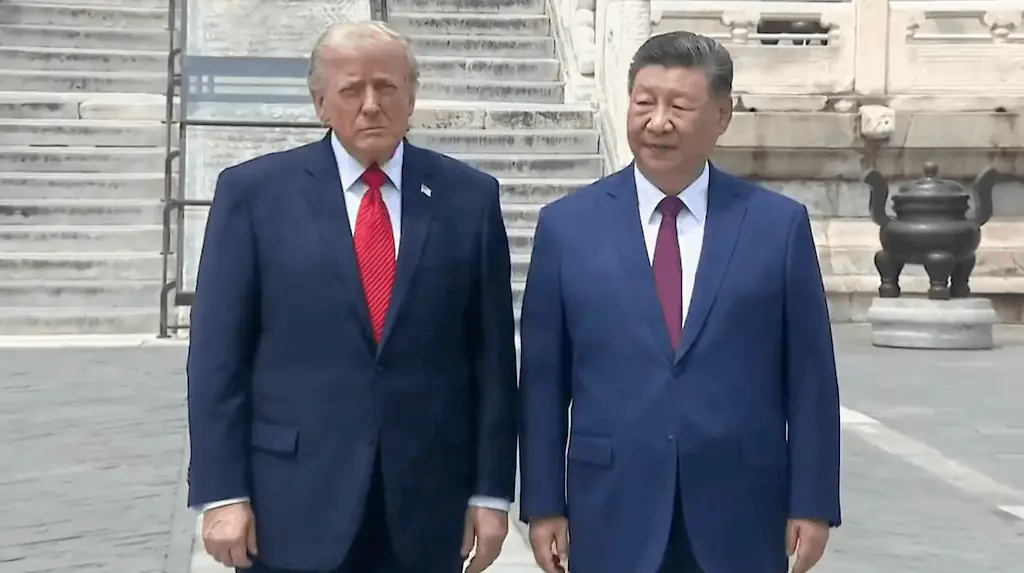
When Xi Jinping sat down with Donald Trump in Beijing, one phrase, associated with military disputes, unexpectedly became the focus of global and media attention: 'Thucydides Trap.'
During opening comments at the high-profile China-US meeting, Xi framed the future relationship between the two superpowers as one of the defining challenges of the modern era.
“Whether China and the United States can transcend the so-called Thucydides Trap and create a new normalization of relations between major powers,” Xi said, would determine “whether we can join hands to address global challenges and inject greater stability into the world.”
He also spoke about 'the future destiny of humanity' and the importance of building 'a better future for bilateral relations.'
What is the Thucydides Trap, and why is the phrase being used in Trump and Xi's meetings?
The phrase Thucydides Trap may sound academic, but it reflects growing fears about rising tensions between the United States and China, particularly around trade wars, military rivalry, semiconductor restrictions, and growing competition for technological dominance.
At its very core, the theory suggests that conflict can become more likely when an emerging global power threatens to overtake an already established one.
The concept was popularized by Harvard political scientist Graham Allison, who based it on the writings of ancient Greek historian Thucydides.
Thucydides's studies of war and its links with the US and China
Thucydides studied the Peloponnesian War between Athens and Sparta nearly 2,500 years ago and concluded that 'the rise of Athens and the fear this created in Sparta' made war almost unavoidable.
Allison later adapted the idea to modern geopolitics, arguing that when a rising power threatens to displace a dominant one, 'structural tensions emerge that make conflict more likely, even if neither side actively seeks war.'
Xi’s decision to reference the theory during talks with Trump highlighted the growing anxiety surrounding China-US relations, as both nations continue competing economically, politically, and militarily on the world stage.