


US3 min(s) read
What would happen if president died during TV networks' suspension on Trump coverage including CNN and MS NOW

Donald Trump is currently at the center of further controversy with some of America's biggest television networks, but what would unfold if the president suddenly died while that dispute was still ongoing?
ABC, CBS, CNN, Fox News, and NBC have collectively suspended their participation in the current TV pool covering the president's routine events.
Why has coverage been suspended?
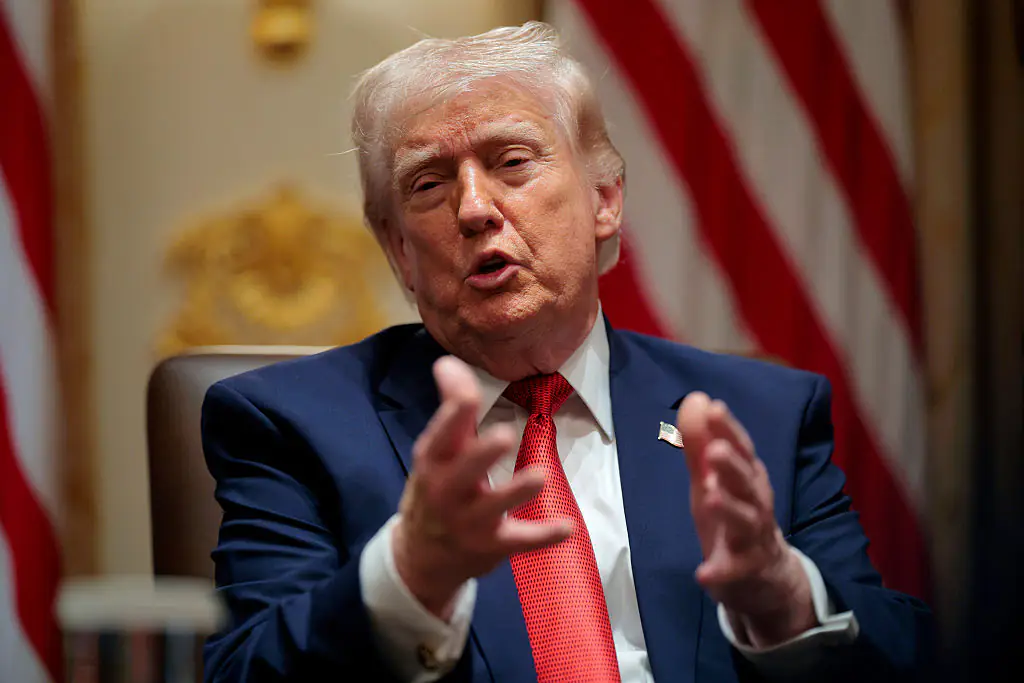
The move came after the White House blocked CNN from carrying out its assigned pool duties, with the major broadcasters choosing not to provide cameramen or reporters as part of the pool in protest.
That means Trump's appearance at the United Nations General Assembly in New York is not being covered through the usual major-network TV pool arrangements.
Despite their refusal to broadcast Trump’s UN General Assembly attendance, the networks have not stopped reporting on Trump altogether, meaning a major breaking-news event involving the president would be treated very differently.
The dispute centers on the White House's decision to restrict access for CNN, MS NOW, and Politico.
Bryan Broughton, Fox News' Washington Bureau Chief, confirmed the joint decision in an email on Monday, writing: “This is to advise that, effective today, the TV pool will not be covering events designated as pool coverage of the President.
“This follows the White House's position preventing CNN from fulfilling its assigned pool duties. There will be no replacement pool put in place.”
It remains unclear exactly how long the suspension will last, with the broadcasters yet to announce when they will resume participating in the presidential pool.
The situation escalated after reporters from the affected outlets reportedly encountered restrictions when attempting to work at the White House, with some allegedly having their press credentials revoked.
CNN, MS NOW, and Politico subsequently announced plans to challenge the White House in court.
Their joint statement said: “The public has a vital interest in receiving accurate, independent information about its government.” The statement added: “No administration should restrict a news organization because it objects to its reporting.”
The outlets said they intended to protect their rights and have since filed a lawsuit against Trump and his administration.
“First Amendment rights and defend the principle that the government does not decide what the press reports or publishes,” the statement read.
They also claimed: “Without notice or process, the White House revoked our journalists' credentials because it objected to our reporting,” before warning that “left unchallenged, this threatens press freedom and the public's right to independent journalism free from government interference.”
Would the suspension continue if Trump were to die?
If Trump were to die while the dispute was still ongoing, the major networks would be expected to immediately switch to extensive breaking-news coverage, regardless of the disagreement over White House access.
A presidential death would trigger a constitutional succession process, with the news being one of the most significant developments in the country; the existing disagreement over pool access would therefore not amount to a barrier preventing broadcasters from reporting the event.
Rather than relying on the White House TV pool, networks could deploy their own journalists and crews, use other available footage and report from outside the White House or elsewhere in Washington.
The White House has also been developing its own media operation amid the dispute, with the administration launching “Trump TV”, a subscription-based service broadcasting material focused on Trump, his administration and the White House.
But even the emergence of a White House-backed alternative would not replace independent television news organizations in the event of a major national emergency.
For now, the dispute remains focused on presidential access at the White House and official engagements where the Trump administration has control over press access.