


US3 min(s) read
Who will be eligible as Trump promises to give 'every American adult $5,000'
.webp_SmgFsc?tr=cr-292.0.1244.952,f-webp,q-70,w-100)
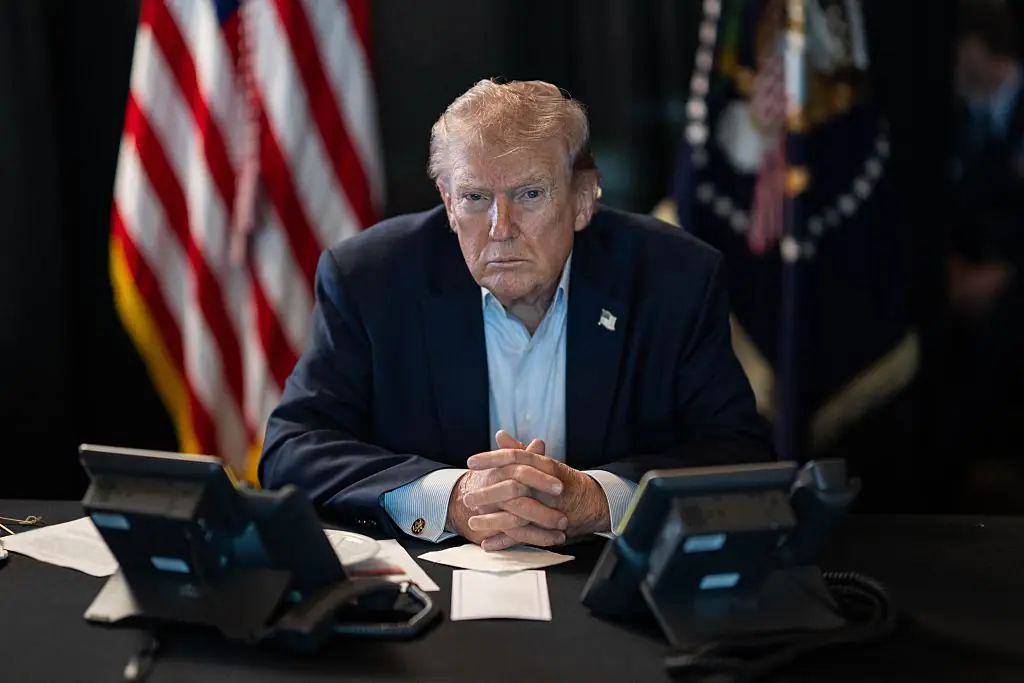
President Donald Trump announced a major financial proposal at the Republican Party's midterm convention in Dallas, Texas. He pledged that every adult citizen in the United States would receive a $5,000 payout if the Republican Party wins control of both the House of Representatives and the Senate in the upcoming November midterm elections.
The proposal carries a massive price tag for the federal government. With nearly 270 million adult citizens in the nation, providing $5,000 to each individual would total roughly $1.3 trillion. The announcement drew strong reactions, with political opponents calling it an empty gesture and analysts raising immediate questions regarding its implementation and legality.
The announcement comes as the public deals with economic pressures and rising consumer prices across the nation. Financial strain has grown following ongoing military conflicts involving the US, Israel, and Iran.
The regional conflict has severely impacted energy routes, particularly near the Strait of Hormuz, causing global oil price fluctuations that continue to affect standard living expenses for American families.
Proposed eligibility criteria and conditions
Under the terms stated during the speech, the primary requirement to qualify for the payout is holding adult US citizenship. The president framed the proposed payments as a direct benefit tied directly to a Republican victory across both chambers of Congress in the November elections.
During his address in Dallas, Trump outlined specific limitations on how recipients would be expected to use the funds. The money would need to be spent within the domestic economy rather than internationally.
"If the Republicans win the House of Representatives and the United States Senate, both of them," Trump said per BBC News, "I will issue a dividend to every adult citizen in the United States of America for $5,000."
He emphasized the requirement to keep the money within national borders during his address to supporters.
"We don't want you going to Canada to spend the money," he said. "We don't want you going to China, to Germany. You got to spend the money in the United States of America."
Details remain unconfirmed on how federal agencies would monitor or enforce domestic spending limits on individual bank accounts. Furthermore, the president did not clarify whether he intends to seek official congressional authorization for the total amount, which he named Trump Dividends.
Questions over legality and congressional approval
The proposed trillion-dollar distribution faces significant legal and logistical hurdles. Federal law strictly prohibits offering monetary compensation or direct financial rewards to influence voter behavior during an election.
Opponents quickly pointed to these statutes to question whether promising direct payments in exchange for congressional votes violates federal campaign laws.
However, legal experts suggest the plan might navigate these regulations by framing the payout as a broad tax relief measure.
Promising prospective tax cuts or tax dividends remains a standard political proposal protected under federal law. An election law expert noted that political statements of this nature generally fall under free speech protections guaranteed by the First Amendment of the US Constitution.
This proposal is not the first time political leaders have linked monetary benefits to legislative victories. Similar strategies have been used previously, such as when political candidates promised pandemic relief payments depending on party control in key legislative races.