ADVERT
Weird2 min(s) read
Published 09:09 27 Jun 2026 GMT
A father was left stunned after testing one of his daughter's favourite viral toys and discovering it appeared to release potentially harmful chemicals.
Jordan Collinet, who shares product safety tests on social media under the handle @learning.the.limits, decided to investigate the hugely popular "squishy dumplings" after noticing a strong chemical smell coming from them.
The toys, which have become a viral sensation on TikTok especially popular among children and collectors, are small squishy collectibles designed to look like dumplings, with some rare versions depending on their color, Gold being the rarest one.
But Collinet wanted to know whether the toys were safe to keep around the house.
The dad used a device designed to detect volatile organic compounds (VOCs), chemicals that can be released into the air from certain products and materials.
VOCs can include substances such as benzene, formaldehyde and toluene, some of which have been linked to serious health risks after prolonged exposure.
In a video recently shared online, Collinet first tested the toys in open air, where the readings appeared normal.
However, after placing two of the toys alongside the testing device inside a sealed zip-lock bag, the results changed dramatically.
The device recorded a TVOC reading of 9.999, the highest level the machine can display.
"Are the viral squishy dumplings polluting your whole room?" Collinet asked viewers while documenting the experiment.
According to research published on PubMed, VOCs are chemicals released as gases from certain liquids and solids.
Exposure to elevated levels of VOCs has been linked to symptoms including headaches, eye irritation, sore throats, fatigue and difficulty concentrating.
Some VOCs, including benzene, have also been classified as carcinogens.
The findings come after Trading Standards officers in Swansea issued warnings about similar toys being sold online.
Officials urged parents to be cautious if the products give off a strong chemical smell or are missing important safety information.
Rhys Harries, Swansea Council's Trading Standards Officer, said: "These products are clearly attractive to children because they are being driven by online trends, but that does not mean they are safe.
"When a toy gives off a strong chemical smell and is missing basic safety information, that should ring alarm bells for parents and retailers alike."
The Office for Product Safety and Standards (OPSS) has also warned about certain squishy toys after identifying excessive levels of benzene in some products.
According to the agency, benzene can cause irritation if inhaled and is classified as a carcinogenic substance.
The UK Health Security Agency states that benzene is known to cause acute myeloid leukemia and has also been linked to other cancers.
It's important to note that Collinet's test was not designed to determine whether a specific toy causes cancer or disease.
However, the results have sparked fresh concern among parents about the potential presence of harmful chemicals in products marketed towards children.
health3 min(s) read
Published 10:33 24 Jun 2026 GMT
An urgent warning has been issued to parents about a viral toy dumpling - especially if it begins to get a certain smell.
In recent months, one of the latest mystery toys to go viral is a squishy dumpling in a plastic dim sum box, with children clamoring to get their hands on the 'rare' colors.
As with other viral crazes, including Labubu dolls, when demand outstrips supply, a wave of fakes quickly hit the market to capitalize on those parents desperate to fulfill their little one's wishes to own one.
The mystery squishy dumplings, originally created by RMS International, went viral on TikTok as users shared thousands of videos of them unboxing the different colored toys, hoping to get a glittery version.
Trading Standards have now issued a warning to parents about the safety of counterfeit dumplings, urging parents to throw away any that have a strong chemical smell, especially one similar to petrol.
Swansea Council revealed it had tested various seized counterfeit products and found that many of them contained volatile organic compounds (VOCs) such as Ethyl Benzene, Styrene, m-Xylene, p-Xylene and o-Xylene.
Rhys Harries, Swansea Council's Trading Standards Officer, warned: "When a toy gives off a strong chemical smell and is missing basic safety information, that should ring alarm bells for parents and retailers alike.
"Our main concern is the risk posed to children if unsafe items end up in homes, school bags or play areas."
Glasgow City Council Trading Standards officers also revealed that they'd seized almost 6,000 counterfeit toys from a warehouse in the city earlier this month, and shared concerns that they may contain harmful chemicals.
Laura Doherty, Glasgow city councillor and city convener for Neighbourhood Services and Assets, explained: "The items which have been recovered pose serious dangers to anyone using or playing with them."
According to Science Direct, the danger stems from gases given off from the materials used in tactile toys, which can cause a series of short- and long-term health issues.
The outlet states: "Children are particularly susceptible to these chemical insults because their respiratory, immune, and neurological systems are still in critical stages of development.
"Furthermore, their higher inhalation rates relative to body mass can lead to a greater internal dose of pollutants compared to adults (Heinrich, 2011).
"Chronic exposure to indoor VOCs during early childhood has been scientifically linked to adverse health outcomes, including the exacerbation of respiratory symptoms such as asthma and allergic rhinitis, as well as potential neurodevelopmental impairments (Boyle et al., 2011, Mendell, 2007)."
Health concerns can include nausea, headaches, skin irritation, and breathing problems, as well as posing a choking hazard for small children.
Parents have been told to check for a few signs to see if their dumpling toy is genuine, with legitimate RMS dumpling toys containing a UKCA/CE marking, which indicates the toy has been safety assessed, age restriction information and safety warnings, as well as details of the manufacturer.
If the toy does not contain the above information, there is a high chance it is counterfeit, meaning it may not be safe for a child to play with. Parents are advised to dispose of the toy if they notice it has a chemical smell.
us3 min(s) read
Published 10:04 13 Jan 2024 GMT
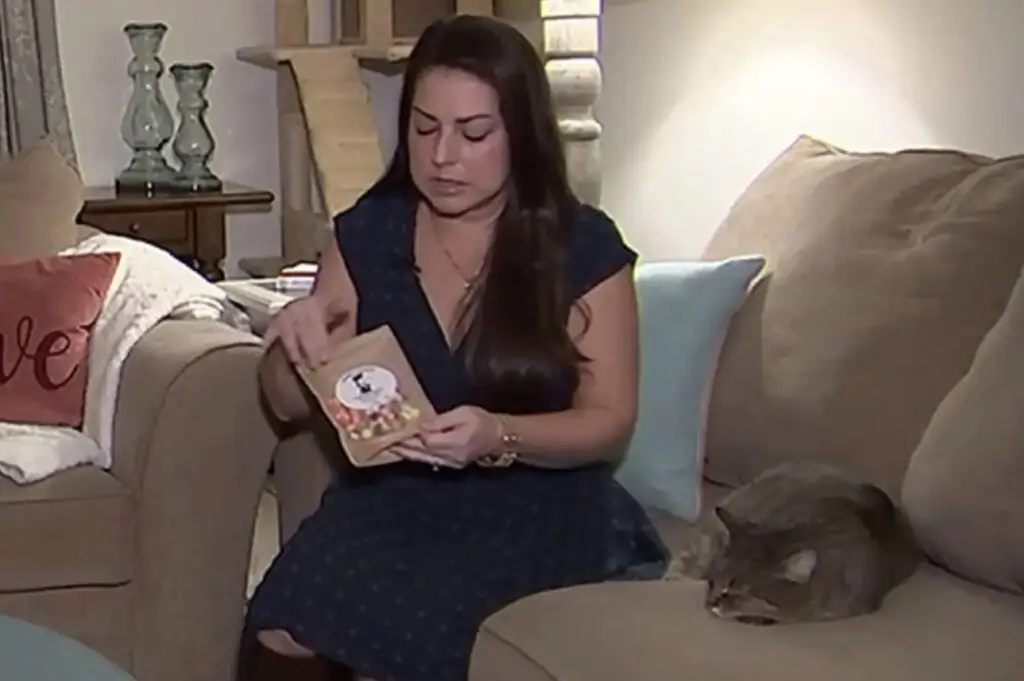
A 6-year-old boy from North Carolina spent hours in the emergency room after mistakenly consuming THC-laced candy that his family purchased.
The incident occurred during a family outing in Charlotte's South End neighborhood, where they stopped for lunch at the Common Market. Speaking to the New York Post, the parents described the business as an "uncommon convenience store, deli, and bar".
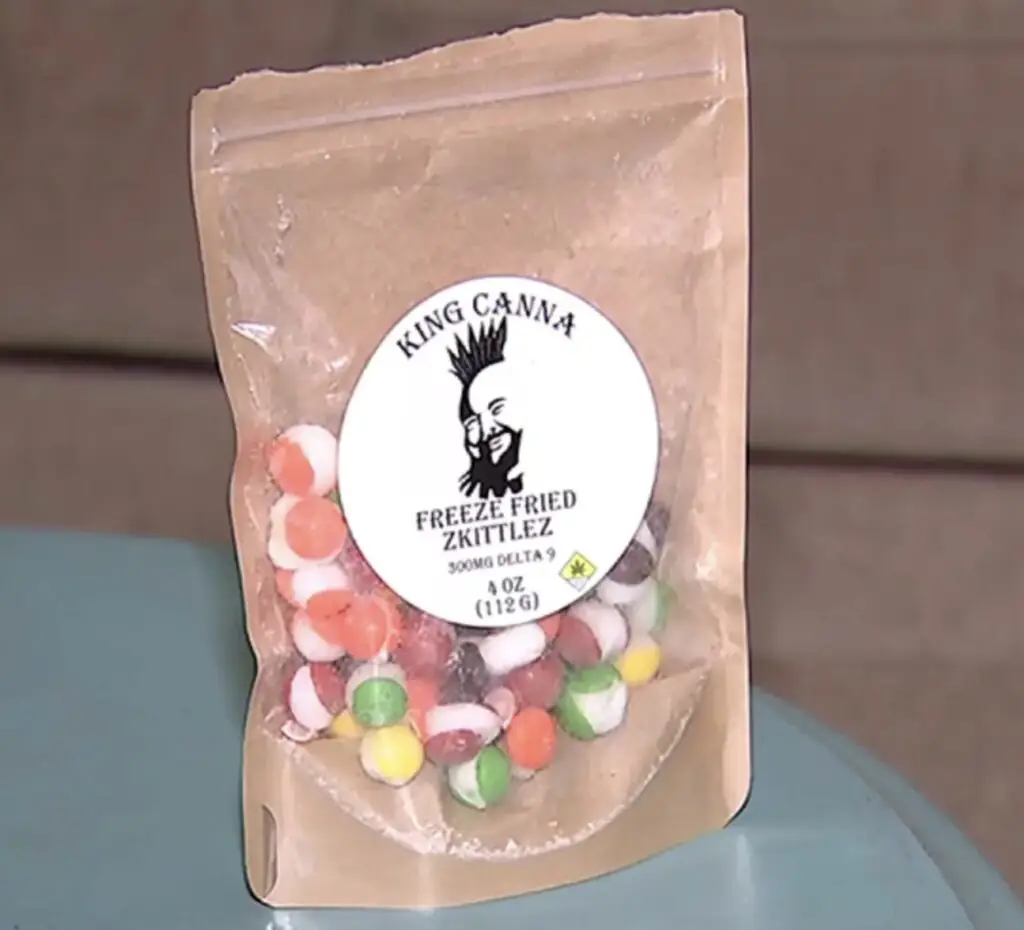
The young boy, intrigued by the unfamiliar candy displayed on the counter, persuaded his mother to buy it. However, the cashier failed to inform the parents - who believed the candies were freeze-dried Skittles - that the product contained THC.
Mom Catherine Buttereit revealed to The Post that her son had seen these types of Skittles in a YouTube video and had wanted to try them for some time.
The family - including several other children - tried the candy, with the boy consuming around 40 pieces while others had one or two.
Soon after, the child began experiencing adverse and painful effects, including a burning pelvic area, freezing chest, headache, and stomach discomfort.
"He was in excruciating pain," mother Catherine told The Post.
Concerned about his well-being, his mother swiftly called 911, suspecting poisoning after the boy complained that the water tasted "disgusting". It was then discovered that the candy was laced with Delta-9 THC, the primary psychoactive component of the cannabis sativa plant.
Doctors estimated that the child had consumed approximately 13 times the adult dosage of THC for his 40-pound weight. Although Delta-9 THC is considered therapeutic, the long-term effects on a child of his age and size were unknown.
After a 17-hour sleep at the hospital, the boy woke up and his pain had fortunately subsided.
Despite marijuana being illegal in North Carolina, Delta-9 THC products with up to 0.3% content can be sold in various stores throughout the state, including convenience stores and online shops. Some packages may include a suggested 21 and over age label, but enforcement of age restrictions is not mandatory.
The Common Market, where the incident occurred, reportedly has a policy of IDing customers similar to alcohol sales and typically keeps the candy in a Plexiglas case behind the counter, out of reach of customers.
The Post reports that although the store in question did not respond to requests for comment, it confirmed that the candy should have been secured and that staff is trained to educate customers about such products.
The incident has raised concerns about the availability of THC-laced products in family-friendly settings. Buttereit hopes to raise awareness among parents and caretakers about these new drug products being accessible in places where children are present. She emphasized the importance of business owners taking proactive measures to ensure these products do not end up in the hands of children.
"I'm really just trying to bring awareness to other parents and caretakers that this extremely new drug product is available now in family-type settings where children are going to be, not only in exclusive vape-type shops anymore," said Buttereit.
She did acknowledge her own negligence as a parent but stressed that businesses must do their part in educating employees and preventing such products from reaching children.
health3 min(s) read
Published 11:16 17 Jan 2024 GMT
A disturbing series of images have gone viral on Facebook, showing the damaging effects swallowing a button battery will have on a small child.
The pictures, which stem from the public emergency first aid Facebook page CPR Kids, display the horrific damage wrought upon the flesh of a chicken fillet after being put into contact with a lithium button battery - highlight just how dangerous they can be if an infant ingests one.
A paediatric nurse placed a battery inside a chicken fillet and monitored the damage closely.
After only four hours, she examined the meat and discovered that the battery acid contained within the button had already leaked out and corroded much of the tissue, covering it in black ichor.
Commenting on her experiment in a recent interview, CPR Kids founder Sarah Hunstead told Kidspot: "I was inspired to do this particular experiment after a trip to the supermarket with my oldest daughter.
"We were walking down the baby products aisle - she stopped and picked up a small object off the shelf where the baby toys were - my daughter said ‘Mom Look! A button battery! That is so dangerous!"
Sarah added: "Looking around I saw an opened packet on the shelf that obviously a shopper had left there - did they not understand how incredibly dangerous these items are? I decided that we needed to show what damage these batteries can do, so I put some chicken fillets in my trolley and my daughters and I did the time-lapse photos that afternoon."
She continued: "Even though I have seen firsthand the damage that a button battery can do, I was still shocked at the immediacy of the burns.
In my career as a pediatric emergency nurse, I have cared for children who had swallowed or choked on button batteries. A few were lucky because it was witnessed by a parent and they knew to seek immediate emergency help, however, most ended up with horrific injuries, sometimes requiring years of ongoing treatment if they survived."
Swallowing button batteries is a very real issue families face. Back in September, four-year-old Kaiden Taylor found himself in a life-threatening situation after accidentally swallowing a button battery at his nan's home in Douglas on the Isle of Man.
As reported by ITV News, the terrifying ordeal began when young Kaiden was innocently playing at his nana's house and came across a button battery that he had removed from a remote control. In a matter of seconds, the battery had vanished, setting off alarm bells for his vigilant grandmother.
Recognizing the gravity of the situation, Kaiden's grandmother wasted no time and rushed him to Noble's Hospital, where medical professionals assessed his condition. Due to the severity of the incident, Kaiden was subsequently airlifted to Alder Hey Children's Hospital.
What makes this incident even more poignant is that Kaiden's father, Ryan, was away on holiday at the time and had to rush to be by his son's side.
"When I got there they explained to me what could happen and it was serious stuff what could happen," dad Ryan revealed. "It could turn fatal, he could end up having to get cut open or he could end up having a blood transfusion or even go into intensive care."
"They said it wasn't far away from burning through the oesophagus and into the blood vessels and main artery which is life threatening," the father continued. "We just had to take it hour by hour, it was terrifying".
Laura Duthie, consultant at Alder Hey told ITV News: "We know the majority of children who swallow these objects, reassuringly turn out to be fine, but there are a proportion of them who sustain injuries and a small proportion of those who unfortunatley do die from those injuries.
For more advice on how you can help your little one avoid a nasty accident, please visit Kids Health for help and more information.
health2 min(s) read
Published 18:53 28 May 2019 GMT
A disturbing series of images have gone viral on Facebook, showing the damaging effects swallowing a button battery will have on a small child.
The pictures, which stem from the public emergency first aid Facebook page CPR Kids, display the horrific damage wrought upon the flesh of a chicken fillet after being contaminated with a lithium battery - showing how dangerous they can be if an infant ingests one.
A paediatric nurse placed a battery inside a chicken fillet and monitored the damage closely. After only four hours, she examined the meat and discovered that the battery acid contained within the button had already leaked out and corroded much of the tissue, covering it in black ichor.
Check out this video showing an iPhone battery exploding after someone bites into it:
[[jwplayerwidget||https://content.jwplatform.com/videos/cmGO2XIb-Q0L14jDU.mp4||cmGO2XIb]]
Commenting on her experiment in a recent interview, CPR Kids founder Sarah Hunstead told Kidspot: "I was inspired to do this particular experiment after a trip to the supermarket with my oldest daughter. We were walking down the baby products aisle - she stopped and picked up a small object off the shelf where the baby toys were - my daughter said ‘Mum Look! A button battery! That is so dangerous!"
[[facebookwidget||https://www.facebook.com/CPRKids/photos/a.131560170297146/2152613941525082/?type=3&theater]]
Sarah added:
"Looking around I saw an opened packet on the shelf that obviously a shopper had left there - did they not understand how incredibly dangerous these items are? I decided that we needed to show what damage these batteries can do, so I put some chicken fillets in my trolley and my daughters and I did the time-lapse photos that afternoon."
She continued: "Even though I have seen first hand the damage that a button battery can do, I was still shocked at the immediacy of the burns ... In my career as a paediatric emergency nurse, I have cared for children who had swallowed or choked on button batteries. A few were lucky because it was witnessed by a parent and they knew to seek immediate emergency help, however, most ended up with horrific injuries, sometimes requiring years of ongoing treatment if they survived."
For more advice on how you can help your little one avoid a nasty accident, please visit Kids Health for help and more information.
health3 min(s) read
Published 14:19 27 Jul 2018 GMT
There are lots of reasons not to use plastic - but this one might come as a shock. Chemicals in everyday items, from household cleaners to food packaging, can damage a man’s penis - and make it smaller.
Turns out, phthalates, BPA and parabens are to blame for a rise in the number of baby boys being born with genital defects, experts have warned. Dr Andrew Pask and Dr Mark Green, from the University of Melbourne, said in Australia, penis birth defects have doubled in recent years due to plastic use.
To prove the link, they looked at the results when humans and animals were exposed to the chemicals. They were specifically looking for a defect called hypospadia, where the opening of the penis is on the underside rather than the tip, causing problems with function. The pair identified several chemicals known to cause damage to humans, that we either consume through food or water contamination. Pask and Green aren’t the first to do so.
In 2014 a study led by Sweden’s Karlstad University showed the effects of phthalates, a common component of many products, on young males. The researchers showed a significant shortening of the distance between the anus and the penis. In 2015 a small French study found a “strong” link between exposure to endocrine-disrupting chemicals during pregnancy and hypospadia. And an Italian study in 2010 did the same.
Zero waste promoter Bea Johnson even references the terrifying claim in her talks, giving the men in the room just another reason not to use plastic on her recent Australian tour. Pask and Green believe they are Australia’s only scientists studying the chemicals’ effect on male reproduction. Those chemicals include BPA and phthalates, parabens used in toothpaste and beauty products and atrazine in herbicide. Pask says:
“Exposure to these chemicals, this is the number one reproductive issue for men. No one likes to talk about this. Often parents don’t even like to tell their kids they had it - it gets surgically repaired but often the surgeries don’t work very well. When it’s doubling, it cannot be genetic defects - it takes years for that to spread through a population. So we know it has to be environmental in origin.”
The whole concept of plastic for consumption has pretty much become taboo and I imagine certain men after hearing this will want the issue sorted promptly. Like a lot of stores, McDonald's is rolling out a blanket ban on the use of them for the foreseeable future.
A recent statement said: "Reflecting the broader public debate, our customers told us they wanted to see a move on straws." With any luck, this massive decision will lead to a complete removal of single-use plastic straws from all of McDonald's restaurants worldwide. Trials are to take place in Norway, France and the USA soon.
Eric Goldstein, senior attorney for the Natural Resources Defense Council, said the announcement from as big a company as McDonald's reflects the growing tide of concern about single-use plastics worldwide. "The drive to eliminate plastic straws is a good step and it's symbolic - and symbols are important," he said.
"You could say it should've been done earlier, but it's certainly better late than never." For now, the ban on plastic straws will only concern UK and Ireland restaurants.
The World Health Organisation also recently launched a review after microplastics were found in 90 percent of bottled water. Analysis of 259 bottles from 19 locations in nine countries across 11 different brands found an average of 325 plastic particles for every litre of water being sold.
There is probably a long way to go before people stop worrying about plastic.