


World3 min(s) read
Australia’s Prime Minister issues blunt warning to Trump amid concern over Iran war
.webp_SmgFsc?tr=cr-292.0.1244.952,f-webp,q-70,w-100)
The ongoing war between Iran, the United States, and Israel has captured international attention, drawing concerns from world leaders. Australia’s Prime Minister, Anthony Albanese, has expressed his unease about the situation and has delivered a stern message to former President Donald Trump. Albanese's remarks come as the conflict approaches its second month, with escalating tensions and no clear end in sight.
What started as a missile attack by Israel and the U.S. on February 28, leading to retaliatory strikes on U.S. military bases, has evolved into a broader military engagement.
The U.S. Department of War is reportedly preparing for ground operations, deploying thousands of soldiers and Marines to the Middle East. As the war continues, countries around the globe are questioning the objectives of the United States and its allies, especially with the lack of a clear strategy.
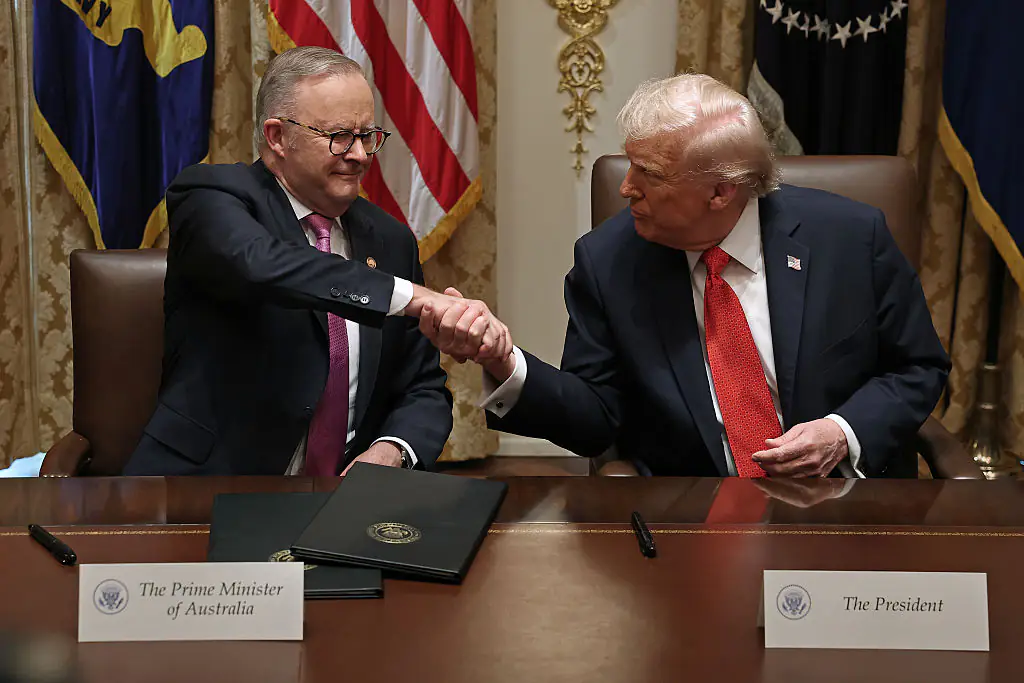
Anthony Albanese’s warning to Donald Trump
On March 30, 2026, Prime Minister Albanese addressed the situation in Canberra, voicing his concern and calling for clarity from the U.S. regarding its goals in Iran. Albanese acknowledged the importance of preventing Iran from developing nuclear weapons and changing its leadership, but emphasized the need for a de-escalation of the conflict.
He stated (via the Daily Mail), "I want to see more certainty in what the objectives of the war are, and I want to see a de-escalation." Albanese further commented, "A de-escalation is in the global economy's interest. I have nothing but contempt for the Iranian regime."
Despite his support for regime change in Iran, Albanese cautioned that achieving this goal through external intervention would be extremely difficult. Reflecting on the initial objectives of the war, Albanese noted, "At the beginning of the conflict the objectives were outlined as one: stopping Iran from getting a nuclear weapon, which has been clearly achieved."
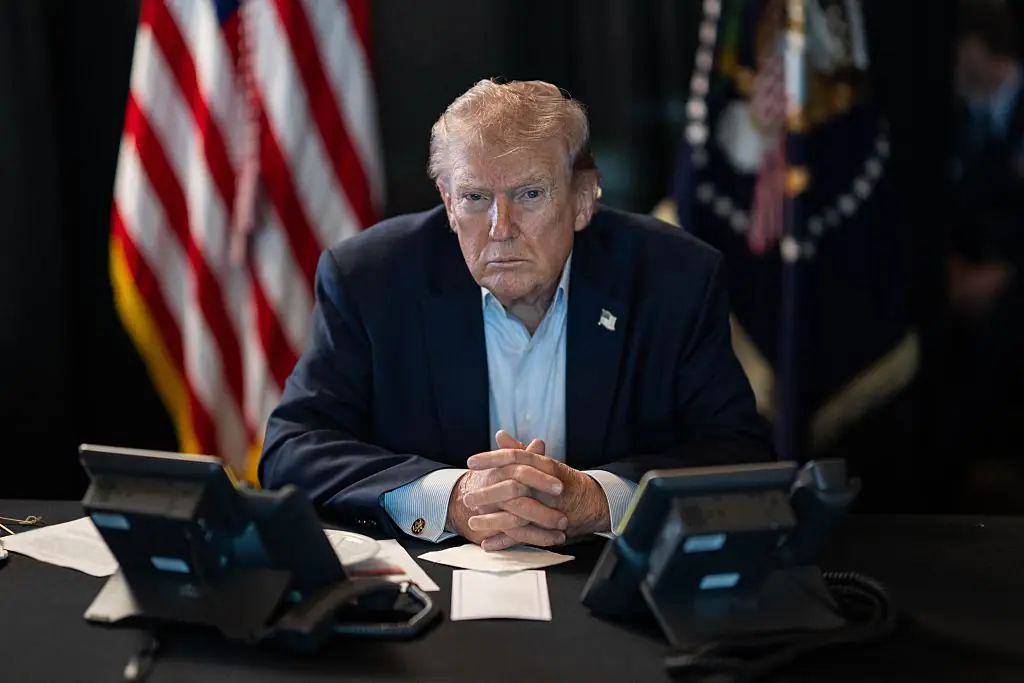
The difficult path to regime change
In his address, Albanese also expressed doubts about the feasibility of regime change in Iran. He explained, "The third was regime change and I think that, very clearly, history tells us that regime change imposed from outside is very difficult."
He went on to say that the conflict has had a severe impact, and there needs to be an "end point" to the war. "This has had a devastating impact and that tail will continue for some time," Albanese added. "Quite clearly there is a need to see an end point. I think that's what people want to see."
The ongoing conflict has also caused a significant rise in fuel prices in Australia, with costs surging by 40 percent since the strikes on Iran, according to ABC News. The closure of the Strait of Hormuz has exacerbated the situation, creating ripple effects across global economies.
Despite claims by Donald Trump of "productive talks" with Iran, the Middle Eastern nation has strongly denied any negotiations, stating that it is prepared to confront U.S. troops if they enter Iranian territory.
As the conflict continues to evolve, the international community remains divided on how to address the situation, with many leaders, including Albanese, calling for a swift resolution.