ADVERT
World1 min(s) read
Published 08:42 18 Jun 2019 GMT
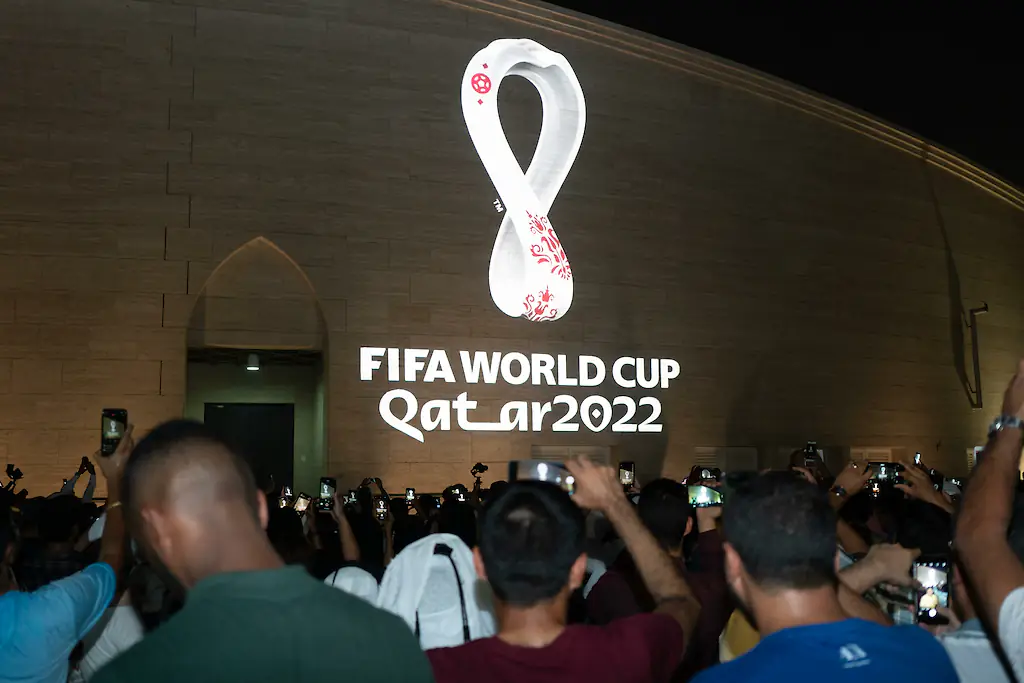
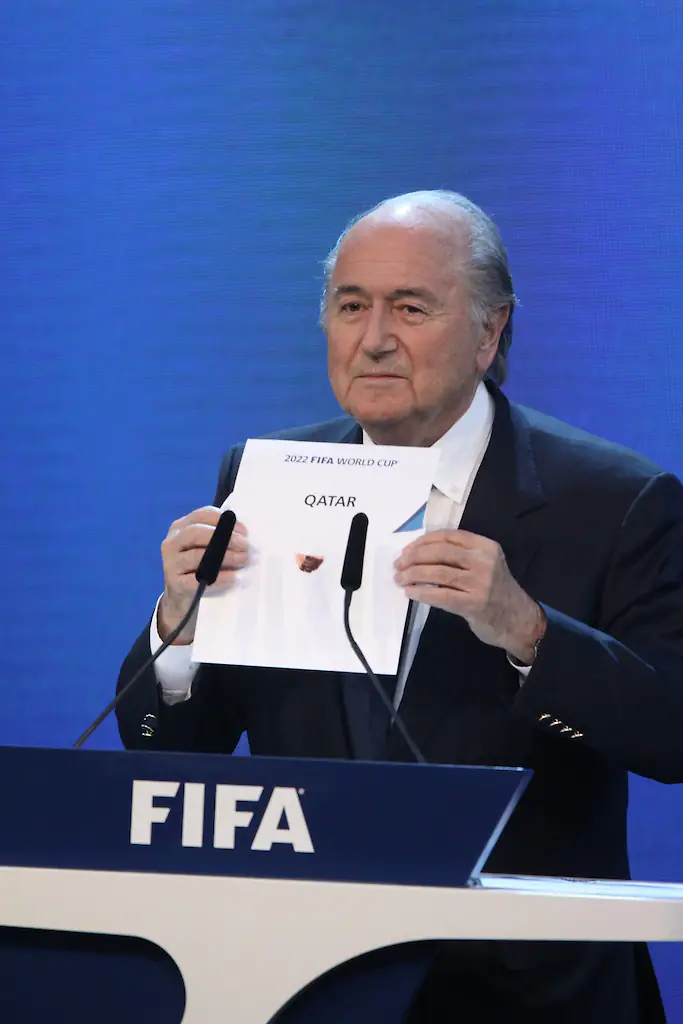
Michel Plantini, the former president of UEFA and head of European football, has been taken into custody over the decision to award the 2022 World Cup to Qatar.
France's Mediapart claim that Platini was arrested on Tuesday as part of the investigation into the decision to host the World Cup in Qatar. He was allegedly taken to the premises of the Anti-Corruption Office of the Judicial Police (OCLCIFF)
The 63-year-old was the president of UEFA between 2007 and 2015, before he was banned by the Fifa Ethics Committee.
Platani is currently serving a four-year ban from football - which is due to end in October of this year - after he was found guilty of receiving a "disloyal payment" from ex-Fifa president, Sepp Blatter.
Qatar was named as the host of the 2020 World Cup back in December of 2010, however, there have been doubts regarding their suitability.
The former Juventus midfielder and France captain was also co-president of the organising committee at France 98, and recently admitted that the group allocations for seeded teams were made with a "dream" final in mind.
More to follow...
us3 min(s) read
Published 12:07 19 Nov 2025 GMT
The 2026 FIFA World Cup is shaping up to be one of the biggest sporting events in history – but two surprise qualifiers on Donald Trump’s newly reinstated travel-ban list are already raising major questions about how smoothly the tournament will run on U.S. soil.
The expanded 48-team competition, jointly hosted by the United States, Mexico, and Canada, kicks off next summer. With qualifying nearly wrapped, 42 nations have already booked their place, including debut appearances from Curaçao, Cape Verde, Jordan, and Uzbekistan.
But the celebrations come with a looming problem.
In June, President Trump reintroduced a sweeping travel ban targeting several countries. The list includes Afghanistan, Iran, Libya, Somalia, Sudan, Yemen, Myanmar, Chad, Congo-Brazzaville, Eritrea, Equatorial Guinea, and Haiti. Another group – including Cuba, Venezuela, Sierra Leone, Togo, and Turkmenistan – faces partial restrictions.
Iran, who topped their Asian qualifying group with 23 points, have made it to their seventh World Cup. Haiti joined them this week after a decisive 2–0 win over Nicaragua, securing only their second-ever appearance at the tournament.
But both Iran and Haiti remain on the banned list. Reports suggest U.S. authorities have already blocked the Iranian delegation from entering the country for December’s World Cup draw – a worrying sign of what could follow for players, staff, and fans.
On paper, Trump’s restrictions bar most nationals from banned countries from entering the U.S. as immigrants or tourists. That includes thousands of fans who would otherwise be traveling to support their teams.
However, athletes competing in major international sporting events are exempt – meaning players, coaches, and essential staff from the affected nations will be allowed in. Immediate family members are reportedly also covered.
The real uncertainty lies with supporters.
The U.S. hosts 11 World Cup cities, and FIFA expects to make more than six million tickets available, according to The Guardian. But fans from banned nations will need to navigate a more complicated visa process than most.
To handle the massive influx of applications, U.S. embassies will use a newly created FIFA Prioritised Appointment Scheduling System (PASS). Fans with verified tickets will be bumped to the front of the line for visa interviews, though approval still isn’t guaranteed.
“America welcomes the world,” FIFA president Gianni Infantino said, calling PASS “a very concrete example” of efforts to make 2026 the most inclusive World Cup ever.
Secretary of State Marco Rubio added that PASS “guarantees you an expedited appointment” but stressed that all applicants face the same vetting process, BBC News reports.
Meanwhile, Trump has continued warning host cities that they could lose their matches if they don’t crack down on crime – most recently aiming threats at Seattle after similar remarks about Boston.
With the World Cup draw set for December 5 and the tournament just months away, FIFA, U.S. officials, and competing nations are working through the diplomatic complications.
For now, Iran and Haiti remain fully qualified — and fully restricted. Whether the political tension spills onto the pitch is a storyline no one expected heading into 2026, but it’s already shaping up to be one of the tournament’s biggest off-field dramas.
sport3 min(s) read
Published 11:29 10 Jun 2026 GMT
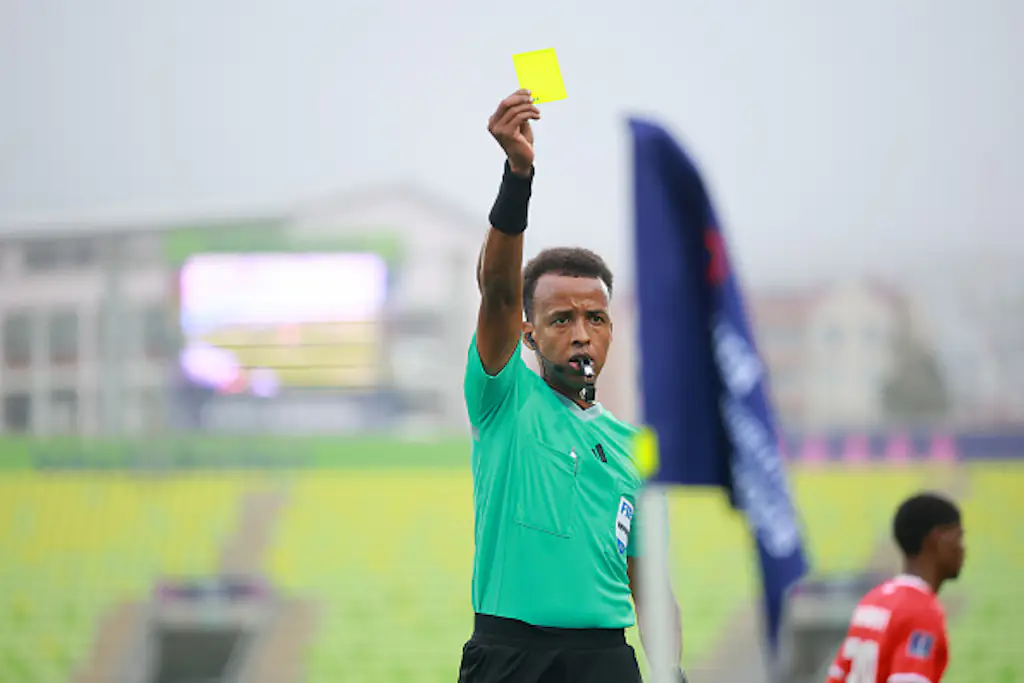
Donald Trump’s administration was dragged into further disrepute after it banned one of Africa’s top referees from entering the country, and now the White House has come out to explain its decision.
With the FIFA World Cup just days away, Somali referee Omar Artan was due to make history by becoming the first official to represent the country at FIFA’s flagship tournament.
However, upon arriving in Miami, Artan was subjected to a lengthy interrogation from US immigration officers before being sent home.
Somalia is currently one of the countries on the United States’ “banned list”, which prohibits travel to and from the East African nation due to concerns around safety and immigration.
The White House has since explained its decision to bar Artan from entry, with Andrew Giuliani, the executive director of the White House task force for the 2026 World Cup, saying: "There have been some officials that have been denied, and for good reason."
Responding to the question, Giuliani added: "We're striking that balance between making sure that any bad actors that try to come into the country under the guise of the World Cup will not get access to the United States."
In a statement to Fox, Giuliani said: "This individual was seeking admission to the United States. Upon further inspection by CBP, derogatory information, including association with suspected members of terror organizations, was discovered making the traveler ineligible for admission to the United States under the Immigration and Nationality Act (INA).
He continued: “The traveler was refused admission and given immigration forms that provide the section of law used to complete an expedited removal under 8235 of the INA. President Trump's administration will not allow any security threat to enter our country - full stop.”
This comes after numerous players, officials, and fans have either been detained or denied access to the United States for similar reasons.
Due to the ongoing war in the Middle East, Iran’s national side has been forced to house its training base in Mexico, only permitted to access the US for games.
While Artan was denied entry, he was greeted by hundreds of fans when he arrived back in Somalia's capital, Mogadishu.
“What happened has happened and it was unfortunate. I am grateful for the support Fifa gave me,” Artan said.
Despite the ongoing civil war, Artan urged his compatriots to support the country, “Somalia is ours, whether things are good or bad. I want to tell our youth not to lose hope in our country. I am now in my country, and there is no other place I want to be.”
“I promise you, God willing, that I will attend the next one,” he said as hundreds of supporters at the airport waved the Somali flag. “I want the Somali public to take comfort in this and remain confident.”
us3 min(s) read
Published 16:28 04 Jun 2026 GMT
The 2026 FIFA World Cup is due to kick off at the Estadio Bonarte in Mexico City on June 11, but fans of some nations may face some trouble if they're traveling to any games in the US.
Back in June 2025, the Trump Administration provided a list of 75 countries whose citizens were handed "suspended immigrant visa processing."
It's made the travel situation more stressful, with many countries' fans left in limbo with just one week to go until the tournament kicks off.
The tournament is taking place across the North American continent, with the US, Canada, and Mexico hosting games.
However, the majority of games, including the final, will be played on American soil.
So, with the biggest tournament in world soccer fast approaching, how will Trump's immigration restrictions affect those looking to make the trek to the US?
A footballer has already fallen victim to the US' new visa restrictions, as Swiss forward Breel Donald Embolo couldn't fly to the US with the squad after his ESTA (Electronic System for Travel Authorization) was denied.
However, it is believed that this was due to a criminal case from his home nation in 2023, as he was found guilty of making multiple threats, and he was also given a suspended fine following an altercation back in 2018.
It isn't clear if similar issues have taken place on a wider scale yet, but with the World Cup fast approaching, fans are bracing themselves.
The move to suspend immigrant visa processing for citizens of 75 countries is expected to have numerous effects, having first been implemented in January 2026.
As one of the biggest changes to US immigration practices under the Trump administration, it was decided to reduce legal immigration by restricting entry for individuals from countries deemed likely to rely on public assistance.
It has primarily affected applicants from a number of regions such as Africa, Asia, Latin America, the Middle East, and Eastern Europe.
Luckily, this suspension should not affect non-immigrant visas such as those for tourism or business travel, which will continue to be processed.
The full list of nations affected by the move includes several countries with a range of political, economic, and security conditions.
These countries have been affected by immigrant visa processing:
Once again, fans for all but one nation seem to be safe from visa restrictions, as this list only covers those looking to secure immigration status to the US.
The only nation whose fans may face trouble is the Ivory Coast.
According to Fragomen, it was listed in January as a country whose non-immigrant visa issuance was suspended in the B, F, M, and J visa classifications, for temporary visitors, students, and exchange visitors.
For nationals of the other 19 countries, the new proclamation suspends immigrant visa issuance, as well as nonimmigrant visa issuance in only the B, F, M, and J visa classifications for temporary visitors, students, and exchange visitors.
In a positive move, the Trump administration confirmed that ticket-holding supporters from Algeria, Cape Verde, the Ivory Coast, Senegal, and Tunisia will be exempt from the requirement to post a visa deposit, from May this year.
sport3 min(s) read
Published 14:00 18 Nov 2022 GMT
Fifa has banned the sale of alcohol at World Cup stadiums, a mere 48 hours before the tournament is due to begin and despite Budweiser having a multi-million dollar deal with the sports governing body.
The World Cup, the most-watched sporting event on the planet, is due to begin in Qatar on Sunday, but soccer fans hoping to get an alcoholic beverage at the games will be left disappointed, the Daily Mail reports.
The tournament has already been the subject of controversy, with a new Netflix documentary shining a light on the alleged bribery to secure Qatar as the host nation.
This will be the first time a country in the Middle East will be hosting the games, and also the first time it will take place in November and December. The usual calendar has the tournament played every four years in June and July, but with temperatures reaching 98F in Qatar during these months, it was deemed unsafe.
Now, after pressure from the country's royal family, no alcohol will be permitted within the stadium. Beer company Budweiser is thought to have a $75 million dollar deal with Fifa, per the Daily Mail.
Fifa released the following statement: "Following discussions between host country authorities and FIFA, a decision has been made to focus the sale of alcoholic beverages on the FIFA Fan Festival, other fan destinations, and licensed venues, removing sales points of beer from Qatar's FIFA World Cup 2022 stadium perimeters."
It was thought that Qatar recognized that beer is often part of soccer culture, but the U-turn has angered fans. The Sun cited this comment from The Football Supporters Association: "Some fans like a beer at a game and some don't.
"But the real issue is the last-minute u-turn which speaks to a wider problem - the total lack of communication and clarity from the organizing committee towards supporters.
"If they can change their minds on this at a moment's notice, with no explanation, supporters will have understandable concerns about whether they will fulfill other promises relating to accommodation, transport or cultural issues."
Budweiser is yet to state whether it will be seeking legal action, though a tweet from its official Twitter account was uploaded and swiftly deleted. The tweet read: "Well this is awkward..."
Despite this news, fans will still be able to purchase alcohol in designated fan zones and beer will be available at the stadiums in corporate hospitality.
us3 min(s) read
Published 16:30 15 Jan 2026 GMT
The FIFA World Cup will be here before we know it, but for some fans, gaining entry to the US to watch the games could prove tricky...
The biggest sporting event on the planet will be held in Canada, Mexico, and the USA this summer.
While fans from around the world usually flock in their hundreds of thousands to the tournaments, this year might be a little different due to Visa bans.
Among the 15 countries impacted by this measure is Brazil, the country with the most World Cup wins in history, per LBC.
Brazil also clinched the title during the 1994 World Cup, which was held on American soil. The current ban could make it harder for Brazilian supporters and officials to attend the event this year.
Scotland, which is making its first appearance in a World Cup finals since 1998, is facing a similar situation.
All three of Scotland’s group opponents - Brazil, Morocco, and Haiti - are on the list of affected countries. If the visa ban remains in place, it could potentially limit the number of fans and officials traveling to the US to support their teams during the tournament.
According to the memo, the visa restrictions are part of a temporary move by the Trump administration to strengthen its vetting procedures for applicants.
The policy aims to prevent individuals who might rely on public benefits or welfare programs from entering the country.
As part of the vetting process, US officials will consider several factors, including an applicant’s health, age, and proficiency in English.
"The State Department will use its long-standing authority to deem ineligible potential immigrants who would become a public charge on the United States and exploit the generosity of the American people," said State Department spokesperson Tommy Piggott.
He added: "Immigration from these 75 countries will be paused while the State Department reassesses immigration processing procedures to prevent the entry of foreign nationals who would take welfare and public benefits."
The visa ban is likely to have a major impact on World Cup logistics, especially if the restrictions persist throughout the tournament.
Aside from Brazil, Morocco, and Haiti, the policy affects several other footballing nations. These include:
If the ban remains in place, the absence of fans from these 75 countries could create a noticeable void in the stadiums, with fewer supporters attending matches to cheer on their teams.
This could alter the atmosphere of the tournament and affect the overall fan experience.
The timing of this visa freeze is also notable, as it coincides with rising tensions between the US and Iran, another country that will participate in the World Cup.
The Trump administration is reportedly weighing options to strike Iran following its violent crackdown on protests by the Islamic regime.