ADVERT
World3 min(s) read
Published 10:03 28 Jul 2026 GMT
The inventor of the controversial Sarco 'suicide pod' has revealed that the machine asks users three important questions before they choose to die.
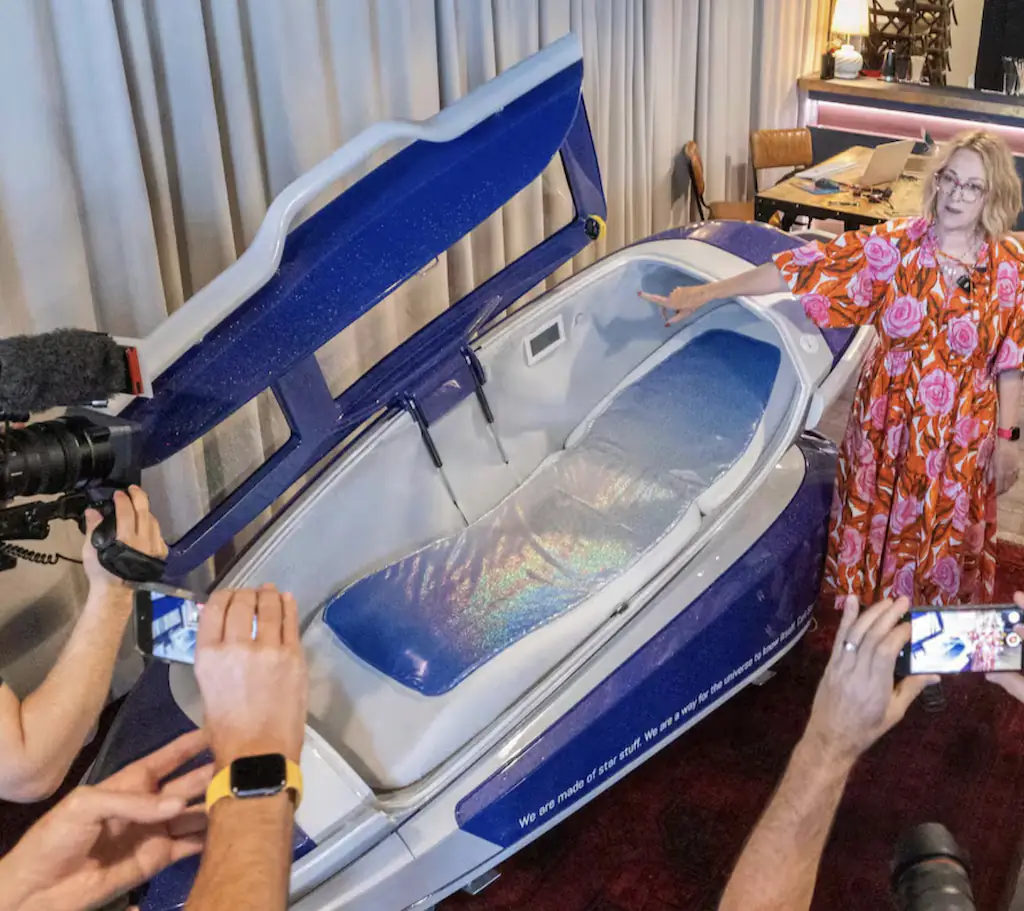
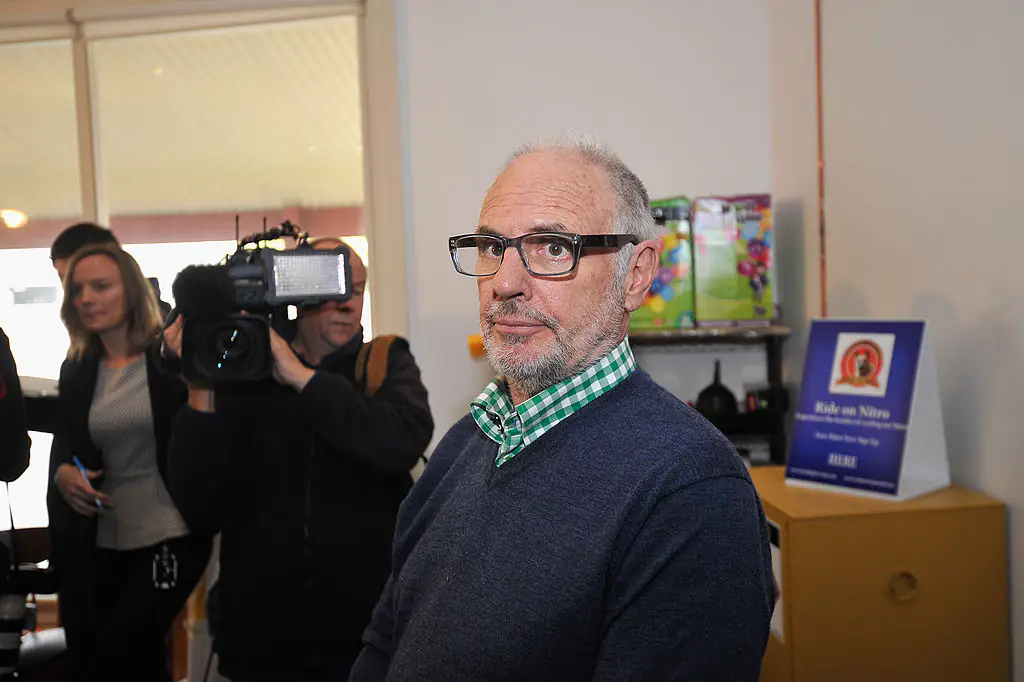
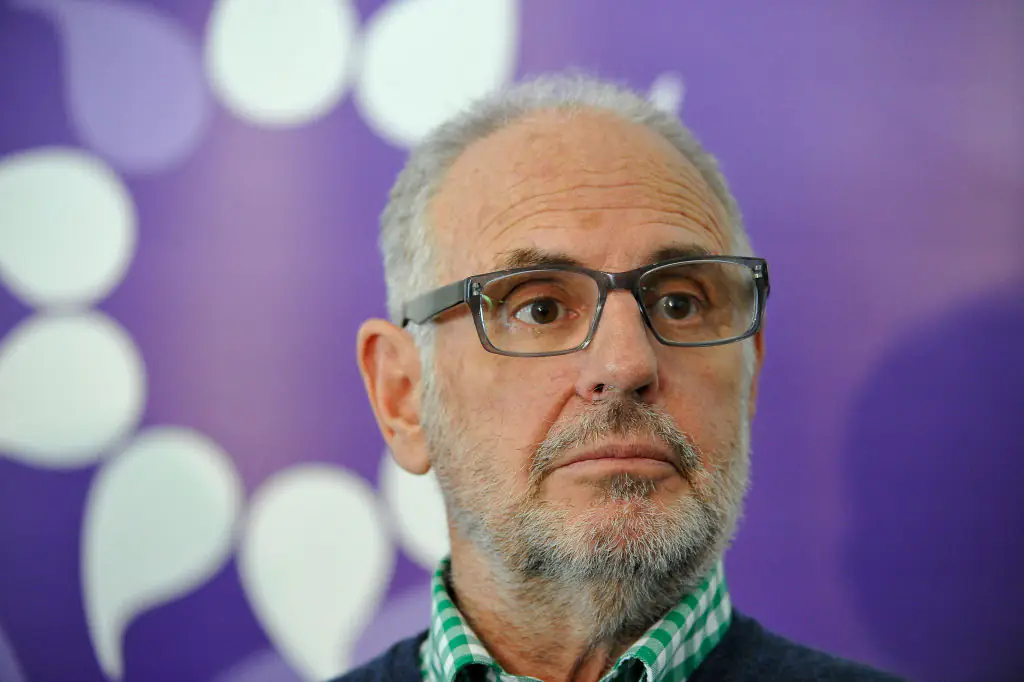
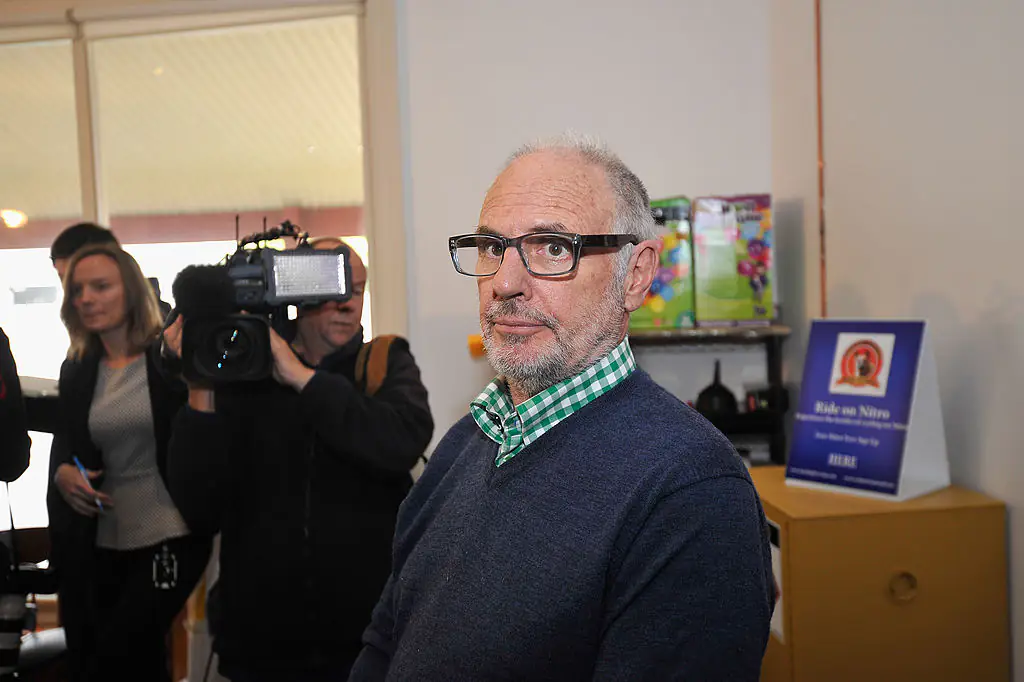
The Sarco pod, designed by Dr. Philip Nitschke, a former physician also known as "Dr. Death", aims to provide a self-administered, painless method for assisted suicide.
The pod works by replacing oxygen with nitrogen gas, causing death by hypoxia, according to reports from the BBC.
Dr. Nitschke explained that the device allows individuals to end their lives peacefully and autonomously without the use of drugs.
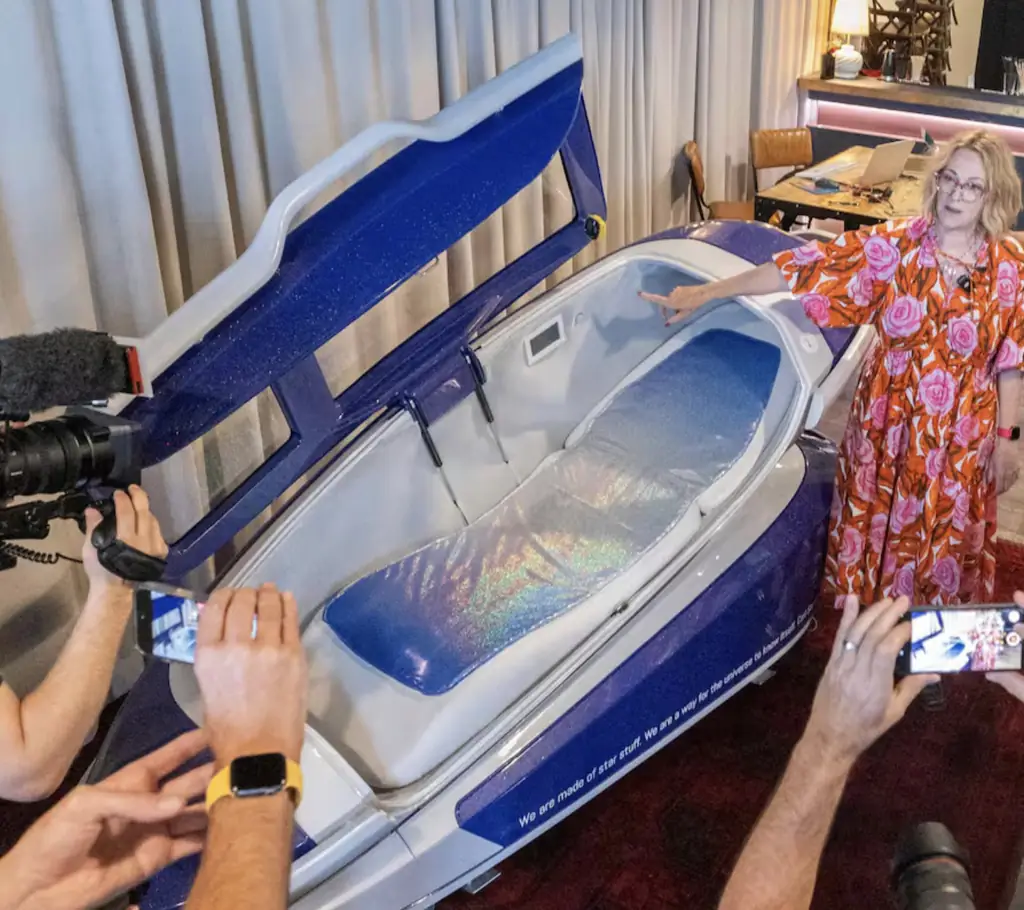
The capsule is an alternative to other legal methods of assisted dying, which usually involve the administering of drugs such as liquid sodium pentobarbital to cause the person's death.
Nitschke told Ladbible in 2021: "I’ve always wanted to remove the role [and the] need for professional people to prescribe difficult drugs to use.
"The idea of using a gas, in this case an inert gas came up, because if you can find a suitably elegant and attractive container, climb in, and then flood that container with an inert gas like nitrogen so that the level of oxygen rapidly drops, you rapidly go into a state of cerebral hypoxia, which is pretty quick, and you’ll faint very quickly and die within a few minutes. That’s the idea behind it."
Nitschke revealed to the MailOnline that the pods, which cost between $4,000 and $8,000, ask users three questions when they enter the machine: "Who are you?", "Where are you?", and "Do you know what happens if you press the button?"
He explained: "If they answer those questions verbally, the software then switches the power on so that the button can then be pressed.
"And if they press the button they will die very quickly. When you climb into Sarco the oxygen level is 21 percent but after you press the button it takes 30 seconds for the oxygen to drop to less than one percent."
The Last Resort, the company behind the pods, has strict criteria on its website for those considering using the services.
Their website has the following examples of reasons for using the pods: "Advanced old age, poly-pathologies of old age, Illness – serious, chronic or terminal, to anyone who is face to face with the dying process, be that slow or fast, and early dementia – as long as mental capacity is retained."
However, it states: "The Last Resort does not assist young people to die, unless they have a serious physical illness (ie. not psychiatric)."
The website also specifies that use of the pods is free to "approved users" at the Last Resort.
In 2024, an unnamed 64-year-old American woman became the first to use one to end her life.
She reportedly passed away "almost immediately" after pressing the button, in a remote forest near Merishausen, northern Switzerland.
Though the Last Resort says use of the pod is free, an article by the Daily Mail suggested the American woman paid for her usage, but the cost was low.
She reportedly paid around 18 Swiss francs ($20) for the nitrogen used in the machine, which stands in sharp contrast to traditional Swiss assisted suicide clinics, which can charge as much as $13,360.
While assisted suicide has been legal in Switzerland since 1942, provided the person makes the decision freely, without external pressure or selfish motives, euthanasia - where another person directly causes death - remains illegal in the country.
If you or someone you know is struggling or in crisis, help is available. Call or text 988 or visit 988lifeline.org.
world3 min(s) read
innovation4 min(s) read
world3 min(s) read
world3 min(s) read
Published 15:10 25 Sep 2024 GMT
Before an American woman became the first person to die via a suicide pod, the creator shared a 10-word warning.
The Sarco pods, designed by Dr. Philip Nitschke - commonly referred to as "Dr. Death" - offer a new method of assisted suicide, providing users a way to end their lives autonomously.
The device, which induces death by oxygen deprivation through nitrogen gas, is intended to provide a painless, self-administered death.
According to a report by BBC News, the pod allows users to initiate the process without the need for medical professionals or drugs.
As reported by News.com.au, a 64-year-old American woman has become the first person to die using the controversial Sarco suicide pod.
The woman reportedly died "almost immediately" on Monday in the device, located near a forest hut in Merishausen, northern Switzerland, under a canopy of trees.
Dr. Nitschke, speaking to Dutch newspaper de Volkskrant, commented on her determination to end her life: "When she entered the Sarco, she almost immediately pressed the button. She didn’t say anything. She really wanted to die."
Nitschke estimated that the woman lost consciousness within two minutes and was dead within five.
“We saw jerky, small twitches of the muscles in her arms, but she was probably already unconscious by then. It looked exactly how we expected it to look," he added.
The former physician, who has long campaigned for legalized euthanasia, criticized society's approach to death.
“It seems we demand humans to live with indignity, pain, and anguish whereas we are kinder to our pets when their suffering becomes too much," Nitschke said in 2009.
He has often challenged long-standing religious and ethical objections to assisted suicide, calling them "illogical" and "immature."
The American woman, whose name has not been released, left a four-minute audio message for The Last Resort before her death.
According to De Volkskrant, she stated that she had been "immune compromised" and in "severe pain" for at least two years.
She also shared that her two sons, who were not present at the time of her death, supported her decision "100 percent."
Despite the legal hurdles, Dr. Nitschke and his team argue that the Sarco pod provides an alternative to assisted dying that does not require medical supervision or pharmaceuticals.
The pod can be 3D-printed and assembled at home, making it portable and accessible for those seeking an assisted death in different settings.
Dr. Nitschke issued a grim warning earlier this year when unveiling the device: “Once the button is pressed, there is no way back,” per the New York Post.
A German scientist, Florian Willet, who helped create the Sarco pod, echoed Nitschke’s sentiments and said he would “probably use the Sarco myself instead of living through my last days in a miserable state while seriously ill.”
Following the American woman's death, authorities recovered both the device and the body at a forest hut in Merishausen, near the German border.
Swiss police stated that several people were detained on suspicion of incitement and aiding and abetting suicide.
If you or someone you know is struggling or in crisis, help is available. Call or text 988 or visit 988lifeline.org.
Published 15:27 24 Sep 2024 GMT
Published 14:49 27 Feb 2025 GMT
Warning: This article contains mentions of suicide which some readers may find distressing.
The creator of the "Suicide Pod" has shed new light on how the device works and what happens to a person once they activate it.
The Sarco pod - commonly referred to as the 'suicide pod' - was designed by Dr. Philip Nitschke and aims to provide a "peaceful" death within 10 minutes.
However, its use has sparked widespread controversy, particularly following its first recorded case last year.
On September 23, 2024, the pod was used for the first time by a 64-year-old American woman in Switzerland. The procedure was overseen by a doctor, who was later taken into custody by the Swiss Federal Police.
According to Dr. Florian Willett, who was involved in the case, the woman had a "fast, peaceful, and dignified" death, per The Last Resort website.
Nitschke previously explained the process, stating that she had entered the capsule "voluntarily and unaided" and "pressed the internal activation button herself," adding: “The oxygen concentration was recorded and can be shown to have dropped sharply on activation and to have remained at lethal levels until well after the woman had died."
The Sarco pod operates by filling up with nitrogen gas, rapidly reducing oxygen levels, and rendering the person inside unconscious in under a minute. Death follows approximately 10 minutes later.
Speaking on the How It Ticks podcast in December last year, Nitschke - who is the current director and founder of Exit International - elaborated on the science behind the process.
Podcast host Mike Connors expressed surprise that it was a painless method, asking, “So there’s no struggle from the body, gasping for oxygen?” Nitschke responded, “No, you need to have a very sudden drop in oxygen.”
He explained that once the button inside the pod is pressed, they are "filling the lungs up with zero oxygen,” causing a rapid drop in the oxygen level of the blood traveling from the heart to the brain.
“That drops off precipitously so that the blood gets to your brain with no oxygen. Your brain immediately conserves what little oxygen it’s got, and it does that quickly by you losing consciousness,” he said.
The process is swift, with Nitschke stating that “within two breaths,” the individual loses consciousness and faints.
Once unconscious, the person inside the pod remains in a “zero oxygen environment, breathing easily, just with no oxygen.” Nitschke explained that this is different from suffocation deaths, which can be distressing.
“With this, you breathe easily, but there’s no oxygen, so it’s hypoxia, you're unconscious. Then step by step, different essential activities controlled by your brain are switched down,” he said.
According to Nitschke, it takes around 5 to 10 minutes for the heart to stop, with the individual unconscious for most of the process. He also noted that while some muscle contractions occur due to lack of oxygen, these are natural and should not alarm any witnesses.
He reassured that “these are normal and any witnesses shouldn’t worry if the person is having a horrible time and being tortured to death”.
While the Sarco pod promises a swift and seemingly painless death, Nitschke issued a stark warning to those considering its use. “Once the button is pressed, there is no way back,” he cautioned.
As the debate surrounding assisted dying continues globally, the Sarco pod remains one of the most controversial developments in the field - raising ethical, legal, and moral questions about the right to die.
Published 09:30 28 Sep 2024 GMT
People who choose to end their lives using a controversial suicide pod will hear an eight-word message before their death.
The Sarco pods have been all over the news recently after an American woman became the first person to use it.
The pod, operated by the company The Last Resort, enables users to initiate the process of euthanasia by pressing a button that releases nitrogen gas into the chamber, per BBC News.
Once the gas is released, the individual is expected to lose consciousness and die from oxygen deprivation within ten minutes.
Dr. Philip Nitschke, the creator of the device, has earned the moniker "Doctor Death" due to his advocacy for assisted suicide.
According to Dr. Nitschke, the goal of the device is to provide a peaceful way for individuals to end their lives without the use of drugs.
"It looked exactly as we expected it to," Dr. Nitschke told Dutch media, regarding the death of the American woman.
"My guess is that she lost consciousness within two minutes and that she died after five minutes," he continued.
Despite the woman’s peaceful death, the incident has led to a criminal investigation.
Swiss authorities have detained several individuals and are investigating potential charges of incitement and accessory to suicide.
The 3D-printed capsule offers voice-activated and eye-movement controls for users with limited mobility. However, once initiated, the process cannot be halted or reversed.
Per the Metro, Dr. Nitschke revealed that individuals using the pod will hear a pre-recorded eight-word message once inside: "If you want to die, press this button."
Though assisted suicide has long been legal in Switzerland, the Schaffhausen public prosecutor’s office has warned that anyone assisting with the use of the Sarco pod in the canton could face up to five years in prison.
Exit International, the group behind the Sarco pod, has reported that 120 people are currently on the waiting list to use the device, with around 25 percent of them being British nationals.
Among those on the list are Peter and Christine Scott, a British couple who have publicly announced their intention to be the first to use a two-person Sarco pod, expected to be available by January.
Peter Scott, a former RAF engineer, explained their decision in an interview with The Daily Mail, stating: “We have had long, happy, healthy, fulfilled lives, but here we are in old age, and it does not do nice things to you."
He added: "The idea of watching the slow degradation of Chris’s mental abilities in parallel to my own physical decline is horrific to me.
"Obviously, I would care for her to the point I could not, but she has nursed enough people with dementia during her career to be adamant she wants to remain in control of herself and her life. Assisted dying gives her that opportunity, and I would not want to go on living without her."
Christine, 80, was recently diagnosed with early-stage vascular dementia, which played a significant role in the couple's decision.
If you or someone you know is struggling or in crisis, help is available. Call or text 988 or visit 988lifeline.org.
Published 13:47 26 Sep 2024 GMT
An American woman who died using a controversial suicide pod left a recording explaining her decision.
As widely reported, the 64-year-old American woman reportedly died "almost immediately" after using the device on Monday, in a secluded forest near Merishausen, northern Switzerland.
The Sarco pod, designed to provide a self-administered and painless form of assisted suicide, was used for the first time in this instance.
The pod operates by replacing oxygen with nitrogen gas, leading to death by hypoxia, per BBC News.
The invention, created by Dr. Philip Nitschke, who is often referred to as "Dr. Death," has sparked renewed debate over the ethics of assisted suicide.
The device aims to offer a peaceful and autonomous method for individuals to end their lives without the use of drugs.
Despite the peaceful nature of the death, the incident has triggered a criminal investigation.
Swiss authorities have detained several individuals, and prosecutors are investigating potential charges of incitement and accessory to suicide.
Assisted suicide has been legal in Switzerland since 1942, provided the individual makes the decision without any external influence or selfish motives.
However, euthanasia, where someone else directly causes the death, remains illegal.
The woman paid approximately 18 Swiss francs ($20) for the nitrogen used in the device, per the Daily Mail.
This is in stark contrast to the fees charged by most Swiss assisted suicide clinics, which typically cost around £10,000 ($13,360).
"It looked exactly as we expected it to," said Dr. Philip Nitschke, the pod's inventor, in an interview with Dutch media.
"My guess is that she lost consciousness within two minutes and that she died after five minutes."
Before her death, the American woman recorded a four-minute audio message for The Last Resort.
In a four-minute recording, the woman reportedly stated that she had wanted to die for "at least two years," following her diagnosis with a "very serious illness."
The company confirmed that she was "immune-compromised" and had been experiencing "severe pain."
According to De Volkskrant, the woman's two sons "completely agree" with her decision to end her life. "They are behind me 100 percent," she is said to have remarked.
The company has reported that 120 applicants are currently on the waiting list to use the Sarco device, with around a quarter of those being British nationals.
Among the applicants are a former RAF engineer and his wife, who have publicly announced their intention to become the first couple to use a two-person Sarco pod, which is expected to be ready by January.
Peter and Christine Scott explained their choice in an interview with The Daily Mail.
Peter said: “We have had long, happy, healthy, fulfilled lives, but here we are in old age, and it does not do nice things to you."
Peter expressed his deep concern over their future, saying: “The idea of watching the slow degradation of Chris’s mental abilities in parallel to my own physical decline is horrific to me.
"Obviously, I would care for her to the point I could not, but she has nursed enough people with dementia during her career to be adamant she wants to remain in control of herself and her life. Assisted dying gives her that opportunity, and I would not want to go on living without her.”
Christine, 80, was recently diagnosed with early-stage vascular dementia, prompting the couple’s decision.
If you or someone you know is struggling or in crisis, help is available. Call or text 988 or visit 988lifeline.org.