


World5 min(s) read
Iran just issued most chilling threat to US as Trump threatens them with 'illegal actions'
.jpg_I4Ebof?tr=cr-0.338.2730.3068,f-webp,q-70,w-100)
Iran has issued a stark warning to the United States, threatening to attack American forces if they go ahead with Donald Trump's announced plan to start guiding stranded ships out of the Strait of Hormuz on Monday.
In what is being viewed as one of the most direct threats Tehran has issued in the eight-week war, Iran's military said it would target any foreign vessel, especially US ones, that approach or enter the strategic waterway.
Iran's foreign ministry has also said it is ready to 'respond to US threats' in the strait, and accused the US of 'illegal actions.'
The escalation has reignited fears that the US-Iran war, which had been in a fragile ceasefire since early April, could be on the brink of restarting.
What Donald Trump announced
In a Truth Social post on Sunday (May 3), Trump announced that the US Navy would begin guiding stranded ships out of the Strait of Hormuz from 'Monday morning, Middle East time.'
The mission, dubbed Project Freedom by US Central Command, is designed to help free hundreds of cargo and oil ships, plus an estimated 20,000 seafarers, that have been trapped in the Gulf since the war between the US and Iran began in late February.
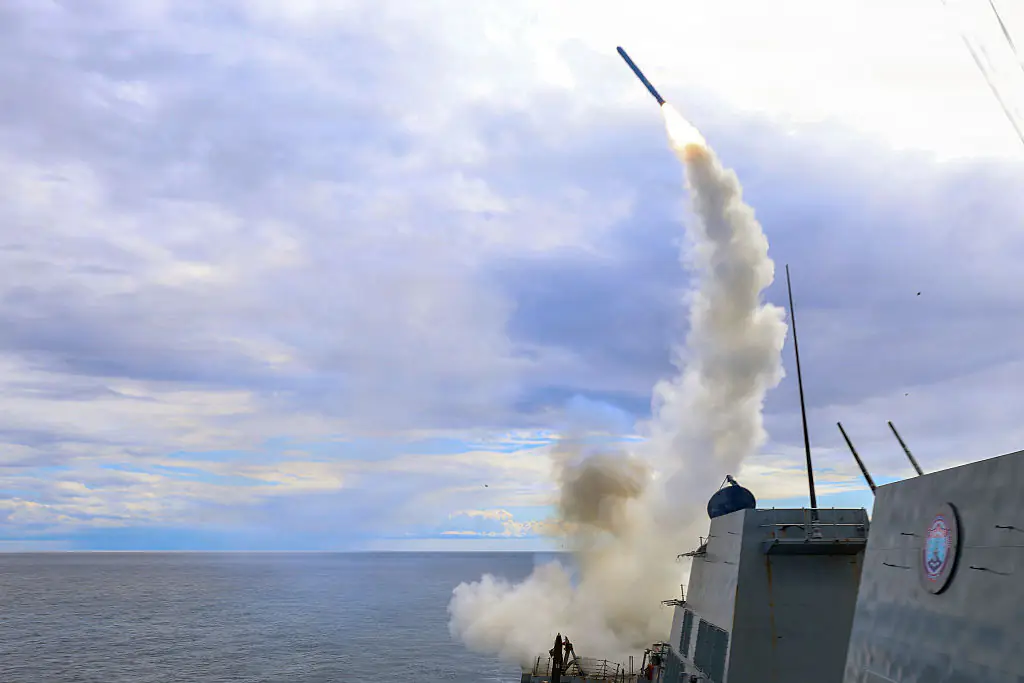
According to a statement from US Central Command on X, the operation will involve 'guided-missile destroyers, over 100 land and sea-based aircraft, [and] multi-domain unmanned platforms.'
US officials have stressed that the operation is not a formal escort mission.
Two American officials told Axios that US Navy ships will be 'in the vicinity' to deter Iranian attacks, while also providing commercial vessels with information on safe shipping lanes, particularly those known to be free of Iranian sea mines.
Trump described the plan as a 'humanitarian gesture.'
Iran's response
Unsurprisingly, Iran did not see it that way.
Within hours of Trump's announcement, Major General Ali Abdollahi, the head of Iran's military central command, issued a statement carried by state broadcaster IRIB.
"We warn that any foreign armed force, especially the aggressive U.S. military, if they intend to approach or enter the Strait of Hormuz, will be targeted and attacked," he said.
"We have repeatedly stated that the security of the Strait of Hormuz is under the control of the armed forces of the Islamic Republic of Iran, and under all circumstances, any safe passage must be coordinated with these forces."
That message was reinforced by Iran's foreign ministry on Monday morning.
Spokesperson Esmail Baghaie said Iran was ready to 'respond to US threats' in the strait, framing the country as the waterway's 'guardian and protector.'
"Ships and shipping companies well know that ensuring their security requires coordination with the competent authorities of the Islamic Republic of Iran," Baghaie said in a statement carried by the semi-official Mehr news agency.
He added that there was no reason for countries that follow the rule of law to follow what he described as the US's 'illegal actions.'
How we got here
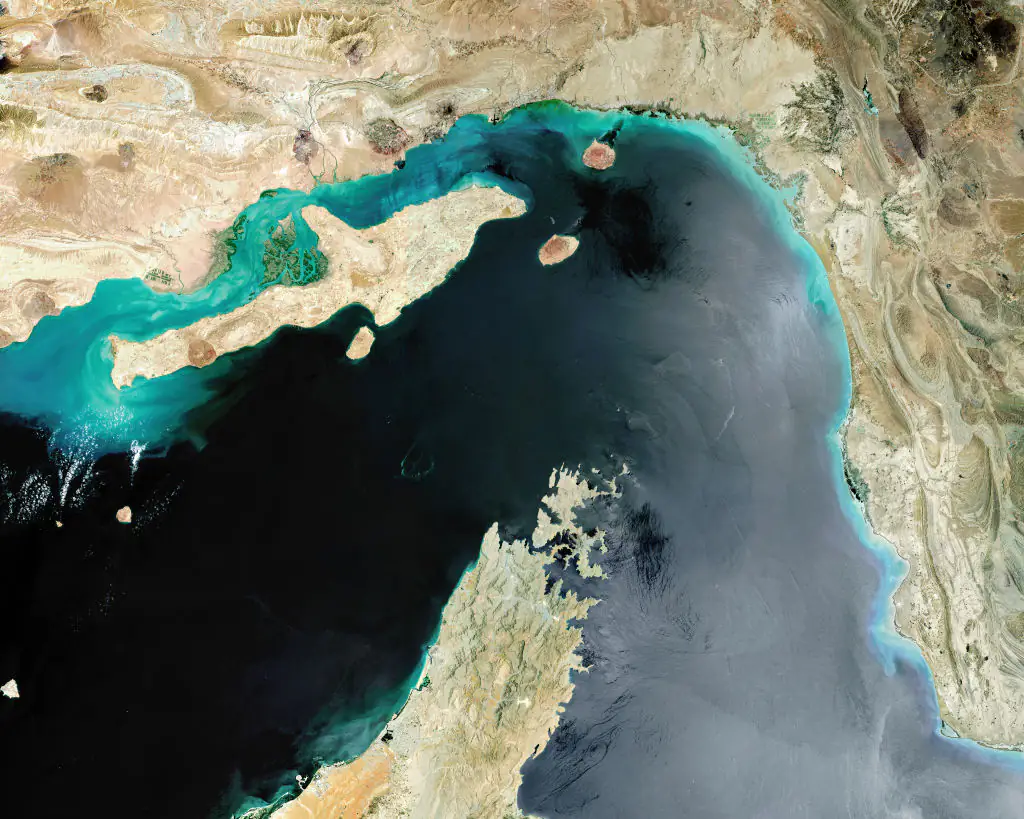
The Strait of Hormuz, a narrow waterway between Iran and the Arabian Peninsula, normally carries around 20% of the world's seaborne oil trade and a similar share of liquefied natural gas.
Iran effectively closed the strait on February 28, 2026, the day the US and Israel launched joint airstrikes on Iran under what was code-named Operation Epic Fury.
Those strikes killed Iran's then-Supreme Leader Ali Khamenei.
Iran retaliated with missile and drone attacks on Israeli cities, US military bases in the Gulf, and US-allied Gulf states including Qatar, Bahrain and the UAE.
The Iranian Revolutionary Guard issued warnings forbidding passage through the strait, boarded merchant ships, and laid sea mines.
Since April 13, the US has imposed its own blockade of Iranian ports, creating what analysts have described as a 'dual blockade' of the wider region.
According to US Central Command, 48 Iranian ships have been turned around by the US blockade in the past 20 days alone.
A fragile ceasefire was agreed in early April, and there has been no direct exchange of fire between US and Iranian forces since April 7. But neither blockade has been lifted.
The crisis has had real-world consequences far beyond the region.
According to the UK's Royal Navy, shipping traffic through the strait has dropped by more than 90 percent since the conflict began, creating what officials warn is both a 'strangulation of international trade' and a looming humanitarian crisis for the seafarers stuck on board.
Iran has previously threatened to target US energy infrastructure across the Persian Gulf, as well as financial institutions connected to the United States, if the conflict escalated further.
What happens next
The next 24 hours are likely to be critical. If the US Navy proceeds with Project Freedom as Trump has announced, and if Iran follows through on its threat to attack any foreign vessel that approaches the strait, the war could effectively restart.
Trump, for his part, has continued to strike a mixed tone.
He told reporters his representatives 'are having very positive discussions' with Iran, and said the talks 'could lead to something very positive for all.'
But the rhetoric on the ground tells a different story.
For now, the world's attention is once again focused on a 21-mile-wide stretch of water between Iran and Oman.
Whether or not the next ship through it is attacked may decide what happens to the wider region in the weeks ahead.