


World3 min(s) read
Major update on site being investigated by scientists to see if it is Noah's Ark

A major update has emerged in the search for Noah's Ark after a formation that resembled the biblical vessel was under investigation by a team of researchers.
The Durupınar Formation, located in eastern Turkey near Mount Ararat, has been at the center of decades of speculation over whether it could be the final resting place of Noah's Ark, or whether it simply bears an uncanny resemblance.
Researchers release update
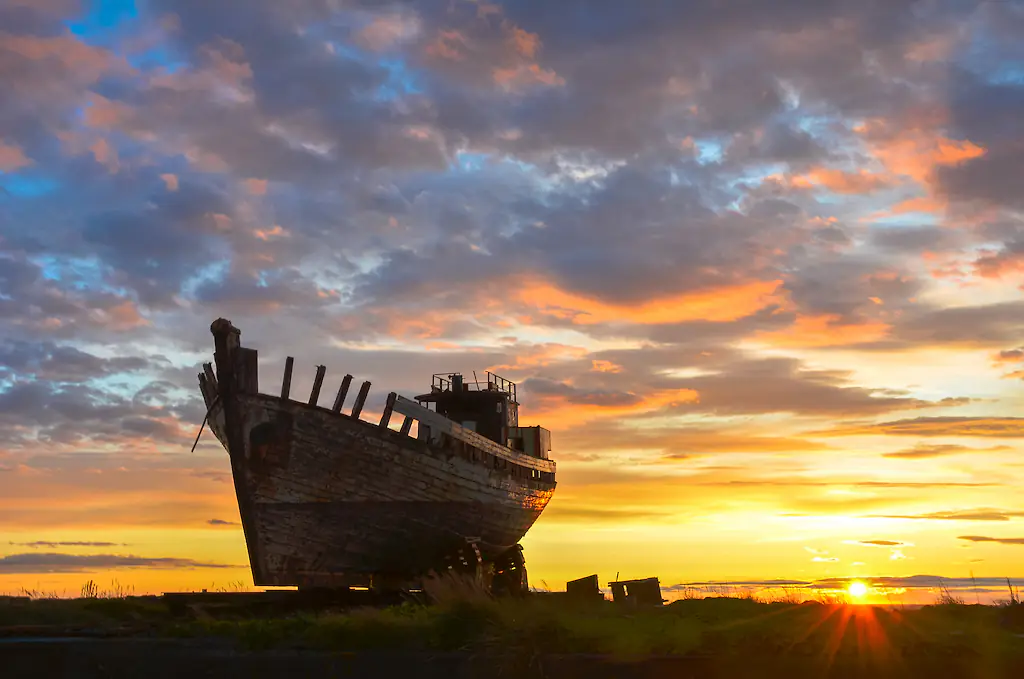
Researchers from the Noah's Ark Scans project have been investigating the unusual 157-metre-long formation using ground-penetrating radar, soil sampling and exploratory drilling, with an underground robot also expected to be used as part of the investigation.
However, according to Newsweek, the latest drilling has not produced conclusive evidence of ancient wood, with researchers admitting they have yet to find concrete, or in this case, wooden, proof that the biblical vessel once stood there.
Samples recovered from the site are now being subjected to laboratory analysis to establish whether the material is simply rock sediment or contains organic material.
If the material is consistent with the surrounding earth, it would support previous geological conclusions that the Durupınar Formation is a naturally occurring feature rather than the remains of a man-made vessel.
Geologist Lorence Collins and explorer David Fasold previously concluded in a 1996 study that the formation was a natural phenomenon, but Andrew Jones, founder of Noah's Ark Scans, continues to believe the formation could contain the remains of the biblical ship.
Last week, Jones suggested that core samples from the formation had revealed layers containing rich organic material that could potentially represent “the decayed top-tier remains of the Ark”.
However, he has since clarified to Newsweek that this was a hypothesis being investigated rather than a confirmed discovery.
That said, one drilling hole has also produced an intriguing result, with the drill breaking after reaching a hard layer around four to five metres below the surface, with Jones suggesting that the material could potentially be petrified wood, although it could equally be a naturally occurring block of rock.
Laboratory results will confirm whether it is '100% Noah's Ark'
Laboratory results are expected over the winter, with a more comprehensive report anticipated in spring 2027, but the latest developments follow claims earlier this month that the site had been effectively '100% confirmed' as Noah's Ark.
The expedition's marketing and fundraising director Lauren Witzke made a particularly confident statement in an update last week, writing: “Core drilling has begun, and the big bang evolutionists are already in damage control mode.”
Should their findings somehow prove that the structure is indeed the ark, it may be viewed as reaffirmation of the Book of Genesis in the bible, with Noah instructed by God to build an ark to survive a flood, taking his family and pairs of animals aboard the vessel.
Genesis 8:4 states that the Ark eventually came to rest on “the mountains of Ararat”, with the Durupınar Formation located in the broader region of eastern Turkey.
The unusual structure was first identified in 1959 after a Turkish Army captain photographed it from the air while mapping the region.
Researchers have investigated the site repeatedly over the decades, with some local experts even excavating parts of the formation and using dynamite during earlier investigations, but those efforts did not uncover archaeological evidence proving that a vessel had once occupied the site.