


World3 min(s) read
Outrage in French village after Pete Hegseth turns up on D-Day with bizarre war comments

On the 82nd anniversary of the D-Day landings, the US Secretary of Defense, Pete Hegseth, attended celebrations in a small town in Normandy, but he did not receive the warm welcome he was expecting.
Residents of the French village where Saturday’s remembrance service was held, Langrune-sur-Mer, were more than displeased with the visit from a member of the Trump administration.
A local news station dubbed the government official "persona non grata."
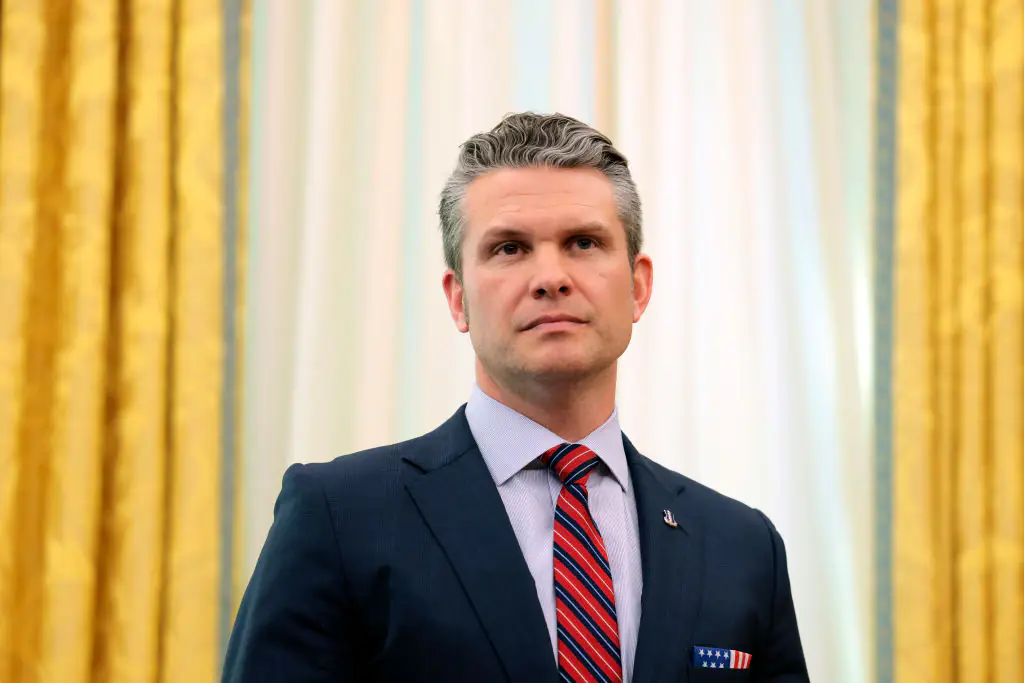
Sylvie Lamy Thepaut, a member of the local association Langrune en Commun, made her thoughts about Hegseth’s visit explicitly clear.
In an interview with French news outlet BFM TV, she said: "He has very warlike remarks, and it seems to us that he does not exactly share our values of democracy and freedom."
A political group have made it clear Hegseth is not welcome
While Chantal Richard, another member of the group, told the outlet: "What's happening with the Trump administration isn't business as usual.
"The fact that Pete Hegseth is challenging all the international organizations that emerged from the Second World War isn't business as usual."
Emphasizing her opposition to the Trump administration’s recent blatant disregard of NATO and the United Nations, she added: “Silence seems to us to be the worst thing we can do on these issues."
In a statement made by Langrune en Commun before Hegseth arrived in the village with his wife and six children, the civic organization said: "This individual holds values contrary to democracy, human rights, and peace.
“This is evidenced by his numerous anti-European remarks.
"The honor of Langrune, that of France, and the memory of the young allies, American, British, Canadian… who died on our beaches in the name of democracy would dictate canceling the visit of this individual."
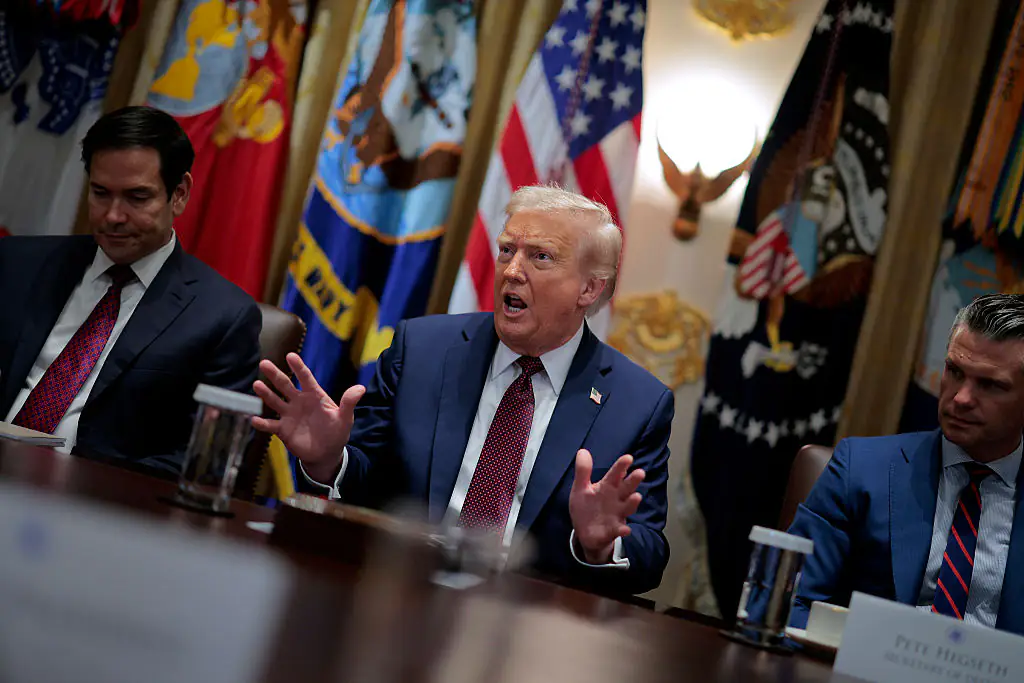
The poor reception to the defence secretary’s arrival was likely predicted by the US government as extra agents had to be called in to protect Hegseth and his family, an anonymous former official of the Army's Criminal Investigative Division told the Washington Post.
What has made locals dislike Hegseth so much?
Hegseth’s unpopularity with locals comes as no surprise following the speech he made at the remembrance service, as he slammed European leaders for their handling of refugees and compared the ongoing humanitarian crisis to “invasions”.
In the speech, he said: “The men buried here thought in a war-fighting alliance where every partner brought its full measure of industry, courage, and sacrifice.
"Not empty slogans, not lavish summits, not communiqués. Real allies doing real things, taking real losses for a shared cause worth fighting and dying for. Each nation pulled its way.
"Sadly, today, different European beaches are stormed by different dangerous ideologies," he continued. "Beaches in Spain, in Italy, in Greece, and in Bulgaria, boats and men arrive. When will European capitals do something about that invasion, or is it too late?"