Loading...
World4 min(s) read
world2 min(s) read
world5 min(s) read
world news4 min(s) read
Published 08:28 17 Aug 2025 GMT
Published 15:42 10 Jun 2026 GMT
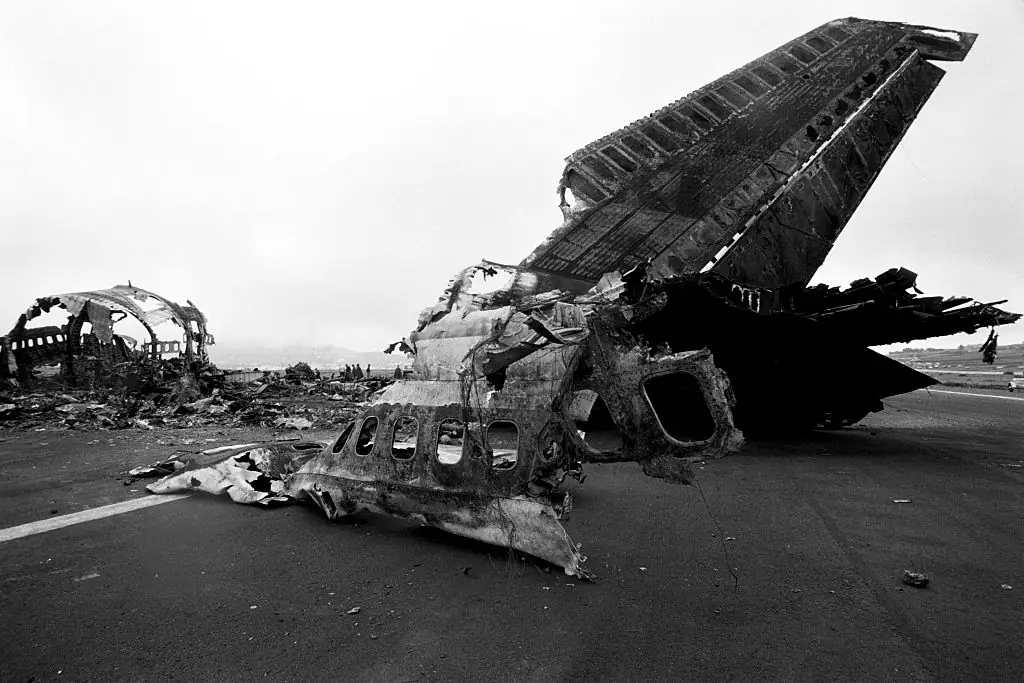
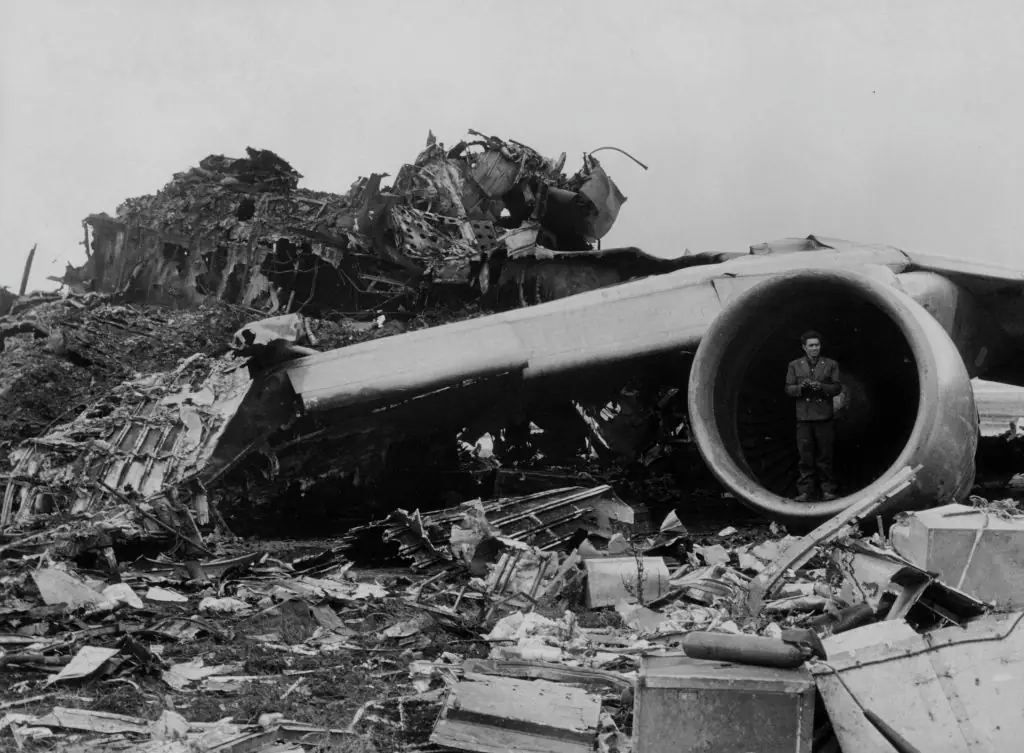
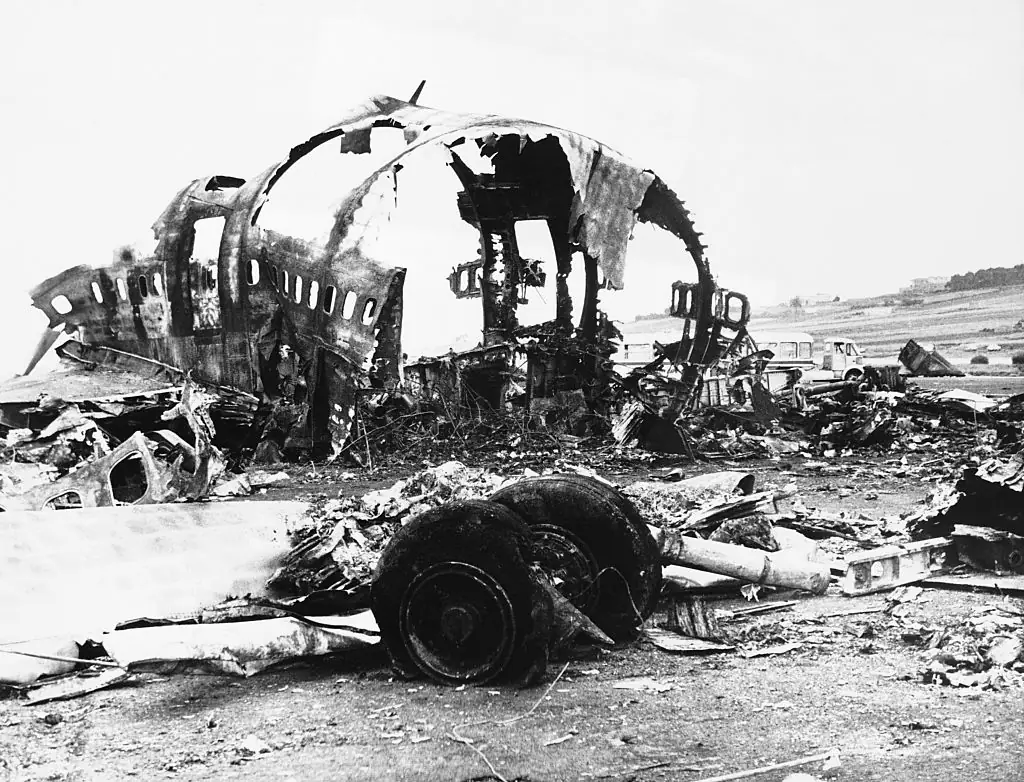
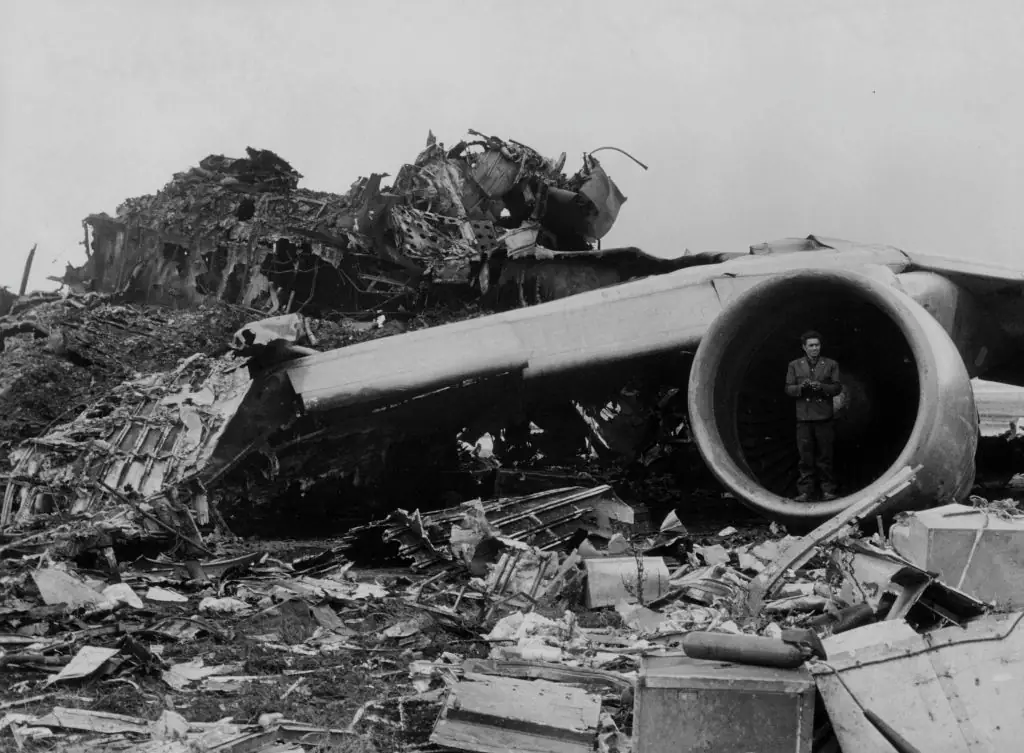
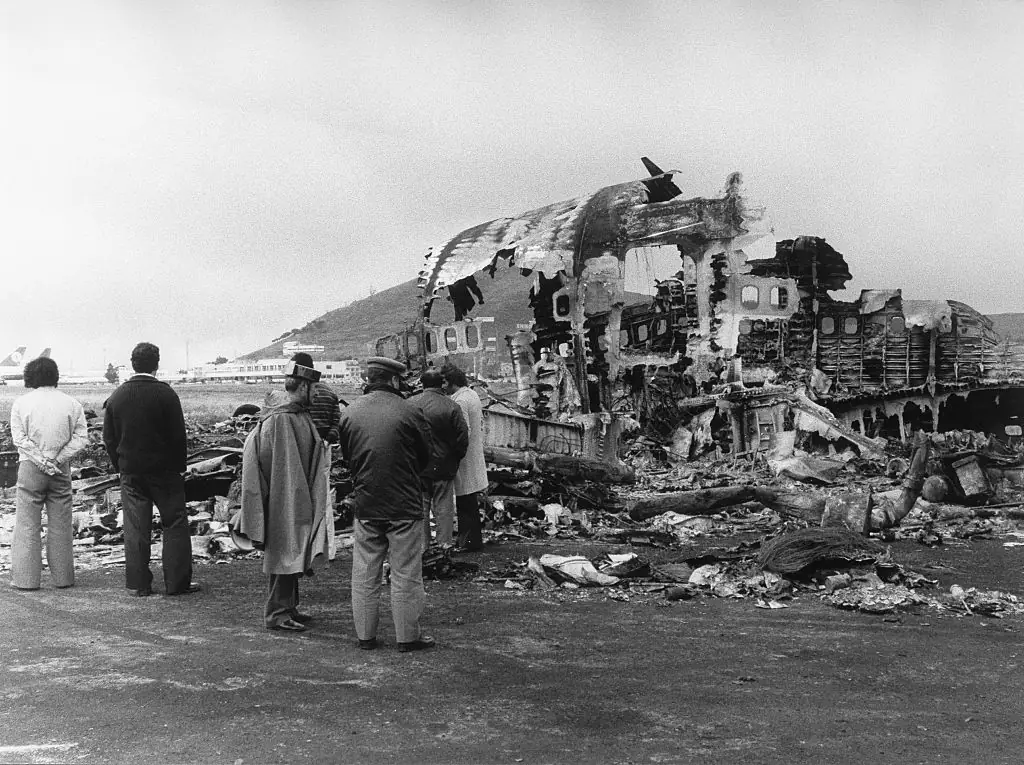
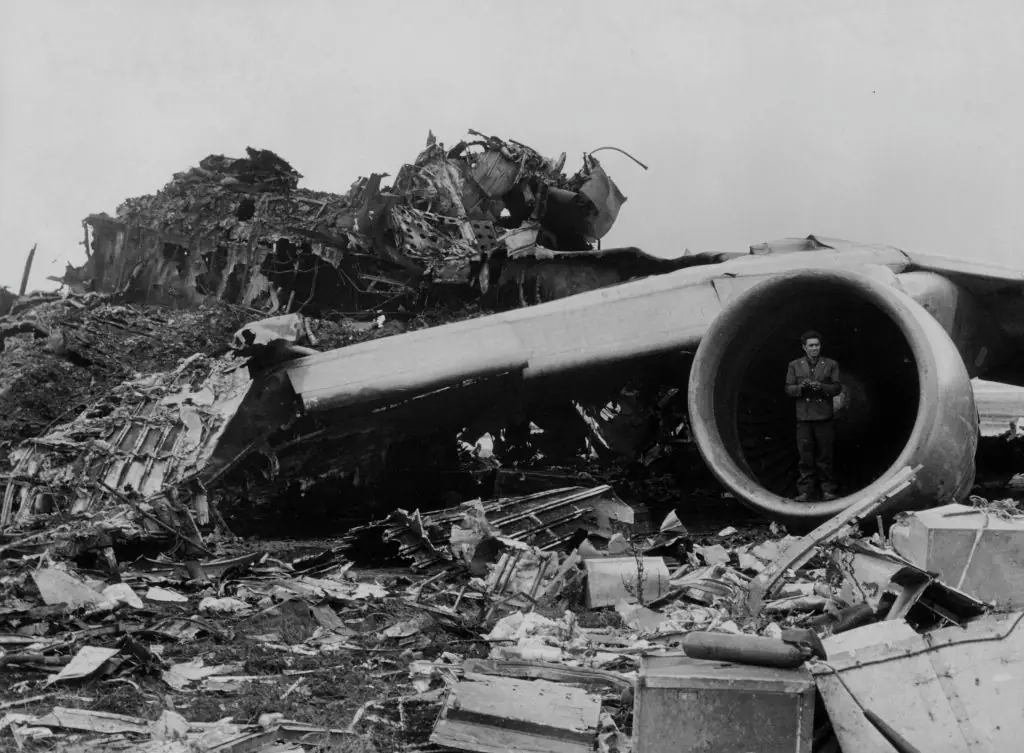
A horrific incident in 1977 remains one of the darkest events in aviation history. March 27, 1977, marks the anniversary of the deadliest air disaster ever recorded. The catastrophe claimed 583 lives and left 61 survivors when two Boeing 747 jumbo jets collided on a runway in Tenerife, Spain.
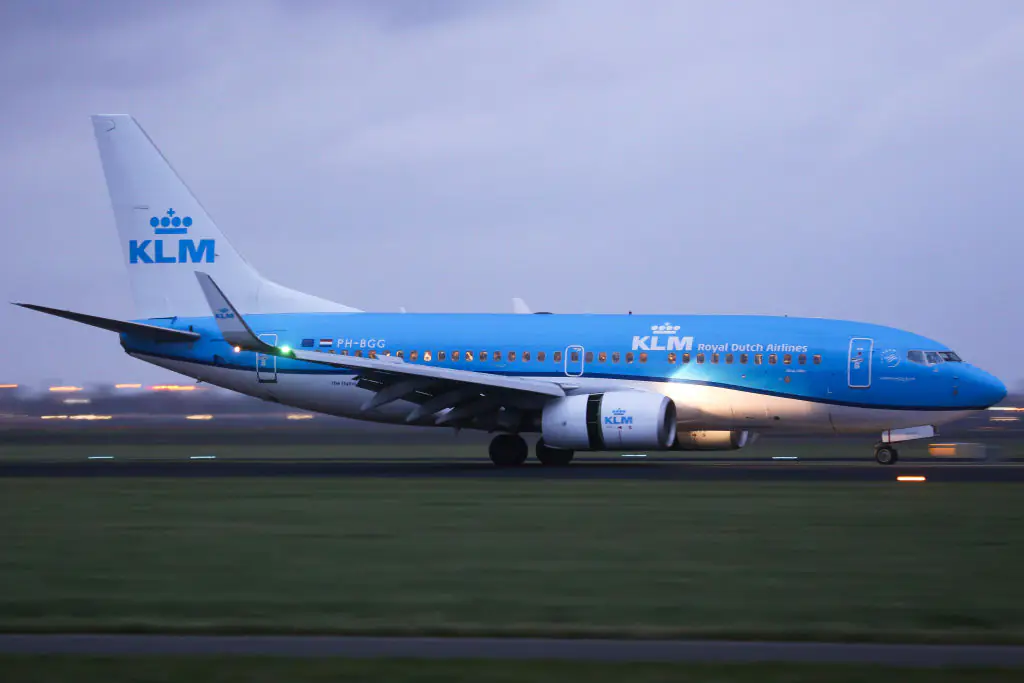
The disaster involved KLM Flight 4805 and Pan Am Flight 1736, which crashed at Los Rodeos Airport, now known as Tenerife North–Ciudad de La Laguna Airport, at 5:06PM GMT on March 27, 1977. In a cruel twist, neither aircraft had originally been scheduled to land there.
Both flights had been heading to Gran Canaria Airport in Las Palmas but were diverted after a bomb explosion at the airport earlier that day. Los Rodeos, one of the few nearby airports capable of handling Boeing 747 aircraft, suddenly found itself overwhelmed by diverted traffic.
The small airport was not designed to cope with the volume of large aircraft that arrived following the diversion. Parking space was limited, operations became congested, and weather conditions deteriorated as thick fog rolled across the airfield.
KLM captain Jacob Veldhuyzen van Zanten was reportedly frustrated by the delays. The Dutch government had recently changed crew duty time regulations, and further hold-ups risked pushing the flight crew beyond their permitted working hours.
According to The Mirror US, van Zanten remarked: "I've seen postage stamps bigger than this place. Now we're going to get boxed in here, goddammit."
Van Zanten was one of KLM's most senior figures, serving as the airline's chief flight instructor and head of safety. His image even appeared in KLM advertising campaigns promoting punctuality.
The situation became even more complicated when the KLM aircraft was refuelled before departure. As dense fog reduced visibility, a fatal misunderstanding developed between the flight crews and air traffic control. Believing he had received take-off clearance, van Zanten accelerated down the runway while Pan Am Flight 1736 was still taxiing ahead.
The cockpit voice recorder recovered from the Pan Am aircraft captured the terrifying seconds before impact.
Pan Am captain Victor Grubbs reportedly spotted the approaching aircraft through the fog and exclaimed: "There he is!"
Moments later, as the KLM jet raced towards them at take-off speed, Grubbs shouted his final words: "There he is... look at him. Goddamn, that son-of-a-b**** is coming!", while first officer Robert Bragg repeatedly yelled: "Get off! Get off! Get off!"
Grubbs attempted to avoid the collision by applying full power and steering sharply left towards the grass. However, there was not enough time. The KLM aircraft had already exceeded its V1 decision speed, meaning the pilots could no longer safely abort the take-off.
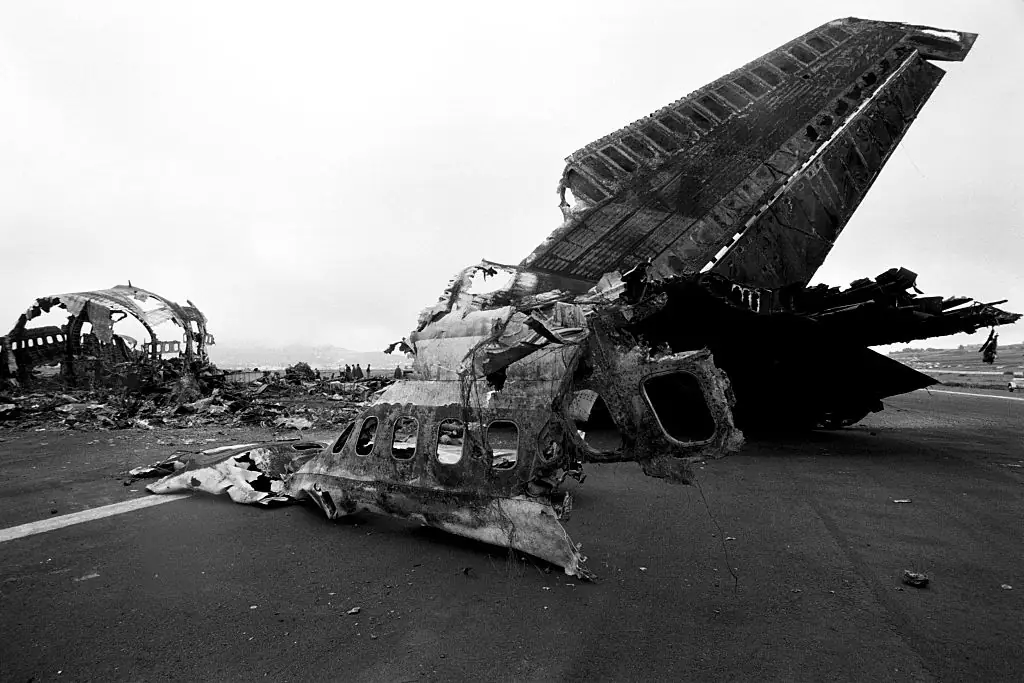
In a desperate attempt to clear the Pan Am jet, the KLM crew tried to lift off early. The manoeuvre resulted in a tailstrike, and although the aircraft briefly became airborne, it slammed into the upper section of the Pan Am plane, tearing through its fuselage and ripping off its tail.
The KLM aircraft continued for around 150 meters before crashing back to the ground and sliding hundreds more metres down the runway. Its fully fuelled tanks ignited on impact, creating a massive fireball that took hours to extinguish.
All 248 people aboard KLM Flight 4805 were killed. On the Pan Am aircraft, 335 of the 396 people on board lost their lives. The 61 survivors were all seated in the front section of the aircraft. Remarkably, all five occupants of the Pan Am cockpit survived.
The disaster prompted major changes across the aviation industry. Investigators concluded that miscommunication, assumptions, and poor visibility all played critical roles in the tragedy.
In the years that followed, international aviation authorities introduced stricter procedures for radio communication, requiring standardized English phraseology between pilots and air traffic controllers. Crew resource management practices were also strengthened, encouraging flight crew members to question and challenge captains when safety concerns arise.
Nearly five decades later, the Tenerife runway collision remains the deadliest accident in aviation history and continues to shape airline safety procedures around the world.
Published 15:45 03 Oct 2024 GMT
A pilot had some chilling final words before another aircraft crashed into his, resulting in the deadliest passenger plane crash in history.
On March 27, 1977, the island of Tenerife was the site of the deadliest aviation accident in history when two Boeing 747s collided on a runway, killing 583 people.
The crash occurred at Los Rodeos Airport (now known as Tenerife North), and is often referred to as the "Tenerife airport disaster".
KLM Flight 4805, mistakenly believing it had been cleared for takeoff, began accelerating down the foggy runway, as reported by SimpleFlying.
Unbeknownst to the KLM crew, Pan Am Flight 1736 was still taxiing on the same runway, attempting to clear it.
Due to poor weather conditions, KLM pilot Jacob Veldhuyzen van Zanten and first officer Klaas Meurs could not see the Pan Am aircraft ahead of them.
Neither plane had originally been scheduled to land there but had been redirected there due to an emergency diversion caused by a bomb explosion at the nearby Las Palmas airport.
The two Boeing 747s waited for hours on the tarmac as an unusually dense fog descended over the airport. Eventually, air traffic control instructed the KLM flight to taxi to the end of the runway and turn around.
Pan Am was told to follow behind, but the KLM crew mistakenly believed they had been cleared for takeoff.
“The Pan Am pilots heard this, became startled, clicked their mic to say, ‘Hey, we’re still on the runway,’” explained Patrick Smith, a commercial airline pilot and aviation author, per CBS News.
However, due to radio interference, the KLM crew did not hear the message. Assuming they had clearance, the KLM plane began its takeoff roll, barreling down the foggy runway directly toward the still-taxiing Pan Am jet.
Bob Bragg, the first officer of the Pan Am flight, recounted the terrifying moment in an interview with CBS News:
“As soon as I saw the man moving and coming at us, I started saying, ‘Get off!’ As we were turning to the left, I looked back out of my side window, and that’s when he had lifted off the ground and become airborne, right as close to us as I could see him.”
The chilling final words of the Pan Am pilot were captured on the cockpit voice recording.
"There he is!" shouted captain Victor Grubbs. "Look at him! Goddamn, that son of a b**** is coming!"
Seconds later, the two aircraft collided, resulting in the deadliest aviation disaster on record, claiming 583 lives.
All 248 passengers and crew aboard the KLM flight were killed. There were also 335 fatalities and 61 survivors on the Pan Am flight, per the Federal Aviation Administration.
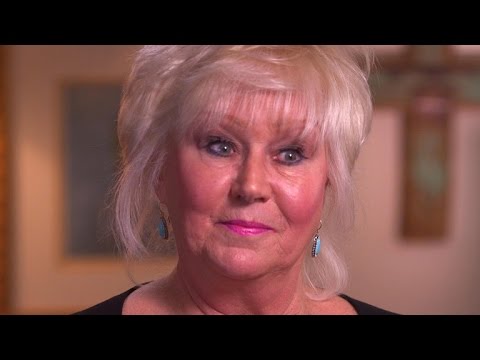
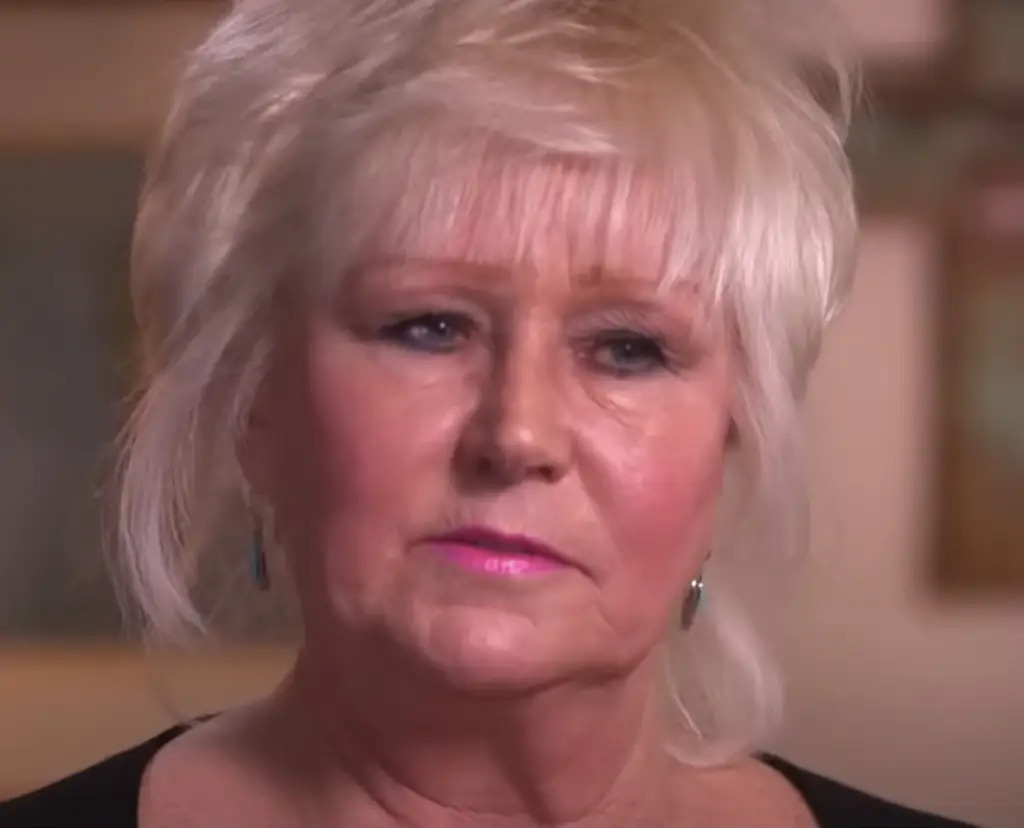
One of those survivors, Joan Feathers, recalled the harrowing escape in an interview with CBS correspondent Jeff Glor.
“I sat there thinking, ‘This is the end.’ So as we made our way to the side of the plane, all these little implosions of fire, I just felt that it was imminent," she said.
"I did not want to burn up. So there was a doctor from Chicago that had been in the plane and he was down below and he said, ‘Jump, I’ll catch you.’”
Feathers described the scene as she ran for safety: “I could tell that there were a lot of these little fires that were getting bigger, so I kept running. And it wasn’t maybe fifteen seconds and the plane went up like an atom bomb. … It just phewww, and then a huge fire.”
Investigations placed most of the blame on KLM pilot Jacob van Zanten, a highly respected and experienced aviator who had even been the face of KLM in advertisements.
“He was on KLM billboards and in KLM advertisements,” said Smith. “And one of the famous little nuggets of the story is that when word got back to KLM that one of their planes had crashed, they went looking for Captain van Zanten to go to the scene to figure out what happened, unaware that he was actually the captain.”
Published 13:36 02 Oct 2024 GMT
A woman who miraculously survived the deadliest plane crash in history revealed the ominous joke her boyfriend told her before disaster struck.
On March 27, 1977, 583 people lost their lives when two planes collided on the runway of Tenerife's Los Rodeos Airport (now called Tenerife North).
The devastating incident occurred after a terrorist attack at an airport in Gran Canaria led to flights destined for the island being re-routed to the nearby Los Rodeos.
However, due to the smaller size of the airport, it soon started to become overwhelmed by the increase in traffic. This - combined with poor weather conditions and a miscommunication between air traffic control and two pilots - soon led to a disaster that sent shockwaves in the aviation world.
The incident unfolded when KLM Flight 4805 attempted to take off, but accidentally collided with the Pan Am Flight 1736, which had been using the runway to taxi.
Both aircraft erupted in flames and pandemonium unfolded. All 248 passengers and crew aboard the KLM flight were killed and 335 fatalities were recorded on the Pan Am plane.
Only 61 passengers managed to survive the catastrophe.
One of those fortunate to survive was Joani Feathers, who was traveling with her then-boyfriend, Jack, to the Canary Islands for a two-week Mediterranean cruise.
Feather, who was 27 at the time, recalled to The Daytona Beach News-Journal that she was sat in her seat with her seatbelt fastened. That's when she saw the KLM aircraft also on the runway.
She admitted to feeling nervous about being able to see the other plane - completely unaware that it was actually barrelling towards them at 140mph.
When she told boyfriend Jack that she wished she couldn't see the KLM plane, Jack jokingly replied: "Don't worry, if he hits us, you won't feel a thing."
An unfortunate comment given the devastation that would follow just moments later.
After the collision, Feathers recalls seeing debris everywhere, as fires broke out.
"All my rings had come off my fingers," she said. "My shoes came off."
Jack was also alive, but injured - suffering a gash to his head.
They were the fortunate ones.
In front of them Feathers recalls seeing a woman wearing hair curlers on fire, and another woman who had been cut in half by her seatbelt.
"I just didn't want to burn up," Joani said, saying she and Jack "rallied" to undo her seatbelt and get out of the plane.
After a nasty fall out of the what was left of the entryway, Feathers started to run - repeating: "No. No. I can't believe this is happening."
An investigation by Spanish authorities (Subsecretaria de Aviacion Civil) later determined that the KLM captain was the primary cause of blame, per the Federal Aviation Administration.
Investigators say he took off without clearance and failed to comply with the "stand by for take-off" request from air traffic control in the tower. Additionally, it was found that the KLM captain may have proceeded with take off due to new time limitations on crew introduced by the Dutch government - which could have seen him face penalization.
Published 09:07 30 May 2024 GMT
Published 13:21 09 Jul 2025 GMT
A pilot had a tragic three-word question as the plane he was flying plunged from the sky, killing all 62 people onboard.
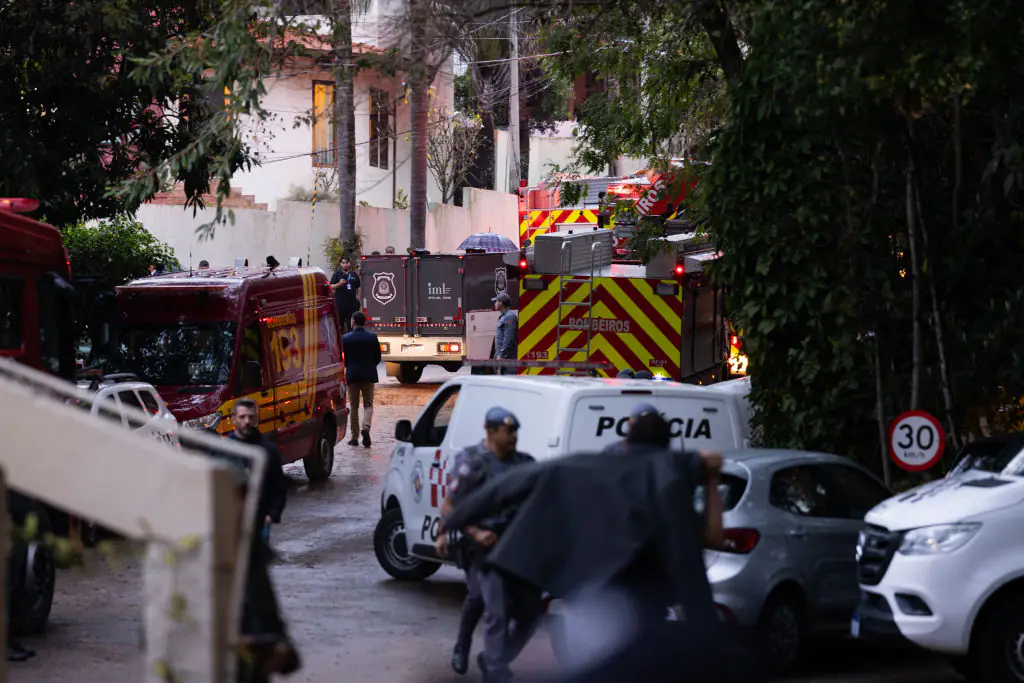
The doomed ATR-72 turboprop, bound for Sao Paulo from Cascavel, crashed on August 9, 2024, in the town of Vinhedo after it was seen spiraling out of control and emitting black smoke before slamming into trees and sending a plume into the air, per the Mirror.
The black box revealed the tragic final moments in the cockpit between pilot Danilo Santos Romano and co-pilot Humberto de Campos Alencar e Silva, with Humberto asking the devastating question: “What’s going on?” before stating the aircraft needed “more power,” according to local TV station Globo.
Brazil’s aviation accident investigation center, Cenipa, did not comment on the transcript report.
The final moments were caught on camera by horrified onlookers as the plane dropped terrifyingly close to a home, though miraculously, no one on the ground was injured.
Initially, Voepass reported 57 passengers and four crew were on board, but the airline later confirmed an additional unaccounted-for passenger was on the flight, raising the death toll to 62.
The passenger, Constantino Thé Maia, had not been listed on the manifest due to a “technical issue,” according to Globo TV News.
The youngest victim was three-year-old Liz Ibba dos Santos, who was traveling with her father, 41-year-old Rafael Fernando dos Santos, for Brazilian Father’s Day.
Also among the dead were Josgleidys Gonzalez, 29, her four-year-old son Joslan, her mother Maria Gladys Parra, and their six-month-old dog Luna.
Four professors from Unioeste University and eight cancer doctors were also on board, heading to a conference in Sao Paulo.
Eduardo Baptistella of the Regional Medical Council said: “Unfortunately we received very sad news and were able to confirm the death of eight doctors. The doctors were going to an oncology conference. These were people who dedicated their lives to saving others.”
Among the victims were radiologist Leonel Ferreira, pediatric cancer expert Sarah Stella, and Silvia Osaki.
The Cascavel Cancer Hospital, where two of the doctors, Arianne Albuquerque Estavan Risso and Mariana Comiran Belim, worked, released a statement saying they “treated all patients with great dedication, affection, and respect.”
“It is no wonder that the two were frequently praised by our ombudsman offices. The love that they both had for their profession was very clear. Now, all that is left for us is the longing and memories of two young doctors who left us too soon,” the hospital said.
Risso’s cousin, Stephany Albuquerque, said: “She wasn’t the kind of doctor who would the tell the patient, ‘this is your illness, take this.’ No, Arianne took care of people. ... She would give out her personal phone number to patients.”
Willian Rodrigo Feistler, a general practitioner and close friend of Belim, said: “Mariana was serene with a melancholic temperament, but very intelligent, empathetic and devoted to her profession. She dedicated much of her life to studies and medical training.”
Brazil's Federal Council of Medicine described the loss as leaving “Brazil’s medical world in mourning,” expressing solidarity with friends and families.
The pilot, Captain Danilo Santos Romano, 35, had logged over 4,500 flight hours and was described by colleagues as “always smiling” and “willing to help.” Co-pilot Humberto, 61, and flight attendants Débora Soper Avila, 29, and Rubia Silva de Lima, 41, also lost their lives.
Brazil’s air force reported the aircraft stopped responding to calls at 1:21PM, with radar contact lost at 1:22PM It had not issued a distress signal or reported adverse weather, though weather forecasters noted reports of severe icing in the region at the time of the crash.
Brazilian aviation engineer and crash investigator Celso Faria de Souza believes ice likely caused the accident, noting ATR-72 aircraft have a history of ice-related issues, including a 1994 crash in Indiana that killed 68 and a 2016 near-crash in Norway.
Voepass CEO Eduardo Busch stated: “The entire crew was competent. We are waiting for access to all communications between the pilot and the control tower to have a broader understanding of what happened.”
São Paulo Public Security Secretary Guilherme Derrite confirmed the plane’s black box was recovered for analysis to determine why the plane plummeted over 13,000 feet in just one minute.
Meanwhile, stories of those who narrowly missed the flight have emerged, including Adriano Assis, who arrived too late at the counter after finishing a hospital shift, saying: “I wouldn’t be here if I hadn’t missed it.”
Officials used seat assignments, physical characteristics, documents, and belongings such as cell phones to identify the victims, while the morgue requested relatives provide dental, X-ray, and medical records to aid in the difficult process.
Authorities have confirmed all 62 on board perished in one of the deadliest aviation tragedies Brazil has faced, leaving behind shattered families and colleagues, and a healthcare community mourning the loss of doctors who dedicated their lives to saving others.
The final words of a pilot and co-pilots captured moments before a tragic plane crash that killed 228 have been revealed.
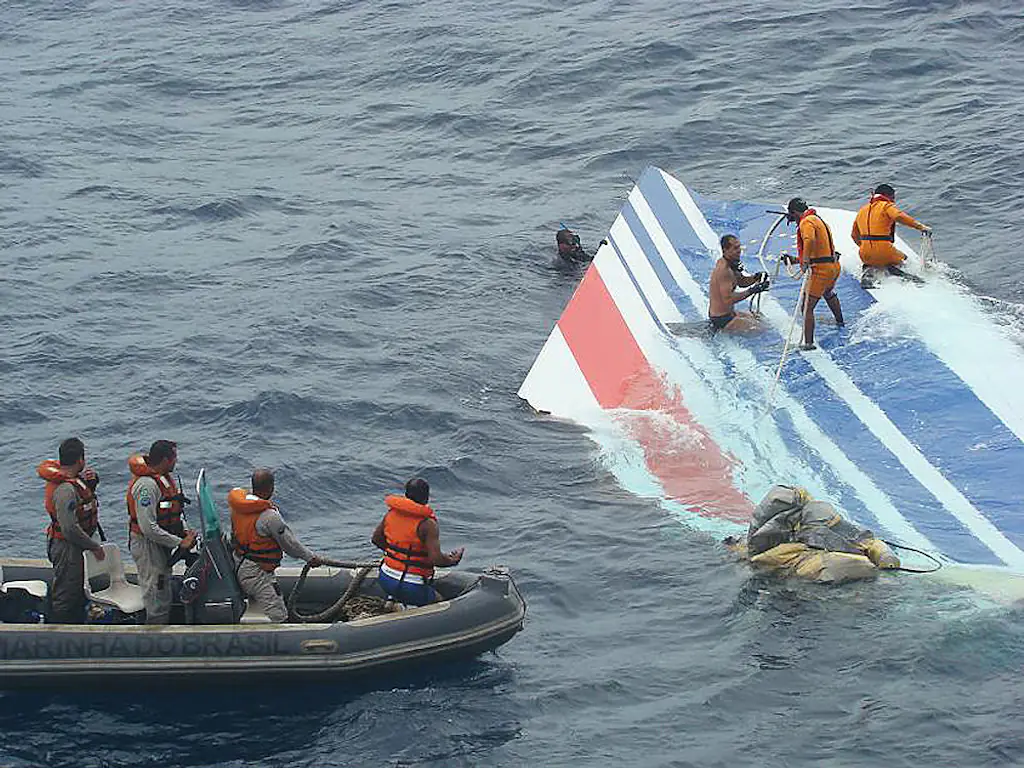
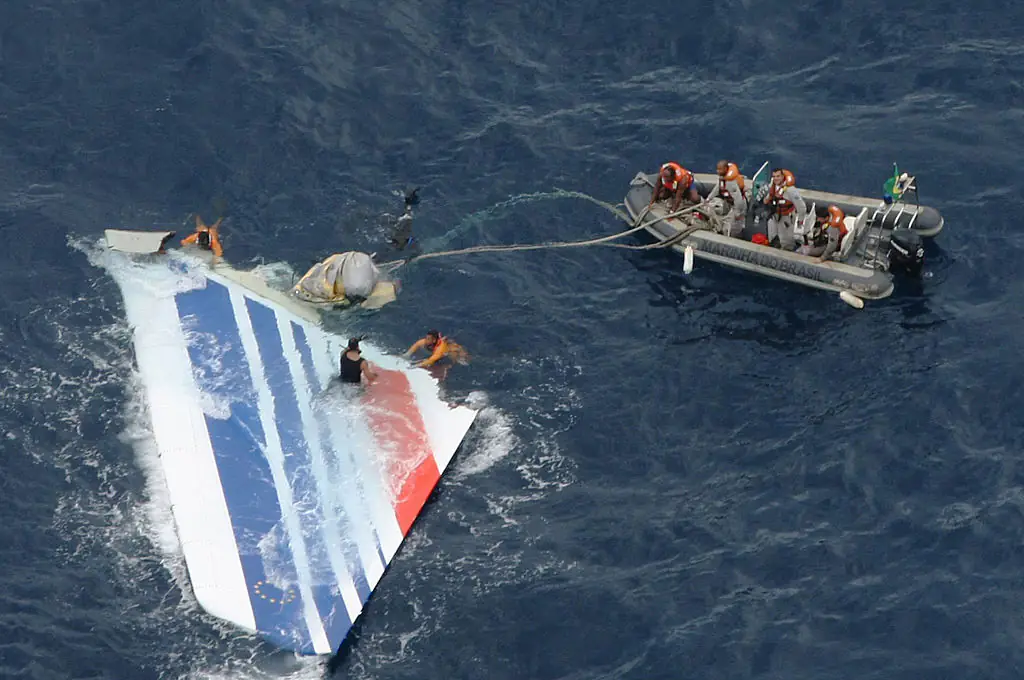
Back in 2009, Air France flight 447 crashed into the Atlantic Ocean during a May 31 flight from Rio de Janeiro to Paris.
The Airbus 330 was carrying 288 people onboard - including five Brits and two Americans - as well as captain Marc Dubois, 58, and his two junior co-pilots - 32-year-old Pierre-Cedric Bonin and 37-year-old David Robert.
Everybody onboard died as a result of the tragic crash.
As reported by the Daily Mail, a subsequent investigation revealed the final conversation between the pilots - sharing a glimpse into the panic that flooded the cockpit as the plane descended.
Excerpts from recorded conversations reveal that Dubois and Robert had been asleep when Bonin - who was at the controls - started to experience difficulties when the plane hit a tropical storm.
When Robert came to his assistance, Bonin said: "[I] don't have control of the aeroplane anymore now. I don't have control of the aeroplane at all!"
In response to an error in the air-speed readings, Bonin had started to incorrectly tilt the plane's nose upwards instead of downwards when it stalled.
Robert replied: "Controls to the left" - before taking over himself.
However, with both co-pilots attempting to control the plane, they received a "dual input" audible warning.
With alarms blaring, Dubois could be heard asking his two co-pilots: "Er what are you [doing]?"
"We've lost all control of the aeroplane, we don't understand anything, we've tried everything," Robert replied.
Robert can be heard saying to himself: "Climb, climb, climb, climb." Bonin replied: "But I've been at maximum nose-up for a while!"
At this moment, Dubois realized the young pilots' error and screamed: "No no no, don't climb! No No No!"
Bonin then screamed: "We're going to crash! This can't be true. But what's happening?"
Then, it isn't known who spoke next, but a voice is heard saying: "F***, we're dead."
The subsequent investigation revealed that the tragic event stemmed from a combination of technical malfunction and the pilots' inadequate response to the aircraft stalling, leading to a rapid descent of 11,000 feet per minute.
After a search spanning 10,000 square kilometers, it took two years to locate and recover the wreckage and bodies from the sea.
France's Bureau of Enquiry and Analysis for Civil Aviation Safety (BEA) attributed the autopilot disconnection mid-flight to ice crystals.
Despite Captain Bonin transferring control to First Officer Robert, it was too late to recover from the stall, with passengers unaware of the severity of the situation during the three-and-a-half-minute descent.
An in-depth Vanity Fair editorial, Chief investigator Alain Bouillard highlighted that Bonin's departure from his post, while not violating regulations, was unexpected and possibly influenced by Air France's piloting culture.
He revealed that he had left Bonin - an anxious junior pilot - to deal with the challenging weather conditions while he rested after being up most of the night before with his girlfriend, an off-duty hostess and opera singer. "I didn't sleep enough last night. One hour - it's not enough," Dubois told his colleagues before getting some rest.
The Vanity Fair article stated: "On the night of May 31, 2009, the pilots of Flight 447 certainly did not serve their passengers well". In the aftermath, new regulations for airspeed sensors and pilot training methods were introduced to the aviation industry.
In 2023, both Airbus and Air France were cleared of manslaughter charges related to the flight.
Our thoughts are with the families still impacted by this tragedy.