


World4 min(s) read
Ratko Mladić dead: 'Butcher of Bosnia' dies aged 84 in The Hague prison
.jpg_I4Ebof?tr=cr-0.338.2730.3068,f-webp,q-70,w-100)
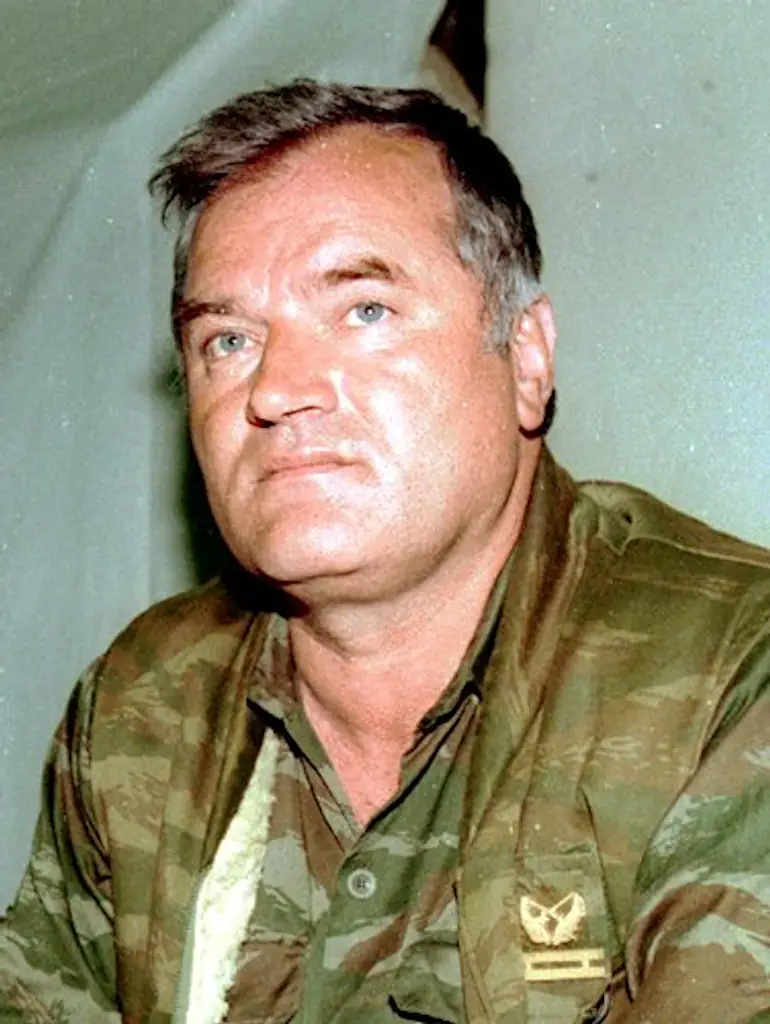
Ratko Mladić, the Bosnian Serb general who orchestrated the Srebrenica massacre and the siege of Sarajevo during the Balkan wars, has died in the UN detention centre in The Hague. He was 84.
Serbian state broadcaster RTS broke the news on Thursday evening, saying Mladić died in a prison hospital after suffering several strokes. His lawyer confirmed the death to Reuters.
He had been serving a life sentence since 2017 for genocide, crimes against humanity, persecution, extermination, murder, terror, unlawful attacks on civilians, and hostage-taking. His appeal was rejected in 2021. Repeated requests for compassionate release were denied.
A UN doctor had assessed in August that his death 'may occur at any time, possibly within weeks'. He died before the assessment could lead to any change in his detention.
What Mladić did
In July 1995, troops under Mladić's command overran the town of Srebrenica in eastern Bosnia. It had been designated a UN 'safe area'. It was not safe.
Over the course of several days, Bosnian Serb forces separated the men and boys from the women and children. The women were loaded onto buses. The men were marched into the surrounding forests and fields and executed.
At least 8,000 Muslim men and boys were killed. It remains the only episode of genocide on European soil since the Second World War.
Footage from those days shows Mladić handing out sweets to children as they waited to be separated from their fathers. The cameras caught him smiling.
When the International Criminal Tribunal for the former Yugoslavia read out his indictment, Judge Fouad Riad described what had taken place.
'Thousands of men executed and buried in mass graves, hundreds of men buried alive, men and women mutilated and slaughtered, children killed before their mothers' eyes, a grandfather forced to eat the liver of his own grandson.'
He called it 'unimaginable savagery'.
The siege of Sarajevo
Srebrenica was the worst of it, but it was not all of it.
From 1992 to 1996, Mladić's forces besieged the Bosnian capital Sarajevo. For nearly four years, the city was pounded daily by artillery, tanks, mortars, and heavy machine guns positioned in the hills above it. Snipers shot civilians in the streets. The population lived without consistent electricity, water, or food.
Around 10,000 people were killed during the siege, including more than 1,500 children. It was the longest siege of a capital city in modern warfare.
The man
Mladić was born on March 12, 1942, in Božinovići, a village in southeastern Bosnia, though his son has said he was actually born on March 8, 1943. His father was killed by Croatian fascists during the Second World War when Mladić was two years old.
He rose through the Yugoslav People's Army and became the commander of the Bosnian Serb Army in 1992 at the start of the war. He was the military face of a nationalist movement led politically by former Yugoslav president Slobodan Milošević and Bosnian Serb leader Radovan Karadžić.
All three were indicted for war crimes. Milošević died in his cell in The Hague in 2006 before his trial concluded. Karadžić was convicted in 2016 and is serving a life sentence in a British prison.
Mladić was indicted in 1995 but spent 16 years on the run. He was finally captured in May 2011 in the village of Lazarevo in northern Serbia, living under a false name. He was frail, grey, and barely recognisable as the uniformed commander who had once strode through Srebrenica with a camera crew behind him.
The trial
His trial at the International Criminal Tribunal for the former Yugoslavia lasted four years. On November 22, 2017, he was found guilty on 10 of 11 counts, including genocide for Srebrenica, and sentenced to life imprisonment.
When the verdict was read, Mladić shouted at the judges and had to be removed from the courtroom.
His appeal was heard in 2021 and rejected on all grounds. He had been in the UN detention centre in The Hague since his arrest in 2011.
He suffered a heart attack in 2013 and his health deteriorated steadily in the years that followed. By his own account, he felt like a frail old man. In court appearances, he wavered between self-pity, defiance, and distraction.
'I am a very sick man,' he told the court on one occasion. In 2019, he asked for permission to visit family graves in Serbia. It was denied.
The reaction
Munira Subašić, whose son and husband were both killed by forces under Mladić's command at Srebrenica, said after his appeal was rejected in 2021: "Everywhere his army went, everywhere his boots went, he committed genocide in the villages, in the cities, in the houses. He killed everyone just because they were not Serbs."
The Bosnian War lasted from 1992 to 1995. Around 100,000 people were killed. Millions were displaced. The ethnic cleansing carried out under Mladić's command reshaped the map of the Balkans and left scars that have not healed 30 years later.
He died in a prison hospital in the Netherlands, having never expressed remorse for any of it.