


World Politics3 min(s) read
Spain train disaster leaves at least 46 dead and dozens injured after high-speed collision

A catastrophic rail disaster in central Spain has left dozens dead and nearly two hundred injured after two high-speed trains collided on Wednesday morning. The violent collision occurred shortly after 9:00AM local time between the municipalities of Los Yebenes and Urda, located in the province of Toledo.
Preliminary reports indicated that at least 39 people died at the scene, though subsequent official statements confirmed that the death toll had climbed to at least 46, with roughly 179 passengers sustaining injuries.
Emergency responders, police officers, and medical personnel quickly mobilized to the site, where rescue operations began immediately in an effort to extract trapped survivors. Officials on the ground warned that the casualty figures could climb even higher as search teams continued combing through the wreckage.
The collision involved an AVE high-speed service and an Iryo train, both of which were traveling in the same direction along the rail line toward and from Seville.
According to Spanish state broadcaster TVE, one high-speed train plowed directly into the rear of the other. The impact derailed two train cars, causing them to tumble down an embankment alongside the tracks.
Spain's rail infrastructure manager, ADIF, confirmed the timing of the crash, while national rail operator Renfe announced the total suspension of services linking Madrid, Ciudad Real, and the wider Andalusia region.
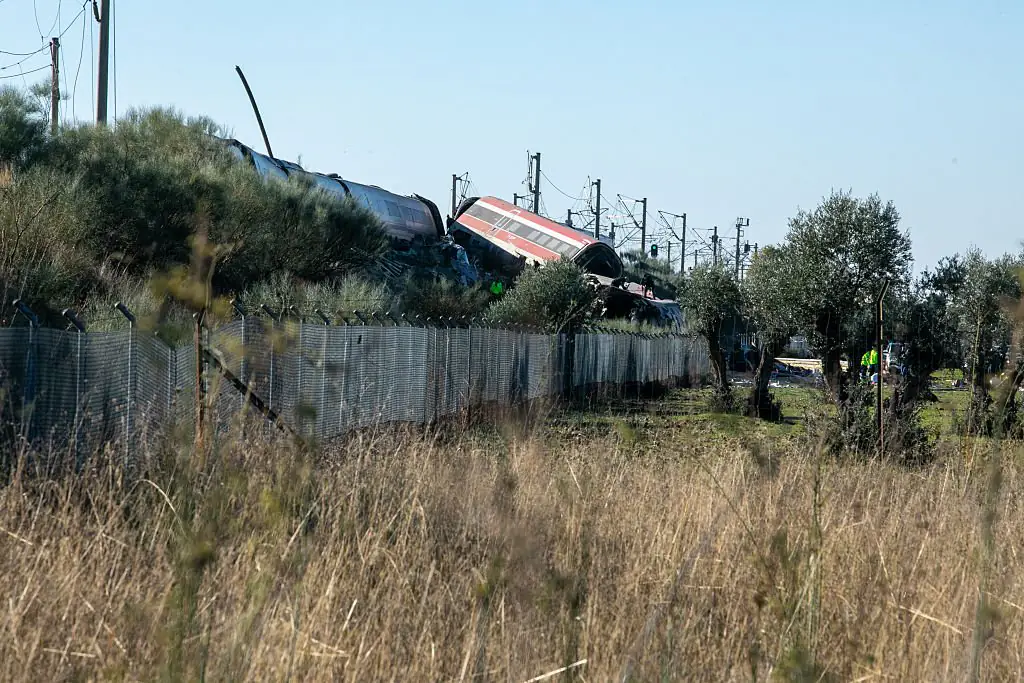
Emergency response
Local authorities in Toledo acted rapidly to accommodate survivors and tend to the wounded. Manuel Galán, the mayor of Urda, confirmed to broadcasters that many passengers had suffered traumatic injuries.
Civil protection officials requested that the Urda town hall convert a local sports pavilion into a temporary shelter and triage center to house unaffected travelers and coordinate medical attention for the injured.
Specialized medical resources were dispatched from neighboring regions to bolster the rescue effort. Antonio Sanz, the Minister of the Presidency, Health and Emergencies for Andalusia, confirmed that the Andalusian Health Service sent mobile intensive care units and a dedicated logistics support vehicle directly to the crash site.
Meanwhile, in Madrid, municipal authorities began preparing resources to assist worried families awaiting news of their loved ones.
Inmaculada Sanz, the Deputy Mayor of Madrid, confirmed that emergency personnel from SAMUR were dispatched to Atocha train station to establish a dedicated support center.
This specialized facility, modeled after previous crisis responses such as the Adamuz rail accident, was arranged to offer psychosocial assistance and private space on the station's first floor exclusively for relatives of potential victims.
The national reaction to the disaster
The disaster provoked immediate grief across Spain, prompting the central government to cancel its entire official schedule for Wednesday. Spanish Prime Minister Pedro Sanchez addressed the tragedy publicly on social media, stating that he was "deeply saddened" by the accident in Urda and expressing his "solidarity and support to the victims and their families" in a post on X.
The Prime Minister confirmed that specialized crews remained on site to assist all affected travelers and secure the hazardous area. Rail safety investigators have begun examining how two trains heading along the same corridor managed to collide.
This incident marks another severe blow to the Spanish railway network, following a tragedy in January when 45 people were killed after a derailed train struck an oncoming service in southern Spain. Technical experts and rail operators will now focus their efforts on determining why collision avoidance protocols failed to prevent the impact.